
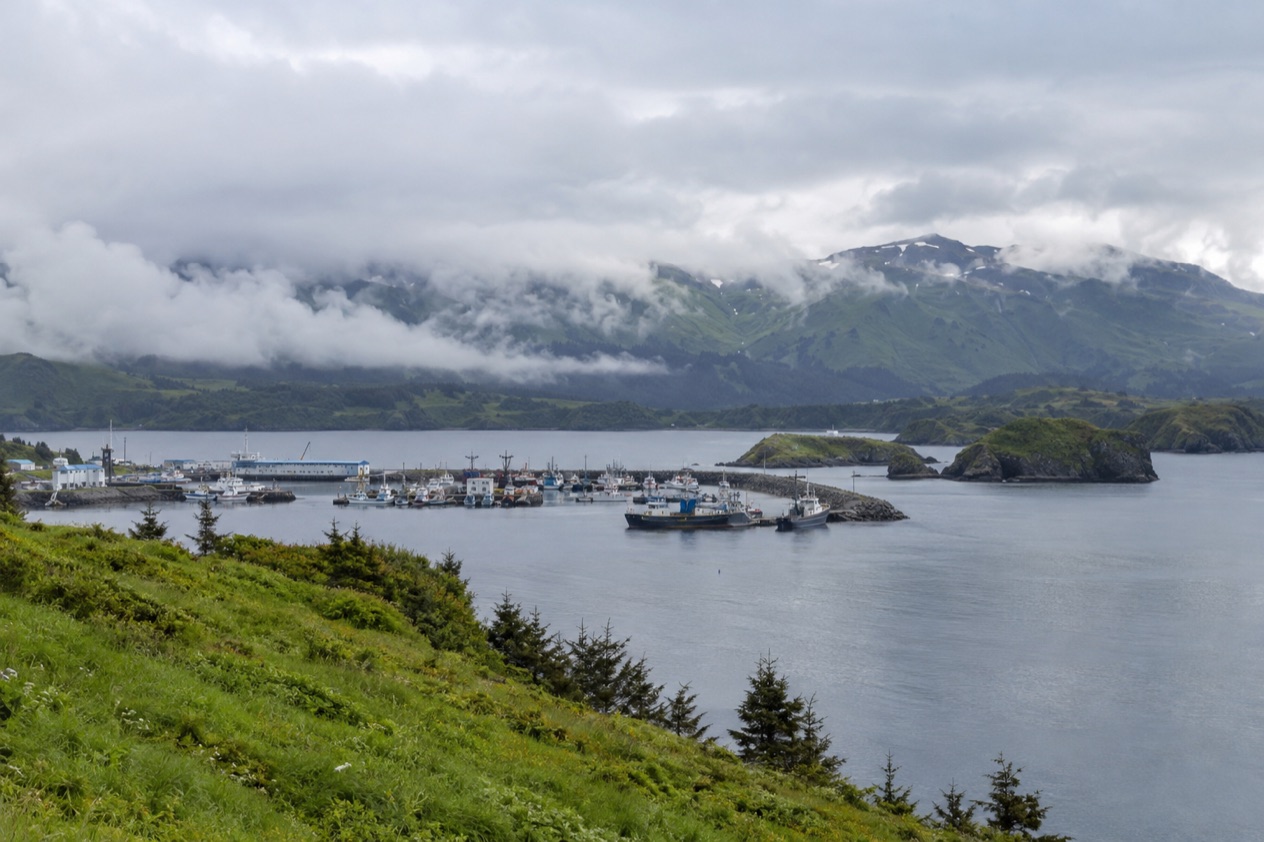
Boats come and go from St. Kodiak is a working fishing town first and a destination second, and that is much of its charm. It suits travelers who want bears, big water, Russian-era history and a plate of just-landed seafood more than souvenir shops.
What are the best things to do in Kodiak?
The best things to do in Kodiak revolve around its wildlife, its fishing harbor and its layered history, with the brown bears at the top of most lists. The island is promoted as the brown bear viewing capital of the world, and the rest of the visit fills in around that: a museum or two, a walk through old coastal defenses, and meals built on the local catch.
Kodiak is nicknamed the Emerald Isle for its lush green landscapes, and you feel it the moment you leave the airport. Think of the town as a base. Some of the best days start with a floatplane or a boat and end back at the harbor with dinner.
- Go bear viewing with a knowledgeable guide, the reason many people come to the island at all, with July, August and September named as the best months.
- Walk the Baranov Museum and the Alutiiq Museum to understand the Alutiiq people, the Russian fur trade and the American years that followed.
- Explore Fort Abercrombie State Historic Park, where old gun emplacements sit among spruce forest and rocky shoreline.
- Climb or drive up Pillar Mountain for a view over the town, the harbor and the islands scattered offshore.
- Take a floatplane or boat trip into Kodiak National Wildlife Refuge, which covers the southwestern two-thirds of the island and has no road access.
- Eat the catch: salmon, halibut, crab, scallops and rockfish, in restaurants, cafés and at the fish docks.
- Walk the harbor and Near Island waterfront to watch the fishing fleet, otters, seabirds and the working life of the town.
- Fly across to the Katmai Coast on a day trip when the weather lets the small planes go.
Sights and landmarks in Kodiak
Kodiak’s sights are scattered and modest in scale, which suits a town of fishing boats and weather. The largest community on the island is the city itself, with a population of 5,581, so everything worth seeing in town is close together and easy to connect on a slow morning. History here has three layers, Alutiiq, Russian and American, and each has left something you can walk into.
Baranov Museum and the Erskine House
The Baranov Museum occupies one of the oldest surviving buildings in Alaska, a log-and-timber warehouse from the Russian era that later served as a family home. Inside, the rooms hold the story of the fur trade, the Russian-American Company and the people who lived through the shift from one flag to another. Samovars, trade goods, old photographs and household objects give the history a domestic scale that big museums rarely manage.
Plan it as a gentle early stop, since it explains why the town looks and sounds the way it does, including the onion-domed church nearby. It suits adults and curious older children, and it pairs well with a walk along the waterfront afterward.
Alutiiq Museum and cultural center
The Alutiiq Museum is dedicated to the Alutiiq people, whose ancestors lived on the archipelago for thousands of years before Russian traders arrived. Exhibits include carved masks, tools, basketry and archaeological pieces, and the museum works with Alutiiq elders and artists on language and heritage projects. It is a living cultural center and not only a collection behind glass.
Visit it before you go out on the water or into the refuge. Seeing how people have fished, hunted and traveled these coasts for generations changes how the landscape reads afterward. Expect a thoughtful hour, not a rush.
Fort Abercrombie State Historic Park
Fort Abercrombie holds the remains of Second World War coastal defenses, with concrete bunkers and gun positions hidden among mossy spruce on a headland above the surf. Trails wander through the forest and along bluffs where the Pacific breaks against dark rock. On clear days the views of the offshore islands are wide, and on misty ones the old bunkers feel properly atmospheric.
The park also has rocky shore where visitors look into tide pools at low tide, and it is a place where you may spot sea otters, seabirds and sometimes whales offshore. Watch your footing near the cliffs and on wet roots.
Harbor, church and town streets
Holy Resurrection Orthodox Church, with its blue domes, is the most recognizable building in town and a reminder of the Russian Orthodox faith that still shapes Kodiak. St. Paul Harbor sits just below, packed with trawlers, seiners and pleasure boats. Walking the docks, you catch the smell of salt and diesel and see crews mending nets, a scene that has barely changed in character over generations.
Smaller stops include the Kodiak Wildlife Refuge visitor center, which explains the refuge and its bears with exhibits and information, and the local shops and galleries downtown selling Alutiiq-inspired and island-made art. Everything here is the kind of place you drift between rather than schedule.
Outdoor things to do in Kodiak
Outdoors in Kodiak means bears, salmon streams, forested ridges and a coast cut by bays, and most of it lies beyond the road system. Nearly two-thirds of the island lies within Kodiak National Wildlife Refuge and has no road access, so the wildest scenery is reached by small plane or boat. Around town, a handful of trails and viewpoints give a taste on days when the weather keeps you close.
Bear viewing
Kodiak brown bears are among the largest bear subspecies, with adult males weighing 600 to 1,400 pounds, and the archipelago is home to about 3,500 of them. They feed heavily on salmon, and the runs extend from May through September on most of the archipelago. That pull toward streams is why viewing trips are organized around the salmon season.
The Discover Kodiak bureau names July, August and September as the best months, ideally with a knowledgeable guide. Trips usually involve a floatplane or boat from town to remote bays and rivers, where guides lead small groups to viewing spots. Bears are wild animals and sightings are a chance, not a promise, but patient watchers often see sows with cubs, young bears at play or a big male working a stream.
Bears begin entering their dens in late October, and males emerge in early April, with sows and new cubs staying until late June. That is why the viewing season is built around the warmer months, and why a trip in the cold season looks very different.
Kodiak National Wildlife Refuge
The southwestern two-thirds of the island is part of the refuge, a landscape of rugged mountains, deep bays, alder thickets and salmon rivers. Without roads, you reach it by air taxi, charter floatplane or helicopter, or by boat, all of which operate out of Kodiak. Visitors come for the bears but also for eagles, foxes, otters and the quiet.
Even if you never leave town, the refuge visitor center is a good place to learn what lives out there and how the land is managed. For the trip itself, expect plans to flex with the weather, since low cloud and wind can delay small planes. Build a little slack into your schedule.
Pillar Mountain and coastal viewpoints
Pillar Mountain rises above town and gives an overview of the harbor, Near Island, Chiniak Bay and the islands beyond. On a clear day the whole layout makes sense, from the fish docks to the channel where boats head out. In rain and fog the view disappears, which is part of the island’s moody character.
Other outdoor stops around town include Near Island and its waterfront, where you may see sea otters, harbor seals and bald eagles, and the forested trails of Fort Abercrombie. For something quieter, a coastal walk at low tide with binoculars often turns up shorebirds, kelp and the odd marine mammal offshore.
Day trips from Kodiak
Day trips from Kodiak mean leaving the road system, because everything beyond the immediate town area is reached by air or water. All commercial transportation between the island’s communities and the outside world passes through the city of Kodiak, so this is the natural gateway for every outing. Floatplanes, air taxis and charter helicopters serve tourists and residents alike.
A floatplane day into the refuge
The classic outing is a floatplane trip from the harbor to a remote bay or river inside the refuge. You lift off over the town, cross forested ridges and settle onto still water, then walk or wade to a viewing spot with a guide. The flight is itself a highlight, with views of coastline, lakes and green mountains that cannot be seen any other way.
The best moment is in the salmon season, when bears gather at streams, and July through September is the stretch the bureau names. The trip suits people comfortable in small aircraft and in damp, uneven terrain, and it is worth packing layers and rain gear. Weather decides the schedule, so a flexible day works best.
The Katmai Coast
Kodiak is promoted as offering access to the Katmai Coast, across the water on the Alaska Peninsula. Katmai National Park and Preserve is one of the protected areas along that peninsula, which is lined by the very active volcanic Aleutian Range. Flights from Kodiak carry you across to beaches and estuaries where bears roam in search of food.
This is a trip for those who want a wilder, bigger landscape than the island itself, with volcanic peaks in the distance and tidal flats below. Operators set the plans and the timing, and sightings remain a matter of chance. It suits adventurous travelers who accept that cloud and wind may reshape the day.
By ferry to other ports
The Alaska Marine Highway connects Kodiak with Homer and Whittier, and the MV Tustumena also serves the Aleutian Islands as far west as Dutch Harbor. The MV Kennicott serves routes between Kodiak, Homer and Whittier. The Whittier crossing takes about 23 hours, so it is a voyage and not a day excursion, but it offers a slow, scenic way to arrive or leave.
Think of the ferry as part of the trip rather than a quick outing. Deck chairs, cabin windows and the passing coastline make the journey itself the attraction, and on a good day you may spot whales or seabirds from the rail.
Smaller outings on the island
Shorter excursions fill out the picture: boat trips around the bay for otters and seabirds, fishing charters for salmon or halibut, and time at coastal parks like Fort Abercrombie. Each is a way to spend a day without committing to a long flight. Local operators and the visitors bureau can point you to what is running.
What to eat in Kodiak
Eating in Kodiak means seafood, caught by boats you can see from the table. The island’s waters yield salmon, halibut, crab, scallops and rockfish, and the best meals tend to be simple: grilled, smoked, battered or baked, with little standing between you and the fish. Salmon runs from May through September feed bears and diners alike, and the town’s menus reflect that rhythm.
Salmon, halibut and crab
Salmon appears in many forms, from grilled fillets and chowders to smoked strips and jars of canned fish that locals give as gifts. Halibut shows up as fish and chips, tacos and seared steaks, with a clean, sweet flavor that needs little help. Crab, when in season, arrives in legs and in cakes, rich and briny.
Look for chalkboard specials, since the catch changes with the weather and the boats. A bowl of seafood chowder on a gray, windy afternoon is one of the island’s quiet pleasures, and it pairs well with bread and a view of the harbor.
Cafés, bakeries and local drinks
Mornings in Kodiak start with strong coffee and baked goods in small downtown cafés, where fishermen and visitors share tables. Cinnamon rolls, breakfast sandwiches and soups fill the menus. These are places to warm up after a wet walk and to hear what the boats brought in.
In the evening, pubs and taverns pour local and Alaska-brewed beer, and a brewery on the island has been part of the scene. Pair a pint with fish and chips or a burger, and you have the standard Kodiak supper. Menus lean practical, generous and unfussy.
Fish docks, smokehouses and gifts to take home
Near the harbor you may find fish processors, smokehouses and shops selling vacuum-packed salmon, jerky and jars of spread that travel well. These make useful gifts and let you taste the island at home. Fishing is the backbone of Kodiak’s economy, and the sight of boats unloading is as much part of the experience as the food.
If you join a fishing charter, ask whether the catch can be processed and shipped. Visitors go home with a box of frozen fillets from their own day on the water, which turns a trip into dinners for months.
Things to do in Kodiak at night
Nights in Kodiak are quiet and unhurried, centered on the harbor, a few pubs and the long habit of staying in after a day outdoors. This is a fishing town, and evenings reflect it, with early meals, a pint, and talk about weather, fish and bears. Do not expect clubs or late-night crowds.
Pubs, music and local company
Pubs and taverns downtown are the heart of the evening. They fill with fishermen, hospital and Coast Guard staff, and travelers, and conversations across tables are easy. Live music turns up from time to time, usually acoustic or country and folk, and there are pool tables and jukeboxes in the older rooms.
If you are lucky with timing, a community event or gathering may be on, such as a concert, a benefit or a festival evening. Ask at your lodging or at the visitors bureau. A local bar is also a good place to hear how the day’s weather affected the boats and flights.
Harbor walks and slow evenings
A walk along St. Paul Harbor after dinner is one of the simplest pleasures in town. Boat lights glint on the water, rigging clinks in the wind, and eagles and gulls settle on pilings. In the long evening light of the warmer months the sky can hold color for a while, and on clear nights the stars come out above the hills.
Quiet options include a seafood dinner by a window, a coffee at a late-opening café, or an evening at your lodge listening to rain on the roof. With so much of Kodiak’s appeal depending on weather and tide, visitors treat the evening as recovery time, plotting the next day over a meal.
What to keep in mind after dark
Kodiak is a small town, and wildlife is never far away. Bears, foxes and other animals live on the island, and they are a reason to pay attention to your surroundings when you walk outside of the lit downtown streets. Bring a flashlight or headlamp for trails and parks, and dress for wind and damp even after the sun is down.
If you are heading out on a morning flight or boat, an early night is usually the sensible choice. The days begin with the weather, and the weather rarely waits.
Things to do in Kodiak with kids
Children in Kodiak get the sort of experiences that no theme park offers: boats, eagles, otters, forests and a town where animals and fishing boats are part of daily life. The activities that tend to work best are those that mix movement, curiosity and a view of something alive. A little preparation for wet weather and wind goes a long way.
Wildlife and the harbor
The harbor is a living display. Kids can watch fishing boats unload, spot sea otters floating on their backs and count eagles perched on pilings and rooftops. A pair of binoculars turns a dock walk into a scavenger hunt, with seals, gulls, cormorants and the occasional whale in view if luck allows.
The refuge visitor center offers exhibits on bears and the island’s ecology that make the wild country feel less abstract. Seeing the size of a brown bear, which can reach 1,400 pounds, tends to fascinate children, and it sets up a conversation about why guides and distance matter.
Fort Abercrombie and tide pools
Fort Abercrombie is the family favorite for good reason. Old concrete bunkers invite exploring, trails wind through mossy forest, and the rocky shore reveals tide pools at low tide where children can look for crabs, anemones and starfish. It is also a place for picnics and for running off energy.
Keep children close near cliffs and on slick rocks, and watch the surf. Rubber boots or sturdy shoes help, and a change of dry clothes in a bag is handy. The wildness is part of the fun, but it asks for attention.
Museums and story-driven stops
The Baranov Museum and the Alutiiq Museum bring history alive through objects that kids can relate to, such as tools, masks, baskets and household items. Older children may enjoy the stories of fur traders, the Orthodox church and the people who built the town. Short visits keep interest high, and a snack afterward helps.
With kids, keep distances and weather in mind. Travel on the island often means small planes and boats, and plans can shift. Pack layers, rain gear, snacks and an activity or two for waiting, and treat a delay as part of the adventure.
Good to know before you go
Kodiak Island lies in the Gulf of Alaska, 250 miles south of Anchorage, and Alaska Airlines offers daily scheduled flights between the two. Kodiak Benny Benson State Airport is five miles southwest of downtown. The Alaska Marine Highway ferry also serves Kodiak, and the Discover Kodiak Visitors Bureau offers a downloadable visitors guide for planning.
Beyond town, nearly two-thirds of the island has no road access, so air taxis, charter floatplanes, helicopters and boats are how people reach the wild places. Bear viewing is tied to the salmon season, which runs from May through September, and to the months the bureau names as best. As a bear-denning season begins in late October, outdoor options shift accordingly.
Sources
- Discover Kodiak Visitors Bureau (https://www.kodiak.org/), checked October 11, 2026
- Wikivoyage, Kodiak (https://en.wikivoyage.org/wiki/Kodiak), checked October 11, 2026
- Wikipedia, Kodiak, Alaska (https://en.wikipedia.org/wiki/Kodiak,_Alaska), checked October 11, 2026
- Wikipedia, Kodiak bear (https://en.wikipedia.org/wiki/Kodiak_bear), checked October 11, 2026
- Wikipedia, Kodiak Island (https://en.wikipedia.org/wiki/Kodiak_Island), checked October 11, 2026
- Wikipedia, Brown bear (https://en.wikipedia.org/wiki/Brown_bear), checked October 11, 2026
- Wikipedia, Alaska Peninsula (https://en.wikipedia.org/wiki/Alaska_Peninsula), checked October 11, 2026
- Wikivoyage, Alaska Peninsula (https://en.wikivoyage.org/wiki/Alaska_Peninsula), checked October 11, 2026