
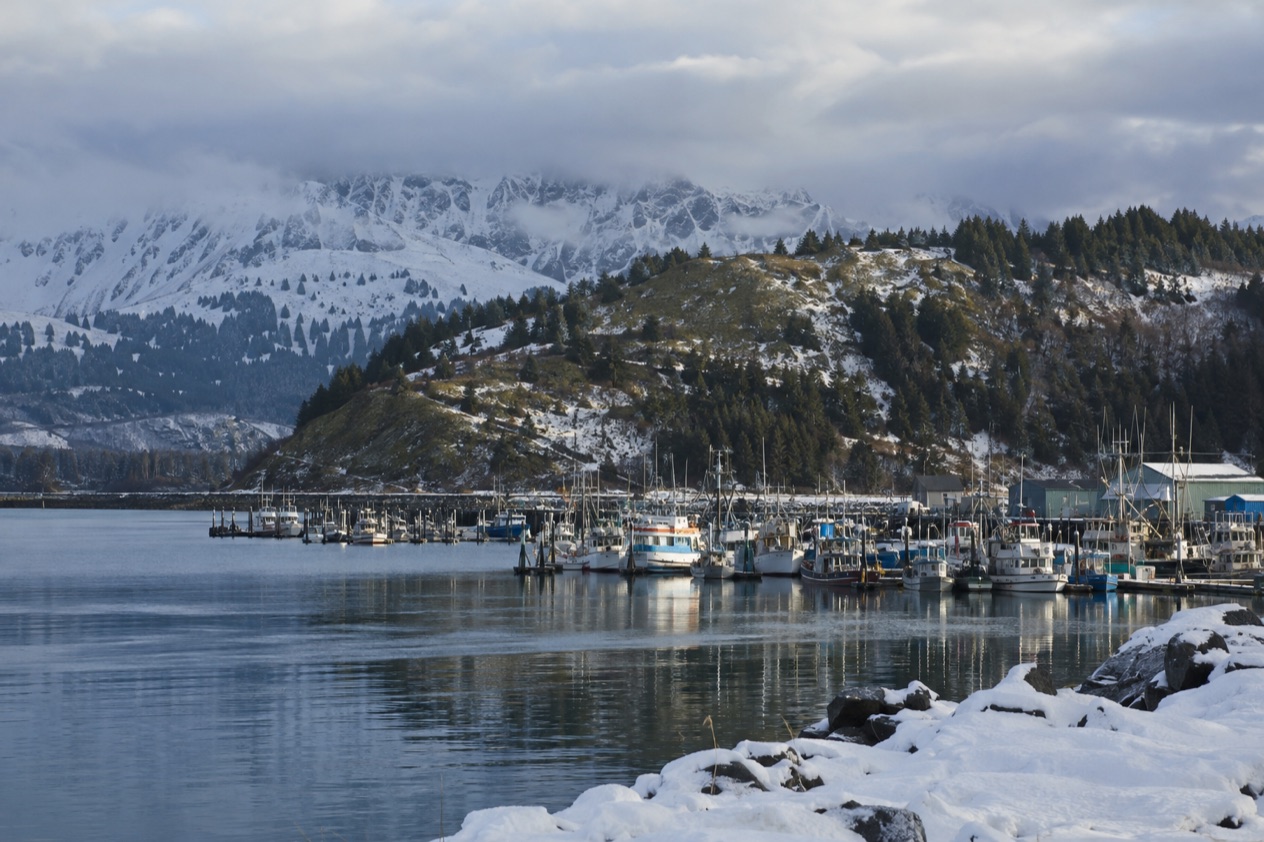
In February, Kodiak’s harbor sits low and gray under the mountains, with fishing boats rocking at their moorings and gulls wheeling over the docks. Rain and wet snow drift in off the Gulf of Alaska, the spruce on the hillsides stays dark green, and the town goes about its working life without a crowd of visitors. It is a month for people who want to see Kodiak Island as its residents know it, quiet, weathered and a little bit stormy.
What is the weather like in Kodiak in February?
February in Kodiak is cold but not frozen, with afternoons hovering just above freezing, nights just below it, and a mix of rain, wet snow and gray skies that rarely settles into one pattern for long.
| Month | Average high (°F) | Average low (°F) | Precipitation (in) | Days with precipitation | Daylight on the 15th |
|---|---|---|---|---|---|
| January | 36.1 | 26.2 | 8.35 | 13.3 | 7 hours 12 minutes |
| February | 37.5 | 27.2 | 6.31 | 11.4 | 9 hours 23 minutes |
| March | 38.8 | 27.6 | 4.82 | 9.4 | 11 hours 42 minutes |
Mornings begin around the freezing mark, so puddles skin over and the docks and steps can be slick before the day warms a little. Afternoons climb into the upper 30s, which is raw rather than bitter, especially with damp air and wind coming off the water.
Precipitation falls on a bit more than a third of the days, sometimes as rain, sometimes as wet snow that sticks on the hills and melts in town. The airport records about 14 inches of snow over the month, but it tends to come and go rather than build into a deep, lasting cover.
Daylight is the quiet gift of February. The days have opened up noticeably since midwinter, so there is a real stretch of light for a walk, a museum visit and a late lunch, with dusk arriving in the afternoon.
Waterproof layers matter more than heavy parkas here, because the damp does more than the cold.
What to do in Kodiak in February
February in Kodiak is not the month for big-game viewing or long summer outings. Kodiak is nicknamed the Emerald Isle for its lush green landscapes, and in winter that green is quieter, carried mainly by the spruce and the mossy slopes between patches of snow.
Bears are not the draw this month. The local visitor bureau places the best bear viewing in July, August and September, so February visitors come for something else: the feel of an island town far from the usual routes, where the fishing fleet is the center of everything. If a particular festival or event interests you, it is worth confirming that it falls in February before building a trip around it.
The harbor and the waterfront
Fishing boats of every size crowd the docks, gear is stacked on the piers, and the smell of diesel, salt and bait hangs over the whole scene.
On a gray winter day the activity is steady, with crews mending nets, hauling crab pots and tying down boats against the next blow. Bald eagles often perch on pilings and rooftops nearby, and sea otters or sea lions may surface among the boats, though none of that is guaranteed.
The walk along the waterfront is best on a dry stretch between squalls, with a hat and good boots for the slick planks. Stop in a harbor-side café or diner afterward, where the talk is of weather, catch quotas and the next opening. Seafood is the obvious order, whether halibut, salmon or crab, since the fish on your plate may have come off one of the boats you just watched.
Museums and the Russian Orthodox past
Kodiak was an early center of Russian settlement in Alaska, and that history still shows. The Holy Resurrection Orthodox Cathedral, with its blue onion domes, is one of the town’s most recognizable buildings, and the church community remains part of local life. Nearby, the Baranof Museum, in one of the oldest surviving Russian-era buildings in the state, tells the story of the fur trade and the people who lived through it.
The Alutiiq Museum is the place to learn about the Alutiiq people, whose home this island has been for thousands of years. Exhibits of tools, masks and baskets, along with language and cultural programs, give context that makes the rest of the island make sense. Museums are what February does best, a warm, quiet way to spend a wet afternoon while rain or sleet blows past the windows.
Fort Abercrombie and the coast in winter
Fort Abercrombie State Historic Park is a good reminder that Kodiak sits on a stormy edge of the continent. Old Second World War defenses stand among tall spruce, with trails leading to cliffs where the Gulf of Alaska breaks against the rocks. In February the surf can be heavy and the spray dramatic on the right day, and the wet forest has a quiet, mossy feel that summer crowds rarely see.
Dress for wind, wet ground and early dusk, and treat the cliff edges with respect in slippery weather. Even a short stay at the water’s edge gives you the Kodiak that fishermen and storm-watchers know, loud, gray and alive. Afterward, the warmth of a coffee shop or a seafood lunch in town feels well earned.
Beyond the town, Kodiak’s wild country is not something to plan around in February. The best bear viewing belongs to other months, and air or boat access to remote parts of the island and the Katmai coast is a summer subject. February is better spent close to town, close to the harbor and close to a warm room.
A two-day itinerary for Kodiak in February
Day 1 starts at the harbor, when the boats are busy and the light is soft and gray. Walk the docks in the morning with a hot drink, watching crews load gear and eagles settle on the pilings. By midday, move to the Baranof Museum and the Orthodox cathedral, which sit close enough to town to fit together in a single, unhurried visit.
Take lunch at a harbor café, ideally something with local fish. In the afternoon, the Alutiiq Museum gives a deeper look at the island’s first people, and it is a good use of the hours before dusk arrives. Dinner is a seafood plate at a place in town, and the evening is for lingering over coffee or a drink while the rain taps the windows.
Day 2 is for the coast, if the weather cooperates. Head to Fort Abercrombie State Historic Park in the morning, when the day’s light is best, and walk among the spruce and the old military works toward the cliffs. The surf and spray are the main show, and a damp, windy day gives the wildest version.
Return to town for a long lunch, then use the afternoon for browsing local shops, a bakery stop and a last stroll along the waterfront. If the weather turns harsh, swap the coast for a second look at a museum, a café afternoon with a book, and an early dinner while the wind rises outside. Evenings in Kodiak are made for being indoors.
Is Kodiak busy in February?
No, February is a quiet month in Kodiak, far from the season when visitors come for bears. The local visitor bureau names July, August and September as the best time to see a Kodiak bear, which puts February well outside the main visiting season.
What that means on the ground is a town that belongs to its residents. Harbor workers, fishermen and families fill the cafés and shops, and a visitor is a small and welcome presence rather than part of a crowd. The pace is slow, the museums and waterfront are yours to wander, and conversations with locals come easily.
The island is reached by air from Anchorage, and there is no road to the mainland, so the town’s quiet is partly a product of its isolation. Winter weather can shape plans more than any crowd does, and flexibility is the real currency of a February visit.
What to pack for Kodiak in February
Pack for damp cold, wind and short days, with layers you can add and remove through a day that moves between the harbor, a museum and a trail.
- A waterproof jacket and rain pants, because precipitation falls on many days and wet snow soaks through ordinary coats.
- Insulated, waterproof boots with good tread for slick docks, wet trails and icy steps.
- Warm base layers and a fleece, since mornings start near freezing and the damp wind adds a chill.
- A hat, gloves and a scarf for the harbor and the cliffs.
- A small daypack to carry shed layers between museums, cafés and the waterfront.
- A headlamp or small flashlight for walks as dusk arrives in the afternoon.
Good to know before you go
Kodiak Island lies in the Gulf of Alaska, 250 miles south of Anchorage, and Alaska Airlines offers daily scheduled flights between the two. The airport is five miles southwest of downtown Kodiak. In February, flexibility matters, since winter weather can reshape a day, and the short daylight hours mean outdoor plans fit best in the middle of the day, with museums and cafés ready for the rest.
There are no roads linking the settlements of southwestern Alaska, so travel beyond the road system on the island is by air or boat. That is one more reason to keep a February visit centered on the town itself.
Kodiak in February vs January and March
Moving the trip earlier, to January, means a wetter and darker month, with the shortest days of the winter and more precipitation falling on more days.
Moving later, to March, brings lighter days, a little more warmth and noticeably less precipitation. The light stretches into the evening, the trails and waterfront are easier to enjoy, and the winter mood begins to give way to the busy rhythm of the fishing year. Bear viewing is still a summer subject, so March does not change that part of the picture.
February sits comfortably in the middle. Choose January if you want the deepest, darkest winter and don’t mind a short day, and choose March if daylight and drier weather matter most. February suits travelers who want a balance of quiet, usable daylight and a still-wintry feel.
Is February a good time to visit Kodiak?
Yes, for travelers who like quiet places, working harbors and moody weather, and no for anyone who has come for bears or long summer days outdoors. February rewards patience and a willingness to let the weather set the pace.
You will love it if museums, local history and fresh seafood appeal to you, and if a gray, windy day at the waterfront sounds like an adventure rather than a letdown. Photographers who enjoy dramatic skies and surf will find plenty to work with, and so will anyone who prefers a town without a crowd.
Choose another month if you want bear viewing, which the visitor bureau places in July, August and September, or if you need dependable weather for outdoor plans. On arrival, start at the harbor, where the working life of the island is easiest to see, then fold the museums into the wetter hours. February in Kodiak is a month of fishing boats, Orthodox domes and spruce dark against a stormy gulf.
Sources
- NOAA NCEI, U.S. Climate Normals 1991-2020, monthly (https://www.ncei.noaa.gov/access/services/data/v1?dataset=normals-monthly-1991-2020&stations=USW00025501), station Kodiak Ap, elevation 80 feet, checked October 11, 2026
- Computed from the date and the latitude of the place (sunrise equation, solar elevation -0.833 degrees), October 11, 2026
- Wikipedia, Brown bear (https://en.wikipedia.org/wiki/Brown_bear), checked October 11, 2026
- Wikipedia, Alaska Peninsula (https://en.wikipedia.org/wiki/Alaska_Peninsula), checked October 11, 2026
- Wikivoyage, Alaska Peninsula (https://en.wikivoyage.org/wiki/Alaska_Peninsula), checked October 11, 2026
- Discover Kodiak Visitors Bureau (https://www.kodiak.org/), checked October 11, 2026
- Wikivoyage, Kodiak (https://en.wikivoyage.org/wiki/Kodiak), checked October 11, 2026
- Wikipedia, Climate of Alaska (https://en.wikipedia.org/wiki/Climate_of_Alaska), checked October 11, 2026
To plan your stay
- Things to Do in Kodiak: Brown Bears, Fort Abercrombie, Fresh Seafood and Day Trips
- Kodiak from Anchorage: Flights, Ferry Routes and What to Do on Arrival
- Kodiak Brown Bears: Salmon Season, Frazer River Viewing and Getting to Kodiak Island
- Best Time to Visit Kodiak: Bear Season, Weather by Month and Seasonal Things to Do