
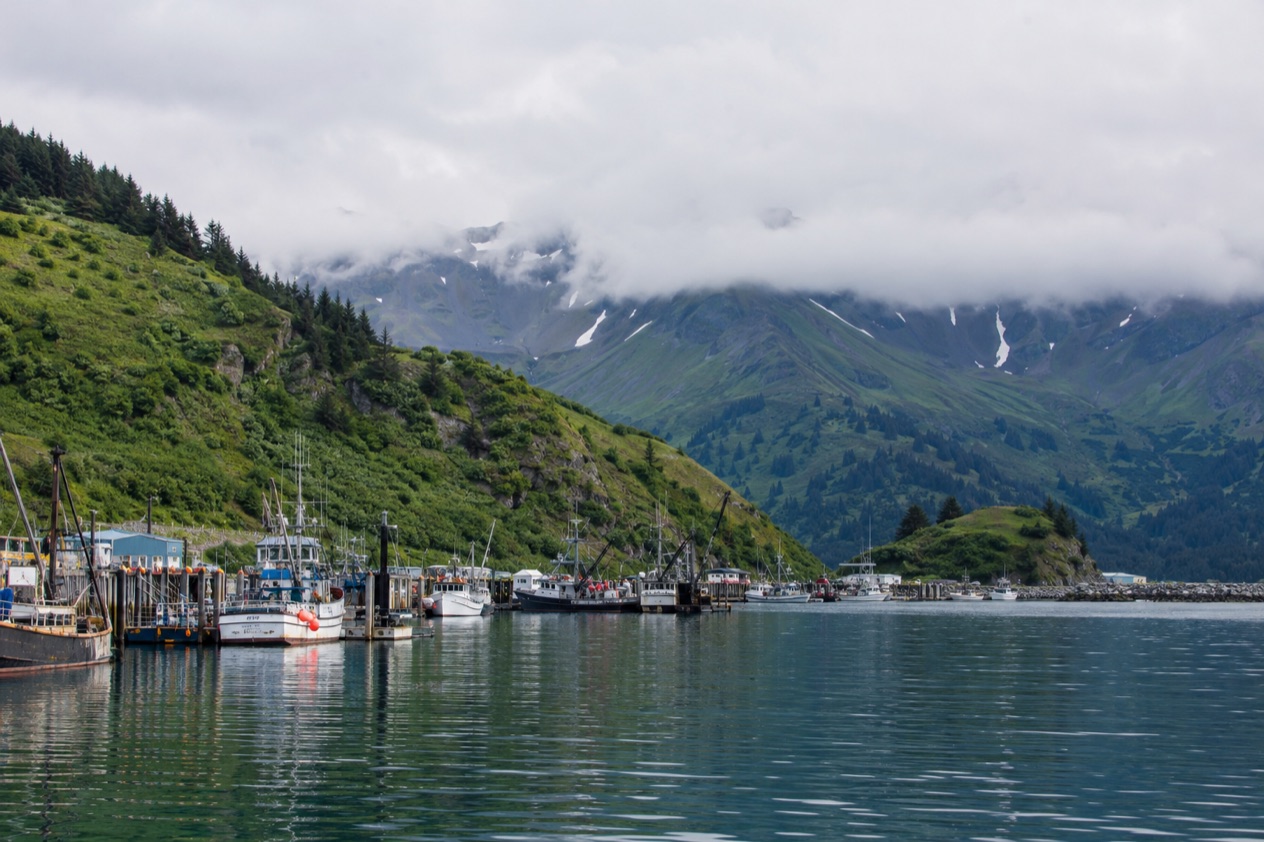
On a July evening in Kodiak, the harbor fills with fishing boats, the light lingers long over the green hills, and talk at the dock turns to salmon and bears. Winter brings a different island, with snow on the slopes and a town that goes about its work in the dark. Kodiak Island, nicknamed the Emerald Isle, is best for travelers who come for brown bears and long summer days, though each season has its own character.
When is the best time to visit Kodiak?
July, August and September are the best months for most travelers, especially anyone who wants to see Kodiak brown bears, and the local tourism bureau names exactly those three months for bear viewing, ideally with a knowledgeable guide. Summer also gives the mildest air of the year and the longest days, so you can fit a great deal into one outing.
For sightseeing and wildlife, plan around the bears. They feed heavily on spawning salmon along parts of the Alaska coast, which is part of why late summer draws so many bear watchers.
Much of the island’s southwestern side lies within Kodiak National Wildlife Refuge, a reminder that this is wild country first and a town second. Kodiak also serves as the gateway to the Katmai Coast, so a trip here can be combined with a bear-viewing outing farther afield.
The quiet seasons suit a different traveler. Late spring brings long days and green hills returning, and the bears are up and about, with males leaving their dens in early April and mothers with new cubs staying put until late June. Fall slows the island down, and winter is for people who like dark afternoons, snow and a working fishing town with few visitors.
Families will find summer the most comfortable season, with the warmest afternoons and daylight that stretches well into the evening. Whichever month you choose, remember that Kodiak sits in the Gulf of Alaska and gets rain in every season, so pack for damp weather even in July.
Kodiak weather by month
Kodiak is a maritime island, so temperatures stay in a narrow band, and the real change through the year is in the daylight and the rain.
| Month | Average high (°F) | Average low (°F) | Precipitation (in) | Days with precipitation | Daylight on the 15th |
|---|---|---|---|---|---|
| January | 36.1 | 26.2 | 8.35 | 13.3 | 7 h 12 min |
| February | 37.5 | 27.2 | 6.31 | 11.4 | 9 h 23 min |
| March | 38.8 | 27.6 | 4.82 | 9.4 | 11 h 42 min |
| April | 44.7 | 33.6 | 6.14 | 12.7 | 14 h 16 min |
| May | 51.7 | 39.9 | 5.85 | 10.4 | 16 h 35 min |
| June | 57.0 | 45.7 | 5.17 | 10.0 | 18 h 03 min |
| July | 61.8 | 50.5 | 4.51 | 8.7 | 17 h 30 min |
| August | 62.8 | 50.3 | 4.90 | 8.6 | 15 h 25 min |
| September | 57.1 | 44.2 | 7.55 | 11.5 | 12 h 55 min |
| October | 48.3 | 36.0 | 8.85 | 11.3 | 10 h 27 min |
| November | 41.2 | 30.2 | 7.06 | 11.4 | 8 h 02 min |
| December | 37.3 | 26.5 | 8.81 | 13.5 | 6 h 35 min |
Summer afternoons stay cool, never hot, so a fleece and a rain jacket are the everyday uniform from June through August. Those months also have the fewest days with precipitation, though the island still sees plenty of gray and drizzle. The long evenings in June and July give you time for a late walk or a late dinner after a day out.
Winter is not dry. December and January have the most days with precipitation, and it falls as a mix of rain and snow, with a good deal of snow in the deepest months. Days are short, so errands and outings squeeze into the middle of the day. September and October are the wettest part of the shoulder season, so waterproof layers matter more than at any other time outside winter.
What is there to do in Kodiak in each season?
Summer: bears, boats and long evenings
Summer is the season for the island’s main draw, the Kodiak brown bear. July, August and September are the months the local bureau names for bear viewing, and a guide who knows the country is the way the bureau suggests going about it.
The archipelago is home to a large bear population, and these are among the largest bears in the world, so seeing one is something you remember. Sightings are a chance, never a promise.
Between bear outings, the town of Kodiak itself rewards a slow walk around the harbor, where the fishing fleet is the center of local life. With daylight running from morning deep into the evening in June and July, you can stretch a day well past dinner. The wildlife refuge covers much of the island’s southwestern side, which gives a sense of how much of Kodiak is untouched by roads or buildings.
Fall: quieter days and wetter weather
September still falls in the bear-viewing window, so the start of fall can be as rewarding as August, with cooler air and shorter days. By October the island is damper and the light fades earlier. Bears begin entering their dens in late October, so the chance of seeing one drops as the month goes on.
Fall suits travelers who like moody weather, empty paths and a town that returns to its own rhythm once the summer season ends. Bring good rain gear, because October is the wettest month on the table.
Winter and spring: snow, then the thaw
Winter brings snow, the shortest days of the year and the fewest visitors. It is a time to experience Kodiak as a working fishing community rather than a destination, and to enjoy the cozy side of a small island town. Do not expect summer-style outings, since the bears are denned and the days are brief.
Spring arrives gradually. Snowfall fades by May, days stretch quickly, and in early April the male bears begin to leave their dens, while mothers with new cubs stay put until late June. The hills green up as the season turns, which is part of how the island earned its Emerald Isle nickname.
When is Kodiak cheapest and least crowded?
The busiest stretch is the bear season of July, August and September, when the island’s main attraction is most rewarding. That is when rooms and guided outings are in highest demand, because most visitors are coming for the same thing.
The quiet months are late fall, winter and early spring. From November through March the island is calm, the days are short, and the town feels like itself. If you want space and a slower pace and do not mind cold, wet or snowy weather, those months deliver. Rooms are easier to find then, and you will have the harbor and the town largely to yourself.
May and June sit in between. The days are already very long, the air is mild, and the summer rush has not yet arrived. It is a pleasing time for travelers who care more about light and landscape than about guaranteed bear sightings.
Getting to Kodiak shapes the trip in every season. Alaska Airlines flies daily from Anchorage, and the Alaska Marine Highway ferries Tustumena and Kennicott serve the island, so you can arrive by air or by water.
Which months should you avoid in Kodiak?
No month is off limits, but December and January are the hardest, with the shortest days, the most days of precipitation and plenty of snow. If you are coming for bears, avoid the winter months entirely, since bears begin denning in late October.
The long-daylight months are May through August, with June the longest at just over 18 hours on the 15th. Those are the months for outdoor plans and for stretching a day. The bear-viewing months of July through September are the focus for wildlife travelers.
October and November are damp and darkening, and much of the island’s visitor energy has faded by then. They suit people who enjoy a quiet, rainy island, not people with a long list of outings. Between December and February, the days are short and the weather is at its roughest, so keep expectations modest and plan around the middle of the day.
The island has no road link to other Alaska communities, and all commercial travel in and out passes through the city of Kodiak by ferry or airline. Weather can disrupt any trip in any season, so leave some slack in your schedule.
Festivals and events in Kodiak through the year
Summer and the bear season
The great seasonal event on Kodiak is not a festival but a natural one: the arrival of salmon and the bears that follow them. July, August and September are the months named for bear viewing, and in parts of coastal Alaska brown bears feed mainly on spawning salmon. Fishing is the backbone of the island’s economy, so the harbor is busy with boats during these months.
Summer is also when Kodiak feels most like a community out of doors. Long evenings let locals and visitors spend time at the waterfront, and the fishing fleet sets the pace of town life. The fixed holiday of July 4 is celebrated in Alaska towns generally, with parades, music and gatherings, and a small island town like Kodiak is a pleasant place to join one.
Fall and the denning season
As fall turns toward winter, the main natural event is the bears heading for their dens, which begins in late October. It marks the close of the viewing season and the start of a quieter time on the island.
Halloween on October 31 and Thanksgiving in November are the fixed holidays that bring the community together as the days shorten. In a town where the days grow dark early, these gatherings carry extra weight.
Winter and spring
Christmas on December 25 and New Year’s Day are the fixed celebrations of the dark months, and they are a good time to see the island as locals know it, with lights glowing against the snow. It is a modest, community-centered season rather than a tourist one.
Spring brings its own natural milestone, as male bears leave their dens in early April and mothers with new cubs stay in until late June. These dates mark the island waking up after winter, and they are a quiet reminder of how closely life on Kodiak follows the rhythm of its wildlife.
Sources
- NOAA NCEI, U.S. Climate Normals 1991-2020, monthly (https://www.ncei.noaa.gov/access/services/data/v1?dataset=normals-monthly-1991-2020&stations=USW00025501), station Kodiak Ap, elevation 80 feet, checked October 11, 2026
- Computed from the date and the latitude of the place (sunrise equation, solar elevation -0.833 degrees), October 11, 2026
- Discover Kodiak Visitors Bureau (https://www.kodiak.org/), checked October 11, 2026
- Wikivoyage, Kodiak (https://en.wikivoyage.org/wiki/Kodiak), checked October 11, 2026
- Wikipedia, Kodiak, Alaska (https://en.wikipedia.org/wiki/Kodiak,_Alaska), checked October 11, 2026
- Wikipedia, Kodiak bear (https://en.wikipedia.org/wiki/Kodiak_bear), checked October 11, 2026
- Wikipedia, Kodiak Island (https://en.wikipedia.org/wiki/Kodiak_Island), checked October 11, 2026
- Wikipedia, Brown bear (https://en.wikipedia.org/wiki/Brown_bear), checked October 11, 2026
- Wikipedia, Alaska Peninsula (https://en.wikipedia.org/wiki/Alaska_Peninsula), checked October 11, 2026
- Wikivoyage, Alaska Peninsula (https://en.wikivoyage.org/wiki/Alaska_Peninsula), checked October 11, 2026
- Wikipedia, Climate of Alaska (https://en.wikipedia.org/wiki/Climate_of_Alaska), checked October 11, 2026
To plan your stay
- Things to Do in Kodiak: Brown Bears, Fort Abercrombie, Fresh Seafood and Day Trips
- Kodiak from Anchorage: Flights, Ferry Routes and What to Do on Arrival
- Kodiak Brown Bears: Salmon Season, Frazer River Viewing and Getting to Kodiak Island
- Kodiak in January: Winter Weather, Bears in Their Dens and a Two-Day Plan