
The island narrows to a thin strip of sand and then simply stops, and where the ground ends there is a channel of bright, moving water with people sitting along its edges. Music drifts from the buildings nearby, swimmers drift in the current, and travelers who met on the water taxi this morning are comparing notes with strangers. The Split is the social heart of Caye Caulker, a place to arrive, sit down and stay longer than you planned.
Is visiting the Split on Caye Caulker worth it?
Yes, if you want a place that is more about company and atmosphere than about a sight to tick off, and it suits backpackers, couples and friends traveling together who like to swim, talk and watch the island go by. It is a thin canal that divides the northern and southern portions of the island, and it has become a favorite place to hang out, swim and meet fellow travelers.
What sets it apart from other spots around the cayes is that it exists because of a storm and that it is a gathering place rather than a monument or a reserve. You are not here for a guided walk or a fenced-off exhibit.
You are here to sit at the water’s edge, join the conversation and let the afternoon go slowly, with a village behind you and the reef on the other side of the island. If you are looking for a quiet beach to yourself, this is not it. If you want to feel the pulse of Caye Caulker, it is the best single place to take it.
It also tells you something about the island. Caye Caulker is a flat, low-lying strip of sand and mangrove, and the Split is the plainest evidence of how much the sea can rearrange it. A visit takes in a little history, a swim in the channel and an easy way of meeting people, all in one stop.
What to see at the Split on Caye Caulker
The channel itself
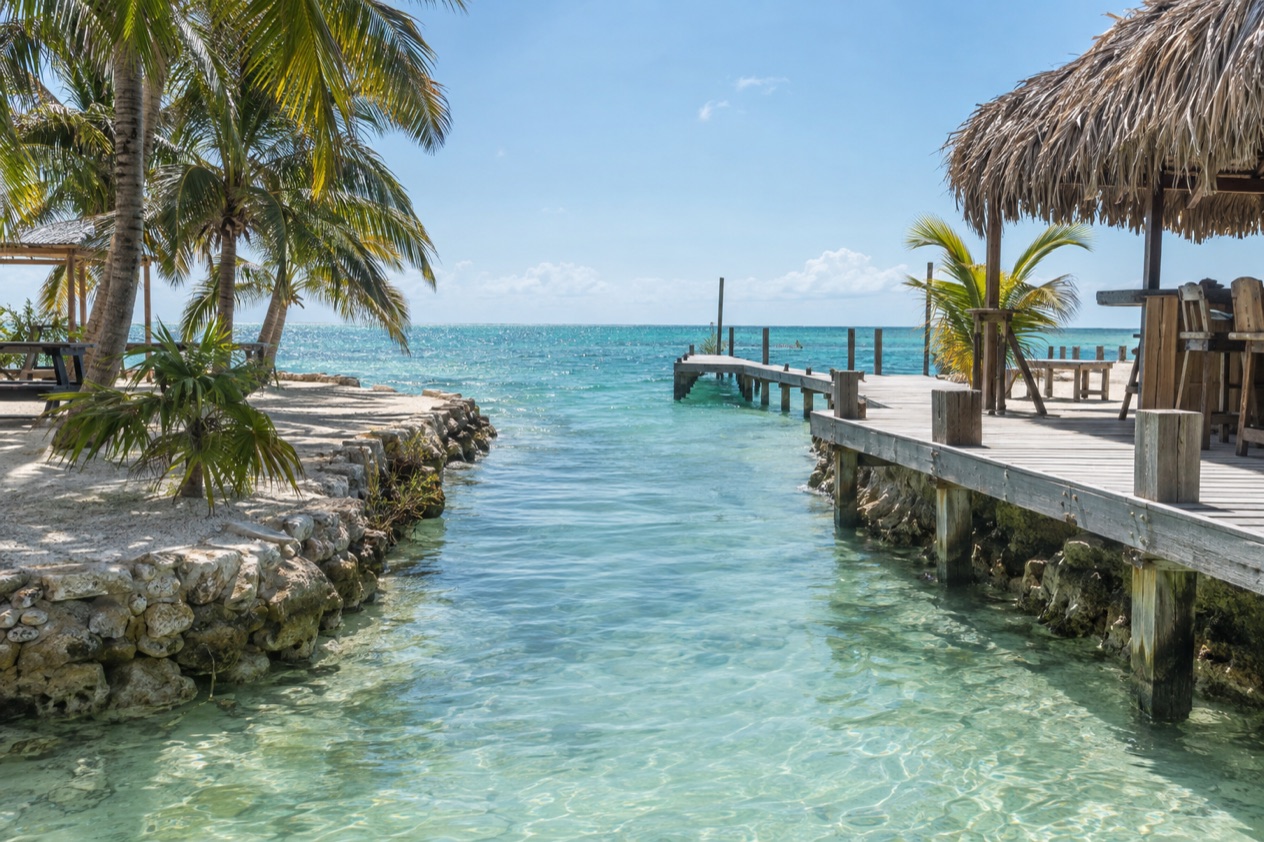
The Split is a narrow canal cutting straight across the island, and the first thing you notice is how the water moves between the two sides. Its edges are lined with chairs, docks and railings where people perch with a drink, and the scene changes with every hour as swimmers slip in and out. Look at the color of the water, a pale and clear green where it is shallow, and at how close the two halves of the island sit on either bank.
Swimming is part of the appeal, since the Split has become a favorite place to hang out, swim and meet fellow travelers. Standing on one side, you can see the northern part of the island, quieter and more wooded, facing the busier southern part where the village lives.
The story of Hurricane Hattie
The canal was created when Hurricane Hattie split the island in two in 1961. Before that storm, Caye Caulker was a single unbroken strip, and the people who lived here walked from end to end without crossing water. The hurricane pushed the sea through its narrowest point and left a channel that never closed.
The island is only 8 feet at its highest point, which explains how a storm surge can cover all of it, and it happened again with Hurricane Keith. Standing at the Split, with the water running between your feet and the horizon, the low profile of the land is easy to read. The settlement is older than the channel, since the area of the village was granted to Luciano Reyes by Queen Victoria around 1870, and lots were sold to six or seven families, most of which still have descendants on the island.
The village on the south side
Caye Caulker Village is where the island lives, with hotels, restaurants and small shops that make the place a popular stop for backpackers and other tourists. After the Split, the sand streets of the village are a natural next walk, with the sound of cooking and the smell of grilled fish coming from open doorways.
The shallow lagoon in front of the village meets the Belize Barrier Reef to the east, and the reef there is a dry reef exposed at the surface. You may notice how the whole island is oriented around that water, with the reef just offshore and the bay of La Ensenada on the western side, where one theory says boats were once caulked and gave the island its name.
The northern forest and mangroves
Across the channel, the northern end of the island changes character. The Forest Reserve covers the northern 40 acres’ worth of land, as the figure is usually given in hectares and acres, and it is mostly dense mangrove forest. Seen from the water at the Split, it is a green wall of roots and leaves that makes a strong contrast with the village side.
Hours, tickets and rules
The Split is a public stretch of waterfront in the middle of a village, not a gated site with a ticket window, so you plan around the rhythm of the island rather than a posted schedule. You walk up to the channel, choose a spot at its edge and decide how long to stay.
What the place is known for is simple. The surroundings are a small island community, so treat it as someone’s neighborhood as well as a place to relax, and leave the sand and the docks as you found them.
The one practical rule that matters for the area is about what you do on the water further out. Manatee tours to Swallow Caye Wildlife Sanctuary, a separate outing from the Split, do not allow swimming with the manatees, and some days may be more difficult to see them. That is a good reminder that the rules differ from one stop to another, and that what is welcome at the Split, such as a swim in the channel, does not carry over to every spot around the island.
If you plan to stay overnight, one small detail from the lodging side is that Iguana Reef Inn on Caye Caulker does not allow children under 10 years old. Families traveling with younger children will want to keep that in mind when choosing where to sleep.
How to get to the Split on Caye Caulker
You reach Caye Caulker by high-speed water taxi or by small plane to Caye Caulker Airport, and the Split is on the island itself. The island lies about 20 miles north-northeast of Belize City, which is the mainland base for the boat and for the flights.
The water taxi is the way many travelers picture the arrival, crossing open water toward a low line of palms and rooftops. The small plane, by contrast, gives a view of the reef and the cayes from above, with the island appearing as a thin pale strip against the sea. Either way, you land on an island about 5 miles long, so the Split and the village are close to wherever you arrive.
Once on Caye Caulker, the Split is part of the island’s own geography, the canal that separates the northern and southern portions. You do not need to cross open water to find it, because it is the island’s defining feature and sits within the village area where most of the hotels, restaurants and shops are found. Ask for it by name and anyone you meet will point the way.
Because the whole island is small, it is a place where you adapt your plans to the local pace. The reef lies about a mile to the east, and the sheltered bay of La Ensenada is on the west side, so the Split sits between two very different edges of the same narrow strip of sand.
When to visit the Split on Caye Caulker
The Split is a place for any hour you are on the island, and the best time is whenever you feel like sitting by the water with other travelers. Early on, you can watch the channel before the crowd gathers. Later in the day, the atmosphere turns more social as people arrive from their hotels, the boats and the village streets.
The Atlantic hurricane season runs from June 1 to November 30, and the Split exists because of a hurricane. A visit between December and May falls outside the official hurricane season, while the months within it are the ones in which storms can form. The island is only 8 feet above the sea at its highest point, so a strong surge can cover the whole of it, as happened with Hurricane Hattie and Hurricane Keith.
That does not mean the Split is unreachable during the season, only that the weather forecast deserves a look before you travel and a flexible plan when you arrive. The place has no festival tied to the calendar in our notes, so the best month is the one that suits your own trip, your time on the reef and the kind of company you want on the water.
If you want the quieter side of the island, pair the Split with a walk away from the central waterfront. If you want the social side, stay where the music and conversation are, because that is what the place is for. Neither choice depends on a particular month so much as on how you like to spend your hours.
Tips for your visit
Bring a swimsuit and a towel, since swimming is one of the reasons the place has its reputation. A small bag for your things and a hat for the sun make the afternoon more comfortable, and a pair of sandals suits the sand streets of the village.
Plan the Split as a stop within a longer day on the island rather than as a full excursion on its own. It combines naturally with a walk through the village, a meal at one of the restaurants and a look at the lagoon and reef in front of Caye Caulker Village. The reef there is a dry reef exposed at the surface, and the shallow lagoon between 6 inches and 14 feet deep gives the waters around the island their pale green color.
The area around Caye Caulker is also popular with windsurfers, so you may see sails out on the water on some days. For a different pace, a manatee tour to Swallow Caye Wildlife Sanctuary is an outing from the island, though swimming with the manatees is not allowed and some days may be more difficult to see them.
Families will find a village built around hotels and small restaurants, with more than 50 hotels on the island to choose from. Check each property’s rules for children before booking, since Iguana Reef Inn does not allow children under 10 years old. The Split itself sits at the edge of the village, so the walk from most places to stay is within the village area rather than a trip across the island.
Good to know before you go
The U.S. State Department rates Belize Level 2, “Exercise increased caution”, because of crime, and says the south side of Belize City has historically had the highest concentration of violent crime.
Caye Caulker is a small island community of low buildings and sand streets, so a relaxed pace and respect for the neighborhood fit the setting. The island sits only a few feet above the sea, and the Atlantic hurricane season runs from June 1 to November 30, which is worth remembering when you plan the dates of your stay. Beyond that, the Split asks very little of you: arrive, find a place at the water’s edge and enjoy the company.
Sources
- Wikipedia, Caye Caulker (https://en.wikipedia.org/wiki/Caye_Caulker), checked October 11, 2026
- Wikivoyage, Caye Caulker (https://en.wikivoyage.org/wiki/Caye_Caulker), checked October 11, 2026
- Caye Caulker Village Council, Traffic (https://www.cayecaulkervillagecouncil.org/traffic), checked October 11, 2026
- San Pedro Belize Express Water Taxi, Caye Caulker (https://belizewatertaxi.com/destinations/caye-caulker/), checked October 11, 2026
- Tropic Air, Caye Caulker (https://www.tropicair.com/caye-caulker-cuk/), checked October 11, 2026
- Wikipedia, Tourism in Belize (https://en.wikipedia.org/wiki/Tourism_in_Belize), checked October 11, 2026
- U.S. Department of State, Belize Travel Advisory, Level 2, March 11, 2026 (https://travel.state.gov/), checked October 11, 2026
- NOAA National Hurricane Center, Climatology (https://www.nhc.noaa.gov/climo/), checked October 11, 2026