
At the kitchen table the night before a flight to Belize, the suitcase usually has a snorkel mask on one side and a pile of questions on the other: bug spray, a drone, the pills from the bathroom cabinet. The short answer is to pack light clothes for sun and water, a full supply of every medicine you take, and to leave the drone at home.
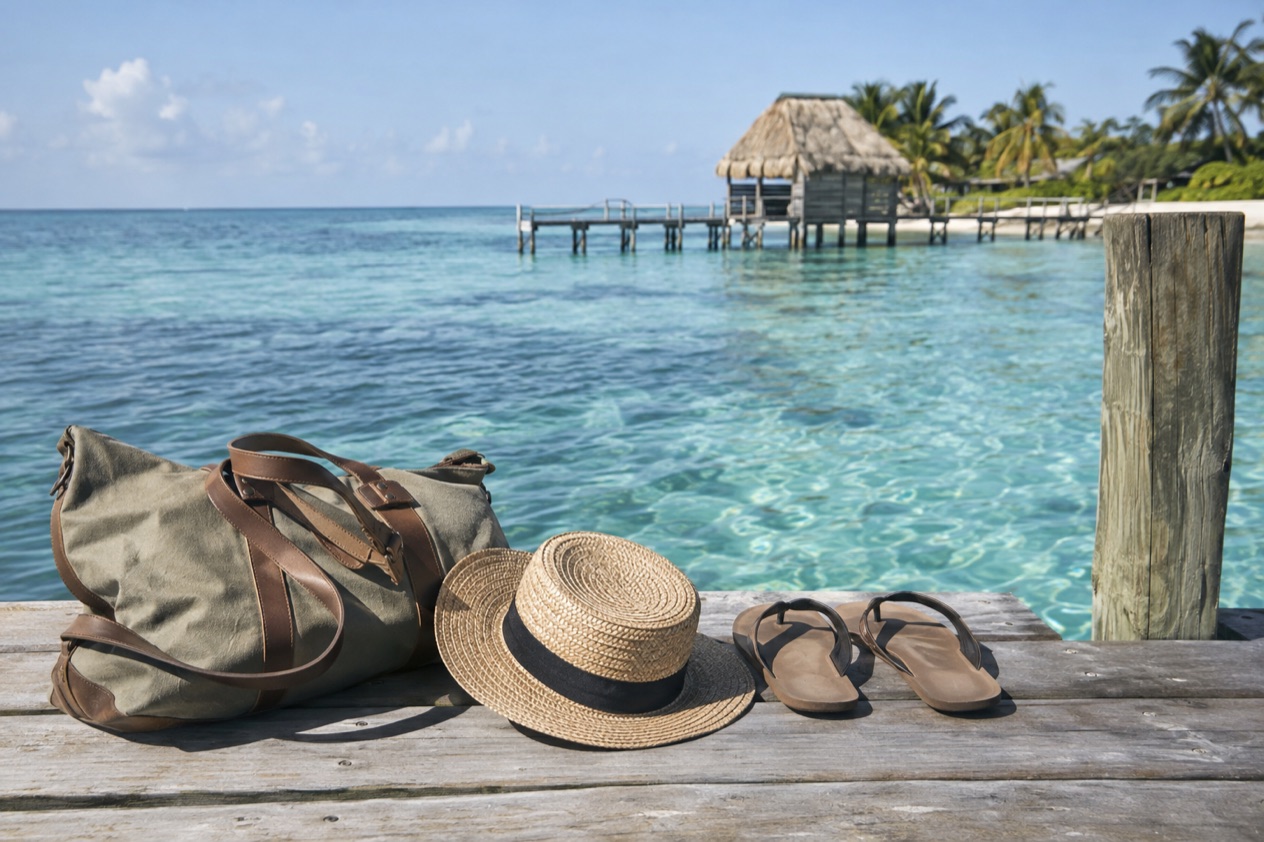
What should you pack for Belize?
Pack your medicines first, then everything else around them, because medical supplies are the one category that is hard to fix once you land. Belize is the only country in mainland Central America where English is the official language, so you will not need a phrasebook, but you will need a well-stocked pouch of health essentials.
Bring all the medicines you need, including the over-the-counter kind, from the United States. The CDC explains that medicine in Belize may be substandard or counterfeit, and specialized prescription drugs may not be available at all. That means pain relievers, antihistamines, stomach remedies and anything for a chronic condition belong in your carry-on, in quantities for the entire trip.
Health items for the bag
A small kit covers the likely needs: bandages and antiseptic for wounds, since the CDC advises cleaning and covering every wound to avoid New World screwworm. Add insect repellent and, if you like, a light bed net, because the same guidance suggests sleeping in a room with screened windows or under a net. Dengue, Zika and malaria all appear in the health notes for Belize, and mosquito protection is the everyday defense you can carry.
If your doctor prescribes malaria medication for the parts of Belize you will visit, the CDC says to fill it before leaving and take enough for the whole trip. Ask a travel clinic well ahead of departure about hepatitis A, hepatitis B and typhoid vaccines, which the CDC recommends in various cases, and about rabies if your plans involve contact with animals.
Insurance papers and money
Put your insurance details in your wallet and your phone. Most hospitals and doctors in Belize do not accept U.S. health insurance, Medicare and Medicaid do not apply overseas, and the State Department does not pay medical bills. For that reason the State Department strongly recommends supplemental insurance that covers medical evacuation, since serious injuries or illnesses normally require evacuation to another country.
For cash, ATMs from the Belize Bank, Scotiabank and Atlantic Bank accept Mastercard, so a card from that network gives you a way to withdraw money. Carrying a second card from a different bank is a sensible habit on any trip.
Clothes that suit the seasons
The dry season typically runs from February to May and the rainy season lasts through November. For a trip in the rainy months, a light rain jacket and quick-drying shirts earn their space, along with a dry bag for your phone and passport. In the dry months, breathable cotton or linen, a hat and sandals cover most days.
Add one pair of closed shoes you do not mind getting muddy, and one long-sleeved layer for evenings and for bug protection. A small daypack rounds it out, sized for water, repellent and a camera.
A lodging safety extra
Many hotels and other lodgings in Belize are not equipped with carbon monoxide detectors, even where gas appliances or generators are present. A small battery-powered detector is light enough to slip into a suitcase and gives you your own protection wherever you sleep.
What sun, sea and jungle gear do you need?
For the water and the forest you need reef-friendly sun protection, a mask and snorkel you trust, shoes for wet ground, and repellent. The Belize Barrier Reef is the second-largest coral reef system in the world and a UNESCO World Heritage Site, so much of a trip happens in, on or beside the sea.
For the reef and the cayes
Two swimsuits mean one is always dry, and a long-sleeved rash guard keeps the sun off your shoulders and back while you float face down over coral. A snorkel mask that fits your face is worth bringing from home, since a leaky mask spoils time on the reef. Water shoes help on docks and rocky shorelines, and a waterproof phone pouch lets you take photos without worry.
Pack sunscreen you are happy to see wash off into the sea, and a wide-brimmed hat for the boat. Sunglasses with a strap survive a boat ride better than ones without. A reusable water bottle fits easily into a daypack.
For the jungle and the caves
Inland, trails and ruins call for lightweight long pants, a long-sleeved shirt, repellent and shoes with grip. In the Cayo district it is dangerous and illegal to enter the caves without a licensed guide, so what you bring there is simply sturdy footwear and clothes that can get wet, while the guide handles the rest.
A headlamp is handy at a jungle lodge in the evening, and binoculars bring birds and howler monkeys closer from the trail. Because the rainy season lasts through November, a small poncho folded in the daypack is a good idea for jungle days in those months.
Fresh water and your health
Leptospirosis, a bacterial infection spread in fresh water, is found in Belize, and the CDC advises avoiding swimming in fresh, unchlorinated water such as lakes, ponds or rivers. Plan your swim time around the sea and chlorinated pools, and pack gear accordingly, with the reef in mind rather than a river dip.
Livestock areas deserve a little distance too, because the CDC guidance on screwworm says to avoid spending time around livestock. Between the water and the farms, a bottle of repellent and a pack of bandages do real work.
A word on the storm season
The Atlantic hurricane season runs from June 1 to November 30, and hurricanes that bring coastal flooding are prevalent from June to November, especially in the south of Belize. If you travel in those months, a waterproof pouch for documents and a charged power bank are small things that make a disrupted day easier.
What can’t you bring?
The item to leave at home is the recreational drone, because the Government of Belize currently prohibits its temporary importation by international travelers. That rule catches many photographers by surprise, so it is the first thing to take out of the suitcase.
Drones
For international travelers, the government is currently accepting drone authorization applications only from those commissioned for works or services for an approved local business or organization in Belize. A vacation flight over the reef does not fall into that category.
Belize is developing requirements and regulations for recreational drone travelers, and once that process is complete, all travelers will be allowed to operate their drones after meeting the necessary requirements under the Laws of Belize. For the detailed requirements, international travelers are directed to the Civil Aviation Department’s web page. Until then, a camera with a good zoom or a waterproof action camera is the better companion.
Goods and customs duty
Belize Customs and Excise collects duty on imports, and rates range from 0 to 100% of the customs value, with most commodities attracting a 20% import duty. The duty is applied on a value that includes cost, insurance and freight. The tariff is modeled on the Harmonized System and was revised on January 1, 2023.
For a traveler, the practical lesson is to pack for personal use. Items in quantities that look like goods for sale are the ones likely to raise questions about duty, while clothing, a camera and a snorkel set for your own trip are ordinary luggage.
What to leave behind for other reasons
Do not count on buying medicines on arrival. The CDC warns that medicine in Belize may be substandard or counterfeit, which is why the whole supply travels with you. Leave behind the assumption that your U.S. insurance card will work at a clinic, since most hospitals and doctors do not accept it.
Plans that rely on night driving are worth dropping as well, because the CDC advises avoiding it where street lighting may be poor. That affects what you pack only indirectly, but it shapes the day: pack for arriving at your lodging before dark.
Good to know before you go
The U.S. State Department rates Belize Level 2, “Exercise increased caution”, because of crime, and says the south side of Belize City has historically had the highest concentration of violent crime.
Money and health shape most of the packing decisions. A Mastercard works at ATMs of three banks, while emergency services are usually unavailable or significantly delayed and ambulance services are not widely available, so a basic first aid kit and your insurance details are worth carrying everywhere. In rural and remote areas even basic medical care can be hard to find, and advanced treatment is scarce in Belize City and Belmopan.
Storm season runs through the end of November on the Atlantic, so a trip late in the year is worth packing for with rain in mind. The CDC also lists Belize in its Zika risk area, one more reason repellent goes in the first bag you pack.
Sources
- Belize Customs and Excise Department (https://customs.gov.bz/), checked October 11, 2026
- U.S. Department of State, Belize Travel Information, Health (https://travel.state.gov/), checked October 11, 2026
- U.S. Centers for Disease Control and Prevention, Belize traveler view (https://wwwnc.cdc.gov/travel/destinations/traveler/none/belize), checked October 11, 2026
- Wikivoyage, Belize (https://en.wikivoyage.org/wiki/Belize), checked October 11, 2026
- Belize Tourism Board, Drone requirements (https://www.belizetourismboard.org/tourism-resources/belize-drone-requirements/), checked October 11, 2026
- Wikipedia, Roatan (Honduras) (https://en.wikipedia.org/wiki/Roat%C3%A1n), checked October 11, 2026
- Wikivoyage, Yucatan Peninsula (Mexico) (https://en.wikivoyage.org/wiki/Yucat%C3%A1n_Peninsula), checked October 11, 2026
- Wikivoyage, Jamaica (https://en.wikivoyage.org/wiki/Jamaica), checked October 11, 2026
- U.S. Department of State, Belize Travel Advisory, Level 2, March 11, 2026 (https://travel.state.gov/), checked October 11, 2026
- NOAA National Hurricane Center, Climatology (https://www.nhc.noaa.gov/climo/), checked October 11, 2026