
The Museum of Belize sits in Belize City in a building that looks like what it once was, a prison, and the first thing you notice is how a place built to hold people has been turned into a place that tells their stories. Inside, Maya artifacts share the building with the history of slavery, colonial life and the many ethnic groups of the nation. It is a visit for travelers who want to understand Belize before heading out to the cayes or the jungle.
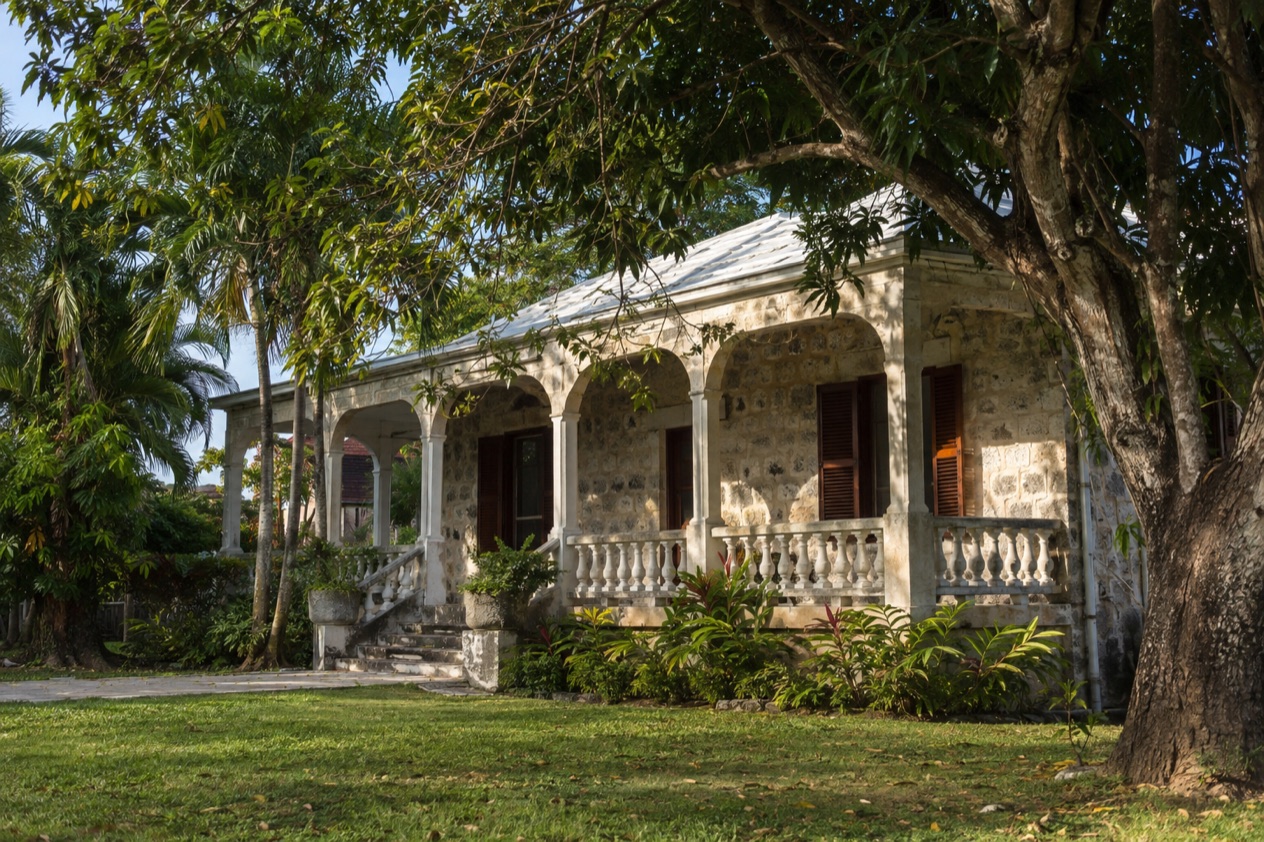
Is visiting the Museum of Belize worth it?
Yes, if you like your travel with some history behind it, and especially if you are passing through Belize City on the way to somewhere else. The museum is an art and history museum, and it gives you the long view of the country in one building: Maya civilization, the arrival of Europeans, slavery and resistance, and the cultures that make up Belize today.
What sets it apart from the other stops in the city is the building itself. The structure was the Belize City Prison until 1993, when prisoners were transferred to Hattieville Prison, and it was restored and renovated into a national museum in 2002.
Many museums put history behind glass in a purpose-built hall. Here the setting is part of the story, and the exhibit on the prison’s own history sits inside the walls where that history happened.
It suits history lovers, families with curious older children, travelers with a rainy day or a layover to fill, and anyone who wants context before visiting Maya sites elsewhere in the country. Visitors who prefer to spend every hour on the water or in the rainforest may find a museum stop a detour, but it pairs well with a day in the city.
What to see at the Museum of Belize
The exhibits range across several centuries and many themes. Plan to move at your own pace, lingering where a topic grabs you, since the collection covers far more than one subject.
The Maya galleries
The museum displays Maya artifacts and explores some 3,000 years of Maya history. This is the part that pairs best with a trip to the great Maya sites of Belize, because it lets you see the objects and the story of the people who built them, from early villages through the age of the great cities.
Look at how everyday and ceremonial objects are presented side by side, and let the long timeline sink in. If you plan to see sites such as Xunantunich, Caracol or Lamanai later in your trip, this gallery gives you a framework to carry with you.
Slavery, revolts and the maroons
The exhibits on slavery in Belize include a timeline, information about slave revolts, and the story of communities of escaped slaves called maroons. It is a serious section, and one of the strongest reasons to come, because it fills in a chapter that beach and reef itineraries rarely touch.
Take your time with the timeline first, since it gives the sequence that makes the revolts and the maroon settlements easier to understand. The material sits comfortably in a former prison, a building that makes ideas of confinement and freedom feel very concrete.
The prison itself
Among the additional exhibits is the history of the prison, which gives the building a voice of its own. You are walking through a structure that held prisoners until 1993, and the displays connect the architecture to the people who lived within it. Notice how the layout and the walls shape your sense of the place, and how the transformation from jail to national museum is itself part of Belize’s modern story.
Colonial life, nature, art and the peoples of Belize
The remaining exhibits cover colonial life, natural history, visual arts, and the cultural exhibits of the many ethnic groups of the nation. This is where the museum widens from the past into the present, showing how different communities, from Maya to Garifuna to Creole and others, fit into one country. Look for the natural history displays if you are curious about the wildlife you may meet on the reef or in the forest, and for the visual arts if you want a sense of how Belizean artists see their own country.
Hours, tickets and rules
Opening hours and admission for the Museum of Belize are not something to guess at, and the details to count on are the ones about the building and the collection, which are covered throughout this visit. A museum in a restored prison is a place to go slowly, and the exhibits reward a relaxed visit more than a rushed one. The museum is an art and history museum in Belize City, established in 2002 in the former Belize City Prison, which closed as a prison in 1993.
How to get to the Museum of Belize
The museum is in Belize City, the largest city in Belize, which sits on a small peninsula protruding into the Caribbean Sea at the mouth of Haulover Creek, a distributary of the Belize River. Most arrivals by air come through Philip S. W. Goldson International Airport, which is in the village of Ladyville, about a 30-minute drive northwest of the city center. Belize City Municipal Airport is within the city itself.
Westbound buses to the Western Zone (Belmopan, San Ignacio and Benque Viejo Del Carmen) depart between 5AM and 9PM. These are the services that connect the city to the rest of the country, so a museum visit can slot in before or after a bus ride.
Cruise passengers will find the Tourism Village in Belize City, which is only open when a cruise ship is in town. The city is also the country’s principal port and its financial and industrial hub, so it is a natural gateway for travelers of all kinds.
When to visit the Museum of Belize
An indoor museum works in any month, which is part of its appeal. If the weather turns on you during a stay in the city, the galleries are a sensible place to spend the hours, and on a sunny day they give you a change of pace from the water.
The Atlantic hurricane season runs from June 1 to November 30, so travelers planning a trip in those months may find a museum visit a useful indoor option if plans change. Outside those months the museum is just as worthwhile, and it fits easily into any itinerary built around the cayes, the rainforest or the Maya sites.
Since the museum covers so much, it rewards a visit early in your trip. Seeing the Maya galleries and the slavery exhibits first gives you background for everything you will see afterward, from ruins in the Cayo District to Garifuna communities on the coast.
Tips for your visit
Go with curiosity and give the exhibits time. The collection is broad, and the stories of slavery, revolt and the maroons deserve more than a quick look. If you travel with children, the prison setting often sparks questions, and the Maya and natural history displays give younger visitors something to hold onto.
Combine the museum with other things in Belize City. The Swing Bridge is the only functioning, manually operated swing bridge in the world, and it is a sight worth a look while you are in town. Belize City was the capital of British Honduras until the government moved to Belmopan in 1970, and that layered past is exactly what the museum helps you read.
Think of the visit as an orientation. Seeing 3,000 years of Maya history, the story of slavery and the many cultures of the nation in one place sets up the rest of your trip, so you arrive at every other stop knowing a little more about where you are.
Good to know before you go
The U.S. State Department rates Belize Level 2, “Exercise increased caution”, because of crime, and says the south side of Belize City has historically had the highest concentration of violent crime.
The museum is in a city where, as the State Department notes, the south side of Belize City has historically had the highest concentration of violent crime, so it makes sense to plan your movements around the city with that in mind. Between June and November the Atlantic hurricane season is under way, and the museum is a solid indoor stop whatever the sky is doing.
Sources
- Wikipedia, Museum of Belize (https://en.wikipedia.org/wiki/Museum_of_Belize), checked October 11, 2026
- Wikipedia, Belize City (https://en.wikipedia.org/wiki/Belize_City), checked October 11, 2026
- Wikivoyage, Belize City (https://en.wikivoyage.org/wiki/Belize_City), checked October 11, 2026
- U.S. Department of State, Belize Travel Advisory, Level 2, March 11, 2026 (https://travel.state.gov/), checked October 11, 2026
- NOAA National Hurricane Center, Climatology (https://www.nhc.noaa.gov/climo/), checked October 11, 2026