
Somewhere in the Cancun airport, between the rental counters and the taxi touts, a traveler looks at a map and sees how little coastline separates the resorts of Quintana Roo from the cayes of Belize. The question comes up in a hotel lobby, over breakfast, or while scrolling flight options at midnight. The short answer is that you either fly with Tropic Air from a small building on the Cancun airfield, or you work your way south to Chetumal and cross by water or road into northern Belize.
How do you get from Cancun to Belize?
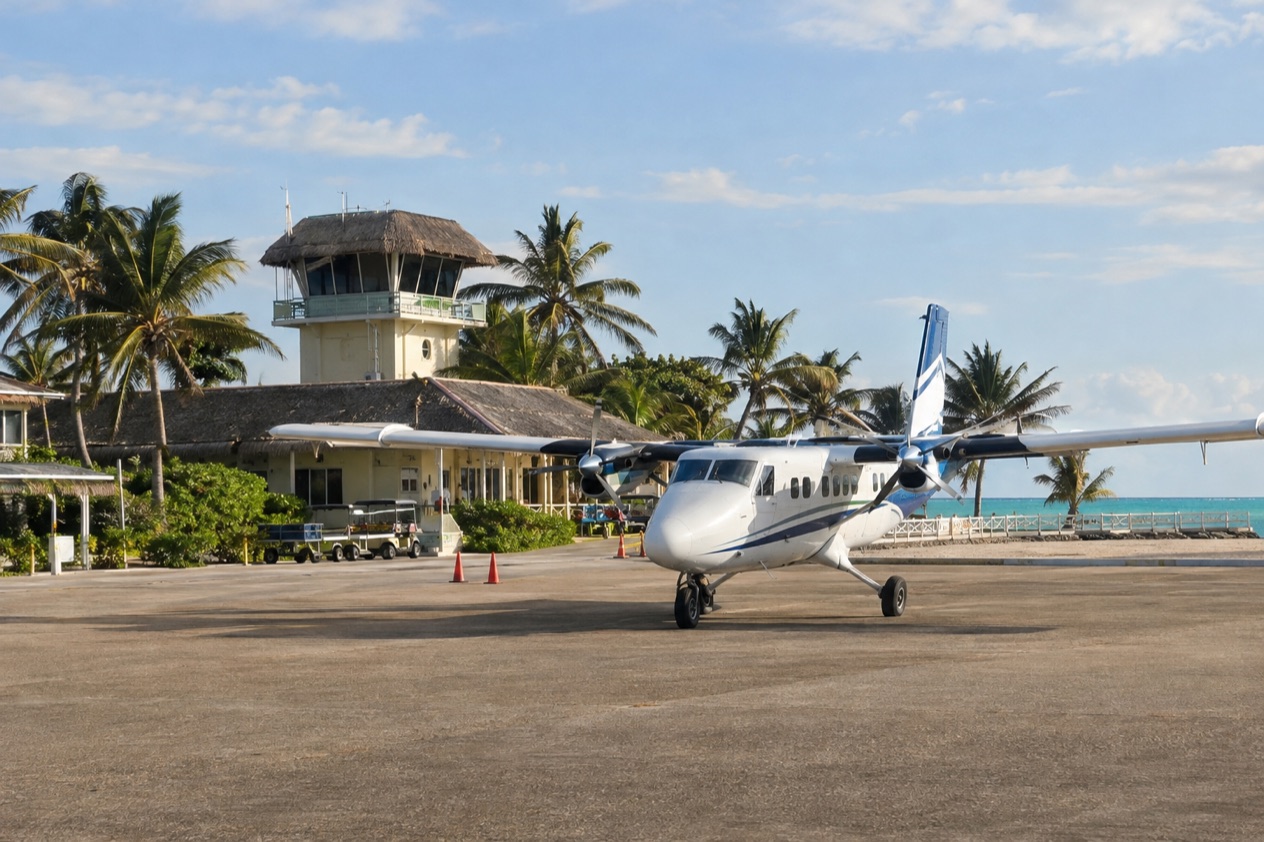
You can fly or you can go overland in stages, and the two ways feel like different trips. The flight is a direct hop on Tropic Air, which lists Cancún among the international destinations it flies from the Belize International Airport. The overland way runs through Chetumal, the Mexican border city on Chetumal Bay, where a water taxi carries you across to Belize.
Flying with Tropic Air
Tropic Air flights between Belize City and Cancun do not use the main terminals. They arrive and depart at the New FBO Building, a separate facility on the airfield. Plan your arrival accordingly, because walking into the big terminal and looking for the Tropic Air desk will send you in the wrong direction.
On the Belize side, the flight lands at the Philip Goldson International Airport, the only international airport in the country, in Ladyville outside Belize City. From there, the cayes and the rest of the country are within reach by the domestic routes and the road network that Belize City anchors. If your final stop is a caye, the flight puts you at the right end of the country to begin that journey.
A flight like this suits travelers who are already in Cancun with a hotel stay behind them and want to reach Belize without spending a day on the road. It also suits anyone who prefers one clear departure point over a chain of connections.
The shuttle at the Cancun end
Because the FBO sits apart from the terminals, Tropic Air runs a complimentary inter-terminal shuttle. Passengers arriving from Belize and connecting onward can ride it from the FBO to the Terminal 4 transit area. It runs once per day, and its departure time depends on when the flight arrives.
Going the other way, passengers connecting to a Tropic Air flight from another terminal can use a complimentary airport inter-terminal shuttle to reach the Tropic Air check-in counter. Anyone who needs a shuttle at a different hour than the single daily departure pays their own way. For questions about the shuttle, call Tropic Air’s Cancun station at +52 (998) 886-0547, or send a message on WhatsApp to +52 (998) 114-9321.
Overland through Chetumal
Chetumal is the capital of the state of Quintana Roo and sits on the western side of Chetumal Bay, near the mouth of the Río Hondo. It is the gateway city for anyone crossing south by land or water. The airport at Chetumal also offers commercial airline service, which gives you another way to reach the bay without driving the whole stretch.
From the Terminal Maritima Internacional Filiberto Sabido Padilla, the San Pedro Belize Express Water Taxi offers transportation from Chetumal to Belize City, Caye Caulker and San Pedro on Ambergris Caye. The trip between San Pedro and Chetumal takes an hour and a half. The company’s office in Chetumal can be reached at [email protected].
This route suits travelers who like to see a border city rather than skip it, and who want to arrive on a caye by boat instead of by plane. It fits well with a stop in Bacalar or a night in Chetumal itself.
A stop in Bacalar
Bacalar is a small town on its lagoon, named a Pueblo Mágico in 2006. Its Spanish town was established in 1545, and the Fortress de San Felipe, completed in 1729, can be visited today. A Tren Maya station serves Bacalar, and from it train travelers can reach the fort, the Piracy Museum, the Bacalar Lagoon and the Blue Cenote.
The nearby Limones and Chacchoben archaeological sites have their own separate station, called Limones-Chacchoben. Bacalar works as a pause between Cancun and the border: a place for a lagoon-side evening before the last leg.
Where does the road enter Belize?
The road reaches Belize in the north, and the first town you meet is Corozal, which lies on the Caribbean Sea about nine miles from the border with Mexico. Corozal Town is the capital of Corozal District, and from there Belize City lies about 84 miles to the south. That makes Corozal the natural first stop for anyone arriving by land.
Corozal Town, the first stop
Corozal is a quiet bayside town, and its look comes from its history. Hurricane Janet destroyed an estimated nine-tenths of the town in 1955, and most of what stands today was built afterward. The result is an open, practical town with a waterfront rather than a colonial center, where the day moves along at the pace of the bay.
If you arrive in the evening, Corozo Blue’s is a place to sit down and eat. It is open Sunday to Thursday from 10:00 to 00:00, and Friday and Saturday from 10:00 to 02:00. For families, Maximum Water Park opened to the public in April 2021 and gives Corozal something to offer on a hot afternoon.
Ruins and a small museum
Corozal has Maya sites close to town, and a museum for a rainy hour. Santa Rita is an archaeological site within the town area, and the Cerros Maya ruins sit across Corozal Bay. You reach Cerros either by boat from the main dock in Corozal or by a 10-mile dirt road, which can be very washed out after bad weather.
That boat or road choice shapes the visit. By water you cross the bay and see the town from offshore. By road you drive the long way around and depend on the weather.
| Site | Open |
|---|---|
| Santa Rita Archaeological Site | Daily, 8:00 a.m. to 5:00 p.m. |
| Cerros Maya Ruins | Daily, 8:00 a.m. to 5:00 p.m. |
| Corozal House of Culture museum | Monday to Friday, 8:00 a.m. to 5:00 p.m. |
Chetumal before you cross
If you are crossing by water, Chetumal deserves an hour or two. Boulevard Bahía is the place to spend time by the bay, walk a few miles and eat local food at the many restaurants along it. The old district has dozens of colonial homes in beautiful condition on sand-ridden streets, and it makes for a slow walk.
The Museum of the Mayan Culture is the largest and most comprehensive museum in Quintana Roo on that subject, with authentic works and reproductions in several sections. Outside town, Kohunlich holds the Temple of the Masks. Chetumal has a small-city feel, far from Cancun’s hotel zone, and the contrast is part of the appeal.
What do you need at the border?
On the Belize side, what you need most is a plan for the next leg, because the first town you reach, Corozal, is small and the rest of the country is a long way beyond it. Corozal lies on the Caribbean Sea in Northern Belize, and it has a dock, a few restaurants and a handful of sights, so arriving with a destination in mind makes the day easier.
Know where you are going next
The water taxi from Chetumal serves three destinations: Belize City, Caye Caulker and San Pedro on Ambergris Caye. Choose among them before you leave Chetumal, since that decision sets your first night.
If you fly instead, the Philip Goldson International Airport receives the Tropic Air flight from Cancun. The same airport also receives American Airlines from Charlotte, Dallas, Miami and Los Angeles, Alaska Airlines from Seattle and Los Angeles, Delta from Atlanta and Minneapolis, Southwest from Denver and Houston, Sun Country from Minneapolis, and COPA from Panama City. It is the single international door to the country.
What a day in Corozal can hold
If you land in Corozal with time to spare, the town gives you a short list of things to do. Walk the bayfront, find a table at Corozo Blue’s, visit the House of Culture on a weekday, and, if the weather is dry, plan a visit to Santa Rita or to Cerros across the water.
With a plan in hand, the crossing becomes a pleasant change of scene instead of a scramble. A traveler who has chosen between the bay, the cayes and the city can step off the boat or out of the vehicle and begin the Belize part of the trip at once.
The weather on both sides of the line
Chetumal has a tropical savanna climate, with a pronounced wet season from May to October and a dry season from November to April. In January the mean daily temperature there is about 74°F. Wet months shape the trip, since a washed-out dirt road to Cerros is a real possibility after bad weather.
Both Chetumal and Corozal have a history with storms. Hurricane Janet and Hurricane Dean, both Category 5, made landfall near Chetumal in 1955 and 2007, and Janet is the storm that destroyed most of Corozal Town.
Good to know before you go
The U.S. State Department rates Belize Level 2, “Exercise increased caution”, because of crime, and says the south side of Belize City has historically had the highest concentration of violent crime.
The Atlantic hurricane season runs from June 1 to November 30, which covers the Caribbean coast on both sides of the border, so a trip in these months follows the rhythm of the weather. Wet-season rain can wash out the dirt road to Cerros, while the water taxi and the flights are the more predictable ways to cross.
Carry some Belize dollars for small purchases in Corozal and keep your plans loose enough to adapt. In Belize City, the south side has historically had the highest concentration of violent crime, which is one more reason to know where you sleep before you arrive.
Sources
- Tropic Air, Cancun (https://www.tropicair.com/cancun-mexico/), checked October 11, 2026
- San Pedro Belize Express Water Taxi, Chetumal (https://belizewatertaxi.com/destinations/chetumal/), checked October 11, 2026
- Wikipedia, Chetumal (https://en.wikipedia.org/wiki/Chetumal), checked October 11, 2026
- Wikipedia, Bacalar (https://en.wikipedia.org/wiki/Bacalar), checked October 11, 2026
- Wikipedia, Corozal Town (https://en.wikipedia.org/wiki/Corozal_Town), checked October 11, 2026
- Wikivoyage, Corozal (https://en.wikivoyage.org/wiki/Corozal), checked October 11, 2026
- Tropic Air, Belize International Airport (https://www.tropicair.com/belize-international-airport-bze/), checked October 11, 2026
- U.S. Department of State, Belize Travel Advisory, Level 2, March 11, 2026 (https://travel.state.gov/), checked October 11, 2026
- NOAA National Hurricane Center, Climatology (https://www.nhc.noaa.gov/climo/), checked October 11, 2026