
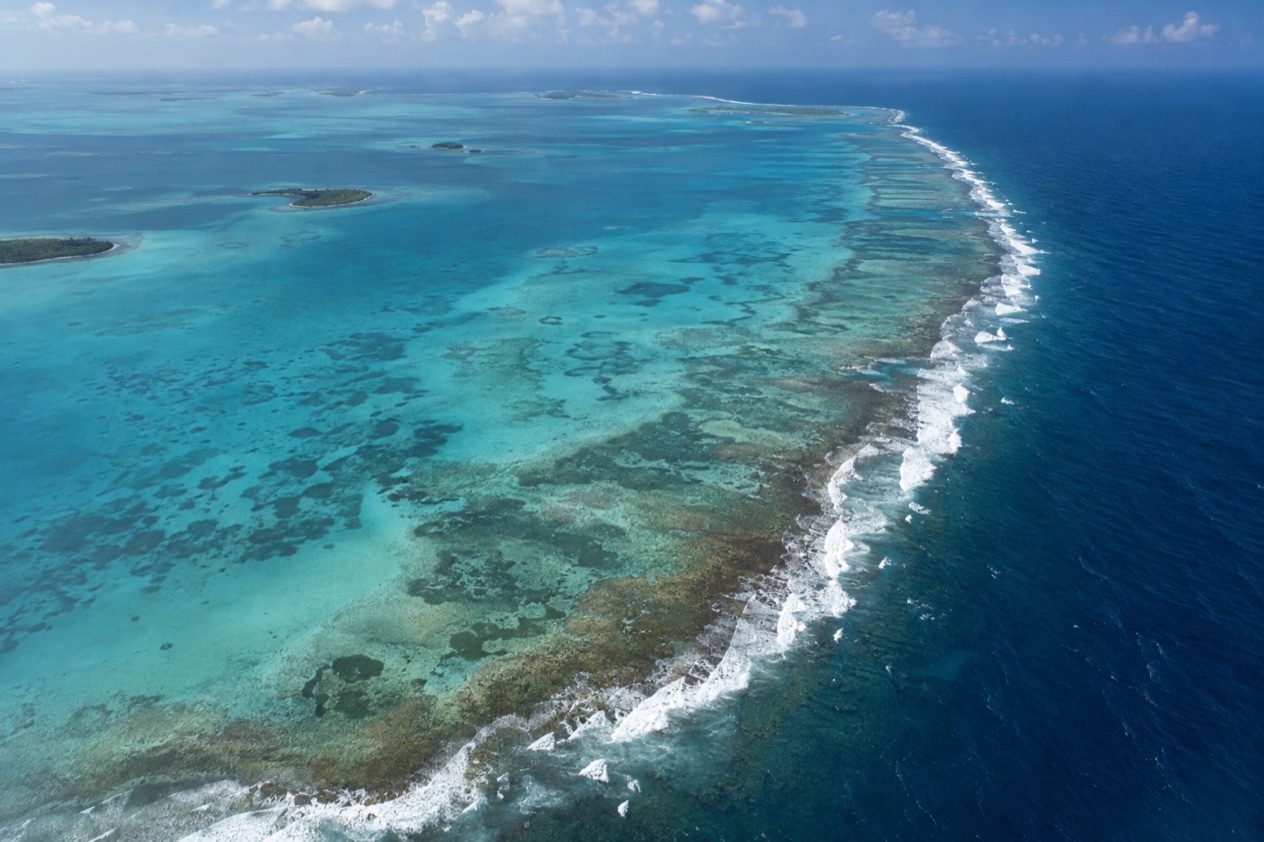
Out past the cayes, a pale line of surf marks the place where the Caribbean breaks on living coral, and the water inside it turns from deep blue to glassy turquoise. Boats cross that line toward reef walls, mangrove islands and a few sandy specks of land with a lighthouse or a bird colony on them. The Belize Barrier Reef is a visit by sea, built around snorkeling, diving and time on the water, and it suits travelers who want to see how a reef actually works.
Is visiting the Belize Barrier Reef worth it?
Yes, if you want to spend your days looking at coral, fish, turtles and sea birds rather than at monuments, and it fits snorkelers and divers best. The reef is a series of coral reefs running along the whole coast of Belize, and it holds 70 hard coral species, 36 soft coral species and 500 species of fish, along with hundreds of invertebrates. Even a first look through a mask gives you a sense of that variety.
What sets it apart from other Caribbean reefs is its shape. It is not one spot but a long barrier close to shore, with three atolls farther out: Turneffe Atoll, Glover’s Reef and Lighthouse Reef.
In the north the reef sits just offshore, while in the south it lies much farther out, so the character of a day changes with where you base yourself. Protection is part of the story too. Belize became the first country in the world to ban bottom trawling completely, and the reef system was designated a World Heritage Site in 1996.
It is also a reef with a fragile side, and honest visitors should know it. Scientists say that over 40% of Belize’s coral reef has been damaged since 1998. Seeing the reserves, the rules and the spawning sites up close makes that history easier to understand, and it is part of what gives the visit weight beyond the pretty fish.
What to see at the Belize Barrier Reef
The reef is best understood through its parts, each with its own habitat and its own wildlife. Starting near the coast and moving outward, you pass from reserve waters close to San Pedro to remote atolls with lagoons, bird colonies and some of the clearest diving in the country.
Hol Chan Marine Reserve and Shark Ray Alley
Hol Chan lies about four miles south of San Pedro on Ambergris Caye. It was the first marine protected area in Belize, and it protects coral reef, sea-grass meadows and mangrove swamp in one reserve. That mix is the point: you see how the mangroves shelter young fish, how the grass beds feed them, and how the reef takes over as they grow.
Shark Ray Alley was folded into the reserve in 1999 to protect the sharks and rays that gather at a feeding point. Snorkelers in the recreational zones watch these animals glide around them, an experience that stays in the memory long after the trip. The reserve is divided into zones, and you may dive or snorkel only in the recreational ones after registering and being told the rules.
Turneffe Atoll
Turneffe is the largest coral atoll in Belize and the nearest atoll to Belize City, lying directly east of it and southeast of Ambergris Caye and Caye Caulker. From the air it would look like a ring of mangrove islands around a lagoon. On the water it is a network of flats, creeks and lagoons dotted with more than 150 mangrove islands and higher cayes covered in savanna and littoral forest.
Look for the animals that use those quiet waters: sea turtles, manatees, dolphins, seabirds and American crocodiles. The atoll is a nursery for Queen conch and Caribbean spiny lobster, and several known spawning sites for reef fish are found here. At the northern end stands the lighthouse on Mauger Caye, a landmark for boats approaching from the mainland side.
Lighthouse Reef, the Great Blue Hole and Half Moon Caye
Lighthouse Reef is the most easterly diving area in Belize, and it is considered one of the best developed and healthiest reefs in the Caribbean. Its shallow sandy lagoon surrounds the Great Blue Hole, the dark circular sinkhole that Jacques Cousteau made famous in 1970. From above it looks like an ink-blue eye set in pale shallows.
The atoll’s named dive sites include Half Moon Caye Wall, Long Caye Aquarium, Silver Caves, Tres Cocos and West Point. On Half Moon Caye, the land side has its own attractions: a rare atoll siricote forest on the western half, a rookery of magnificent frigatebirds and a nesting colony of about 4000 red-footed boobies. Both the Great Blue Hole and Half Moon Caye are Natural Monuments.
Glover’s Reef
Glover’s Reef is a partially submerged oval atoll off the southern coast, with an interior lagoon dotted with around 850 reef patches and pinnacles rising to the surface. It harbors one of the greatest diversities of reef types in the western Caribbean, so a single day can take you from a wall to a lagoon patch to a sandy shallow.
Its major cays are Amounme Point Cay, Northeast Cay, Long Cay, Middle Cay and Southwest Cay. At the northeastern end lies a large spawning site for the endangered Nassau grouper, one of only two viable sites remaining for the species. That makes this atoll important well beyond tourism.
Hours, tickets and rules
The reef is open water, not a gated site, so what shapes a visit is the reserve you enter and the rules that go with it. Each reserve has its own history and its own management, and the table lays out the three that matter most for visitors.
| Reserve | Established | Notes |
|---|---|---|
| Hol Chan Marine Reserve | July 1987 | First marine protected area in Belize, now eight zones, includes Shark Ray Alley |
| Glover’s Reef Marine Reserve | 1993 | Wilderness Zone closed to visitors |
| Turneffe Atoll Marine Reserve | November 22, 2012 | Co-managed by the Turneffe Atoll Sustainability Association, management team +501-670-8272 |
In Hol Chan, no one may remove or disturb flora or fauna, including rocks, dead corals, shells or sand, unless authorized by the fisheries administrator. Dumping waste, garbage or litter into the water or onto land is prohibited, as is dragging an anchor in a way that may damage coral.
Long lines, fish traps, seine nets, gill nets and spear fishing are banned, and fishing of any kind needs a valid license. Divers and snorkelers may enter only the recreational zones, after registering and being told the rules. At Glover’s Reef, the Wilderness Zone is closed to visitors, and the Seasonal Closure Zone is closed to all fishing from the start of December to the end of February.
How to get to the Belize Barrier Reef
You reach the reef from the coast, and the right base depends on which part you want. Along the coast, the reef lies roughly 300 meters offshore in the north and about 25 miles out in the south, which is why the northern cayes feel so close to it and the south feels like a longer reach.
Hol Chan is the nearest to a town: it sits about four miles south of San Pedro on Ambergris Caye. Turneffe Atoll lies directly east of Belize City and southeast of Ambergris Caye and Caye Caulker, about 20 miles from Belize City, and it is the nearest of the three atolls to that city.
Lighthouse Reef is about 50 miles southeast of Belize City, and it is the most easterly of the diving areas in Belize. Glover’s Reef is farther south, roughly 28 miles off the southern coast. Each of these is out in open sea, so the distance is part of the experience of reaching it.
When to visit the Belize Barrier Reef
The reef is there all year, and the choice of month is mostly about what else is going on around it. The Atlantic hurricane season runs from June 1 to November 30, so those months deserve a thought when you plan a sea trip. Outside those dates, the sea is the same living reef, with the same turtles, rays and reef fish.
A few details tie the reef to the calendar. At Glover’s Reef, the Seasonal Closure Zone is closed to all fishing from December through February, and where it overlaps with the grouper spawning aggregation site, it is closed to fishing all year round. Turneffe has several known fish spawning sites and suitable nesting grounds for green, loggerhead and hawksbill turtles, which is a good reason to keep your eyes open in the water any month of the year.
The reef’s recent history is another reason to visit with care. A first mass bleaching in 1995 killed an estimated tenth of coral colonies, and a second event followed with Hurricane Mitch in 1998, when biologists saw a 48 percent drop in live coral cover. Bleaching and storms are part of why reefs here are watched so closely, and why the reserves matter.
Tips for your visit
Think of the reef as several visits rather than one. Pair a day at Hol Chan and Shark Ray Alley with time in San Pedro, or a Turneffe trip with a stay on Caye Caulker, since both places sit in the same stretch of coast as the atoll. A day at Lighthouse Reef naturally combines the Great Blue Hole with Half Moon Caye, where you can look for the frigatebirds and boobies on land.
Bring a mask, a snorkel and the habit of looking without touching. The rules in Hol Chan make the point plainly: nothing is taken, nothing is dropped, and anchors stay clear of coral. If you want to talk with the Turneffe reserve’s management team, you can call +501-670-8272.
For birdwatchers, Half Moon Caye is the highlight, with its frigatebirds, red-footed boobies and the siricote forest. Wildlife spotters should keep in mind that turtles, manatees and dolphins are chances, not promises. Lighthouse Reef also shelters the American crocodile, the hawksbill, loggerhead and green sea turtles, and two small land animals found nowhere else in quite the same way, the Belize endemic leaf-toed gecko and Allison’s anole.
Lighthouse Reef suffers from uncontrolled fishing and tourism despite its protection, so choosing to follow each reserve’s rules is a real contribution rather than a formality.
Good to know before you go
The U.S. State Department rates Belize Level 2, “Exercise increased caution”, because of crime, and says the south side of Belize City has historically had the highest concentration of violent crime.
The Atlantic hurricane season runs from June 1 to November 30, and a trip out to the atolls or cayes in those months is worth planning with that in mind. The reef is a protected place: in the reserves you do not take shells, rocks or sand, and you leave no litter behind. Belize has also banned offshore oil drilling within one kilometer of the Barrier Reef, a sign of how seriously the country treats the water you are about to enter.
Sources
- Wikipedia, Belize Barrier Reef (https://en.wikipedia.org/wiki/Belize_Barrier_Reef), checked October 11, 2026
- Wikipedia, Turneffe Atoll (https://en.wikipedia.org/wiki/Turneffe_Atoll), checked October 11, 2026
- Wikipedia, Glover's Reef (https://en.wikipedia.org/wiki/Glover's_Reef), checked October 11, 2026
- Wikipedia, Lighthouse Reef (https://en.wikipedia.org/wiki/Lighthouse_Reef), checked October 11, 2026
- Belize Fisheries Department, Hol Chan Marine Reserve (https://fisheries.gov.bz/hcmr/), checked October 11, 2026
- Belize Fisheries Department, Turneffe Atoll Marine Reserve (https://fisheries.gov.bz/tamr/), checked October 11, 2026
- U.S. Department of State, Belize Travel Advisory, Level 2, March 11, 2026 (https://travel.state.gov/), checked October 11, 2026
- NOAA National Hurricane Center, Climatology (https://www.nhc.noaa.gov/climo/), checked October 11, 2026