
The last conch fritter is eaten, the straw bag is stuffed with rum cake, and the departure hall at Nassau hums with sunburned families wondering why they are being asked U.S. questions while still standing in the Bahamas. That is preclearance. Customs and Border Protection officers inspect you in Nassau before you board, so the flight home lands like a domestic arrival.
What is U.S. preclearance in the Bahamas?
U.S. preclearance is the arrangement in which Customs and Border Protection (CBP) officers work inside a foreign airport and inspect travelers, and their goods, before they board a U.S.-bound flight. In the Bahamas, that means the inspection you would normally face at a U.S. airport after landing happens in Nassau instead, a few steps from your departure gate.
The payoff comes on the other end. Travelers who use preclearance bypass CBP and TSA inspections when they arrive in the United States and go straight to a connecting flight or out to ground transportation. For a family hauling beach gear and sleepy children, skipping a second round of lines after a flight is the whole appeal.
What changes when you land in the United States
Think of the Nassau inspection as a customs hall that has been moved across the water. You answer the officer’s questions, your bags and belongings are looked at there, and you board knowing the formal border step is behind you. When the plane touches down, you walk off like a passenger who flew in from another U.S. city.
That matters most if you are changing planes. Travelers using preclearance can accept tighter connection windows at U.S. airports and are less likely to miss a domestic connection. If your trip home continues to Chicago, Atlanta or anywhere else, you do not spend the layover standing in an arrivals hall.
The technology behind the process
CBP uses tools such as facial recognition biometrics to speed up passenger processing, so the officer’s check is often quicker than the old paper-and-stamp image suggests. The inspection covers people and their goods, and agriculture specialists are part of the teams, which is why fruit, plants and food souvenirs get a second look.
The program is large. CBP has more than 600 officers and agriculture specialists stationed at its preclearance locations. In 2025, those teams precleared more than 22 million travelers abroad, which is nearly 14.6 percent of all commercial air travelers to the United States. Nassau is one of those locations, and its travelers are part of that number.
Why it shapes the flights you can take
Preclearance also changes the map of where flights from the Bahamas can land. Because the inspection is done before departure, it enables direct routes to over 160 U.S. airports, whether or not those airports have a CBP port of entry of their own. A smaller U.S. city without a customs hall can still receive a flight that left Nassau.
For you, the practical effect is simple. When you compare return flights, you are not choosing between airports that can handle international arrivals and airports that cannot. The inspection has already been taken care of, and the airline’s choice of U.S. destination is wider.
Where is it available?
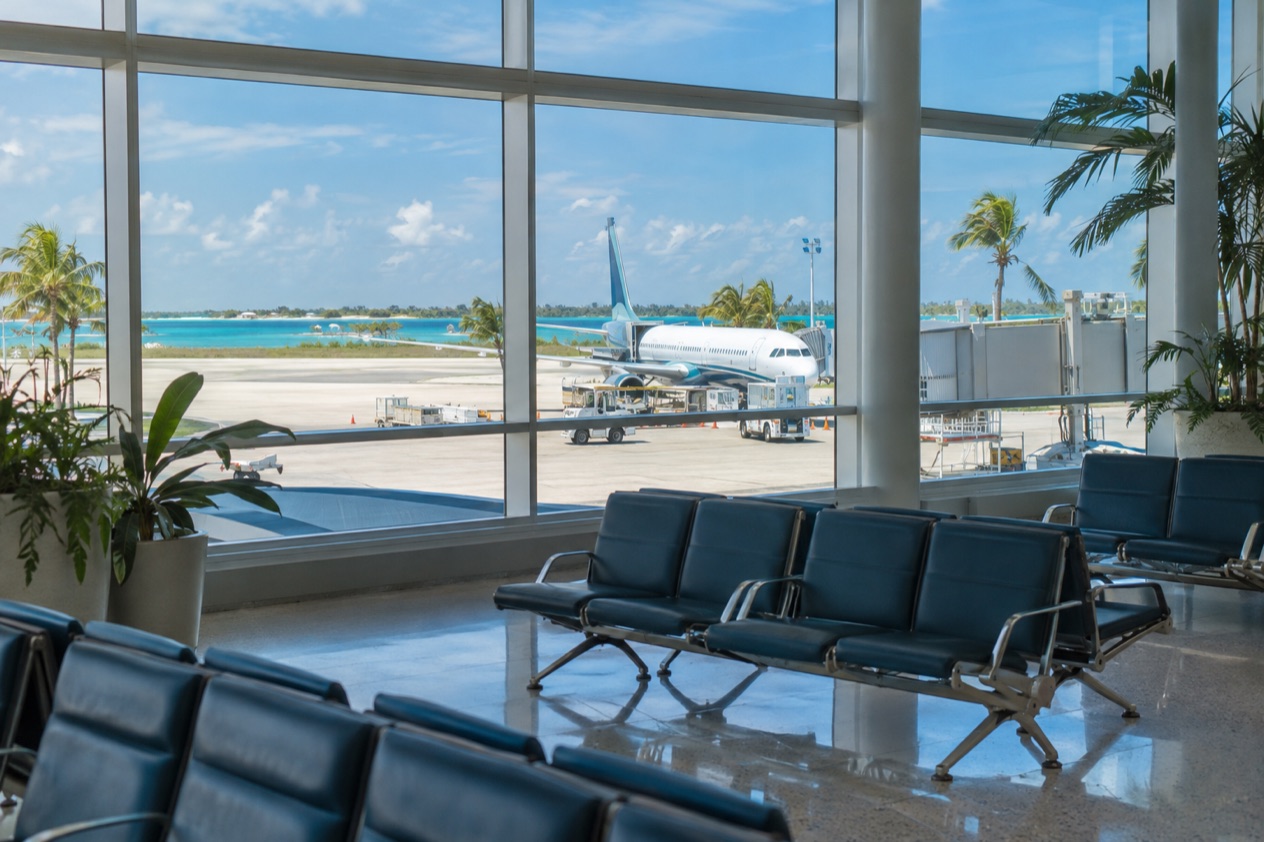
In the Bahamas, U.S. preclearance is available at Lynden Pindling International Airport in Nassau, for travelers heading to the United States. It is one of 16 preclearance locations in 6 countries, and Nassau is the Bahamian one.
Lynden Pindling International Airport
The airport sits at the western end of Nassau on New Providence, about 10 miles from downtown. It is named for Lynden Pindling, the first prime minister of the Bahamas, and older travelers may still call it by its former name, Nassau International Airport. It is the largest airport in the Bahamas and the largest international gateway into the country.
The U.S. side has its own building. The former U.S. terminal was renovated into the U.S./International Arrivals Terminal with a budget of $127.9 million, and the U.S. Departure terminal is where the preclearance process takes place. Inside, a lounge upstairs serves guests who have first-class amenities or pay for access, and the airport sits only 16 feet above sea level, so the approach is flat and the terminal sprawls low to the ground.
Bahamasair, Western Air, Flamingo Air, Southern Air Charter and Pineapple Air all use this airport as a hub. That matters because many travelers pass through here on the way to other islands before heading home, and the preclearance facility is where the trip ends.
| Facility | Open | Address | Phone |
|---|---|---|---|
| Nassau Preclearance, Lynden Pindling International Airport | Daily, 6:00 a.m. to 7:00 p.m. | 1 Windsor Field Road, Nassau | (242) 377-7125 |
Staying on another island
If your vacation is on Great Exuma, Eleuthera, Grand Bahama or another island, remember that preclearance in the Bahamas is a Nassau facility. The inspection takes place at the airport on New Providence, not at an airport near your resort, so the place to think about for the U.S. inspection is Nassau.
Many travelers like to treat Nassau as the final stop of the trip. A last evening in town, a walk through the old streets near the harbor, or a dinner of cracked conch gives the vacation an ending, and the airport is a short taxi ride in the morning. Daily operating hours are worth matching to your flight time, because the facility does not run around the clock.
Preclearance elsewhere in the world
The program is not unique to the Bahamas. CBP officers work at airports in other countries as well, and the same idea applies wherever there is a facility: inspect before boarding, land as a domestic passenger. If you have used preclearance in Canada or in another country before, the Nassau experience will feel familiar in structure.
What changes from place to place is the building, the hours and the line, not the principle. In Nassau, the hours and the phone number in the table are the ones to keep handy, and the facility’s own number is the one to call about the process itself.
What should you expect at the preclearance area?
Expect a full departure sequence in Nassau that combines airport security with the U.S. inspection, so the morning of your flight starts earlier than you may be used to. Airport security and U.S. Customs open at 6 a.m. in the U.S. Departure terminal, and passengers on U.S.-bound flights are asked to arrive at least 3 hours before departure.
Getting to the airport and checking in
Public buses are not permitted to operate within the airport grounds. Transportation options include taxis, car rentals, ride-sharing services and private shuttles, and there are designated pick-up and drop-off areas at the terminals. There is no valet parking, though short-term and long-term lots exist for those who drive.
Checking in online and using the self-service kiosks at the airport can speed up the first step. The Aerocloud app, available from the Apple App Store and Google Play Store, gives the latest flight information for the airport. Passengers who need wheelchair assistance should call their airline in advance, and the airport asks for at least 48 hours of notice for assistance requests.
The inspection and the security line
At the checkpoint, the familiar carry-on rule applies. Liquids, gels, creams and pastes must be in containers of 3.4 ounces or less, and all of them must fit in one quart-sized clear zip-top bag, with one bag per passenger. A bottle of hot sauce or sunscreen packed in the wrong place is the most common reason for a repacking session at the side of the belt.
Once through, you deal with the CBP officers. Everything you have bought is part of the conversation, from rum and cigars to produce, so keep your receipts and souvenirs easy to reach. The officers inspect travelers and their goods before the flight, which is why this is the moment to have your documents and bags in order.
Global Entry, Mobile Passport Control and documents
Pre-approved Global Entry members can use self-service kiosks to complete U.S. entry processing before departure from Nassau. Mobile Passport Control and Global Entry are currently offered to returning U.S. residents and green card holders in the U.S. Customs hall, which can shorten the process for those who have enrolled.
To clear immigration at the airport, passengers must present a valid passport and any necessary visas or travel documents. Keep them out of the checked bag and within reach, along with your boarding pass, because you will show them more than once before you reach the gate.
Waiting for your flight
Free Wi-Fi is available throughout the airport. Connect to the network named LPIA Free WiFi and fill out a short form. There are no smoking areas past the security checkpoint, since smoking is permitted only in designated curbside areas outside the arrivals and departure terminals.
If you want a quieter place to sit, the lounge upstairs in the U.S. Departure terminal is open to first-class ticket holders and to paid guests. The Lignum Lounge is in the domestic and international departures terminal, which matters if your trip home does not use the U.S. building. For flights not bound for the United States, passengers should arrive at least 2 hours before departure.
Good to know before you go
The U.S. State Department rates the Bahamas Level 2, “Exercise increased caution”, and says most crime occurs in Nassau on New Providence and in Freeport on Grand Bahama.
Hurricane season in the Atlantic runs from June 1 to November 30, so an October departure falls inside the official season and the final weeks of it are still ahead. Keep your return plans flexible enough to adjust if a storm shifts flights.
As for shopping, U.S. citizens returning from abroad, including from the Bahamas, can bring back up to $800 worth of duty-free goods after at least 48 hours out of the country, and up to 40 ounces of liquor or wine counts within that exemption. Save your receipts and keep your last purchases within reach for the officer.
Sources
- U.S. Customs and Border Protection, Preclearance (https://www.cbp.gov/travel/preclearance), checked October 10, 2026
- U.S. Customs and Border Protection, Get to know preclearance (https://www.cbp.gov/travel/preclearance/get-know-preclearance), checked October 10, 2026
- Lynden Pindling International Airport (Nassau), FAQs (https://nassaulpia.com/help/faqs/), checked October 10, 2026
- Wikipedia, Lynden Pindling International Airport (https://en.wikipedia.org/wiki/Lynden_Pindling_International_Airport), checked October 10, 2026
- Lynden Pindling International Airport, Airport checklist (https://nassaulpia.com/airport-guide/airport-checklist/), checked October 10, 2026
- U.S. Department of State, The Bahamas Travel Advisory, Level 2 (https://travel.state.gov/), checked October 10, 2026
- NOAA National Hurricane Center, Climatology (https://www.nhc.noaa.gov/climo/), checked October 10, 2026
To plan your stay
- Best Time to Visit the Bahamas: Weather, Hurricane Season, Sea Temperatures and Junkanoo
- Where to Stay in the Bahamas: Best Islands, Resorts, Boutique Stays and How to Choose
- Getting Around the Bahamas: Flights, Ferries, Mailboats and Taxis in Nassau
- Know Before You Go to the Bahamas: Entry Rules, Money, Getting Around and Local Customs