
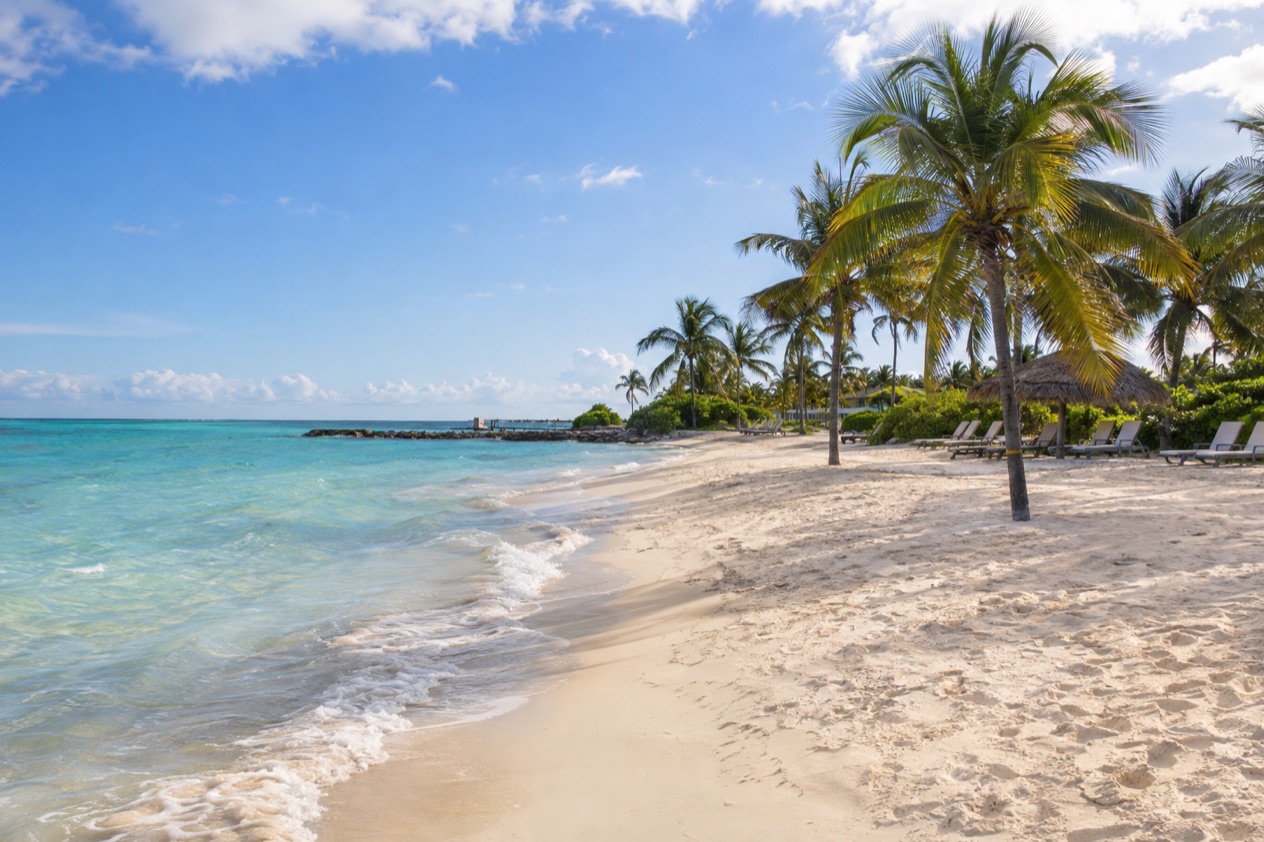
Under the shade at Taino Beach, families settle onto benches while children head for the playground and the sea breeze moves through the native trees. This is a community park on the sea as much as a beach, and the feel is local. It is the kind of stop that suits a slow afternoon on Grand Bahama in the Freeport and Lucaya area, with a trail, a memorial and a calendar of festivals.
Is visiting Taino Beach worth it?
Yes, if you like a relaxed, local-feeling stop where Bahamians and visitors share the same grounds, and less so if you want a resort with a pool bar and a line of loungers. Taino Beach is a park first. It has restrooms, a playground, sitting areas and a nature trail, so a visit is built around staying put, walking a little and watching the day go by.
What sets it apart from the resort beaches around Lucaya is who looks after it. The park is leased from the Grand Bahama Port Authority for 99 years and is a prized possession of the Freeport/Lucaya Council, which developed it as a place for Bahamians and visitors alike.
That shared ownership gives it a different rhythm from the hotel strands, where the guests are mostly travelers. Here the festivals are local ones and the people around you may be neighbors out for the afternoon.
The park also carries a bit of culture that a hotel beach rarely offers. It is the home of the annual Junkanoo Summer Festival, and the Ministry of Tourism hosts Tea Parties on the grounds as part of the People to People Program.
Add a bird sanctuary trail through native vegetation and you have a stop with more to it than sand and a view. It fits a traveler who wants to meet the island, not only look at it.
It is also a good companion to a busier day. Lucaya is the tourist district of Grand Bahama, with beaches, hotels, Port Lucaya and the dive operation UNEXSO, and Taino Beach gives you somewhere quieter in the same part of the island to pause between them.
What to see at Taino Beach
The visit divides into a few parts: the shaded park itself, a short walk into native bush, a memorial and, on the right dates, a festival. None of them demands a plan, and together they make a pleasant, unhurried visit.
The park, playground and sitting areas
The core of Taino Beach is the park the Freeport/Lucaya Council developed. You find restroom facilities, playground equipment and sitting areas, which is what turns a stretch of coast into a place where a family can spend hours. The seating is the heart of it, with room to watch the water, unpack a lunch you brought and let the children run between the swings and the shade.
The atmosphere is that of a community space. On a weekend afternoon you may see groups gathered for a get-together, and the pace is slow. It suits parents with young children, travelers with older relatives who prefer to sit, and anyone who wants the sea in view without a resort around it.
The nature trail and bird sanctuary
A trail leads through a nature preserve and bird sanctuary that highlights Grand Bahama’s indigenous vegetation. It is a chance to see what the island looked like before resorts and roads, with native trees and scrub closing in around the path and birdsong in the branches.
The best way to take it is slowly, with a pause to look at the plants. The trail gives the park a second character, quiet and green, set against the sociable seating and playground, and it is worth walking even if you came only for the sea view. Bring binoculars if you have them, since birds often turn up where the vegetation is thickest.
The Edward St. George memorial
A memorial to the late Chairman of the Grand Bahama Port Authority, Mr. Edward St. George, is prominently displayed in the park. It connects the grounds to the story of how Freeport grew, since the Port Authority is the body that holds the land the park sits on under its long lease.
It is a small stop, not a monument that needs an hour, but it adds context. If you wonder why the park exists and who stands behind it, the memorial and the lease together answer the question: a development partnership between the Port Authority and the council that put a public space on this coast.
Junkanoo Summer Festival and Tea Parties
The park is the venue for the annual Junkanoo Summer Festival. Junkanoo is the Bahamian tradition of rushing parades with cowbells, goatskin drums, horns and elaborate costumes, and a summer festival in the park brings that sound and color to the grounds, with food and music in the air.
The Ministry of Tourism also hosts Tea Parties here as part of the People to People Program, which pairs visitors with Bahamians for an easy exchange of conversation and local hospitality. Both events are what make the park different from a plain beach: they turn it into a gathering place.
Hours, tickets and rules
Taino Beach is a public park run by the Freeport/Lucaya Council on land leased from the Grand Bahama Port Authority for 99 years, not a ticketed attraction with a gate and a box office. What you get on the grounds is what the park provides: restrooms, a playground, sitting areas, the nature trail through the bird sanctuary and the Edward St. George memorial.
Because the park belongs to the council and is developed for both Bahamians and visitors, it is a place you go to, not one you book. The events are the exception, since the Junkanoo Summer Festival and the Tea Parties are organized occasions with their own organizers, and the Ministry of Tourism is the host of the Tea Parties.
For questions about the beach and park, the contact person is Ms. Elaine Smith, reachable locally at (242) 350-8600 or by email at [email protected]. She is the named contact for Taino Beach, so a call or a message to her is the direct route for anything about the park or the events held there.
Rules on the grounds are those of a shared community park. Facilities such as the restrooms and the playground are there for everyone, and the nature preserve is a bird sanctuary, so the trail is for walking and looking at the native vegetation.
How to get to Taino Beach
Taino Beach is in the City of Freeport on Grand Bahama Island, and Freeport is the island’s main city, holding both the commercial ship harbour and the main airport. So the usual arrivals, by plane at Grand Bahama International Airport or by ship into the Freeport harbour, both bring you into the same city as the beach.
From Florida the island is close. Lucaya, the suburb of Freeport where the tourist hotels and beaches cluster, lies roughly 105 miles east-northeast of Fort Lauderdale. The island has two airports, Grand Bahama International in Freeport and West End Airport in West End, but the latter is open only sporadically and for private aircraft only, so Freeport is the gateway for a visit to Taino Beach.
Once on the island, you reach the park by staying in the Freeport and Lucaya area, where resorts such as Our Lucaya (with its Radisson and Reef Village properties) and attractions like UNEXSO and Port Lucaya are found. Staying in that stretch puts you among the places that make up the tourist side of Grand Bahama, and Taino Beach is part of the same area.
Grand Bahama is part of the Eastern Time Zone, the same as the U.S. East Coast, so a trip from Florida involves no clock change. West End, the island’s westernmost town, sits at the opposite end from McLean’s Town in the east, which gives a sense of how much of the island lies beyond Freeport. Taino Beach belongs to the Freeport end of that long island.
When to visit Taino Beach
Grand Bahama has two seasons, a hot, rainy one from May through October and a warm, dry one from November through April. For a park where you sit outdoors, stroll a trail and spend afternoons in the open, the dry season is the more comfortable time, with mild days and cooler evenings.
| Season | Months | Average high (°F) | Average low (°F) |
|---|---|---|---|
| Hot, rainy season | May to October | 88 | 79 |
| Warm, dry season | November to April | 82 | 66 |
In the summer months the air is hot and heavy and showers come with the season, so a shaded seat in the park matters more. In winter, the days are warm enough to walk the nature trail without discomfort and the evenings are cooler, which makes a long afternoon outdoors a pleasant plan.
Time of day matters as much as month. In the hotter season, the morning is the gentler time for the trail, and the afternoon is for the sitting areas under the trees. In the cooler season, you can walk the grounds at midday and stay until the light turns golden over the water.
A special date is the annual Junkanoo Summer Festival, which fills the park with its parade tradition during the summer, in the rainy season. If the festival is what you want, that is the time to come, and the weather becomes the price of admission.
The Tea Parties hosted by the Ministry of Tourism are another organized occasion in the park. The highest hurricane risk on the island falls in August, September and October, which is worth knowing when you are choosing the late-summer weeks.
Tips for your visit
Think of Taino Beach as a half-day stop, not an all-day expedition. The park offers restrooms, a playground and sitting areas, so you can arrive with what you want for the afternoon and stay as long as the mood lasts. The trail through the bird sanctuary is a good way to fill the time between sitting and watching the sea.
What to bring is simple: a hat and sunscreen for the open stretches, something to drink and, if you like birds, binoculars for the trail. Comfortable shoes suit the walk through the native vegetation. If you are visiting in the rainy season, a light rain layer is worth having in the bag.
Families are well served here, since the playground gives children something to do while adults sit in the shade. The sitting areas also suit older travelers who prefer to watch the water. Both the nature trail and the memorial can be done at a leisurely pace, so the park works for a group with different energy levels.
To build a fuller day, combine the park with the rest of the Lucaya side of the island. Port Lucaya is a social hub, centered on Count Basie Square, and UNEXSO offers a dolphinarium and a range of scuba diving charters including shark feeding dives. The Our Lucaya resort sits in the same area. A quiet morning at Taino Beach followed by an afternoon in Port Lucaya makes a balanced plan.
For anything specific, such as a question about the park or an upcoming event, the named contact is Ms. Elaine Smith at (242) 350-8600.
Good to know before you go
The U.S. State Department rates the Bahamas Level 2, “Exercise increased caution”, and says most crime occurs in Nassau on New Providence and in Freeport on Grand Bahama.
The Atlantic hurricane season runs from June 1 to November 30, and Grand Bahama sits within it, so the late-summer and early-fall weeks carry the most weather risk for a trip. Hurricane Dorian struck Grand Bahama as a Category 5 storm in early September 2019, damaging or destroying nearly half of the homes on the island, a reminder of what the season can bring.
Tiger sharks are often found near the canals, harbours and shallow reefs of the island, which is background knowledge for anyone planning time on the water around Grand Bahama. As in any busy tourist area, keep your belongings with you in the park and use the same everyday habits you would at home.
Sources
- Bahamas Ministry of Tourism, Investments & Aviation (bahamas.com), Taino Beach (https://www.bahamas.com/natural-wonders/taino-beach), checked October 10, 2026
- Wikipedia, Lucaya (https://en.wikipedia.org/wiki/Lucaya,_Bahamas), checked October 10, 2026
- Wikipedia, Grand Bahama (https://en.wikipedia.org/wiki/Grand_Bahama), checked October 10, 2026
- U.S. Department of State, The Bahamas Travel Advisory, Level 2 (https://travel.state.gov/), checked October 10, 2026
- NOAA National Hurricane Center, Climatology (https://www.nhc.noaa.gov/climo/), checked October 10, 2026
To plan your stay
- Best Time to Visit the Bahamas: Weather, Hurricane Season, Sea Temperatures and Junkanoo
- Where to Stay in the Bahamas: Best Islands, Resorts, Boutique Stays and How to Choose
- Getting Around the Bahamas: Flights, Ferries, Mailboats and Taxis in Nassau
- Know Before You Go to the Bahamas: Entry Rules, Money, Getting Around and Local Customs