
Early in the morning on Grand Bahama, the pine woods around Freeport go quiet except for birds, and by the time the sun climbs over the water at Port Lucaya the dive boats are already pulling away from the docks. Freeport is a low, spread-out island town with a resort district beside it, a marina where people eat conch within sight of the boats, and cave and beach country a drive to the east. It suits travelers who want the sea at the center of the vacation, whether on a boat, a reef or a quiet stretch of sand.
Where is Freeport and what is it like?
Freeport sits on Grand Bahama, the northernmost island of the Bahamas, just across the water from Florida, about 67 miles off the coast of Palm Beach. It is a planned town more than an old harbor village, laid out on a grid after it was established as a free trade zone on August 4, 1955, and it still feels like a place built around commerce, shipping and visitors rather than around a historic square.
The map matters here. Freeport is the business and residential center, and Lucaya, a suburb of Freeport whose main industry is tourism, holds the resorts, the beach frontage and the waterfront Port Lucaya Marketplace. Out past both, the island stretches a long way in each direction.
West End, the oldest and westernmost settlement, lies toward Florida and is the first port of entry for boaters crossing over. East Grand Bahama is where Lucayan National Park and Gold Rock Beach sit, and the southern shore has become the home of Celebration Key.
The pace is unhurried and a little sprawling. Grand Bahama is the third largest island in the Bahamas, and it rewards people who like open space, pine forest, mangrove creeks and long empty horizons over those who want a walkable old quarter with a café on every corner. The clock is Eastern Time, the same as New York, so a trip from the East Coast involves no jet lag at all.
Who loves it: divers, families who want a resort with a beach, couples who like a marina dinner and a quiet morning, and anyone curious about the island’s caves and creeks. Who may not: travelers who want a compact, dense town with everything on foot, or a quick hop between several islands without crossing water. Grand Bahama is its own island, and the other Bahamian destinations lie across the sea.
What is there to do in Freeport?
The things to do in Freeport are mostly outdoors and mostly about the water: a national park built around caves, reefs and shipwrecks to dive, wild stingrays, and a cruise destination on the south shore. What sets Grand Bahama apart from its neighbors is that it combines a resort district with real wild country, pine forest, mangrove and open coast, within the same island.
Lucayan National Park
Lucayan National Park lies on the eastern side of the island, near Freeport, and covers only 40 acres, yet it is the one place in the Bahamas where you can see all six of the island’s ecosystems. Boardwalks and paths run through pine forest, mangrove and coastal scrub toward the shore, and the park incorporates one of the largest underwater cave systems in the world.
Two caves are open to the public, and you look into them from above, since swimming in the caves is prohibited. Access to the caves is seasonal, because they are also used for bat conservation, so what you can enter depends on the time of year.
Do not leave belongings unattended in the park, as thefts have been known to occur. It suits walkers, photographers and anyone who likes seeing how the island’s geology works.
Diving at Lucaya and around the island
Diving is the strongest reason many people come. UNEXSO, in Lucaya, was the first destination dive charter business in the world, and it runs a range of SCUBA charters, including shark feeding dives, and has a dolphinarium on site. Divers around Freeport swim alongside Caribbean reef sharks, a draw for people who want an encounter rather than a glimpse.
Picasso’s Gallery is a dive spot known for coral heads shaped like a painter’s palette, and the sunken shipwrecks around Freeport bloom with gorgonian sea fans and swarms of fish. Wrecks and reefs give the island two different kinds of dive, one about structure and one about color. It suits certified divers and anyone who wants to be near that world, even from the dock.
Stingrays and the rest of the wildlife
In Freeport, Keith Cooper offers a stingray meet-and-greet, where visitors swim with wild stingrays that he has befriended over twelve years. It is a close encounter, shallow and personal, and it makes a good half-day for people who like animals more than activity schedules.
Pair it with the other wild corners of the island. Peterson Cay National Park is reached only by boat, with anchoring in set areas away from the coral reefs, and fishing, shelling and any damage to or removal of coral are strictly prohibited there, as are leaving garbage, ash, coals or embers. The cay is a place to look, not to collect.
Beaches and Celebration Key
Gold Rock Beach, on the eastern end near Lucayan National Park, is the beach for people who want the island’s quieter shore. On the south side, Celebration Key is a Carnival destination designed for Carnival guests, with a mile-long white sand beach and a welcome area called Paradise Plaza, where live music and photo spots greet guests ashore.
Inside Celebration Key the zones are split by audience. Starfish Lagoon is made for families, with the Flash Flamingo and Mach III Marlin waterslides, the Guppy Grotto splash pad, and courts for basketball, beach volleyball and pickleball. Calypso Lagoon is for adults, with lagoon-side swim-up and swings bars and a DJ island. It is a separate experience from the island’s towns, aimed at the ship’s guests.
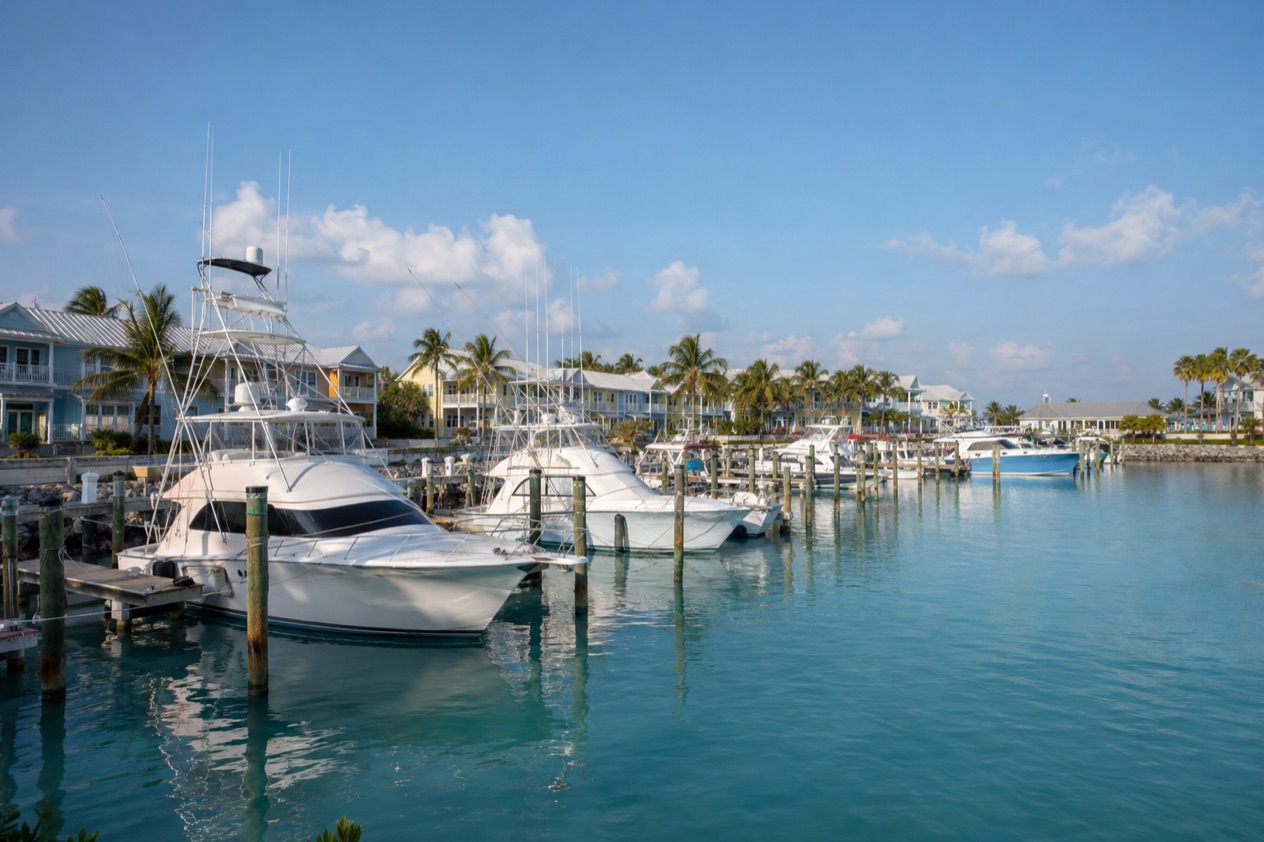
Back in Lucaya, the Port Lucaya Marketplace is the place for a slow afternoon, with boats in the slips, a bar with live music and a plate of cracked conch or conch salad. The Bahamian kitchen is simple and good here: fried or steamed fish, johnnycake, peas and rice and a cold Kalik. Evenings tend to start late and stay easy.
How many days do you need in Freeport?
A long weekend covers the essentials of Freeport, and a week lets you do the island properly. With three or four days you can fit in a dive or a stingray morning, a day at Lucayan National Park and Gold Rock Beach, and evenings at Port Lucaya, with time left over for a beach afternoon in Lucaya.
A short stay works best if you choose one theme. A diver gives most of the days to the water and treats the park as a half-day on a surface-interval afternoon. A family might pair a resort stay with the stingrays and the park. Because the island is spread out, packing too many stops into a single day means more time in transit than at the places themselves.
With a full week, the island opens up. You can add West End, the old western settlement where boaters from Florida clear in, and spend an afternoon among fishing boats and weathered docks. You can also add Peterson Cay by boat, a second dive on the wrecks, a slow morning in the pine woods of the east, and a day set aside for Celebration Key if you are sailing with Carnival.
Beyond that, Grand Bahama is a good base for people who like to repeat a favorite beach, return to a dive site in different light, or simply read in the shade after a morning outing. The other Bahamian islands are separate trips by sea or air, not day excursions, so a week here is a week on Grand Bahama.
Where to stay in Freeport
The main places to stay on Grand Bahama are Lucaya, central Freeport and the quieter eastern and western ends. Lucaya is the resort district, since tourism is its primary industry, and it holds the Our Lucaya resort, which includes both The Radisson and Reef Village properties. It is the natural choice for people who want a beach, a pool and restaurants close at hand, and for divers who want to be near UNEXSO and the marina.
Port Lucaya sits beside it and puts you within reach of the marketplace and the evening music. Staying in this part of the island means you can leave the day’s plans loose and still end the evening with a dinner by the water. It suits couples, families and groups of friends who want one base and no daily logistics.
Central Freeport is the practical, residential and commercial heart, grid-patterned and spread out, with the airport and the harbor on its side of the island. It suits travelers who want to be near the working side of the town, or who prefer a smaller place over a resort. It is less beach-oriented than Lucaya, so it is a better fit for people who plan to spend their days out on the island.
East Grand Bahama is the choice for quiet. It is home to Lucayan National Park and Gold Rock Beach, and staying out that way suits nature lovers who want to wake near the pines and the shore. West End, the oldest settlement, appeals to those who like boats, fishing and a sense of the island’s older history.
If you choose a vacation rental, stay alert, especially where private security is not present. That is a habit to carry anywhere, and it applies here. Celebration Key is a day destination for Carnival guests, not a place to stay.
How do you get to Freeport and get around?
Most visitors arrive by air at Grand Bahama International Airport, code FPO, which serves Freeport. The airport was privately owned until the Bahamian government bought it for one Bahamian dollar, and its runway is long enough to handle the largest aircraft in service. It sits relatively close to all the major cities of the Eastern Seaboard of the United States, which is part of why Freeport works well for a short escape.
The airport also anchors a larger commercial complex. Its land adjoins the Freeport Harbour Company Limited and the two operate as a single entity called the Sea Air Business Centre. That reflects the town’s origins as a place built for trade, with air and sea links under one roof, and it explains why the harbor and the airport feel part of the same working landscape.
By sea, boaters arrive at West End, the first port of entry from the Florida coast, 55 nautical miles away. Cruise passengers reach Grand Bahama through the cruise destinations on the island, and Celebration Key lies on the south side. Lucaya itself is about 105 miles east-northeast of Fort Lauderdale, which gives a sense of how near the island is to the Florida coast.
Once on the island, distances are the main thing to plan around. Freeport and Lucaya are neighbors, but Lucayan National Park and Gold Rock Beach lie out on the eastern end and West End far toward the west, and Peterson Cay is reached by boat. Think of the island in zones and group your outings by zone, which spares you long transfers and leaves more time for the sea.
When is the best time to visit Freeport?
The best months are November through April, the warm, dry season on Grand Bahama. Winter days run in the low 80s, evenings cool down into the mid-60s, and a light layer is welcome after dark. It is the right stretch for park walks, long beach mornings and outdoor dinners at the marina.
May through October is the hot, rainy season. Summer afternoons reach the high 80s with warm nights, and showers and thunderstorms are part of the rhythm. Nassau’s long record shows July far wetter than January, a pattern that fits the island’s seasons. Hot days suit people who spend them on the water, and the sea itself runs warm.
The Atlantic hurricane season runs from June 1 to November 30, with the highest risk in August, September and October. In early September 2019, Hurricane Dorian struck Grand Bahama as a Category 5 hurricane and damaged or destroyed nearly half of the homes on the island, a reminder of how serious the late-summer months can be. Late fall and the first weeks of winter are the shoulder of the season, still inside the official window until the end of November.
For festivals, the island’s biggest moment is Junkanoo, the Bahamian parade of costumes, cowbells, goatskin drums and brass, held around Boxing Day and New Year’s Day. It falls in the dry season, so it pairs naturally with the best weather. A winter trip combines that with the easiest conditions for diving, park visits and long days outside.
Good to know before you go
The U.S. State Department rates the Bahamas Level 2, “Exercise increased caution”, and says most crime occurs in Nassau on New Providence and in Freeport on Grand Bahama.
The currency is the Bahamian dollar, and the island follows Eastern Time. Hurricane season runs through the end of November, so build some flexibility into a late-fall trip. Keep belongings with you at Lucayan National Park, and stay alert in vacation rentals that lack private security.
Respect the rules of the island’s protected places: no swimming in the caves at Lucayan National Park, and no fishing, shelling or coral collecting at Peterson Cay. Those restrictions are what keep the caves, the reefs and the cays worth visiting.
Sources
- Wikipedia, Freeport, Bahamas (https://en.wikipedia.org/wiki/Freeport,_Bahamas), checked October 10, 2026
- Wikivoyage, Grand Bahama travel guide (https://en.wikivoyage.org/wiki/Grand_Bahama), checked October 10, 2026
- Wikipedia, Grand Bahama (https://en.wikipedia.org/wiki/Grand_Bahama), checked October 10, 2026
- Bahamas Ministry of Tourism, Investments & Aviation (bahamas.com), Lucayan National Park (https://www.bahamas.com/natural-wonders/lucayan-national-park), checked October 10, 2026
- Bahamas Ministry of Tourism, Investments & Aviation (bahamas.com), Keith Coopers Stingrays Freeport (https://www.bahamas.com/experiences/keith-coopers-stingrays-freeport), checked October 10, 2026
- Bahamas Ministry of Tourism, Investments & Aviation (bahamas.com), Dive Freeport (https://www.bahamas.com/experiences/dive-freeport), checked October 10, 2026
- Wikipedia, Lucaya (https://en.wikipedia.org/wiki/Lucaya,_Bahamas), checked October 10, 2026
- Carnival Cruise Line, Celebration Key (https://www.carnival.com/celebration-key), checked October 10, 2026
- Wikipedia, Geography of the Bahamas (https://en.wikipedia.org/wiki/Geography_of_the_Bahamas), checked October 10, 2026
- NOAA NCEI, GHCN-Daily station BF000078073 (Nassau Airport), normals 1991-2020 computed from the daily record (https://www.ncei.noaa.gov/access/services/data/v1?dataset=daily-summaries&stations=BF000078073), checked October 10, 2026
- Open-Meteo Marine API, average 2015-2024, checked October 10, 2026
- U.S. Department of State, The Bahamas Travel Information, Safety and security (https://travel.state.gov/), checked October 10, 2026
- U.S. Department of State, The Bahamas Travel Advisory, Level 2 (https://travel.state.gov/), checked October 10, 2026
- NOAA National Hurricane Center, Climatology (https://www.nhc.noaa.gov/climo/), checked October 10, 2026