
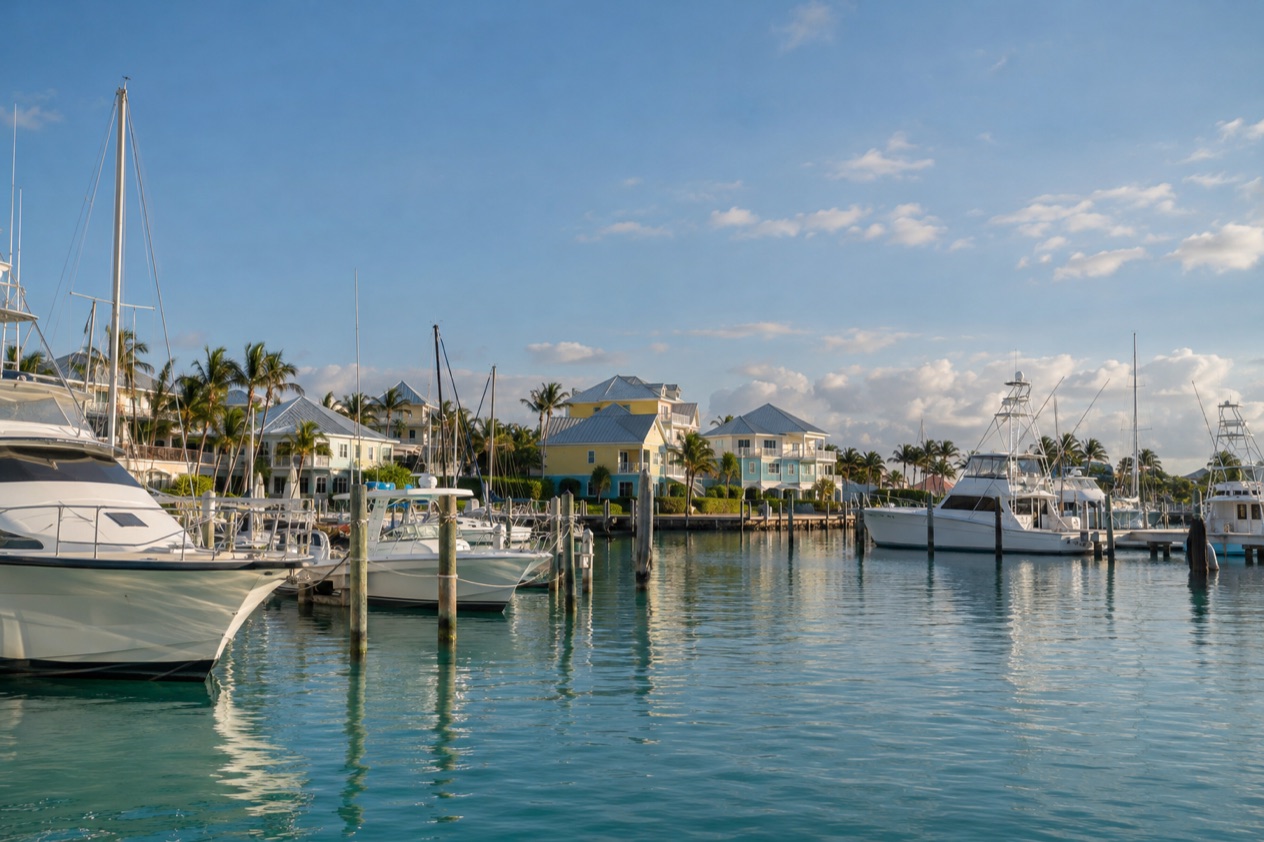
Late in the afternoon in Port Lucaya, the boats rock at their slips, a steel pan or a guitar starts up near the waterfront, and someone at a stall is cracking conch for a salad with lime and hot pepper. Freeport sits on Grand Bahama, the northernmost island of the Bahamas, and it is built around the water: reefs to dive, creeks to paddle, beaches that run for miles and pine woods that open onto caves. It suits divers, nature lovers, families and anyone who wants island food without a resort bubble.
What are the best things to do in Freeport?
The best things to do in Freeport are mostly outdoors and on or under the water: walking through Lucayan National Park, diving the reefs off Lucaya, meeting wild stingrays, browsing Port Lucaya Marketplace and eating at a local fish fry. Between those, there is room for a quiet beach, a garden and a night of live music.
The list below is the short version. Each item gets its own treatment in the sections that follow, with what you see, when it feels right and who it suits.
- Walk Lucayan National Park, where pine forest, mangroves, caves and a beach all sit within one park.
- Dive or snorkel off Lucaya, from the coral heads of Picasso’s Gallery to wrecks covered in sea fans.
- Meet the wild stingrays that Keith Cooper has befriended, a hands-on encounter that stays with people long after the trip.
- Stroll Port Lucaya Marketplace and the waterfront, with its shops, boats and evening music.
- Spend a slow morning on a stretch of beach such as Taino, Xanadu or Gold Rock, depending on how quiet you want it.
- Eat conch, fried snapper and baked macaroni at a Bahamian fish fry or a settlement restaurant.
- Drive out to West End, the oldest settlement on the island, for a look at where Grand Bahama began.
- Take a nature outing by kayak or on foot through the creeks and mangroves that fringe the island.
What ties the list together is that Freeport is two places in one. The city itself was planned as a free trade zone, wide and spread out, while Lucaya next door is the beachfront and marina district where most of the visitor life gathers. The wilder side of the island, with its caves, reefs and cays, begins just beyond both.
If your time is limited, put Lucayan National Park and one day on the water at the top, then fill the evenings around Port Lucaya. If you have longer, the quieter settlements and a second beach day reward the extra time.
Sights and landmarks in Freeport
Freeport’s sights are a mix of planned-city curiosities, waterfront streets and green spaces rather than grand monuments. The city was established as a free trade zone on August 4, 1955, and you can still read that ambition in its wide boulevards and its scatter of districts, each with its own purpose.
Port Lucaya Marketplace and the waterfront
Port Lucaya is the part of Lucaya that most visitors treat as the town center. Tourism is the district’s main industry, and the marketplace shows it, with colorful shop fronts, craft stalls, restaurants with terraces and a marina where charter boats tie up. Count Basie Square, at the heart of it, is the natural meeting place, often with a band playing as the light turns gold.
Come once in the morning, when the boats are heading out and the stalls are being arranged, and again at dusk, when the place fills with the smell of grilled fish and the sound of music. Straw work, wood carvings, painted conch shells and hot sauces are the usual souvenirs. It suits couples, families and anyone who likes to wander with no plan, and it sits right beside the dive docks of UNEXSO.
Lucayan National Park
Lucayan National Park is both a sight and an outing, and it is the one place in the Bahamas where all six of the island’s ecosystems can be seen. It covers 40 acres near Freeport and takes in pine woodland, mangroves, a creek, a beach and the entrances to caves. It also incorporates one of the largest underwater cave systems in the world, although what you see from above is a quiet, shaded forest floor with limestone openings.
Two of the caves are open to the public, and access to them is seasonal because the caves are also used for bat conservation. That makes it worth treating the cave visit as a bonus rather than a promise. Bring something to carry water in, keep your belongings with you at all times, since the park advises that thefts have been known to occur, and plan for the boardwalks and trails to be the main event.
Gardens, nature centers and local history
Garden of the Groves, in Freeport, is a landscaped park with waterfalls, ponds, flowering trees, peacocks and a small chapel, and it gives a green and unhurried break from the beach. A museum devoted to Grand Bahama’s past has been housed there, and it tells the story of the island’s first people, the Lucayans, and of the later settlers and the building of Freeport.
The Rand Nature Centre, run in the interest of conservation, offers pine-woodland trails and native plants and birds, and suits anyone who wants a quiet walk close to town. Both places work well on a morning when the sea is rough or the sky is gray.
The International Bazaar and the city’s older corners
The International Bazaar is a throwback from Freeport’s early boom, with its red torii-style gate at the entrance and a collection of shops that once imitated markets from around the world. It has a faded, nostalgic charm and is a good stop for people interested in how the city was imagined.
Beyond it, the older settlements on the island, such as the stretch around Smith’s Point and the quiet communities along the coast, give a sense of everyday Bahamian life that the resort districts do not. Churches, small bars, brightly painted houses and fishing boats pulled up on the sand are the sights there.
Beaches and outdoor things to do in Freeport
Freeport’s outdoor life centers on long stretches of pale sand, reefs a short boat ride out and mangrove creeks, and the beaches vary from lively hotel frontage to nearly empty strands. Grand Bahama’s seasons run in two halves, a hot, rainy season from May through October and a warm, dry one from November through April, so plans on the water shift a little with the calendar.
The beaches of Lucaya and beyond
Lucaya’s own beach fronts the Our Lucaya resort, which includes both The Radisson and Reef Village properties, and it has the busiest feel, with lounge chairs, beach bars and water sports nearby. Farther along the coast, Taino Beach and Xanadu Beach have a more relaxed, local mood, with the occasional beach shack serving conch and cold drinks.
Gold Rock Beach, reached through Lucayan National Park, is the favorite of people who want wide, quiet sand with a wild edge, little development and space to walk. Bring your own shade, water and snacks, since there is little behind it. The sea off these beaches changes from day to day, so judge the water in front of you rather than expecting any one beach to behave the same way.
Diving and snorkeling
Diving is the signature water activity here. UNEXSO in Lucaya was the first destination dive charter business in the world, and it still anchors the local scene. Picasso’s Gallery is famous for its vibrant coral heads shaped like a painter’s palette, and divers also explore sunken shipwrecks that bloom with gorgonian sea fans and swarms of fish.
For people who want something more daring, divers in Freeport can swim alongside Caribbean reef sharks. Snorkelers can ask the operators in Port Lucaya about the reef and wreck sites that suit them. Most trips go out by boat from the marinas, and the blues offshore are a good reason in themselves to be on the water.
Stingrays, kayaks and mangrove creeks
In Freeport, Keith Cooper offers a stingray meet-and-greet where visitors can swim with wild stingrays that he has befriended over twelve years. It is a personal, small-scale encounter rather than a theme-park show, and the rays come to him because of that long relationship.
Paddling is another way in. Guided kayak outings through mangrove creeks, among roots, herons and small fish, show a side of Grand Bahama that the beaches hide. Bonefishing in the flats is also part of the island’s reputation among anglers, and charter captains in Lucaya can arrange fishing of other kinds offshore.
Celebration Key and the cays
On the south side of the island, Celebration Key is a new exclusive destination from Carnival, designed for Carnival guests. Its beach is a mile-long stretch of white sand, and Paradise Plaza, the first portal, welcomes guests ashore with live music and photo ops.
Peterson Cay National Park is reachable only by boat, and visitors are instructed to anchor in specific areas away from the coral reefs. It is a place for people who already have a boat or a charter and want a small, wild cay.
Day trips from Freeport
The day trips people actually take from Freeport go to Lucayan National Park, West End and the offshore cays, with a few smaller stops along the way. Most of them are about nature or history rather than sights in the usual sense, and they pair well with a late lunch at a roadside spot.
Lucayan National Park and Gold Rock Beach
The park lies on Grand Bahama near Freeport, and most visitors reach it by road along the island’s south shore. Boardwalks cross the mangroves and the creek, a trail leads through the pine forest, and the limestone openings of the caves appear among the trees. Two caves are open to the public, and access is seasonal because of the bats that use them.
Morning gives the best light under the pines and a quieter trail. Finish at Gold Rock Beach, a broad, pale shore that suits a picnic and a long walk. The park suits families with older children, birders and anyone who likes a little wilderness. Keep valuables with you rather than leaving anything unattended.
West End
West End is the westernmost town on Grand Bahama and the oldest settlement on the island. It is also the first Port of Entry for boaters crossing from the Florida coast, which gives the harbor a salty, practical feel: boats at the docks, weathered bars, and the sea in every direction.
The town carries the island’s rum-running and fishing past in its buildings and stories, and it is a good stop for people who like places with a past rather than a polish. Go for a late lunch of fried fish or conch, and stay for the view over the water toward Florida.
Peterson Cay and the offshore cays
Peterson Cay National Park sits offshore and is accessible only by boat. Visitors must anchor in specific areas away from the coral reefs, which shows how fragile the surrounding water is. On a charter, you see a small green island ringed by shallow reef and clear water.
It suits people who want a boat day with a purpose, such as snorkeling, photography or simply a quiet landing. Charter operators in Lucaya are the place to ask about trips. Pack sun protection and your own water, since there are no facilities to count on.
Smaller stops along the way
- Smith’s Point, for a local fish fry and a look at everyday island life.
- Roadside conch stands, where the salad is made in front of you.
- Quiet beaches such as Barbary and Churchill, for a swim-free walk and a long look at the water.
- Fishing settlements along the coast, with painted boats and small churches.
What to eat in Freeport
Eating in Freeport means conch in every form, fresh fish, and sides that make a plate feel like a Sunday dinner. Conch is the star, served raw in a salad with onion, pepper, tomato and sour orange or lime, fried as fritters, or cracked, pounded thin and fried until crisp.
Conch, fish and lobster
Conch salad is best eaten close to the water where it was made, with the juice still bright and the hot pepper adjusted to taste. Conch fritters come in a paper basket with a dip, golden and a little spicy. Cracked conch is the heartier choice, usually with fries or rice.
Fish arrives as grouper, snapper and mahi-mahi, often fried whole or steamed with onions, peppers and tomatoes in a savory broth. Spiny lobster, called crawfish locally, appears grilled or in a rich stew, depending on the cook and the season.
Sides, breads and sweets
The plate is not complete without peas n’ rice, a pot of pigeon peas and rice cooked with tomato and thyme, and a square of baked macaroni and cheese that is firm and creamy at once. Coleslaw, fried plantains and a slice of johnnycake round things out.
For dessert, look for guava duff, a rolled, steamed pastry filled with guava and served with a warm, buttery sauce. Coconut tarts and rum cake are also easy to find. A hot, sweet bread from a local bakery makes a good start to the day.
Drinks and fish fry culture
Kalik, the local beer, is the usual companion to a plate of fried fish. Sky Juice, a mix of gin, coconut water and sweet milk, is the traditional island drink, and switcha, a lime-based cooler, is the non-alcoholic favorite. Rum punches are everywhere.
The fish fry is the heart of local eating: a row of small, open-air spots serving fresh fish, conch and sides, with music playing and tables often outside. Smith’s Point has a well-known one, and Port Lucaya Marketplace offers more polished versions along the waterfront. Order a few things and share them across the table.
Things to do in Freeport at night
Freeport evenings are relaxed and centered on the waterfront, with live music, open-air bars and long dinners rather than a late-night club scene. Port Lucaya is where most of it happens, and the mood shifts from shopping to music as the sun sets.
Port Lucaya after dark
As the light fades, the marketplace lamps come on and Count Basie Square fills with people finding tables and drinks. A band or a solo guitarist plays calypso, reggae and island standards, and the boats in the marina glow with deck lights.
Restaurants with terraces over the water serve fish, conch and rum drinks, and the pace is slow. It suits couples, groups of friends and families with children who can stay up a little later. Wander between the stalls and the bars, and stop wherever the music pulls you in.
Fish fry nights and local bars
A fish fry is as much a social event as a meal. Plates arrive hot from the fryer, speakers play soca and gospel by turn, and neighbors stop to talk. Local bars along the coast have a similar feel, with dominoes, cold Kalik and a view of the dark water.
Drinks are simple and strong, and the best way to enjoy them is to take your time. Ask the person behind the counter what they recommend, and let the evening unfold at the pace of the island.
Junkanoo and quieter evenings
Junkanoo, the Bahamian street parade of costumes, cowbells, goatskin drums and brass, takes place on December 26 and January 1, and Grand Bahama has its own celebrations. If you are on the island then, it is the evening to remember, with the sound carrying for blocks.
On ordinary nights, quieter options include a sunset walk on the beach, a drink at a hotel terrace, or a slow dinner at a settlement restaurant. Away from the lights, the sky over the water is dark and often full of stars, which makes a late stroll along a quiet shore a pleasure in itself.
Things to do in Freeport with kids
Children in Freeport spend their days around animals, boardwalks and beaches, and the best outings give them something to touch, spot or splash through. Keep plans flexible, since sun and heat shape the day on any outing and shade and water matter more than a packed itinerary.
Animals and nature outings
The stingray meet-and-greet with Keith Cooper is the kind of encounter that sticks with children, because the rays are wild and come to him after twelve years of friendship. It is a gentle, up-close way to learn about marine life, though it involves being in the water, so it suits those comfortable with that.
Lucayan National Park gives children boardwalks to run along, mangrove roots to inspect and cave openings to peer into. The Rand Nature Centre and Garden of the Groves add peacocks, ponds and flowering trails, all at a pace that suits small legs.
Beach days and play areas
Beaches in Lucaya and along the south shore give children room to dig, collect shells and build. Bring hats, sun shirts and plenty of water. Resort areas such as Our Lucaya have pools and beach activities, which can be a good fallback when the sea is not in the mood. At Celebration Key, designed for Carnival guests, Starfish Lagoon is made for families, with the Flash Flamingo and Mach III Marlin waterslides, the Guppy Grotto splash pad and sports courts for basketball, beach volleyball and pickleball.
Keeping the day comfortable
Distances on Grand Bahama are spread out, so a day with children works best with one main outing and a long, slow lunch rather than several stops. Plan the park or boat trip for the cooler part of the day, and leave time for a rest in the shade.
Sun protection, hats and water are the basics. At parks and beaches, keep bags with you, since the park advises that belongings left unattended have been stolen. End with an ice cream or a fruit drink at Port Lucaya, where there is plenty to watch.
Good to know before you go
The U.S. State Department rates the Bahamas Level 2, “Exercise increased caution”, and says most crime occurs in Nassau on New Providence and in Freeport on Grand Bahama.
Freeport is in the Eastern Time Zone and lies 67 miles off the coast of Palm Beach, Florida, on an island that spreads across a wide area, so Freeport, Lucaya and the outlying settlements are separate places rather than one walkable town. The island’s hurricane season runs from June 1 to November 30, with the highest risk in August, September and October, and Hurricane Dorian damaged nearly half of the island’s homes in early September 2019.
The airport, Grand Bahama International, is publicly owned, and its long runway can handle the largest aircraft in service. Most things to do here are outdoors or on the water, so a sun hat and reef-friendly habits go a long way.
Sources
- Wikipedia, Freeport, Bahamas (https://en.wikipedia.org/wiki/Freeport,_Bahamas), checked October 10, 2026
- Wikivoyage, Grand Bahama travel guide (https://en.wikivoyage.org/wiki/Grand_Bahama), checked October 10, 2026
- Wikipedia, Grand Bahama (https://en.wikipedia.org/wiki/Grand_Bahama), checked October 10, 2026
- Bahamas Ministry of Tourism, Investments & Aviation (bahamas.com), Lucayan National Park (https://www.bahamas.com/natural-wonders/lucayan-national-park), checked October 10, 2026
- Bahamas Ministry of Tourism, Investments & Aviation (bahamas.com), Keith Coopers Stingrays Freeport (https://www.bahamas.com/experiences/keith-coopers-stingrays-freeport), checked October 10, 2026
- Bahamas Ministry of Tourism, Investments & Aviation (bahamas.com), Dive Freeport (https://www.bahamas.com/experiences/dive-freeport), checked October 10, 2026
- Wikipedia, Lucaya (https://en.wikipedia.org/wiki/Lucaya,_Bahamas), checked October 10, 2026
- Carnival Cruise Line, Celebration Key (https://www.carnival.com/celebration-key), checked October 10, 2026
- Bahamas Ministry of Tourism, Investments & Aviation (bahamas.com), Things to do (https://www.bahamas.com/plan-your-trip/things-to-do), checked October 10, 2026
- U.S. Department of State, The Bahamas Travel Advisory, Level 2 (https://travel.state.gov/), checked October 10, 2026
- NOAA National Hurricane Center, Climatology (https://www.nhc.noaa.gov/climo/), checked October 10, 2026