
Mornings in Freeport start with the smell of fried fish and onions near the water, the hum of a golf-cart-sized car park at a beach club, and conch salad being chopped to order at a roadside stand. The island sits just off the Florida coast and feels like an easy escape, with wide roads, a long beach shoreline and a marina district built for strolling. Easy does not mean careless, though, and visitors planning a trip want a straight answer about how safe the place is.
Is Freeport safe to visit?
Millions of people visit the Bahamas and most go home with nothing worse than a sunburn, but Freeport is one of the two places where the country’s crime is concentrated, and that deserves to be taken seriously. The U.S. Department of State says most crime in the Bahamas occurs in Nassau on New Providence and in Freeport on Grand Bahama. A trip here can be relaxed and pleasant, and it works best when you bring the habits you would use in any busy U.S. city.
In practice, that means treating Freeport as a place where common sense matters more than any single rule. Keep your belongings with you, stay alert wherever you sleep, and choose the companies you hire for water outings with care. Grand Bahama is a large island, and Freeport itself spreads across a wide area, so a visit usually involves moving between the resort strip, the harbor districts and the beaches rather than staying in one walkable pocket.
The island lies 67 miles off Palm Beach, close enough that many travelers treat it like a weekend getaway. That closeness can make the place feel more familiar than it is. Local laws are the Bahamas’ own, medical care is limited once you leave the main towns, and the legal system does not work like ours, all of which are covered in the sections that follow.
Two parts of the picture are worth knowing from the start. First, laws on drugs and firearms are strictly enforced, and visitors have been held for days over a single bullet left in a bag. Second, the tourism industry is unevenly regulated, so equipment and facilities do not commonly get safety inspections. Neither point means you should stay home. Both mean you should choose carefully and read the details of what you sign up for.
Safety by area in Freeport
Freeport and the resort and marina districts
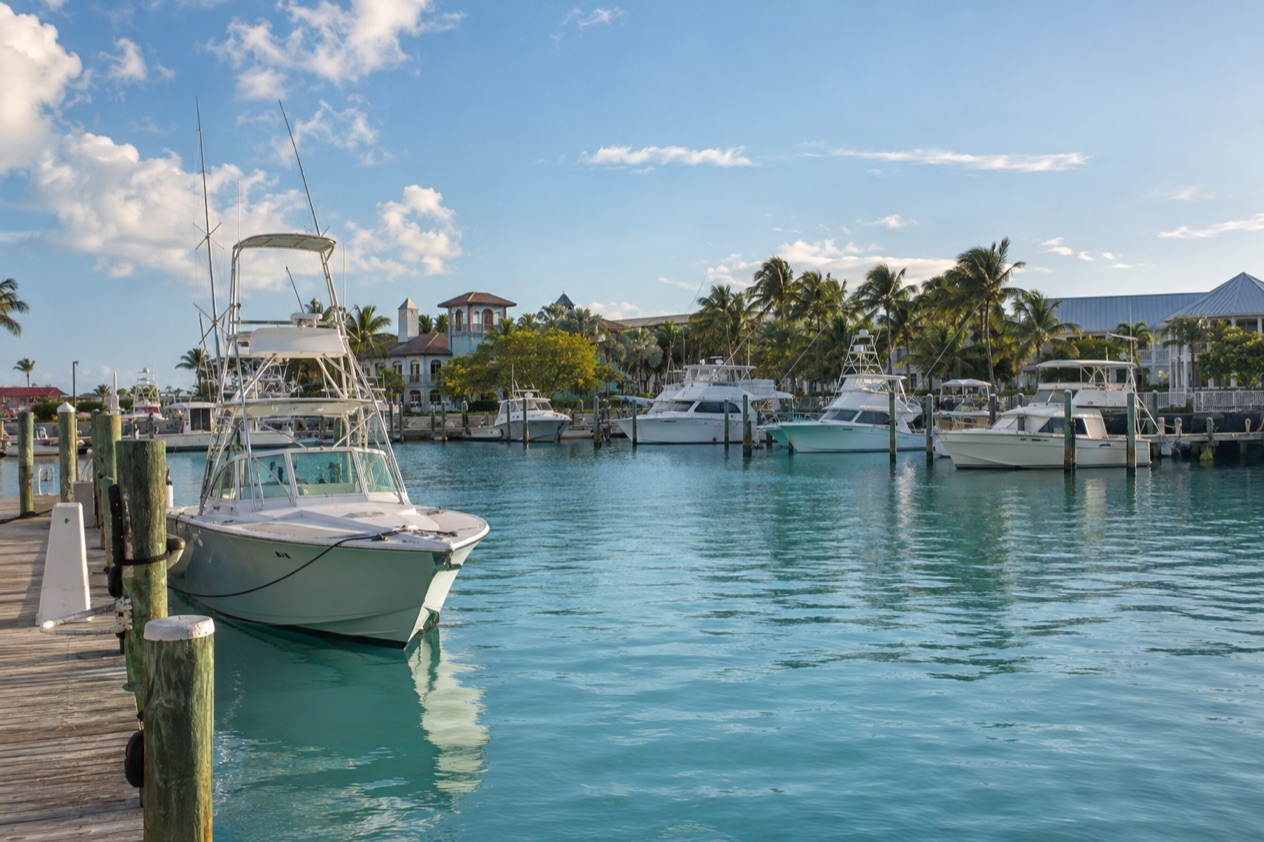
Freeport is a planned city, founded as a free trade zone in 1955, and it shows: broad avenues, shopping plazas, a port and a harbor district around Port Lucaya with restaurants, a straw market and live music in the evenings. By day it is busy with shoppers, cruise passengers and families heading to the beach. The strip is where most visitors spend their time, and it is also within the area the State Department names for the country’s crime.
The practical habit is simple. Carry only what you need for the day, leave passports and spare cash in your room, and keep phones and bags close when you sit down at an outdoor table. Freeport covers a very large area, so distances between neighborhoods are not walkable, and the part of the city you see from a resort window is not the whole of it.
Vacation rentals and private homes
Many visitors rent a house or condo on Grand Bahama, and the State Department points out that travelers should stay alert in vacation rental properties, especially where private security is not present. A rental gives you space, a kitchen and a quiet setting. It also means no front desk and no guard unless the property provides one.
Look at how the place is secured before you commit: whether it sits in a gated complex, how the doors and windows lock, and whether anyone is on site. Lock up whenever you head out for the beach, even for an hour. A resort stay, by contrast, usually puts staff and security between you and the street, which suits travelers who prefer not to think about it.
Lucayan National Park
Lucayan National Park is the island’s showpiece for nature, and the only place in the Bahamas where you can see all six of the island’s ecosystems, from mangroves to pine forest to a beach. Boardwalks and trails run through shady woodland, and the caves hold a seasonal bat population, so access to them changes with the time of year because they are also used for bat conservation.
The park’s own warning is plain: never leave belongings unattended, as thefts have been known to occur. A car parked near a trailhead with a bag on the seat is the classic mistake. Bring a small daypack that stays on your back, put the rest in your hotel, and treat the beach at the end of the trail the same way.
Peterson Cay and the offshore cays
Peterson Cay National Park lies off Grand Bahama and can be reached only by boat, with visitors instructed to anchor in specific areas away from the coral reefs. The reefs are the draw, and also the reason the rules exist. A cay with no road access has no shop, no clinic and no easy exit, so what you bring with you is what you have.
Because commercial boat tours are not consistently regulated in the Bahamas, the choice of captain matters as much as the destination. Ask how the boat is equipped and whether the operator is licensed, and skip any outing that feels improvised. If you hire a boat yourself, remember that running a fishing boat or other charter without a license from the Bahamas Port Department can bring a fine of up to $100,000 and 3 years in prison.
Common scams and how to avoid them
The most serious traps in Freeport are less about a clever hustle than about services that are not regulated the way visitors expect. The tourism industry in the Bahamas is unevenly regulated, and safety inspections for equipment and facilities do not commonly occur. That affects anything you rent or book on the spot, from a boat ride to a water sport.
Jet skis deserve their own warning. Sexual assaults by jet ski operators have been reported in the Bahamas, and U.S. government employees are prohibited from using jet skis and personal watercraft rented from independent operators on New Providence and Paradise islands.
That ban does not cover Grand Bahama, but it shows how seriously the risk is taken. Skipping independent jet ski rentals, or at least never going out alone with an operator, is the simplest way around it.
Water tours and commercial watercraft follow the same logic. Many companies lack safety certifications, so look for a business with a fixed office or a hotel partnership, and watch the boat before you board: life jackets in plain view, a captain who talks you through the plan, a crew that is not rushing to fill seats. If the answers feel vague, walk away. Plenty of other outings leave from the same harbor.
Theft is the everyday risk. At Lucayan National Park, visitors are warned never to leave belongings unattended, and the same habit serves you on any beach, at a café table or in a parked car. Do not leave a bag on the sand while you swim, and do not hand your phone to a stranger for a photo and then turn away.
The costliest mistakes are legal ones. Marijuana and all products with its derivatives, including CBD and THC, are not legal in the Bahamas, and a medical card is no exemption. Drug violators are regularly arrested even for small quantities. Firearms and ammunition are illegal too, including a single round forgotten in a carry-on, and police enforce this even at the airport as travelers leave. Check every pocket and bag before you pack.
Getting around safely
In the Bahamas you drive on the left, which is the first thing to settle in your head before you leave the airport. Seatbelts are required for the driver and every passenger. If you are used to right-hand traffic, roundabouts and turning across lanes take a few minutes to feel natural, so go slowly at first and let others pass.
Rain changes the roads. Flooding occurs frequently in many areas, including Freeport, during and after rainstorms, and a street that was dry in the morning can hold standing water by evening. A afternoon downpour is a good reason to wait at a restaurant rather than push on, and a flooded road is never one to test with a car.
The State Department also notes that traffic in Nassau is severe, with drivers who often show aggressive or careless tendencies, and that pedestrian accidents are common on New Providence. Those statements describe another island, but they are a reminder that the Bahamas has its own driving culture. On Grand Bahama, treat every crossing with care and keep to sidewalks where there are any.
Distances in Freeport are large, since the city spreads over a wide area, so plan your days by area rather than trying to see everything at once. Pick one district for the morning, such as the harbor and marketplace, and another for the afternoon, such as the park or a beach. That keeps your time on the road short and your evenings free.
Beach, water and weather safety
The Atlantic hurricane season runs from June 1 to November 30, and the Bahamas regularly experiences hurricanes, which can also occur outside that period. A trip in those months is possible and many people take one, but the weather deserves a place in your plans. Airports and seaports cease operations well before a predicted hurricane arrives, so a storm can end your travel schedule before the wind picks up.
Rain of any kind can flood roads in and around Freeport, so a wet afternoon is a good time for an indoor stop. Keep an eye on forecasts in the days before you fly, and carry your documents and medications in a bag that stays with you. Travel insurance that covers evacuation and cancellations is worth a look.
At the water, the main caution is about who is running the outing. Commercial recreational watercraft, including water tours, are not consistently regulated, and many companies lack safety certifications. Where you swim, you are on your own judgment, and a beach with no one nearby is a different proposition from one with other people in the water. Keep children within arm’s reach and never swim alone.
Medical help is another reason to be careful. Care is available on Grand Bahama, but serious illnesses or injuries might not be treatable locally, and first responders are generally unable to reach areas outside major cities.
A remote cay or a trail deep in the park is a long way from a hospital. The State Department also points to NASA’s Air Quality Forecast, a three-day outlook for the Bahamas, for travelers sensitive to air quality.
Good to know before you go
The U.S. State Department rates the Bahamas Level 2, “Exercise increased caution”, and says most crime occurs in Nassau on New Providence and in Freeport on Grand Bahama.
Bring cash for medical care, since most care providers overseas accept only cash, and U.S. Medicare and Medicaid do not apply abroad. Medical evacuation to the United States can cost tens of thousands of dollars up front, which is why the State Department strongly recommends supplemental evacuation insurance. Carry prescriptions in their original packaging with the doctor’s note.
If something goes wrong, report crimes to local police at 919 or 911 and contact the U.S. Embassy at +(242) 322-1181. Victims of sexual assault are encouraged to contact the embassy for help.
Anyone 16 or older is tried as an adult, and there is no right to a public defender in lower courts, so legal costs fall on the visitor. Keep your belongings close, lock your rental and leave drugs and ammunition at home.
Sources
- U.S. Department of State, The Bahamas Travel Information, Travel Advisory (Level 2) (https://travel.state.gov/), checked October 10, 2026
- U.S. Department of State, The Bahamas Travel Information, Safety and security (https://travel.state.gov/), checked October 10, 2026
- U.S. Department of State, The Bahamas Travel Information, Local laws and special circumstances (https://travel.state.gov/), checked October 10, 2026
- U.S. Department of State, The Bahamas Travel Information, Health (https://travel.state.gov/), checked October 10, 2026
- U.S. Department of State, The Bahamas Travel Information, Traveling and transportation (https://travel.state.gov/), checked October 10, 2026
- Bahamas Ministry of Tourism, Investments & Aviation (bahamas.com), travel blog, safety downtown Nassau (https://www.bahamas.com/blog/downtown-nassau-safe-for-tourists), checked October 10, 2026
- U.S. Department of State, The Bahamas Travel Advisory, Level 2 (https://travel.state.gov/), checked October 10, 2026
- Wikipedia, Freeport, Bahamas (https://en.wikipedia.org/wiki/Freeport,_Bahamas), checked October 10, 2026
- Wikivoyage, Grand Bahama travel guide (https://en.wikivoyage.org/wiki/Grand_Bahama), checked October 10, 2026
- NOAA National Hurricane Center, Climatology (https://www.nhc.noaa.gov/climo/), checked October 10, 2026