
In the Bahamas, a small boat slides out over water so pale it looks lit from below, and the day’s only decision is which cay to pull up to. In Jamaica, a roadside pit of pimento wood smokes with jerk chicken while reggae drifts from a passing minibus and the hills rise green behind the coast. Both islands speak English and both are a short hop from the States, but they feel like different trips: one built around water and a slow pace, the other around music, food and mountains.
Which is better, the Bahamas or Jamaica?
The Bahamas suits travelers who want a week built around boats, sandbars and resort pools, while Jamaica suits those who want music, cooking and a landscape that climbs from the shore into forested mountains. Neither is the better choice in general. It comes down to whether you want your vacation to revolve around the sea or around the island itself.
The Bahamas is an archipelago of 700 islands and more than 2,500 cays, so what you get depends heavily on which island you pick. Jamaica is a single large island with a capital, Kingston, a mountain spine and several distinct coasts. That difference shapes almost everything below: the Bahamas is a choice among islands, Jamaica is a choice among regions of one island.
| Category | The Bahamas | Jamaica |
|---|---|---|
| Beaches | Pale sand and clear shallows scattered across many islands and cays | Beaches along several coasts, with green hills behind them |
| Vibe | Island-hopping, boats, resort days, Junkanoo spirit | Music, jerk cookery, mountains and a strong national culture |
| Things to do | Boat days among the cays, resort attractions, Nassau’s historic streets | Blue Mountain coffee country, waterfalls, Kingston’s music heritage, food stops |
| Nightlife | Resort bars, Nassau and Freeport evenings | Reggae and dancehall culture, especially around Kingston |
| Weather | Wet season May to October, drier winter months | Tropical, hot and humid, more temperate in the high interior |
| Getting there | Commercial and charter flights, ferries and cruise lines, many airports | Flights to the island, with Kingston as the capital |
| Language | English | English |
| Hurricane season | Atlantic season, June 1 to November 30 | Atlantic season, with direct hits in the past |
| Best for | Boaters, beach lovers, resort stays, cruise passengers | Food lovers, music fans, travelers who want mountains and coast |
Beaches and the sea
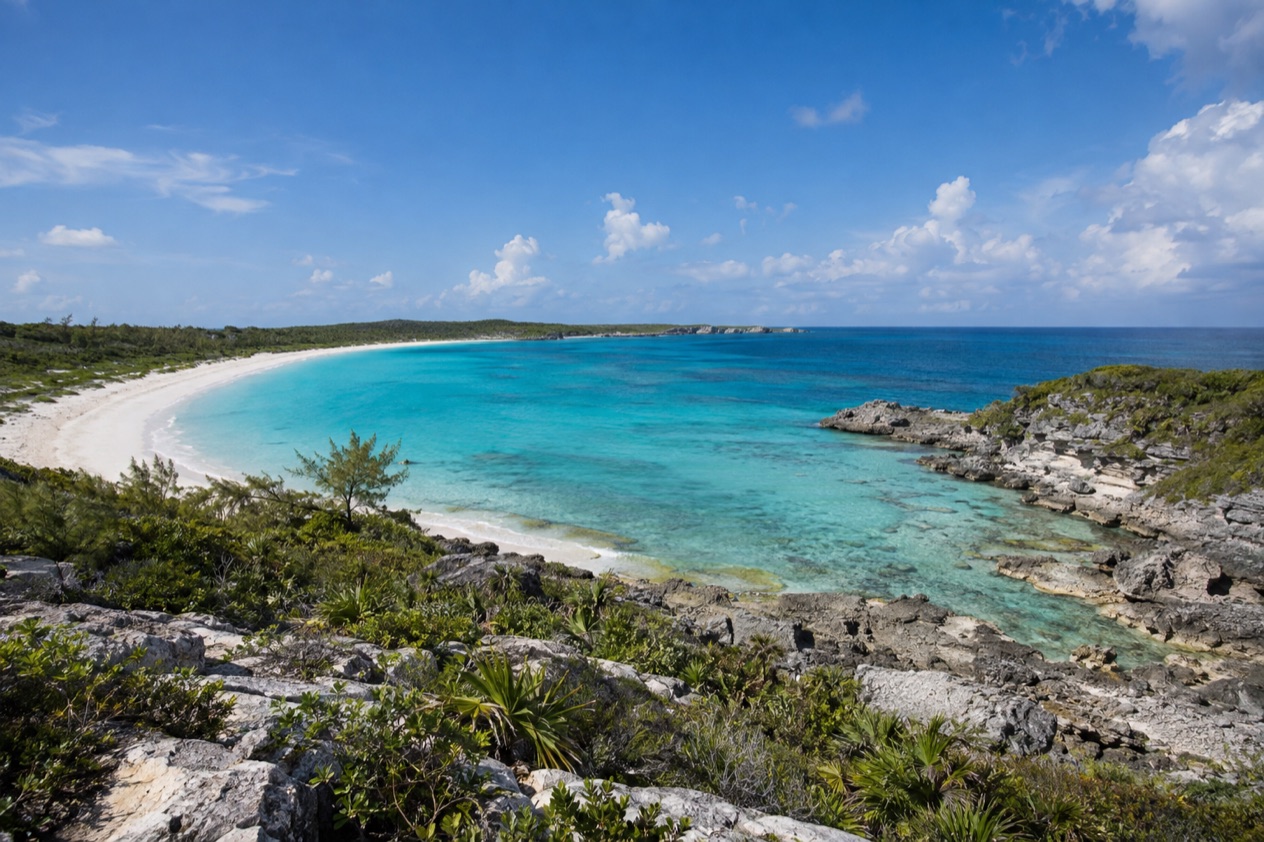
The Bahamas wins on sheer quantity of coastline. With hundreds of islands spread through the Atlantic, you can spend a week moving between beaches without repeating a type: a long resort strand on Paradise Island or Cable Beach, a quiet cay reached by boat, a stretch of sand with no building in sight. The water is the reason most people come, and it is the Bahamas’ calling card for good reason.
Conditions shift with the weather and the season, so decide about swimming beach by beach and day by day. On New Providence, sexual assaults have occurred on and near downtown Nassau beaches, a reason to pick your stretch of sand with some thought. Boat days are where the Bahamas shows what it does best, with a captain, a cooler and a cay of your own for an afternoon.
Jamaica’s coast is more varied in mood. Some beaches sit under palms with resorts behind them, others are backed by steep green hills that remind you the island is mountainous. The sea is part of the experience but not the whole of it, because the island keeps pulling you inland toward food stalls, markets and music.
Jamaica’s tropical climate is hot and humid, which makes the water welcome after a day of exploring. The beach is one chapter of a Jamaican trip rather than the book.
If the beach itself is the point of your trip, the Bahamas wins. Its islands are built around the water, and the choice of settings is far wider. Jamaica takes the prize for a beach day that sits inside a bigger, livelier island.
Things to do
In the Bahamas, the day usually starts with a boat. Out among the cays you stop where the water turns the color of a swimming pool, and the rest of the day is lunch, a nap on the sand and a slow ride back.
Nassau adds a layer of town life: pastel colonial buildings, harbor views and fried conch eaten close to where it was landed. Resorts such as Atlantis on Paradise Island and Baha Mar on Cable Beach bring pools, restaurants and entertainment on site.
Food in the Bahamas centers on conch, served raw in a citrus salad, cracked and fried, or in chowder. Evenings tend toward resort bars, beachside tables and, in Nassau and Freeport, a livelier crowd. Junkanoo, the parade tradition of rushing music, cowbells and elaborate costumes, is the cultural thread that ties the islands together.
Jamaica packs more variety onto a single island. Kingston is the capital and largest city, and it carries the weight of the island’s musical history, from ska and rocksteady to reggae and dancehall. Jerk, smoked over pimento wood and served with festival (a sweet fried dumpling), is the dish most travelers come hunting for, along with ackee and saltfish, curry goat and patties.
Inland, the Blue Mountains rise to Blue Mountain Peak, Jamaica’s tallest at 7,400 feet. The slopes there are known for growing the island’s celebrated coffee, and the air is cooler than on the coast. The interior is greener and more temperate than the beaches, a change of scene that the Bahamas, with its highest point at Mount Alvernia on Cat Island, simply cannot offer.
So the choice is plain enough. The Bahamas gives you water, boats and resort ease. Jamaica gives you cooking, music, mountains and a stronger sense of an island with its own voice. Travelers who like to wander and eat will find more to do in Jamaica, while those who like their days to revolve around a boat and a beach will find the Bahamas more fitting.
Weather and the best time to go
Both destinations are warm all year, but the seasons are not the same. In the Bahamas the wet season runs from May to October, and the contrast in Nassau between January and July shows how much it changes the feel of a trip. January is mild, with highs near 79°F and rain on only a few days. July is hot, with highs around 91°F, warm nights and showers on many more days.
| Nassau | Average high (°F) | Average low (°F) | Rain (inches) | Rain days |
|---|---|---|---|---|
| January | 79.4 | 65.1 | 2.6 | 4.3 |
| July | 90.8 | 76.4 | 5.77 | 12.4 |
For a Bahamas trip, winter is the gentler season: warm enough for the beach in the afternoon, cooler at night, and with far fewer rainy days. Summer means heat, humidity and the wet season, with showers that tend to arrive and clear rather than settle in. Nassau’s figures serve Nassau and Paradise Island, and other islands will feel their own variations.
Jamaica has a tropical climate that is hot and humid at the coast, while the higher inland areas are more temperate. That means you can pair a beach stay with a day in the hills and feel the temperature drop as the road climbs. The high interior is a real advantage for anyone who finds coastal heat wearing.
Storms matter on both sides. The Atlantic hurricane season runs from June 1 to November 30, and the Bahamas regularly experiences hurricanes. Hurricane Dorian struck the Abaco Islands and Grand Bahama at Category 5 intensity in September 2019.
Jamaica has also been hit directly, by Hurricanes Charlie in 1951 and Gilbert in 1988, both with major damage and many deaths. Outside the season, from December to May, both destinations are at their calmest on the calendar.
Getting there and getting around
The Bahamas is reached by air, by sea or by private craft. Visitors can arrive on commercial and charter flights, by ferry or cruise line, on private planes or on pleasure craft, and boaters can come by schooner, powerboat or mega-yacht. The country has 20 international airports plus dozens of smaller public and private airports, which spreads the arrival points across the archipelago.
Once you are there, moving between islands is part of the trip. Travelers can island hop on scheduled and chartered flights, by private boat, or with Bahamas Ferries for service between islands. For private pilots, the Bahamas offers near perfect flying conditions and plenty of airports and island landing strips.
Jamaica is a single island, so the question is less about hopping and more about which part of it you reach. Kingston is the capital and largest city, and the rest of the island unfolds from there along its coasts and into the hills. U.S. government employees working in Jamaica are not allowed to use public buses or drive between cities at night because of road conditions and safety risks, a fact that tells you something about the roads.
If you do drive, petrol stations mostly require cash, and only a few in uptown Kingston accept credit or debit cards. Jamaica operates on Eastern Standard Time and does not observe daylight saving time, so in summer it is an hour behind the East Coast clocks.
For entry, U.S. citizens visiting Jamaica, including those arriving by cruise ship, need a passport but no visa for a stay of up to six months. Passports can have expired, as long as they expired less than a year ago. For the Bahamas, arrival details depend on how you come and are covered on the pages about entry.
Who should choose which
Choose the Bahamas if the water is the point. It suits boaters, couples who want a resort and a beach, families who like attractions on site, and cruise passengers who want a day ashore.
It suits anyone who likes the idea of choosing among islands, from the busy resort strips of Paradise Island and Cable Beach to quieter cays far from Nassau. A trip here is about ease, light and the sea, with a Junkanoo beat in the background.
Choose Jamaica if you want the island to do more than provide a beach. It suits food lovers who plan their days around the next jerk stand, music fans who want to hear reggae where it began, and travelers who like a cooler day in the hills between beach stops. English is the official language in both places, so conversation is easy either way.
Combining them is possible in principle, since both are in the same part of the world and share a language, but they are separate trips by air rather than neighbors by road. Most travelers will be happier giving each its own vacation, and choosing by temperament: sea and ease, or music and mountains.
Good to know before you go
The U.S. State Department rates the Bahamas Level 2, “Exercise increased caution”, and says most crime occurs in Nassau on New Providence and in Freeport on Grand Bahama.
Jamaica’s currency is the Jamaican dollar, and cash matters at petrol stations. Private hospitals in Jamaica require payment up front before admitting patients, and basic and specialized medical care may not be available in many parts of the island. Air ambulance service from Jamaica to the United States costs approximately $30,000 at a minimum, which is why many travelers think about medical coverage before leaving.
In the Bahamas, stay alert in vacation rental properties, especially where private security is not present. Operating a fishing boat or other charter in Bahamian waters without a license from the Bahamas Port Department can bring a fine of up to $100,000 and 3 years in prison. Hurricane season in both places runs with the Atlantic season, from June 1 to November 30.
Sources
- Wikipedia, Jamaica (https://en.wikipedia.org/wiki/Jamaica), checked October 10, 2026
- Wikivoyage, Jamaica travel guide (https://en.wikivoyage.org/wiki/Jamaica), checked October 10, 2026
- U.S. Department of State, Jamaica Travel Advisory (https://travel.state.gov/), checked October 10, 2026
- U.S. Department of State, Jamaica Travel Information, Safety and security (https://travel.state.gov/), checked October 10, 2026
- U.S. Department of State, The Bahamas Travel Information, Travel Advisory (Level 2) (https://travel.state.gov/), checked October 10, 2026
- Wikipedia, The Bahamas (https://en.wikipedia.org/wiki/The_Bahamas), checked October 10, 2026
- Bahamas Ministry of Tourism, Getting here (https://www.bahamas.com/getting-here), checked October 10, 2026
- NOAA NCEI, GHCN-Daily station BF000078073 (Nassau Airport), normals 1991-2020 computed from the daily record (https://www.ncei.noaa.gov/access/services/data/v1?dataset=daily-summaries&stations=BF000078073), checked October 10, 2026
- U.S. Department of State, The Bahamas Travel Advisory, Level 2 (https://travel.state.gov/), checked October 10, 2026
- NOAA National Hurricane Center, Climatology (https://www.nhc.noaa.gov/climo/), checked October 10, 2026
To plan your stay
- Best Time to Visit the Bahamas: Weather, Hurricane Season, Sea Temperatures and Junkanoo
- Things to Do in the Bahamas: Beaches, Blue Holes, Swimming Pigs and Fish Fry
- Where to Stay in the Bahamas: Best Islands, Resorts, Boutique Stays and How to Choose
- Getting Around the Bahamas: Flights, Ferries, Mailboats and Taxis in Nassau