
You step out of arrivals at Leonard M. Thompson International Airport and the air already feels like the islands: warm, salty, with the quiet of a small town instead of a big hub.
Hope Town, with its red-and-white striped lighthouse and pastel cottages, is not on this side of the water. It sits on Elbow Cay, so the last leg of the trip is a change of island, and that shapes everything about getting there.
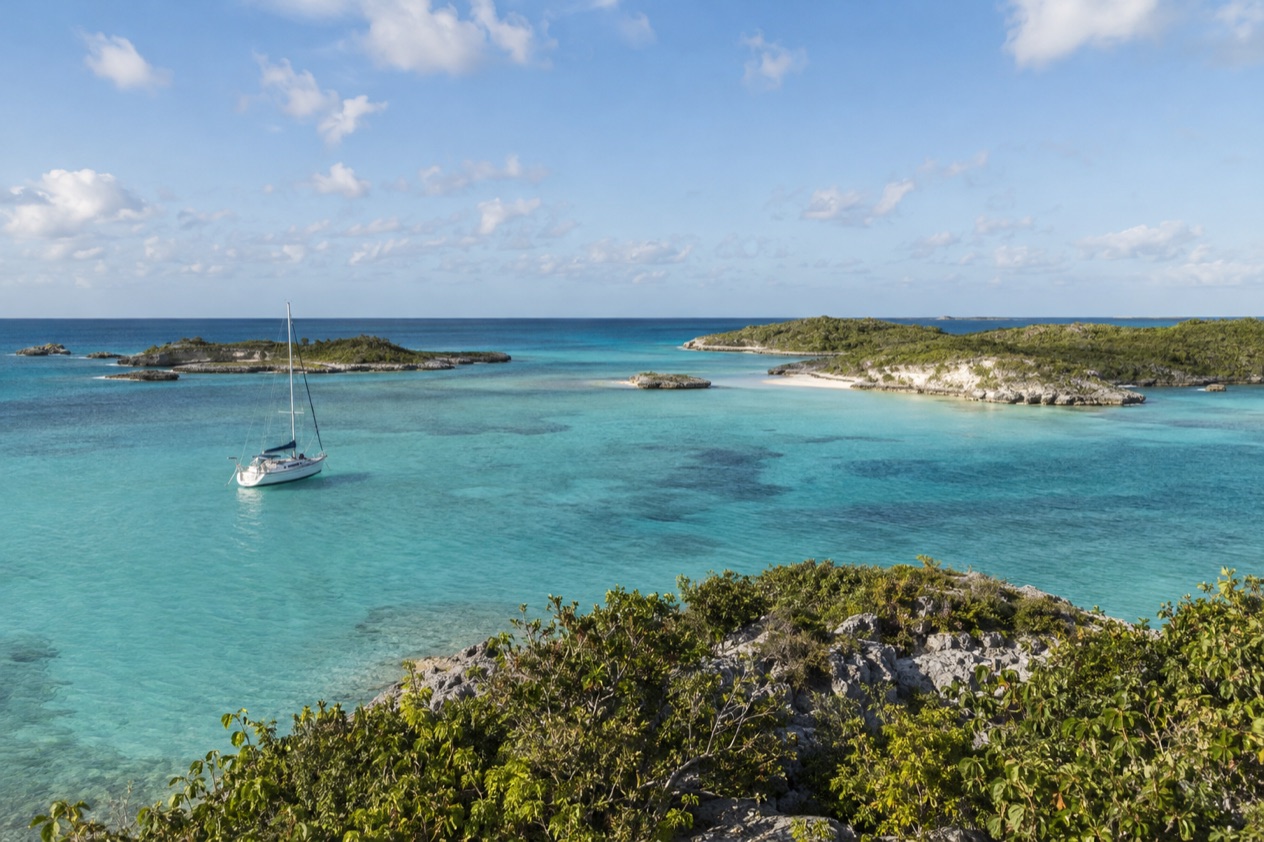
How do you get from the airport to the Abacos?
For Hope Town, the way in is to travel from the airport in Marsh Harbour to the water, then cross to Elbow Cay, because Hope Town is the only settlement on that small island and it is separate from Great Abaco. The airport itself already puts you in the Abacos: it stands in Marsh Harbour on Great Abaco, the main and largest island of the chain, and Marsh Harbour is the commercial hub of the islands.
What decides the details is simple. Luggage matters, since you will carry it from a vehicle to a boat and then through a village of narrow lanes. Group size matters too, because a family of six moves differently from a solo traveler.
Your arrival time counts as well: a late landing leaves you crossing water toward an island with a quiet evening, while a morning landing gives you the whole first day in Hope Town. Treasure Cay Airport, also on Great Abaco, is the other international airport of the chain, so check which one your flight uses before you plan the ground leg.
The Abacos stretch along a long arc of islands and cays, divided into North, Central and South Abaco. That is why a name on a map can look close and still mean a boat ride, and why Hope Town feels like its own small world once you arrive.
Your options from the airport
The road to Marsh Harbour and the water crossing
The airport and the town of Marsh Harbour are on the same island, and Marsh Harbour is where boat traffic to the surrounding cays is based. From there Elbow Cay lies across the water, and Hope Town is its only settlement. This is the route nearly every visitor to Hope Town follows, whether they arrive by commercial flight or from elsewhere in the Abacos.
Think of the trip as two legs: a ground leg from the terminal to the harbor, then a sea leg to the village. The sea leg is part of the charm.
You arrive the way the first settlers did, with the village coming into view from the water, and the lighthouse standing over the harbor as a landmark long before you reach the dock. It suits travelers who like the transition from airport to island to feel like a journey, and it suits anyone traveling light.
Cars and golf carts on Elbow Cay
Once you are on Elbow Cay, the way around changes. Cars and golf carts are permitted on the outskirts of Hope Town, which tells you what the village center is like: a compact settlement of lanes where life moves at walking pace. Most of what you came to see sits close together, from the harbor to the museum to the lighthouse.
That suits visitors who plan to stay put and wander. If your lodging lies out toward the edges of the village, the golf cart and the car are part of the picture there. Keep your luggage modest, since the final stretch from the dock to your door may be on foot or by cart.
Staying on Great Abaco instead
Some travelers land at Marsh Harbour and decide to spend their first night there before heading across. Marsh Harbour is the largest settlement in the Abacos and the third-largest city in the Bahamas, so it holds the shops, the harbor and the feel of a working town. Nearby, Abaco National Park protects the northern breeding grounds of the Bahama Parrot, a reason for nature lovers to look at the map of Great Abaco before they leave it.
This choice works if you land late, or if you want a day on the big island before the quieter pace of Elbow Cay. It also leaves room to see Hope Town as a day of its own rather than a rushed arrival.
Airport transfer options compared
| Stop | Where | What it is |
|---|---|---|
| Leonard M. Thompson International Airport | Marsh Harbour, Great Abaco | International airport of the Abacos |
| Treasure Cay Airport | Treasure Cay, Great Abaco | The other international airport on Great Abaco |
| Marsh Harbour | Great Abaco | Commercial hub of the Abacos |
| Hope Town | Elbow Cay | Only settlement on the island, home of the Elbow Reef Lighthouse |
The trade-off is between speed of arrival and the pleasure of the approach. Going straight through to Elbow Cay puts you in the village sooner, with the lighthouse and the harbor as your welcome. Pausing in Marsh Harbour gives you a base on the biggest island, with more choice of places to eat and shop, and a gentler start if your flight lands late.
Your party changes the equation. A couple with two bags will feel the village lanes differently than a group with coolers and beach gear.
Elbow Cay is small, so whichever way you reach it, you are soon on foot among the Loyalist cottages, which is the point of coming here. Where you land also matters: the two airports on Great Abaco are in different settlements, so your onward route depends on which one your flight serves.
Arriving at the airport
The airport serving Marsh Harbour is Leonard M. Thompson International Airport, on Great Abaco, the largest island of the chain. It opened in 1959, and that date changed the islands. Before it was built, the main sources of livelihood on Elbow Cay were fishing and shipwreck salvage, and Hope Town was a place reached by boat and by little else.
Today the airport is the front door to the whole region, which spans a long string of islands lying in the north of the Bahamas, roughly east of Miami. You land on Great Abaco, but your destination is across the water, and that gap is part of why Hope Town has kept its character. The village has stayed small, with a population of 458.
As you plan the day, let the village set your pace. Hope Town was co-founded in 1785 by Wyannie Malone, a widow from South Carolina who came with her four children after the American Revolution, and the Wyannie Malone Museum keeps that story alive with photos, documents, artifacts and memorabilia. The pastel wooden homes and businesses are fine examples of Loyalist architecture, and the community has preserved its cholera graveyard and the building of Abaco dinghies, boats you see at regattas across the Bahamas.
The candy-striped Elbow Reef Lighthouse is the landmark everyone photographs. It was built in 1862 and became operational two years later, and it is one of the last kerosene-fueled lighthouses still working anywhere in the world. Its light shows five white flashes every fifteen seconds.
Residents first opposed it because it threatened their wrecking trade, but today they embrace it and resist automation of its remaining beacons. It is a good first goal once your bags are in your room.
Good to know before you go
The U.S. State Department rates the Bahamas Level 2, “Exercise increased caution”, and says most crime occurs in Nassau on New Providence and in Freeport on Grand Bahama.
Pack light for a village where the last stretch of your trip may be on foot, and plan your arrival day around the water crossing rather than against it. Hurricane season runs from June 1 to November 30, so a trip in those months deserves a look at the forecast before you leave. Outside those dates, the islands carry no such season, and the quiet lanes of Hope Town are yours to wander at an unhurried pace.
Sources
- Wikipedia, Marsh Harbour Airport (https://en.wikipedia.org/wiki/Leonard_M._Thompson_International_Airport), checked October 10, 2026
- Wikipedia, Hope Town (https://en.wikipedia.org/wiki/Hope_Town), checked October 10, 2026
- Bahamas Ministry of Tourism, Investments & Aviation (bahamas.com), Hope Town (https://www.bahamas.com/natural-wonders/hope-town), checked October 10, 2026
- Bahamas Ministry of Tourism, Investments & Aviation (bahamas.com), The Abacos (https://www.bahamas.com/islands/abacos), checked October 10, 2026
- Wikipedia, Abaco Islands (https://en.wikipedia.org/wiki/Abaco_Islands), checked October 10, 2026
- Bahamas National Trust, Abaco National Park (https://bnt.bs/explore/abaco/abaco-national-park/), checked October 10, 2026
- Great-circle distance computed from the GPS coordinates of the two places, October 10, 2026
- U.S. Department of State, The Bahamas Travel Advisory, Level 2 (https://travel.state.gov/), checked October 10, 2026
- NOAA National Hurricane Center, Climatology (https://www.nhc.noaa.gov/climo/), checked October 10, 2026
To plan your stay
- Best Time to Visit the Abacos: Weather by Month, Sea Temperatures, Crowds and Festivals
- Things to Do in the Abacos: Hope Town Lighthouse, Tahiti Beach, Cays and Conch
- Where to Stay in the Abacos: Treasure Cay, Hope Town, Green Turtle Cay and Marsh Harbour
- Know Before You Go to the Abacos: Entry Papers, Money, Getting Around and Health