
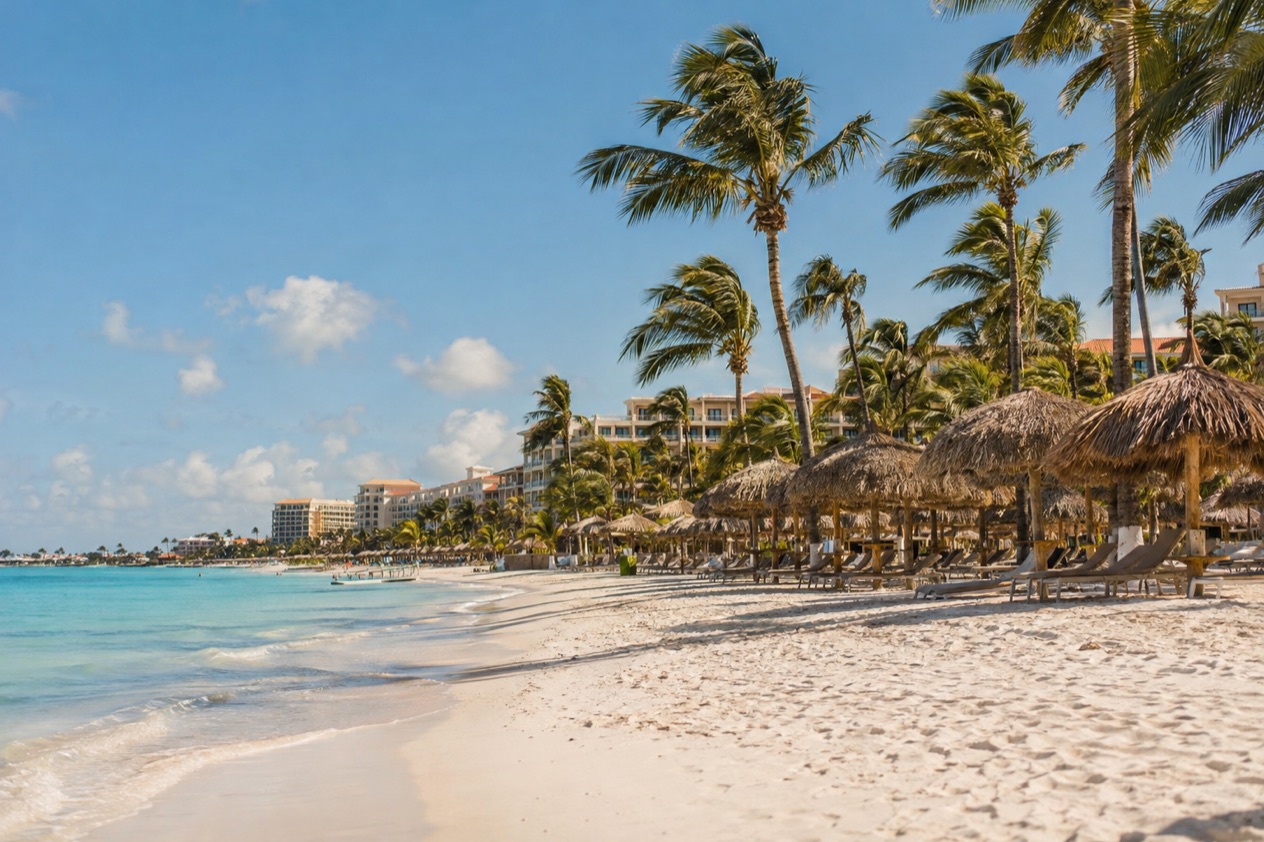
Early in the morning on Eagle Beach, the fofoti trees lean their wind-bent crowns over pale sand while the first walkers head down the shore. A few miles up the coast, Palm Beach is still asleep, and its beach bars will not light up until the sun has gone down behind the piers. Aruba is small, but where you put your suitcase changes the whole rhythm of the trip, from a high-rise resort strip to a low-rise stretch of sand, a harbor city or a quiet southern town.
What is the best area to stay in Aruba?
For a first visit, a beach holiday and a lively evening, Palm Beach is the natural choice. For a wider, calmer stretch of sand, Eagle Beach suits couples and anyone who likes a low-rise feel. Families can choose between resorts with kids’ programs near those two beaches and the lagoon at Baby Beach in the south. Travelers on a tighter budget look at vacation rentals and hotels set back from the sand.
A first-time visitor usually wants everything within a stroll: a wide white beach, restaurants, a casino or two, shops and a place to watch the sunset. Palm Beach is built around exactly that. It is the epicenter of tourism on the island and the home of its high-rise hotels, so you step out of the lobby and find the sand, the water sports and the evening crowd already waiting.
If the beach itself is the reason you are going, Eagle Beach deserves a close look. It is the widest beach on the island, and it is the one with the famous leaning fofoti trees, the most photographed in Aruba. Low-rise resorts sit near it, which keeps the skyline low and the mood slower than on the strip up the coast.
Nightlife lovers will feel at home in Palm Beach, where dining and nightlife form a lively yet laid-back stretch. Dinner on a terrace, a cocktail at a beach bar, a few rounds at a casino table and a walk back along the water make a full evening without any need to go anywhere else. Eagle Beach has its own beach bars and beachfront restaurants, but the pace is gentler.
Families have more choice than you might expect. Aruba is considered a premier family destination, with large resorts that run kids’ programs and smaller boutique hotels that offer personal service.
Some properties have pool complexes with waterfalls and a water slide, and others have a kids club and family rooms. At the other end of the island, Baby Beach in San Nicolas is a kid-friendly beach known for its calm lagoon-formed water and soft white sand.
Couples looking for romance have their own set of options. Adults-only resorts are made for honeymoons and grown-ups-only retreats, with quiet pools, massages and, at some all-inclusive properties, a honeymoon suite. You can pair one with a lively area such as Palm Beach or Eagle Beach, or choose a quieter corner of the island. A walk along either shore at sunset is the classic closing scene of a day.
Budget-minded travelers should widen the search beyond the beachfront. Aruba has hotels that are not directly on the sand, and they bring a more residential style of stay and a chance to mingle with locals. Vacation rentals by owner are generally more budget-friendly than hotels, especially for longer stays, and range from rustic cottages to high-end vacation homes.
The areas differ most in mood. Palm Beach is glamour and resorts, with a two-mile-long strip of palm trees, casinos, piers, water sports concessions, beach bars and shops. Eagle Beach is wider, lower and softer around the edges.
Oranjestad is the colorful Dutch-colonial capital, a working harbor city of boutiques and malls. San Nicolas, the so-called Sunrise City in the southeast, is a quiet coastal town with a character all its own.
Think about how you want your days to feel. If you want to fall out of bed and onto the sand, stay on the beach. If you would rather wander streets, look at pastel facades and eat where locals eat, a harbor or town base gives you more of that. Many travelers end up combining the two, staying on the beach and spending an afternoon or an evening in the capital.
Aruba’s regions run from the dry desert interior to the Dutch-colonial capital, which is why the island feels unlike any other in the Caribbean. The hotels and resorts themselves line the northwestern coast, so the real decision is usually between the high-rise strip, the low-rise stretch and the options outside the main resort zone.
The best areas to stay in Aruba
Palm Beach and Noord
Noord means north in Dutch, and the district covers the northern reaches of the island. Palm Beach sits at its heart, a two-mile-long band of soft white sand lined with the high-rise resorts that give Aruba its glamorous skyline.
Behind the sand you find casinos, piers, water sports concessions, beach bars, restaurants and shops. The water here is calm, which makes it a good spot for swimmers and floaters, and parasailing is among the activities on offer.
Lodging here is mostly large: all-inclusive resorts, big beachfront properties with pool complexes, family rooms and kids clubs, plus luxury hotels with full spas. Some places are just a few steps from the beach, dining, shopping and nightlife, so you can leave the car idea behind and simply walk. Some rooms can sleep a big group, which helps large families traveling together.
Palm Beach suits first-timers, groups of friends, families who want a full resort and anyone who likes an evening out. It is less suited to those who want a hushed, undeveloped shoreline. A good habit is to take the sunset stroll along the water before dinner, when the strip lights up and the beach bars start to fill.
Eagle Beach
Eagle Beach is a broad, open shoreline of soft white sand and ocean views, with fofoti trees leaning in the trade wind. It is the widest beach on Aruba, and it has been voted among the top beaches in the Caribbean in TripAdvisor’s Travelers’ Choice Awards, ranking third among the Best of the Best. You can take part in water sports or cool off beneath the nearby beach huts, and the afternoons pass slowly.
The lodging is low-rise: resorts that stay close to the ground, with a number of all-inclusive options, adults-only properties and boutique-style hotels nearby. Dining is a pleasure of its own, with cocktails at the beach bars and fine dinners at beachfront restaurants, often timed to the sunset. After dark the beach is quieter than the strip at Palm Beach, so the evenings feel more like a long, relaxed dinner than a night out.
Eagle Beach suits couples, honeymooners, travelers who want a wide beach and a calmer evening, and families who prefer a lower-rise setting. It is a good place to base yourself if you want to walk the shore at sunset, a classic pastime for couples here.
Oranjestad
Oranjestad is the capital, a colorful harbor city of Dutch-colonial facades, boutiques, jewelry stores and malls with international luxury retailers. The green stadhuis, or city hall, is where legal marriages are performed. A day here means wandering streets painted in sherbet colors, stopping for a coffee or a pastechi (a fried pastry with a savory filling) and watching the boats in the harbor.
Staying in town suits travelers who care more about streets, shops and local restaurants than about stepping onto sand at breakfast. The hotels outside the beachfront zone offer a more residential style of stay and a chance to mingle with locals, and holiday rentals add another layer of choice. If you want the beach every day, plan to travel up the coast to Eagle Beach or Palm Beach.
It is a good base for a trip built around culture, shopping and food rather than sunbathing. It also makes sense for a couple marrying on the island, since the city hall is right there. Pair a few days in town with a few days on the beach and you see two sides of Aruba.
San Nicolas and the south
San Nicolas is Aruba’s Sunrise City, a quiet coastal town twelve miles southeast of Oranjestad. It sits at the other end of the island from the big resort strips and has a lower-key, local character, with street art that makes it a favorite for the mural tour. The sunrise side of the island is a world apart from the sunset beaches of the northwest.
Baby Beach, a kid-friendly beach known for its calm lagoon-formed water and soft white sand, lies in the south near San Nicolas, and the all-inclusive resorts on this side of the island give families a quieter alternative to the northwest. Staying here means a slower pace and fewer crowds of high-rise guests.
One point to keep in mind: there is an increased risk of crime in the San Nicolas district, especially at night, and crimes against tourists are more common there. Many visitors come for a day of street art and a stop at the lagoon rather than base themselves in town. The area suits travelers who want a quiet, uncrowded corner and are comfortable going out by day.
Aruba areas compared
| Area | Best for | Feel | Getting around |
|---|---|---|---|
| Palm Beach (Noord) | First visit, nightlife, families, all-inclusive stays | Glamorous, lively, high-rise resorts and casinos along a two-mile strip | Dining, shopping and nightlife within steps of many resorts |
| Eagle Beach | Couples, honeymooners, a wide beach | Low-rise, relaxed, fofoti trees and beach bars | Beachfront restaurants and beach bars close by |
| Oranjestad | Culture, shopping, local dining | Colorful Dutch-colonial harbor city | Boutiques, malls and city streets |
| San Nicolas and the south | Quiet stays, Baby Beach, street art | Sunrise City, small and unhurried | Twelve miles southeast of Oranjestad |
| Hotels off the beachfront | A residential stay, mingling with locals | Calmer and more local than the resort zones | Away from the sand, within the island’s regions |
The main trade-off is between beach and local life. Staying right on Palm Beach or Eagle Beach puts you steps from the sand and the sunset, but you give up some of the everyday feel of the island. A harbor or town base shows you the colorful streets and neighborhoods, and the price is a trip up the coast whenever you want a beach day.
The second trade-off is quiet against nightlife. Palm Beach has the casinos, the terraces and the bar scene, and it carries the energy that goes with them. Eagle Beach is gentler, with dinners by the water and a slow stroll afterward. San Nicolas and the south are the quietest of all, though the night warning for the San Nicolas district matters when you plan evenings out.
A third choice concerns the type of lodging. High-rise resorts on Palm Beach and low-rise resorts near Eagle Beach are the closest to the white sand and blue water. Boutique hotels offer personal service, all-inclusives offer ease, and vacation rentals offer flexibility. Think about whether you want a self-contained resort or a base from which you roam.
The island is small, 70 square miles in all, and the roads are safe and modern, so the areas sit close enough that the choice is about mood rather than distance.
How to choose your hotel in Aruba
All-inclusive or not
An all-inclusive stay makes the trip easy to plan and to budget. Aruba’s all-inclusive resorts for families and adults offer premium rooms, upscale amenities, daily activities and entertainment, and a variety of international dining. The best-rated packages are at resorts near Palm Beach and Eagle Beach, and others lie farther afield, including on the south side of the island.
It suits travelers who like the idea of leaving the wallet in the room, families who want everything in one place and anyone who prefers to settle in and rest. A stay without meals included suits those who want to eat out, try keshi yena (a baked cheese dish, a local specialty) in town, or move between restaurants every night. It is a matter of temperament as much as money.
Beachfront or a few steps back
Beachfront means the white sand and blue water are right outside, which is what the high-rise properties on Palm Beach and the low-rise resorts near Eagle Beach offer. It is the classic Aruba stay, with a sunset from the balcony or the beach bar. Luxury beachfront resorts and boutique hotels are both part of the picture.
Hotels not directly on the beach give you a more residential style and a closer look at everyday life. They suit travelers who plan to spend their days exploring, who like to chat with locals or who would rather keep the sand as an outing than as a front yard. Aruban hospitality, warm and welcoming, is part of why visitors keep coming back, and you feel it in both settings.
Families, couples and adults-only
Family resorts cater to every need, from luxurious properties with kids’ programs to intimate boutique hotels with personal service. Look for a kids club, family rooms, a pool complex with a water slide or rooms that sleep a large group, all of which exist on the island. A beach with calm lagoon-formed water such as Baby Beach is the other family option, in the south.
Adults-only resorts are built for romantic escapes and grown-ups-only retreats, where you unwind by the pool or book a massage, and some offer a honeymoon suite. Aruba is widely acclaimed as a honeymoon destination. You can pick a lively area like Palm Beach or Eagle Beach or a quieter corner, so decide first how much energy you want outside the door.
Vacation rentals
Vacation rentals by owner are generally more budget-friendly than hotels, especially for longer stays. They come in every shape, from rustic cottages to high-end vacation homes, and they give you freedom from hotel schedules, so you explore at your own pace. Aruba was the first Caribbean island to sign an official partnership with Airbnb.
Owners often share insider tips about the island, from a favorite local restaurant to the quietest stretch of shore. That personal touch is part of the appeal. A rental suits longer trips, groups who want a kitchen and travelers who value independence over resort amenities.
What to weigh before you book
Decide how you feel about nightlife. A room on the Palm Beach strip puts you near the casinos, terraces and beach bars, which is a plus if you like evenings out and a consideration if you want hush at night. Eagle Beach and the south offer a calmer atmosphere. Then think about how you will get around.
Arubus buses run every 15 minutes during the day, from early morning until evening, and less often after dark until late at night. If a hotel is within steps of dining and shopping, you may need them less. Staying farther out, in the south or off the beachfront, makes your daily plan matter more, because it affects how you reach beaches and restaurants.
Finally, match the lodging to the people in your group. A honeymoon, a family of eight, a group of friends and a solo traveler all want different things, and Aruba has a version of each: a suite for two, rooms for large groups, or a cottage with a kitchen. Choose the one that makes the days feel the way you imagine them.
Good to know before you go
The U.S. State Department rates Aruba Level 1, ‘Exercise normal precautions,’ and says Aruba is generally a safe destination for travelers, with petty crime the main concern in popular tourist areas.
If you fly home from Aruba, note that the airport is under construction for its Gateway 2030 project. U.S.-bound passengers can reach the U.S. Check-In Terminal only up to 3 hours before departure, and most shops and food and beverage spots on the right side after security have been closed since the start of May for the next phase of work. Plan your last meal and your souvenir shopping before you head to the airport.
Sources
- Aruba Tourism Authority, Hotels and resorts (https://www.aruba.com/us/plan-your-visit/hotels-and-resorts), checked October 9, 2026
- Aruba Tourism Authority, Palm Beach hotels (https://www.aruba.com/us/plan-your-visit/hotels-and-resorts/palm-beach-hotels–resorts-aruba), checked October 9, 2026
- Aruba Tourism Authority, Eagle Beach hotels (https://www.aruba.com/us/plan-your-visit/hotels-and-resorts/eagle-beach-hotels–resorts-aruba), checked October 9, 2026
- Aruba Tourism Authority, All-inclusive (https://www.aruba.com/us/plan-your-visit/all-inclusive), checked October 9, 2026
- Aruba Tourism Authority, Adult-only hotels (https://www.aruba.com/us/plan-your-visit/hotels-and-resorts/adult-only-hotels–resort-aruba), checked October 9, 2026
- Aruba Tourism Authority, Family hotels (https://www.aruba.com/us/plan-your-visit/hotels-and-resorts/family-hotels–resorts-aruba), checked October 9, 2026
- Aruba Tourism Authority, Vacation rentals (https://www.aruba.com/us/plan-your-visit/vacation-rental), checked October 9, 2026
- Aruba Tourism Authority, Honeymoon hotels (https://www.aruba.com/us/plan-your-visit/hotels-and-resorts/honeymoon-hotels–resort-in-aruba), checked October 9, 2026
- Aruba Tourism Authority blog, Palm Beach family resorts (https://www.aruba.com/us/blog/palm-beach-family-resorts-in-aruba), checked October 9, 2026
- Aruba Tourism Authority, Oranjestad region (https://www.aruba.com/us/our-island/regions/oranjestad), checked October 9, 2026
- Aruba Tourism Authority, Noord region (https://www.aruba.com/us/our-island/regions/noord), checked October 9, 2026
- Aruba Tourism Authority, San Nicolas region (https://www.aruba.com/us/our-island/regions/san-nicolas), checked October 9, 2026
- Aruba Tourism Authority, Aruba regions (https://www.aruba.com/us/our-island/regions), checked October 9, 2026
- U.S. Department of State, Aruba Travel Information, Safety and security (https://travel.state.gov/content/travel/en/international-travel/International-Travel-Country-Information-Pages/Aruba.html), checked October 9, 2026
- Aruba Tourism Authority, Getting around Aruba (https://www.aruba.com/us/plan-your-visit/getting-around-aruba), checked October 9, 2026
- Aruba Tourism Authority, Public transportation (https://www.aruba.com/us/plan-your-visit/getting-around-aruba/public-transportation), checked October 9, 2026
- Aruba Airport Authority, By car (https://www.airportaruba.com/by-car), checked October 9, 2026
- U.S. Department of State, Aruba Travel Advisory, Level 1, issued August 19, 2026 (https://travel.state.gov/content/tsg_aem/us/en/home/international-travel/travel-advisories/destination.abw.html), checked October 9, 2026
To plan your stay
- Best Time to Visit Aruba: Weather by Month, Peak Season and Festivals
- Things to Do in Aruba: Beaches, Arikok National Park, Island Tours and Food
- Aruba Airport (AUA): Arrival, Getting to Your Hotel, U.S. Preclearance and Departure
- Know Before You Go to Aruba: Entry Forms, Money, Water and Local Customs