
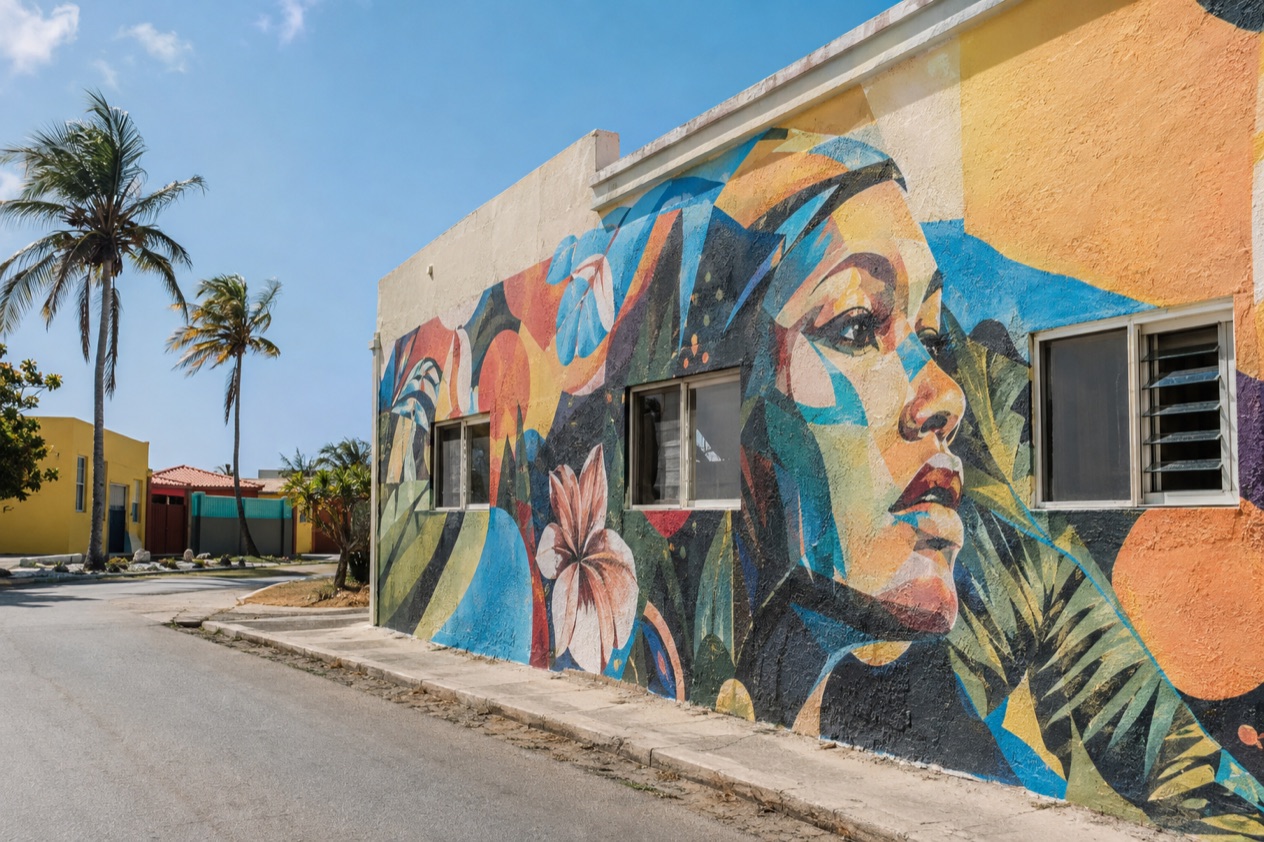
At sunrise, the light comes up over the Caribbean on Aruba’s Sunrise Side and lands first on paint: enormous murals climbing the walls above Zeppenfeldstraat while shopkeepers roll up their shutters. San Nicolas grew around an oil refinery and still carries that working-town character, but today it is the island’s art district, with snack shops, bars and a bay where fishermen leave their boats. It suits travelers who want to see Aruba beyond the resort strip.
What are the best things to do in San Nicolas?
The best things to do in San Nicolas are to walk its mural-covered streets, step into the community museum, and spend a beach afternoon at the bays just to the south, with a plate of local food at either end. The town is small, so one day covers the essentials and a second gives you time to linger.
- Join the mural tour, because the town has been the Art District of Aruba since 2016 and the paintings are the quickest way to understand its story.
- Visit the San Nicolas Community Museum, where a restored store holds the memories of the people who lived and worked here.
- Stroll Zeppenfeldstraat, the main street, for the promenade, the gallery, the small shops and the historic buildings.
- Spend an afternoon at Baby Beach, where shallow water lets you wade far out and where families with small kids are well looked after.
- Pair it with Rodger’s Beach next door, a narrow strip of white sand with fishing boats anchored in the bay.
- Eat local at a snack shop or a beach grill, from pastechi (fried pastries) to grilled seafood.
- Stop at the San Nicolas Visitor Information Center for local tips before you set out on foot.
- Raise a glass in one of the town’s old bars, with an eye on the time of day (more on that in the night section).
Think of San Nicolas as a place to slow down. The pace is quiet, the people talk to you, and the best moments often come between the planned stops: a mural you notice at a corner, a fisherman mending a net, a bar owner who tells you which wall painting is his favorite.
It also pairs well with the rest of the island. Oranjestad, the capital, lies a short stretch up the coast, and the resort beaches of Palm Beach are on the opposite side of the island. San Nicolas offers a different Aruba, one measured in street scenes and sea breezes rather than high-rises.
Sights and landmarks in San Nicolas
The sights of San Nicolas are its streets, its murals and its memories, all of them within an easy neighborhood of one another along the main street. Known as Aruba’s Sunrise City, the town is the island’s second largest, and it began as a company town. The oil refinery opened here in 1924, and for decades workers arrived from across the Caribbean and beyond, which is why you still hear Papiamento (the island’s own language, a blend of Portuguese, Spanish, Dutch and African influences), English, Spanish and Dutch on the same corner.
The refinery went through several chapters of closing and reopening before it shut for the last time in 2009. You can feel that story in the town: the broad old streets, the facades that were built for crowds of workers, and the sense of a community that has reinvented itself around art and local pride.
The murals and the Art District
The murals are the reason many travelers come. Since 2016 the town has been transformed into the Art District of Aruba, and paintings now cover walls of shops, houses and alleys in every style, from portraits of local people to bold, abstract color.
Walking without a guide is pleasant, but the guided tour adds the stories behind the images. It is led by the curator of all the murals, who also organized the Aruba Art Fair.
The tour starts at the ArtisA (Art is Aruba) gallery and shows anywhere from 20 to 40 murals, depending on which tour you book. It is a good way to start a day, with fresh energy and the morning light on the walls, and it suits anyone who enjoys photography, street art or simply hearing how a town reinvented itself.
| Tour | Departures | Starting point |
|---|---|---|
| San Nicolas mural tour | Every day at 9:00 AM, 11:30 AM, 2 PM and 4 PM | ArtisA (Art is Aruba) gallery |
San Nicolas Community Museum
The museum sits on Zeppenfeldstraat in the Nicolaas Store, a restored monument in the heart of downtown. Its exhibition looks at the authentic, everyday aspects of the community’s past life, and it is the best place to put faces and daily routines to the refinery story. The building is part of the draw, with original flooring and wooden doors that creak a little as you walk.
Upstairs, a second-floor terrace gives 360-degree views over the city, a nice moment to see how the murals, rooftops and the sea fit together. Plan on a relaxed visit, with time to read the displays and then step outside to find the places the exhibits mention. The San Nicolas Visitor Information Center is within a mile of the museum, so the two pair neatly.
Zeppenfeldstraat and the visitor center
Zeppenfeldstraat is the town’s main street and its quaint promenade, lined with stores, snack shops, restaurants, bars, an art gallery and historic buildings. It is a street for wandering, stopping for a cold drink, and ducking into shops that sell souvenirs and everyday goods. Many of the murals are a few steps off it.
The San Nicolas Visitor Information Center, at B. v.d. Veen Zeppenfeldstraat 33, sits right on this main street, which makes it a natural departure point for exploring on foot. Trained community members with deep knowledge of Aruba and the San Nicolas region staff it, and they offer local tips and tailor-made suggestions for the kind of experience you want. Start here if you are not sure what to do first.
Beaches and outdoor things to do in San Nicolas
The beaches near San Nicolas are two small bays at the southern end of the island, Baby Beach and Rodger’s Beach, and they offer the island’s beach charm far from the glitz of the Palm Beach high-rise resorts. Expect a gentler scene: families on towels, fishing boats rocking in the water, and a snack stand within reach. Aruba’s sun is strong and the trade wind is steady, so a hat and a bottle of water make a long afternoon more pleasant.
Baby Beach
Baby Beach lies in the southern part of Aruba, close to San Nicolas, and it is ideal for families with small kids. The water is shallow, so swimmers can wade out a long distance and still touch the sea bottom. That gives the bay a relaxed, splash-around atmosphere, with little ones playing near the shore while adults float a little farther out.
Snorkeling is possible where the bay opens out to the ocean, and visitors should stay within the marked snorkel area. For food, a refreshment stand serves hamburgers and hotdogs, and Big Mama’s Grill offers BBQ and seafood platters. It makes an easy plan to arrive after the morning murals, eat a grill lunch and let the afternoon drift.
Rodger’s Beach
Rodger’s Beach is about a minute’s drive from Baby Beach, a narrow strip of powdery white sand curving around a bay. The water here is calm and protected for swimming, and clear enough that you can watch the bottom as you wade in. It has a quieter, more local rhythm than a resort beach, with space to lay out a towel and watch the light change.
Fishermen anchor their colorful boats in the bay, which gives the beach an authentic feel. Photographers like the early hours, when the boats sit still against the pale sand. Combine it with Baby Beach for a half day of two small bays, and move between them depending on your mood: one for splashing, one for gazing.
The rest of the coast
Beyond the two bays, Aruba’s windward coast, the side that faces the trade wind, is rough and wild, with rocky shorelines and crashing surf that people come to look at rather than swim in. The island is flat and dry, scattered with cacti and aloe, and the open landscape around San Nicolas is perfect for a slow drive with the windows down and a few photo stops. Let the visitor center point you to the spots locals like.
Island tours and excursions in San Nicolas
The excursions that start from San Nicolas are mostly local and low-key: a mural tour on foot, a beach day to the southern bays, and a trip along the coast to the capital. Aruba is a small, flat island, so everything stays within reach, and San Nicolas works well as a base for seeing the quieter side of it.
The mural walking tour
This is the signature outing, and it begins in town. You meet at the ArtisA (Art is Aruba) gallery, and the tour runs every day at 9:00 AM, 11:30 AM, 2 PM and 4 PM. Depending on which tour you book, you see an average of 20 to 40 murals, so you can choose a shorter or longer stroll.
The tour is led by the curator of all the murals, so you hear who painted what and why a given image sits on a given wall. The morning slots offer the freshest light, while the later ones fit well after a beach lunch. It suits art lovers, curious travelers and anyone who wants a quick, vivid introduction to the town. Bring comfortable shoes and a camera.
A beach day at Baby Beach and Rodger’s Beach
A beach day is the easiest excursion from town. Baby Beach is in the southern part of the island, close to San Nicolas, and Rodger’s Beach is about a minute’s drive from it. Together they make a full day with a swim, a snorkel within the marked area, a grilled lunch and a slow afternoon watching the fishing boats.
It is best for families, couples and anyone who wants an unhurried day by the sea. Bring sun protection, because the island is open and bright, and let the pace be set by the shade and the breeze. Finish with a drink back in town as the day cools.
A trip along the coast to Oranjestad
Oranjestad, the island’s capital, lies twelve miles northwest along the coast. It offers a very different mood from San Nicolas, with Dutch-colonial colors, harbor views, shopping streets and cruise-ship energy. Many travelers pair the two, spending the morning among the murals and the afternoon in the capital, or the reverse.
The contrast is the reason to go. San Nicolas feels local and unhurried, while Oranjestad is a harbor town with a steady flow of visitors. If you want the full picture of Aruba in one day, this is the way to see both its working-class heart and its polished face.
Other island sights to add
Arikok National Park lies between San Nicolas and the center of the island, and Hooiberg sits in the middle of the island. Only the California Lighthouse is at the opposite, northwest end. They are on the other side of the island from San Nicolas, so treat each as its own outing rather than a quick add-on. The visitor center can help you decide how to fit them in.
What to eat in San Nicolas
Eating in San Nicolas means snacks, grills and home-style Aruban cooking, in a town that is full of small places to sit down. The main street has snack shops, restaurants and bars, and the beaches have their own stands. It is simple, flavorful food, and the pleasure is in the variety and the setting.
Snacks and street-corner bites
Start with pastechi, the golden fried pastry that Arubans eat for breakfast, a snack or a late-night bite. The crisp shell is filled with cheese, ground beef, chicken or fish, and a good one is still hot and a little greasy in the paper. You will also see pan bati, a soft, slightly sweet flatbread, and funchi, a cornmeal side that is similar to polenta and sits next to many a plate of fish.
A snack shop on Zeppenfeldstraat is a good place to try these and to watch the town go by. Order one pastechi to start, then decide whether you want a second. Locals usually pair them with a cold drink, and the pace is relaxed: you can sit for as long as you like.
Seafood and the grill
With the sea so close, seafood is a natural choice. Grilled fish, often served with funchi, rice and a pile of fried plantain, is the classic plate. Near the water at Baby Beach, Big Mama’s Grill offers BBQ and seafood platters, and there is also a refreshment stand with hamburgers and hotdogs when you just want something quick.
Eating beside the bay, with the breeze moving over the table and the water in view, is a pleasure of its own. It suits a long lunch after a swim, when everyone is hungry and nobody wants to rush. Save room for a cold drink to follow.
Island classics to look for
Keshi yena is the dish Aruban kitchens are proudest of: a whole round of Gouda-style cheese hollowed out and stuffed with spiced chicken or beef, baked until the cheese melts around the filling. It reflects the island’s Dutch roots, mixed with Caribbean spices and local ingredients. Another comfort dish is sopi, a hearty soup that often appears as a daily special.
To drink, Balashi is the local beer, light and cold and well suited to the heat. You will also find fresh fruit juices and rum-based cocktails, especially at the bars on the main street. Ask the staff at the visitor information center which local restaurants they like, since they know the town’s kitchens well.
Things to do in San Nicolas at night
Nights in San Nicolas are small-scale: a few bars, a bite to eat on the main street and the sound of music drifting out of open doors. It is nothing like the busy evenings of the resort strip, and that is the appeal. The town has a local, neighborly character, and the evening is best spent in a bar or restaurant rather than strolling around.
One caution belongs here. Travel guidance notes an increased risk of crime in the San Nicolas district, especially at night, with crimes against tourists more common there. Plan your evening so you know where you are going and how you will get back, and keep your belongings close. For the island as a whole, the U.S. State Department asks travelers to exercise normal precautions.
Bars and a drink on Zeppenfeldstraat
The main street’s bars are the heart of the evening. The best known is Charlie’s Bar, a San Nicolas institution whose walls and ceiling are crowded with objects left by visitors over the decades, from license plates to banknotes to business cards. It is a place to have a cold beer and read the walls, and it is worth a look even if you stay for only one drink.
Other bars in the area keep a similar neighborhood feel, with friendly staff, a bit of music and a mix of locals and visitors. Go in the early evening, when the light is soft and the mood is easygoing, and decide from there how long to stay. If a place feels right, you will find it hard to leave.
Dinner, music and quiet evenings
For dinner, the restaurants of the town center serve local and Caribbean dishes, and a table by the open front of a restaurant makes the most of the warm evening air. Eating earlier, while it is still light, lets you enjoy the street scene and see the murals one last time in the glow of sunset. It also gives you a relaxed start to the evening.
If you prefer quiet, an evening on a terrace with a drink and good conversation is just as rewarding. The seasonal events are the exception: during Carnival season the streets of San Nicolas come alive with parades, costumes and music, usually in the early part of the year. If your trip coincides, it is a joyful way to see the town at its liveliest.
Things to do in San Nicolas with kids
Kids do best in San Nicolas at the beach, and Baby Beach is the heart of any family plan. The town is small and unhurried, which suits children who tire of crowds, and the murals add something to look at between swims. Keep the days short and flexible, with plenty of shade, water and breaks.
Baby Beach for small children
The beach is ideal for families with small kids, and its shallow water lets swimmers wade out a long distance and still touch the sea bottom. That means little ones can paddle at the edge while parents stay close, and older children can explore a bit farther out. Pack buckets, floaties and a hat for everyone, because the sun is strong and the island is open.
Where the bay opens out to the ocean there is snorkeling, and visitors should stay within the marked snorkel area. Meals are simple: the refreshment stand serves hamburgers and hotdogs, which most children enjoy, and Big Mama’s Grill has BBQ and seafood platters for the grown-ups. It makes an easy, comfortable day with little planning.
Rodger’s Beach and the fishing boats
A minute’s drive from Baby Beach, Rodger’s Beach is a narrow strip of powdery white sand with calm waters, protected for swimming and clear enough to see the bottom. Children like the colorful fishing boats anchored in the bay, and watching the fishermen at work is its own kind of show. It is a nice place for a quieter hour after a busy morning.
Bring a snack and a bottle of water, and let the kids dig, wade and look for shells at their own pace. The calm mood suits families who want a peaceful afternoon, and the beach has just enough going on to keep children interested without overwhelming them.
Murals and museum for curious kids
The murals turn a walk into a treasure hunt. Children can spot their favorite colors, characters and animals on the walls, and the guided tour, which shows an average of 20 to 40 murals depending on which one you book, gives older kids stories to go with the pictures. Choose a morning slot, before the heat builds, and bring water.
The San Nicolas Community Museum is a good indoor break. Its restored building has original flooring and wooden doors, and the second-floor terrace has 360-degree views over the city that children usually enjoy. Keep the visit short and let them point out the murals they can see from above. Pair it with a pastechi on the main street for a reward.
Good to know before you go
The U.S. State Department rates Aruba Level 1, ‘Exercise normal precautions,’ and says Aruba is generally a safe destination for travelers, with petty crime the main concern in popular tourist areas.
San Nicolas is a compact town of quiet streets, and the main street is made for walking, with the San Nicolas Visitor Information Center right on it as a natural starting point. The staff will share local tips and tailor-made suggestions for what you want to see. Plan your bigger outings, such as the beaches, around the heat of the day, and keep your evenings simple, with your route settled before you head out.
Sources
- Aruba Tourism Authority, San Nicolas region (https://www.aruba.com/us/our-island/regions/san-nicolas), checked October 9, 2026
- Wikipedia, San Nicolaas, Aruba (https://en.wikipedia.org/wiki/San_Nicolaas,_Aruba), checked October 9, 2026
- Aruba Tourism Authority, Aruba mural tours (San Nicolas) (https://www.aruba.com/us/explore/aruba-mural-tours), checked October 9, 2026
- Aruba Tourism Authority, San Nicolas Community Museum (https://www.aruba.com/us/explore/san-nicolas-community-museum), checked October 9, 2026
- Aruba Tourism Authority, San Nicolas visitor center (https://www.aruba.com/us/explore/san-nicolas-visitor-information-center), checked October 9, 2026
- Aruba Tourism Authority, Baby Beach (https://www.aruba.com/us/explore/baby-beach), checked October 9, 2026
- Aruba Tourism Authority, Rodgers Beach (https://www.aruba.com/us/explore/rodgers-beach), checked October 9, 2026
- Aruba Tourism Authority, Best time to visit (https://www.aruba.com/us/our-island/one-happy-island/when-is-the-best-time-to-visit-aruba), checked October 9, 2026
- U.S. Department of State, Aruba Travel Information, Safety and security (https://travel.state.gov/content/travel/en/international-travel/International-Travel-Country-Information-Pages/Aruba.html), checked October 9, 2026
- U.S. Department of State, Aruba Travel Advisory, Level 1, issued August 19, 2026 (https://travel.state.gov/content/tsg_aem/us/en/home/international-travel/travel-advisories/destination.abw.html), checked October 9, 2026