
On a September afternoon in Old San Juan, the sky turns slate gray over the harbor, a warm shower drums on the blue cobblestones, and ten minutes later the sun is back and the plaza steams. Out west, the surf town of Rincon is quiet and the sea is as warm as it gets all year. September is a hot, humid, green month across Puerto Rico, with fewer visitors and more weather to plan around.
What is the weather like in Puerto Rico in September?
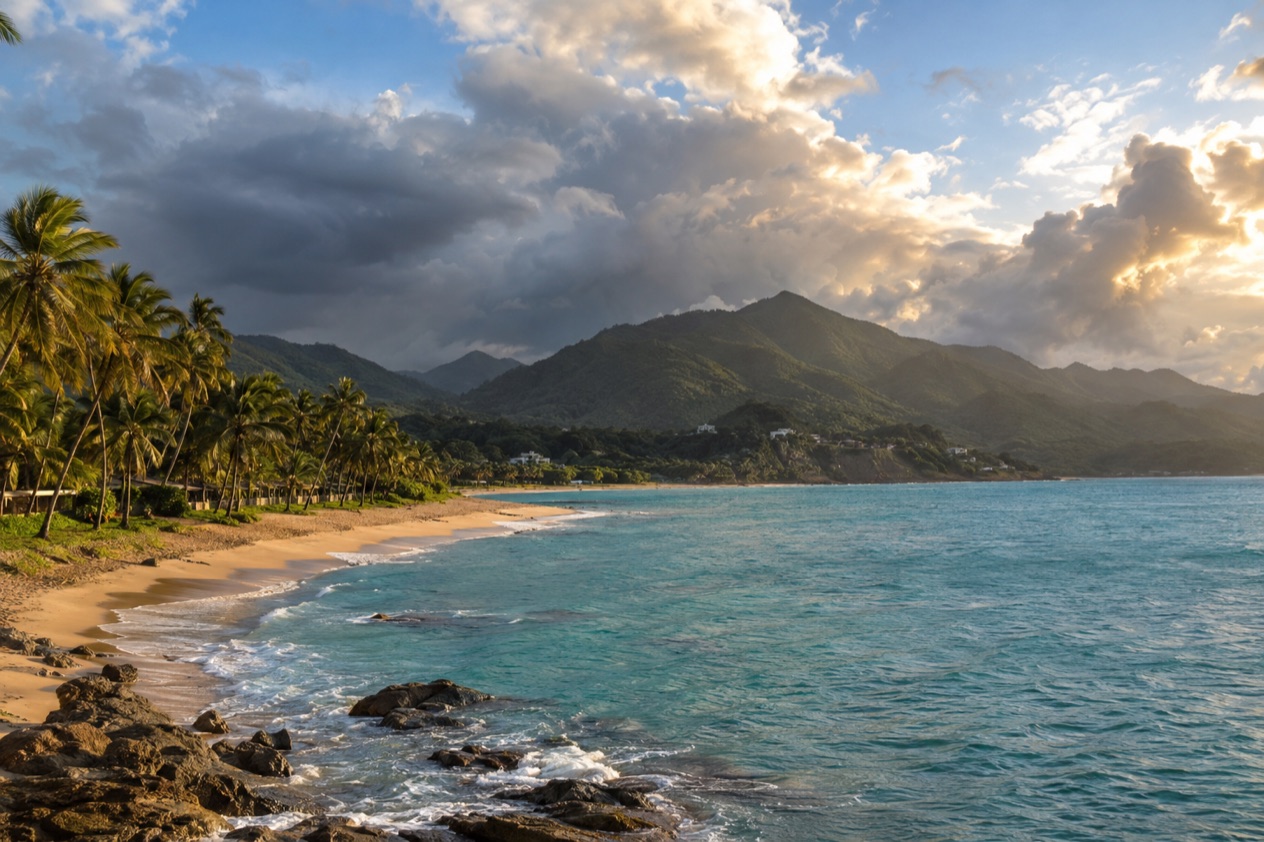
All across Puerto Rico in September the weather is hot, muggy, and marked by showers, the north and east coasts being the most humid and rainy, the south and west somewhat less wet, and the water at every shore warm enough for swimming. Afternoons bring short downpours, and some days turn gray and rainy from morning on. The readings for San Juan are taken at the airport located just east of Old San Juan, and those for Fajardo at the former naval station in Ceiba a few miles south, which means beach conditions may vary slightly.
| Place | Region | Average high (°F) | Average low (°F) | Rain (in) | Rain days | Sea (°F) |
|---|---|---|---|---|---|---|
| San Juan | North coast | 89.2 | 77.5 | 6.50 | 10.8 | 86.5 |
| Fajardo | Northeast | 88.8 | 76.4 | 6.40 | 10.9 | 87.3 |
| Culebra | East islands | 82.9 | 79.9 | 5.62 | 12.2 | 86.7 |
| Ponce | South coast | 85.4 | 75.8 | 5.30 | 11.4 | 87.5 |
| Rincon | West coast | 85.9 | 78.5 | 3.99 | 9.3 | 88.8 |
The north and northeast carry the heaviest rain, with San Juan at 6.50 inches and Fajardo at 6.40. Rincon is the drier of the places listed, at under four inches and the fewest rainy days, which makes the west the easiest side for planning beach hours. Ponce sits in between on rain, but its sunny stretches feel hot and still.
Heat differs less by place than you might expect. San Juan has the hottest afternoons, while Culebra stays the mildest by day and has the warmest nights, so the small island feels breezy but never cool. Of the five, Rincon offers the warmest water, which is a joy for snorkeling and long swims, but Culebra sees more rainy days than anywhere else, generally short showers that pass through.
Where to go in Puerto Rico in September
The west coast: Rincon and Aguadilla
The west is the logical pick for a beach-first September. Rincon has the fewest rainy days of the places we cover and the warmest water, and the big winter swells that make it a surfing capital are away for the summer. Mornings are often the best window for snorkeling and swimming, with clouds building later.
Beaches around Aguadilla and Rincon can still have currents and sudden surf from passing weather systems, so check each beach day by day and follow any flag, sign or lifeguard. Sunset watching from the town’s lighthouse area is a local habit, and the fish shacks and small restaurants are quieter than in the winter season.
The south coast: Ponce
Ponce is hot, a little drier than the north and best for walking in the morning. When the heat or rain shows up later in the day, the plaza area offers shaded, air-conditioned spots where you can take cover, among them the cathedral, the art museums and the red-and-black firehouse. The food scene runs to fried snacks at kiosks, cold piraguas (shaved ice with fruit syrup) and long lunches.
The south coast is on the Caribbean side, where the sea is usually gentler than on the Atlantic coasts, though conditions change from day to day. La Parguera, on the southwest coast, has one of the three bioluminescent bays. The bay lights up throughout the year, and moonless nights offer the finest viewing, so check the lunar calendar when planning your trip and consider the glow a possibility rather than a guarantee.
The northeast and the islands: San Juan, Fajardo, Culebra
San Juan is hot and sticky, so plan Old San Juan’s forts, plazas and blue cobblestone streets for early morning or late afternoon, and use midday for museums, long lunches of mofongo (mashed fried plantain) or a swim at city beaches. A shower is normal, and umbrellas appear and disappear within minutes.
Fajardo and Culebra are the gateway to the island’s best-known water days. Public ferries for Vieques and Culebra depart out of Ceiba, and because the water may get rough, it pays to stay flexible with your plans. The remaining bioluminescent bays are Mosquito Bay on Vieques and Laguna Grande near Fajardo. Culebra has the most rainy days on our list but they are usually brief, and sargassum may reach east and south coasts in some seasons.
The central mountains
The coffee towns of the central mountains have cooler air than the coasts and a lot of green after the summer rains. Clouds settle on the ridges by afternoon, and the north-facing slopes get a good share of the island’s rain, so go early for views and keep the afternoon for a coffee farm, a roadside lechon asado (roast pork) stop or a long lunch indoors.
The twisting mountain roads are slower in heavy rain, so give yourself more time than the map suggests. El Yunque rainforest, in the northeast, is at its lushest this time of year, and its trails can be wet and muddy.
What to do in Puerto Rico in September
With no one national celebration to anchor the month, September instead belongs to Puerto Rico’s everyday joys: warm water, food and a culture of rainy days. The long Christmas season starts to stir only in late November, and the street parties that follow it are months away. What you get instead is room to move at your own pace.
Beaches, snorkeling and the bays at night
With the sea at its warmest, snorkeling is a highlight, especially along the west coast and around Culebra. Start in the morning when the water is clearest and the clouds have not built, and leave the beach when thunder sounds. If a flag or lifeguard is on duty, do what it says.
Once darkness settles in, head for the luminous waters of Mosquito Bay on Vieques, Laguna Grande near Fajardo, and La Parguera in Lajas. The shine lasts throughout the year, peaks when no moon is out, and overcast skies plus rain may dull the effect. Pick a night near the new moon and keep a second date in reserve.
Eating and rainy-day plans
Rain is an excuse to eat. Request alcapurrias, which are green banana and taro fritters filled with meat, along with tostones, pasteles and lechon asado, then wrap up with tembleque, a coconut pudding. Coffee from the central mountains tastes best in a highland town while clouds sit on the ridges, and a rum tasting is a good wet-afternoon plan.
In San Juan, the museums, the forts’ stone galleries and the cafés of Old San Juan absorb the passing showers. In Ponce, the plaza and the art museums do the same. Hard weather days work well for slow lunches, and a kiosk piraguas is a fine reward when the sun returns.
Is Puerto Rico busy in September?
No, September is one of the quieter months on the island, since summer vacation is over on the mainland and the winter crowds have not arrived. Flights and rooms tend to be easier to find, and beaches, restaurants and Old San Juan’s streets feel unhurried. The mid-week calm is especially noticeable.
Who travels now is mostly people with flexible schedules, couples, visitors from the island’s own diaspora and anyone willing to share the season with showers and storm forecasts. As the month begins, Labor Day weekend draws a brief wave of travelers from the island and the mainland to the beaches, above all around San Juan and Fajardo, and ferries heading to Culebra and Vieques often seem more crowded at that time.
Surf towns like Rincon are at their calmest, and the central mountains are peaceful on weekdays. Weekends are when Puerto Ricans themselves head to the beaches, kiosks and mountain restaurants, so a Saturday on a popular coast has a lively family mood while a Tuesday often feels almost private.
Because this is the heart of the storm season, the most important crowd factor is the forecast. When a system is nearby, visitors cut trips short and tables empty out, so keep reservations and plans flexible, and follow official alerts closely.
What to pack for Puerto Rico in September
Pack for heat and sudden rain everywhere, with a light layer for air-conditioned rooms and the cooler mountain air. On the coasts, think quick-drying clothes and sandals that handle wet pavement. In the central mountains and El Yunque, add shoes with grip and one extra dry shirt.
- Lightweight, quick-drying clothes, since nothing dries slowly in this humidity.
- For the daily downpour, bring a small umbrella or a packable rain shell.
- Sunscreen, a hat and sunglasses for the hours between clouds.
- Water shoes and a snorkel mask for the warm sea.
- Insect repellent for evenings and the rainforest.
- A dry bag or waterproof case for phone and documents on boats and beaches.
Good to know before you go
The Atlantic hurricane season runs from June 1 to November 30, and its peak falls on September 10, with most activity between mid-August and mid-October, so September sits in the busiest stretch. Keep an eye on the latest word from the National Hurricane Center and local officials, since things can shift fast, and book places to stay that let you change your plans.
In certain seasons, sargassum seaweed may wash up on the east and south coasts. If you are a U.S. citizen visiting from the mainland, you can arrive here with no passport or visa.
Is September a good time to visit Puerto Rico?
September is a good month for flexible travelers who want warm water and quiet places, and the west coast around Rincon and Aguadilla is the best region to aim for, with the fewest rainy days and the warmest sea. It is less suited to a rigid schedule, because heat, showers and the storm season all shape each day.
Compared with August, September feels much the same, hot and humid with the sea at its warmest, but the summer vacation crowds are gone and the island empties out further. Against October, it sits closer to the peak of storm activity, though both months are inside the official season and both come with showers and a green landscape.
The north and northeast take the most rain, so if you are based in San Juan or Fajardo, plan indoor alternatives and early starts. Ponce suits visitors who prefer a slightly drier base and do not mind heat. The mountains give a cooler escape, though clouds settle there by afternoon.
What marks September is the rhythm: bright mornings, towering clouds by afternoon, a short downpour, then a rinsed light over the plaza and a fish shack with plenty of empty tables. For travelers who accept that rhythm, the island feels private and generous.
Sources
- NOAA NCEI, monthly normals 1991-2020, station RQW00011641 (San Juan L M Marin International Airport), checked October 8, 2026
- Open-Meteo Marine API, average 2015-2024, checked October 8, 2026
- Open-Meteo / ECMWF ERA5, normals 1991-2020 computed for the grid cell at 18.0111N 66.6141W, checked October 8, 2026
- Open-Meteo / ECMWF ERA5, normals 1991-2020 computed for the grid cell at 18.3403N 67.2499W, checked October 8, 2026
- NOAA NCEI, monthly normals 1991-2020, station RQW00011630 (Roosevelt Roads (Ceiba)), checked October 8, 2026
- Open-Meteo / ECMWF ERA5, normals 1991-2020 computed for the grid cell at 18.3N 65.28W, checked October 8, 2026
- NOAA National Hurricane Center, Climatology (https://www.nhc.noaa.gov/climo/), checked October 8, 2026
To plan your stay
- Things to Do in Puerto Rico: Old San Juan, Beaches, Bioluminescent Bays and Island Food
- Where to Stay in Puerto Rico: San Juan, Rincon, Vieques and the Best Areas for Your Trip
- Getting Around Puerto Rico: Rental Cars, Tolls, Carros Publicos and Ferries to Culebra and Vieques
- Know Before You Go to Puerto Rico: ID, Money, Getting Around and Local Customs