
On the night of Saint John the Baptist, families all over Puerto Rico walk into the sea at midnight, dunk their heads three times for luck, and then stay on the sand talking until the sky turns gray. It is the high point of a month when school is out, the water is as warm as it gets, and the island settles into the rhythm of early summer. June brings long beach days on every coast, rainforest and coffee hills for cooler hours, and the first weeks of the hurricane season.
What is the weather like in Puerto Rico in June?
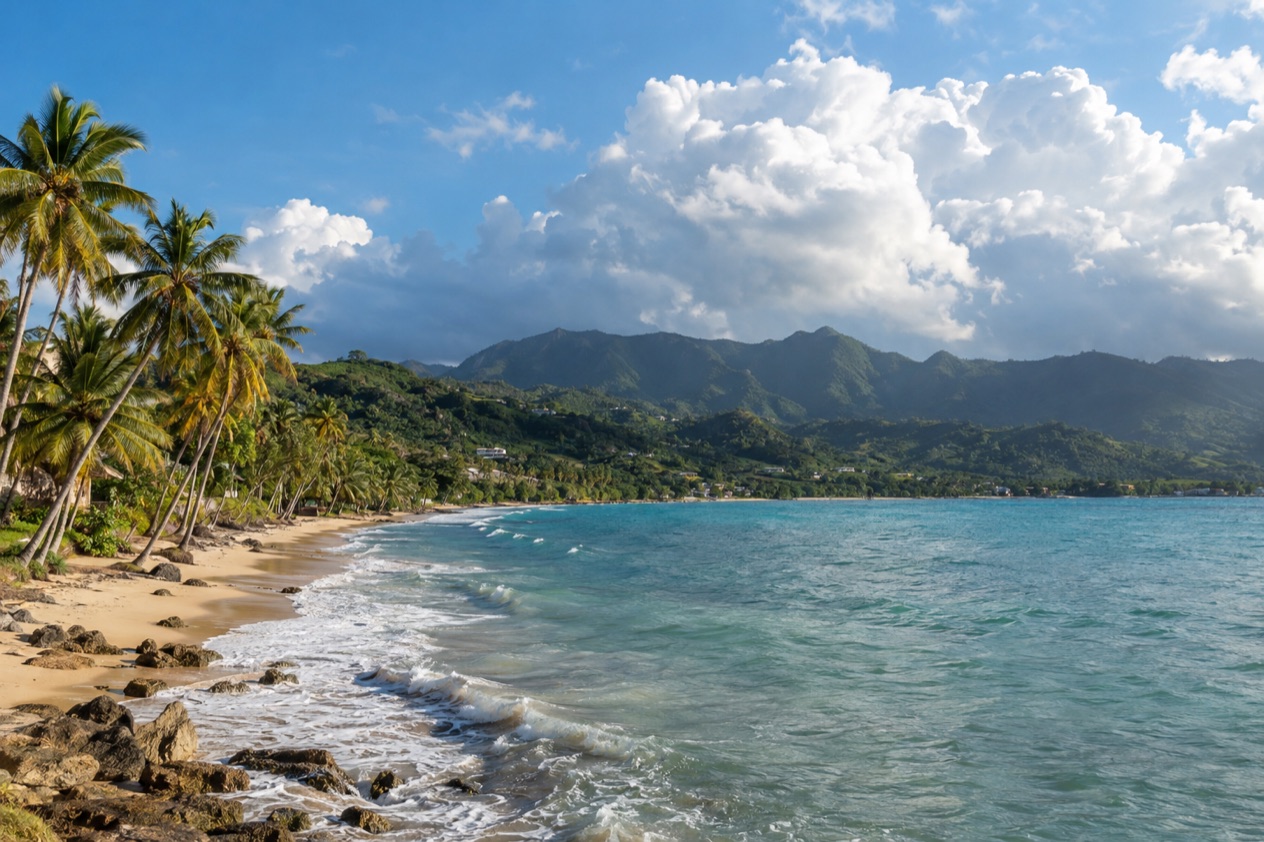
Everywhere on the island, June brings heat and humidity, with the north and east coasts seeing showers most often, the south and west coasts remaining drier, and the central mountains running a few degrees cooler than any beach. Days start bright, clouds build over the interior by midday, and a quick downpour in the afternoon is the usual pattern rather than a gray, all-day rain.
| Place | Region | Average high (°F) | Average low (°F) | Rain (in) | Rain days | Sea (°F) |
|---|---|---|---|---|---|---|
| San Juan (airport) | North coast | 89.0 | 77.2 | 4.66 | 8.0 | 84.8 |
| Fajardo (Ceiba station) | Northeast coast | 88.1 | 77.3 | 3.90 | 7.4 | 85.8 |
| Culebra | Eastern islands | 81.8 | 79.4 | 2.47 | 7.0 | 85.0 |
| Ponce | South coast | 85.8 | 75.7 | 1.96 | 5.3 | 86.1 |
| Rincon | West coast | 86.1 | 77.8 | 1.95 | 5.8 | 87.6 |
San Juan is the wettest of these places in June and also the hottest in the afternoon, so a day of sightseeing in Old San Juan is a day of ducking into shade, cafés and museums. Fajardo sits in between, with fewer rainy days but still enough clouds over El Yunque to keep the rainforest dripping. Nights on the north and east coasts stay warm enough that you will want air conditioning or a good fan.
The south and west are the drier side. Ponce and Rincon each get less than half the rain of San Juan, which means more of your day stays dry, though Ponce feels the heat of its open, sunbaked plains.
Culebra stands apart: thanks to a sea breeze that never lets up, its afternoons remain cooler than the main island, yet no place has warmer nights. Sea temperatures sit in the mid-80s everywhere, a touch warmer on the west side.
Where to go in Puerto Rico in June
San Juan and the north coast
Old San Juan is most rewarding in the early morning and the evening, when the blue cobblestones are cool enough to walk and the old forts catch the low light over the Atlantic. Noon calls for a leisurely lunch in a shaded courtyard, where mofongo (fried plantain that is mashed, often with garlic and pork or seafood) is the order of the day. Condado and Isla Verde offer easy beach time with hotels right on the sand.
This is the part of the island where June rain falls most often, usually as a sudden shower that passes within the hour. The north coast also faces the open Atlantic, so surf can be stronger on some beaches than on others. Look for flags or signs and ask a lifeguard where one is present, because conditions change from day to day.
The northeast, Fajardo and the islands
The northeast is where you combine rainforest, bioluminescent water and island hopping. El Yunque is greenest and wettest in the afternoons, so mornings are the time for its trails and waterfalls. Fajardo is the base for Laguna Grande, where the bay may glow at night, best when the moon is absent.
Public ferries leave Ceiba for Vieques and Culebra, the tranquil islands on the Caribbean side that have the trip’s clearest water. Flamenco Beach on Culebra and the long beaches of Vieques are the draws, along with Mosquito Bay on Vieques, another bioluminescent bay. June suits snorkeling here, though sargassum seaweed can sometimes reach east-facing shores in early summer.
Ponce, the south coast and La Parguera
Ponce is the drier, hotter side of the island, with a pretty plaza, a red-and-black firehouse, and good museums that make the afternoon heat easy to wait out. Do your walking early, and finish the day with a plate of lechon asado, slow-roasted pork, at a roadside spot in the hills above town.
Farther west, La Parguera in Lajas is the third bioluminescent bay and the one reached by boat from a lively fishing village. Evenings there are busy on weekends, with music drifting off the waterfront. The Caribbean sea along this coast is typically gentler than the Atlantic side, though that changes with the weather.
Rincon, Aguadilla and the west
Rincon is the surf town, and its big winter swells are gone by June. The water often turns clearer and quieter, which suits snorkeling, paddleboarding and long swims. The sea is the warmest on the island here, and afternoons come with sunsets that fill the beach bars of the west coast.
Aguadilla and the beaches around it bring families and day-trippers, with enough space to spread out. The area is on the drier side of Puerto Rico, so a beach day is a safer bet than in the northeast. Swell can still arrive from distant storms, so follow any flags or signs you see on the sand.
The central mountains
The coffee towns of the central mountains are the place to cool off. Mornings are fresh and green, with clouds drifting through the valleys and roosters announcing breakfast at roadside restaurants. Stop for a cup of local coffee, the island’s best-known drink, and look for fruit stands along the winding roads.
Afternoon rain is common in the hills, so plan drives and walks for the morning. The roads are narrow and curved, which makes the trip slower than the map suggests. It suits travelers who like quiet lodging, farm visits and a break from beach heat.
What to do in Puerto Rico in June
Noche de San Juan Bautista
The big night of the month is the Noche de San Juan Bautista on June 23. At midnight, people walk backward into the sea three times, letting the waves wash over their heads for luck and a fresh start. Beaches fill with friends, coolers, music and bonfires, and the mood is festive rather than formal.
San Juan and the other coastal towns each have their own gatherings, and the nearest public beach is usually the place to join. Come with a towel and a change of clothes, and expect sand and crowds well past midnight. Those who prefer quiet can watch from a restaurant terrace and have a late dinner.
Turtles, glowing bays and warm water
Sea turtles nest on Puerto Rican beaches in spring and summer, so you may come across marked nests or, with luck, a nesting female at night. Keep your distance, keep lights off and follow any signs. Culebra is one of the places known for it.
The three bioluminescent bays glow all year, and June is a fine month to go. The darker the night, the better the show, so pick a moonless evening if you can. Treat it as a chance rather than a promise, since cloud and rain can dull the effect. Follow the rules of the operator on swimming, kayaking or boat trips.
Eating and drinking in June
June weather suits cold things. Look for piraguas, shaved ice drenched in fruit syrup and sold from carts on hot afternoons, and tembleque, a coconut pudding set with cinnamon on top. Alcapurrias (fritters of green banana and taro, usually filled with meat) are the roadside snack that turns up at every beach kiosk.
Pair tostones, twice-fried green plantains, with fresh fish at a seaside shack, and end with a rum drink or coffee from the mountains. Pasteles are more of a Christmas dish but are still found year-round in some restaurants. A beach day, a long lunch and an early night is a good June routine.
Is Puerto Rico busy in June?
June is moderately busy, with the island filling up on weekends and holiday dates but staying calmer than in the winter high season. U.S. schools let out, so families from the mainland start to arrive, and local families head to the beaches on Saturdays and Sundays, especially around Saint John’s night.
The places that fill up first are the easy beaches near San Juan, the ferries from Ceiba to Culebra and Vieques, and the bioluminescent bay trips on weekends. Flamenco Beach on Culebra is popular on dry days, and the lodging there is limited, so plan ahead for any island stay. Weekdays are noticeably easier almost everywhere.
Quieter corners include the coffee towns in the central mountains, the south coast around Ponce, and the west beyond Rincon on a weekday. El Yunque and Old San Juan draw visitors all year, and the trick is to go early. Because the wetter season begins in May, some visitors stay away, which makes rain-friendly plans easier to arrange.
Local travel also picks up whenever there is a long weekend. On those days beaches, roads and ferry lines are livelier than usual, and restaurants near the water can have a wait. A late breakfast on the porch and an early dinner usually beat the rush.
What to pack for Puerto Rico in June
Pack for heat and humidity on the coast, with light clothes that dry quickly, and add one warmer layer if you plan a night in the central mountains. The north and east need a rain jacket or small umbrella for afternoon showers, while the south and west mean more sun protection and a wide-brimmed hat. Sturdy sandals or water shoes help on rocky shores and on wet trails.
- Lightweight, breathable clothing and at least two swimsuits, since nothing dries fully in the humidity.
- For the afternoon downpours along the north and east coasts and in El Yunque, bring a rain jacket you can pack.
- Sunscreen, sunglasses and a hat for the long beach days.
- For the rainforest’s wet trails, its waterfalls and rocky coves, pack sturdy sandals or water shoes.
- Insect repellent for evenings near mangroves, bays and the rainforest.
- A light sweater for air-conditioned restaurants and cool mornings in the mountains.
Good to know before you go
June is the first month of the Atlantic hurricane season, which runs from June 1 to November 30, with the busiest weeks coming much later in late summer and early fall. A storm can still form this soon in the season, so as your trip nears, watch the National Hurricane Center along with any warnings from local officials, and leave room to adjust your plans.
When you have a certain beach in mind, the locals are your best bet, because sargassum seaweed turns up now and then on the east and south coasts in some springs and summers. U.S. citizens do not need a visa or a passport.
Is June a good time to visit Puerto Rico?
June is a good time for beach lovers, families and anyone who wants warm water, and the west and south coasts are the best bets for dry, sunny days. Culebra and Vieques are also excellent for clear water if you can handle some showers. Travelers who dislike heat, humidity or rain should look at the drier months of winter instead.
Compared with May, June is hotter and more settled, with the sea a little warmer and the rainy-season showers starting to fall into a regular pattern of afternoon bursts. Compared with July, it feels slightly less crowded, and school breaks are only starting, so ferries and beaches are a bit easier. The hurricane season is only beginning in June, with the most active period still months away.
A sensible June plan splits the trip: a few days in San Juan and the northeast for the forts, the rainforest and a glowing bay, then a few more on the dry west or south coast for beach time. Mornings are for walking and hiking, afternoons for swimming and shade, evenings for outdoor dinners with a breeze.
What sets this month apart is the midnight plunge of Saint John’s night, when the whole island seems to walk into the sea together. A chance to join in, with sand under your feet and warm waves around you, is a real way into Puerto Rican summer.
Sources
- NOAA NCEI, monthly normals 1991-2020, station RQW00011641 (San Juan L M Marin International Airport), checked October 8, 2026
- Open-Meteo Marine API, average 2015-2024, checked October 8, 2026
- Open-Meteo / ECMWF ERA5, normals 1991-2020 computed for the grid cell at 18.0111N 66.6141W, checked October 8, 2026
- Open-Meteo / ECMWF ERA5, normals 1991-2020 computed for the grid cell at 18.3403N 67.2499W, checked October 8, 2026
- NOAA NCEI, monthly normals 1991-2020, station RQW00011630 (Roosevelt Roads (Ceiba)), checked October 8, 2026
- Open-Meteo / ECMWF ERA5, normals 1991-2020 computed for the grid cell at 18.3N 65.28W, checked October 8, 2026
- NOAA National Hurricane Center, Climatology (https://www.nhc.noaa.gov/climo/), checked October 8, 2026
To plan your stay
- Things to Do in Puerto Rico: Old San Juan, Beaches, Bioluminescent Bays and Island Food
- Where to Stay in Puerto Rico: San Juan, Rincon, Vieques and the Best Areas for Your Trip
- Getting Around Puerto Rico: Rental Cars, Tolls, Carros Publicos and Ferries to Culebra and Vieques
- Know Before You Go to Puerto Rico: ID, Money, Getting Around and Local Customs