
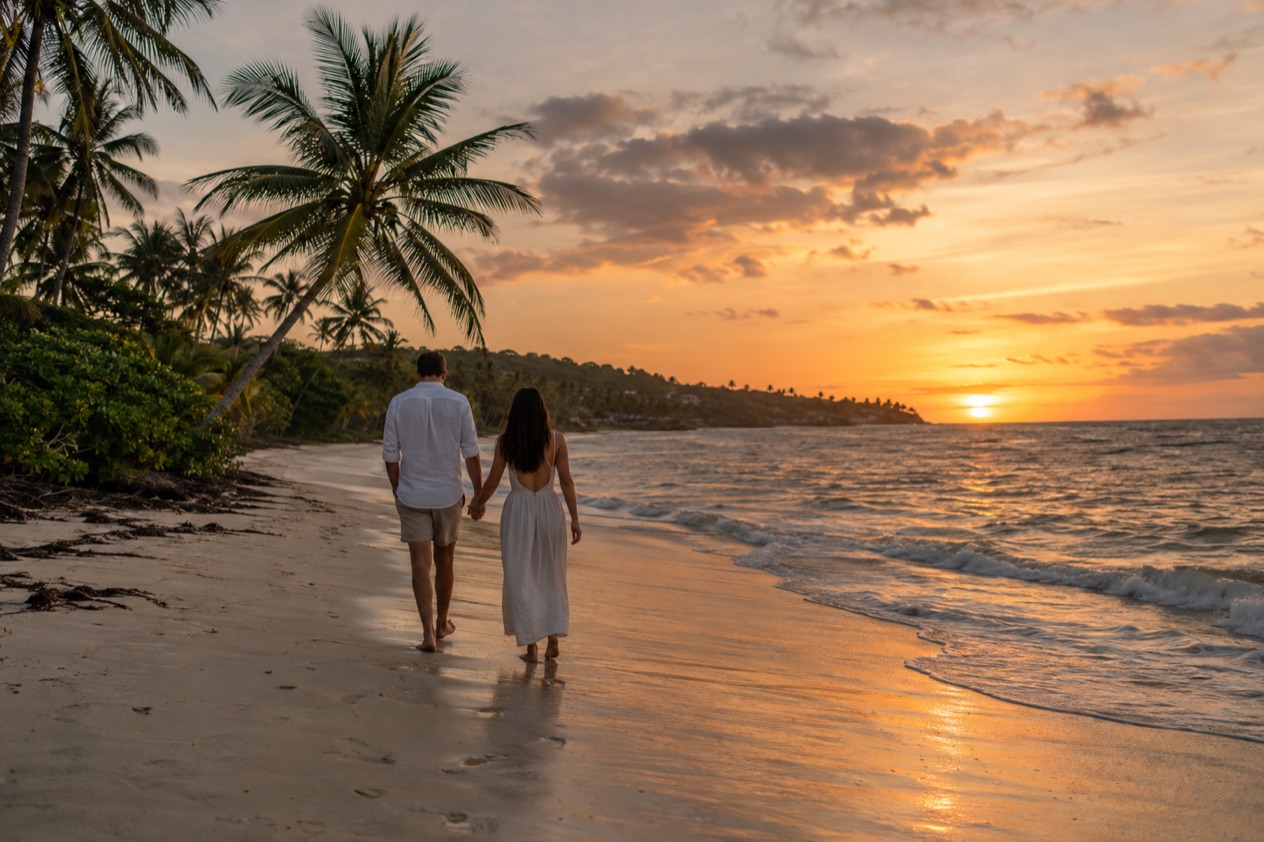
As evening falls in Old San Juan, the blue cobblestones take on a golden hue, a guitar floats from an open doorway, and couples head up toward the old walls with a cup of something spiked with rum to watch the light fade over the Atlantic. Later, on a small island to the east, the water itself may glow under a kayak paddle. Puerto Rico gives newlyweds colonial streets, quiet beaches and night-time magic on a single U.S. territory where no passport is needed.
Is Puerto Rico a good honeymoon destination?
Yes, and the reason is range: you can spend a few evenings in a candlelit colonial city, then trade it for an island with wild horses and almost no resorts, all without leaving U.S. soil. For Americans, no visa or passport is required, mainland departures count as domestic flights, and dollars serve as the currency. Spanish and English are both official, so a few words of Spanish are a pleasure rather than a necessity.
Puerto Rico keeps its warm, humid feel in every season, and a true winter never shows up there. Around December through April the weather turns drier, while from roughly May to November it gets wetter, and that second stretch is when hurricane season also arrives.
Couples who want the most settled skies often aim for the drier months, though the wetter season brings fewer crowds and green hillsides. When your travels land between June and November, watch the National Hurricane Center and follow the guidance of local officials.
Romance by day: beaches, rainforest and coffee hills
A honeymoon here rarely needs a schedule. Mornings can start with coffee grown in the central mountains, where the air is cooler and the towns are small. Afternoons might be spent in El Yunque rainforest in the northeast, where waterfalls and damp green trails make a good change from sand. Since the island’s rainiest zones take in the north coast and the mountains, plan on the odd shower and leave part of an afternoon open.
Beach days are the other half. Winter swells can make the north and west Atlantic shores rough, so check the flags and signs where they are present and ask locally before swimming. Conditions change from day to day and from beach to beach, and sheltered coves are a better bet for a quiet dip than open surf.
Romance by night: food, rum and glowing water
Dinner is a highlight in itself. Mofongo, a mound of mashed fried plantain often stuffed with seafood or meat, is the dish most visitors try, along with lechon asado (slow-roasted pork), crisp tostones and alcapurrias, fritters of green banana and taro. Finish with tembleque, a coconut pudding, or a piragua, shaved ice with fruit syrup, eaten on a warm evening. Island rum and mountain coffee are the two drinks to take home.
Three bioluminescent bays also call Puerto Rico home: Mosquito Bay on Vieques, Laguna Grande near Fajardo, and La Parguera along the southwest coast. These bays shine throughout the year and show best when no moon is out, so plan a honeymoon near the new moon for your top odds of watching the water sparkle around your paddle. It is a chance, never a promise, and cloud and moonlight both matter.
A season that suits a wedding trip
Puerto Rico enjoys a gentle holiday glow from late November through mid-January, and the Calle San Sebastian street festival in Old San Juan marks that season’s peak, when music and crafts bring those historic streets to life. Couples who marry around the holidays will find the island in a festive mood, with parrandas (roving carolers) and lights in the plazas. At other times of year the pace is slower and the evenings are yours alone.
Where should you go for a honeymoon in Puerto Rico?
Pair Old San Juan with one of the two small islands off the east coast, Culebra or Vieques, and you have the island’s two moods: history and quiet. San Juan is the capital and main gateway on the north coast, so most trips begin and end there. The rest of Puerto Rico is a short hop away.
Old San Juan
Old San Juan sits on a small, narrow island on the north coast, linked to the mainland by three bridges. Its fortifications, including El Morro and San Cristobal, have been UNESCO World Heritage Sites since 1983, and the main draw is Castillo San Felipe del Morro, a Spanish fort at the edge of the sea. About three-quarters of the old city walls remain, and walking their length at sunset is as romantic as the town gets.
The rest is for wandering: balconies heavy with flowers, tiny plazas, bars with live music and restaurants serving mofongo under old beams. La Fortaleza, the governor’s residence, is among the historic buildings along the way. Plan an evening or two here rather than a week, as the district is compact and best on foot.
| Site | Open |
|---|---|
| Culebra National Wildlife Refuge (public areas and trails) | Daily, 6:00 AM to 6:00 PM |
| Vieques National Wildlife Refuge | Open year-round |
Culebra
Getting to Culebra is simple, either by a brief flight or the public ferry out of Ceiba, and this little island sits about 17 miles east of the main one. With a single town called Dewey, a calm harbor, and no big resorts, life here moves at the pace of the beach. Flamenco Beach is the well-known one, a wide arc of pale sand and clear shallow water, where rusted army tanks remain on the beach as odd, photogenic reminders of times gone by.
For snorkeling, you can often see green sea turtles grazing on seagrass on the west side at Tamarindo Beach, and Carlos Rosario Beach, only a short walk from Flamenco, has a coral reef close to shore. At the eastern tip, Zoni Beach stretches out spacious and peaceful, drawing many fewer people. Much of the land is a wildlife refuge, home to a large Sooty Tern colony on the Flamenco Peninsula, so walks here often come with birdsong.
Vieques
Southeast of Fajardo lies Vieques, the bigger of the two islands, reachable by small plane or by public ferry out of Ceiba. Long stretches of undeveloped beach remain where the former Navy range now serves as a wildlife refuge, and horses roam free across the roads and sand. Among the most popular spots are Sun Bay, Red Beach and Blue Beach, while part of the refuge on the east side stays off limits due to unexploded ordnance, so keep to the areas that are open.
On the south coast, Esperanza is the relaxed village by the water, home to guesthouses and open-air restaurants where an evening meal stretches into a long night. Up on the north coast, the ferry arrives in the town of Isabel Segunda. To make a night you will not forget, set out for Mosquito Bay, the bay that glows, reaching it by kayak or electric boat alongside a guide, and its light is at its peak under a moonless sky.
How long should a Puerto Rico honeymoon be?
A week is comfortable for most couples: enough for a few nights in Old San Juan and a few on one of the islands, with a day or two kept empty. A long weekend works if you stay in the San Juan area and add a single day trip. Ten days lets you add both islands, the rainforest and the mountains without hurrying.
A long weekend in and around San Juan
Land at Luis Munoz Marin International Airport and head straight into the old city for a slow first evening of dinner and a walk along the walls. The next day, visit El Morro in the morning, before the heat, then spend the afternoon on a beach or by the pool. A day trip to El Yunque rainforest in the northeast fits well on the last full day, with a late lunch of tostones and grilled fish on the way back.
This short version suits couples who want a taste of the island or are saving the longer trip for later. It keeps travel time low and food, music and history high.
A week with one island
Spend the first few nights in Old San Juan, then travel to Ceiba for the ferry, or take a short flight, to Culebra or Vieques. Choose Culebra for snorkeling, turtles and a very small-town feel, or Vieques for horses, long beaches and the bioluminescent bay. Either way, the rhythm changes the moment you step off the boat: fewer cars, more sandals.
Leave a flexible day for weather. Showers can reroute a beach plan, and a rainy afternoon is good for a long lunch or a slow coffee in town. If you want the bay, plan your nights around the new moon.
Ten days: islands, mountains and the south
With ten days you can add a night or two in the central mountains, where coffee towns and cooler air make a pleasant pause from the coast. Ponce in the south has a drier, hotter climate and a different feel from San Juan, and La Parguera on the southwest coast offers another bioluminescent bay. Rincon and the Aguadilla area on the west coast are the surf towns, best known for big winter swells, with calmer, snorkel-friendly water in summer.
Aguadilla and Ponce also have commercial airports, which can save backtracking. From roughly January through March, couples who travel during that stretch get a treat, since humpback whales frequently appear off the west coast.
Good to know before you go
Bring dollars and light clothes, plus sunscreen and a rain layer for the wetter months. Hurricane season runs from June 1 to November 30, with the peak around September 10 and most activity from mid-August to mid-October, so follow the National Hurricane Center and local official alerts if you travel then.
Keep ordinary city habits in San Juan at night, and check beach flags and signs wherever they are posted. The Vieques refuge prohibits drones, so leave yours at home.
Sources
- U.S. Fish and Wildlife Service, Culebra National Wildlife Refuge (https://www.fws.gov/refuge/culebra), checked October 8, 2026
- U.S. Fish and Wildlife Service, Vieques National Wildlife Refuge (https://www.fws.gov/refuge/vieques), checked October 8, 2026
- Wikipedia, Old San Juan (https://en.wikipedia.org/wiki/Old_San_Juan), checked October 8, 2026
- NOAA National Hurricane Center, Climatology (https://www.nhc.noaa.gov/climo/), checked October 8, 2026
To plan your stay
- Best Time to Visit Puerto Rico: Dry Season, Hurricane Season, Beaches and Festivals
- Where to Stay in Puerto Rico: San Juan, Rincon, Vieques and the Best Areas for Your Trip
- Getting Around Puerto Rico: Rental Cars, Tolls, Carros Publicos and Ferries to Culebra and Vieques
- Know Before You Go to Puerto Rico: ID, Money, Getting Around and Local Customs