
In November, Uvita wakes up to a wet, shining green. Mist hangs on the ridges behind town, the first light turns the sand of Playa Ballena the color of honey, and by late morning the clouds begin to stack up over the hills. On the southern Pacific coast, these weeks sit at the peak of the green season, when trails lie empty, beaches stay quiet and the water feels warm, made for travelers who trade a daily shower for room to breathe and peace.
What is the weather like in Uvita in November?
November in Uvita means warmth, thick humidity and rain on most days, though breaks in the weather can open up.
| Month | Average high (°F) | Average low (°F) | Rain days | Sea (°F) |
|---|---|---|---|---|
| October | 80.0 | 72.8 | 30.7 | 85.1 |
| November | 79.9 | 72.3 | 29.2 | 83.0 |
| December | 81.2 | 71.6 | 25.3 | 84.5 |
The day’s finest hours usually come early. The air is warm and sticky from the start, but the sky is frequently bright enough for a walk on the beach or a boat trip before the clouds build. Afternoons are when the rain tends to arrive, sometimes as a heavy downpour that drums on tin roofs for an hour or two, sometimes as a gray, steady drizzle that settles in for the evening.
The rain here is not a passing sprinkle. A good share of the days bring a real soaking, the rivers run brown, and some dirt roads turn to mud, so it pays to plan your outdoor hours early and keep the afternoons flexible. Between showers the light is soft and the forest looks almost electric green.
You can count on evenings mild enough for sandals and a T-shirt, so a sweater is not needed. Bring a light rain jacket, quick-drying clothes and shoes you do not mind getting wet. The sea is warm, which makes a rainy afternoon in the water feel less of a sacrifice than it would elsewhere.
Can you swim in Uvita in November?
Yes, you can swim for a long time in water this warm, and it feels good even to those who normally hate that first plunge.
Playa Uvita and Playa Colonia are long, open stretches of Pacific shore, while Playa Arco is a smaller cove. Waves usually roll in with some energy, and the surf can be bigger on some days than others. Water that looks gentle near the sand can turn into something very different a short way out, so look at the sea for a few minutes before you step in.
Rip currents are a real danger in Costa Rica and claim the lives of multiple American visitors annually, yet at the majority of beaches there are no lifeguards and no alerts about hazardous water.
After heavy rain, rivers can push muddy, debris-filled water into the sea, which dulls the visibility for snorkeling. Bring a rash guard for the sun and a dry bag for your phone, since a shower can arrive while you are still on the sand.
What to do in Uvita in November
November is not a month of big parades here. The one fixed date is November 2, All Souls’ Day (Dia de los Difuntos), a national holiday when families visit cemeteries and many businesses close, so expect a quieter town and some shuttered shops that day. Beyond that, the month belongs to the green season: fewer visitors, dripping forest and the slow rhythm of a small coastal town.
Food follows the same unhurried pace. At the little family spots known as sodas, you can order a casado, that plate of rice, beans, plantains and salad with your pick of fish, chicken or beef, and a fresh fish plate plus a cold fruit juice hits the spot for lunch once you are back from a morning outing. Evenings suit a simple seafood dinner and a long chat while the rain eases off.
Marino Ballena National Park and the whale’s tail
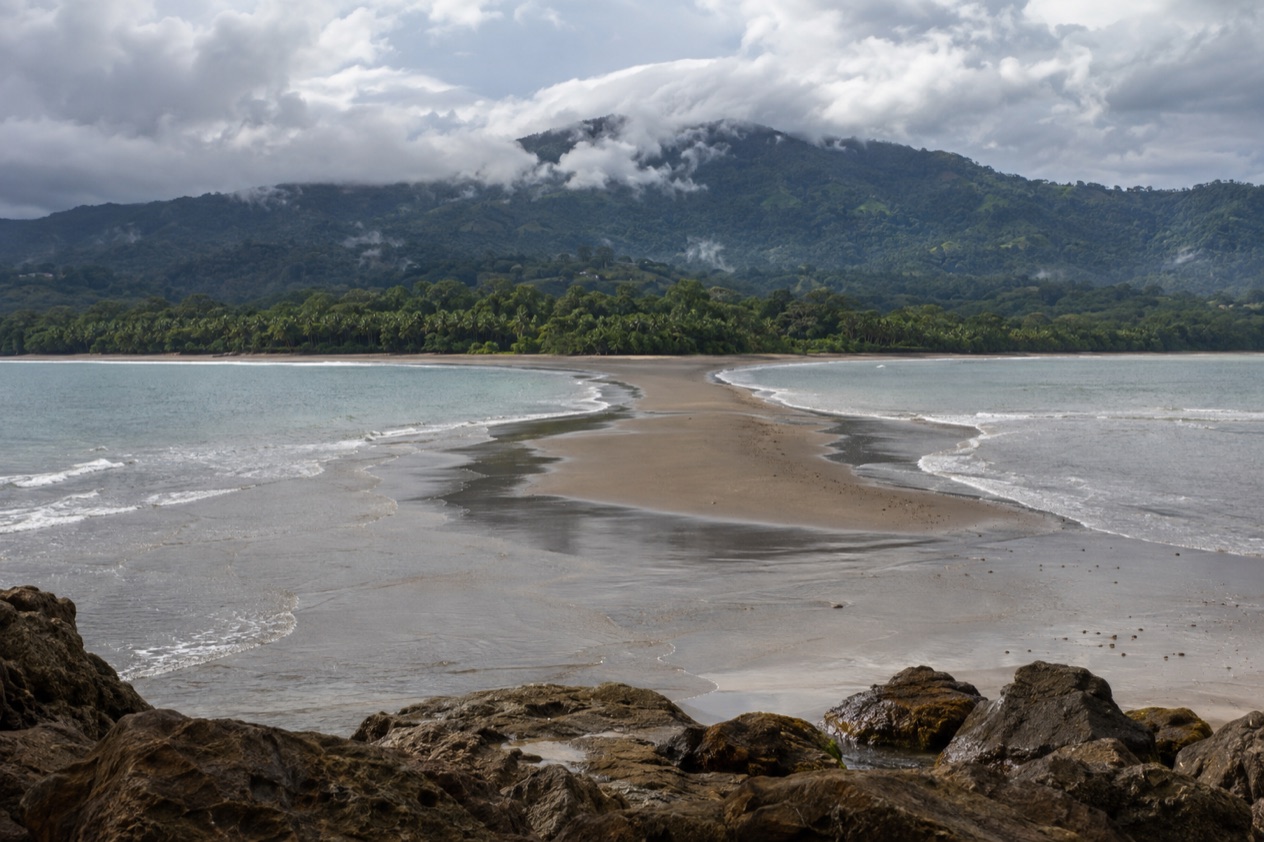
The great sight of Uvita is the sandbar that forms a whale’s tail at low tide, stretching out into the Pacific from the beach. Strolling its length, as waves wash against each side and wooded shores rise at your back, creates the picture that draws every visitor. The sandbar appears at low tide, so check the tide before setting out and remain alert to the returning water.
Head out early, while clear skies are most probable and the glow is gentlest for taking pictures. The park is an easy stop from town, and you can pair it with a swim at the neighboring beaches. Because the sandbar offers scant cover from the sun, pack a hat, water and sunscreen, and look up the park’s official page before you go, since rules and fees can shift.
Boat trips, snorkeling and wildlife
Local operators run boat outings along the coast from Uvita and nearby Bahia Ballena, with chances to see dolphins, seabirds and humpback whales when they are passing through, and to snorkel around the rocky points. Wildlife is always a chance rather than a promise, and sea conditions and visibility after heavy rain vary from day to day. A morning departure usually gives the calmest start and the best odds of dry weather.
These trips suit travelers who like being on the water and are comfortable with a little spray. Bring a rain layer and expect plans to shift if the sea is rough.
Waterfalls, forest and birds
Just off the coast, the hills behind Uvita are home to forest trails, small waterfalls and lookouts over the ocean. November is a lush time to walk them, with birdsong loud in the early hours and the leaves glossy from the rain. Trails can be slick and muddy, so wear shoes with good grip and keep an eye on the sky.
Guided walks are the way most visitors spot birds, monkeys, sloths and other animals, since local guides know where to look and what to listen for. Start early, finish before the afternoon showers and treat rivers and natural pools with caution after heavy rain, when water can rise quickly.
On a truly wet afternoon, do what the town does: find a covered café, order a coffee, and wait for the clouds to move on. Yoga studios and small craft shops give you other rainy-day options.
A two-day itinerary for Uvita in November
Day 1 begins early, because the morning is the driest window of the day. Look at the tide first, then make your way to Marino Ballena National Park to walk out along the whale’s tail in soft light, with the sand almost empty. Follow it with a swim at the neighboring beach, staying within your depth and watching the water carefully.
Lunch is a casado at a small family restaurant near the beach, then a slow hour while the clouds gather. Spend the afternoon at a shaded café or a roadside fruit stand, and if the rain arrives, let it. Dinner is fresh fish in town, ahead of an early night. Daylight lasts almost twelve hours, so the sun sets early in the evening.
Day 2 belongs to the hills and the sea. Join a guided walk in the forest at first light for birds and the chance of monkeys or a sloth, and be back for a late breakfast. If the water looks good, spend the late morning on a boat outing along the coast.
In the afternoon, keep things flexible. If the rain holds off for a bit, take a swim or browse the shops in town.
Is Uvita busy in November?
No, Uvita is quieter in November, when beaches are open and tables come easy.
The green season keeps many travelers away, and the crowds of the dry months are still weeks off. Beaches and trails feel spacious, restaurants rarely have a wait and rooms are usually easier to find than at the turn of the year. November 2 is a national holiday, so it can bring a few local trips and some closed shops.
That relaxed feel does not mean you should wait to the last minute. Small lodges are small, and the best rooms in a quiet month can still go early, so book ahead as a habit, earlier if you plan to travel around the holiday and later if your dates are in the middle of the month. Rental cars and boat outings are easier to arrange than in the busy season, though popular tours can still fill on a good-weather day.
Check the park’s official page for current access and reservation requirements before you head out.
What to pack for Uvita in November
Pack for heat, humidity and rain, and for activities that get you wet and muddy.
- A light rain jacket, since afternoon downpours are common.
- Quick-drying clothes, because nothing dries fast in the humidity.
- Sturdy sandals and shoes with grip for muddy trails.
- Sunscreen, a hat and a rash guard for the open sandbar.
- Bring a dry bag so your phone and camera stay safe.
- Pack bug spray for the woods and after dark.
Good to know before you go
The U.S. State Department rates Costa Rica Level 2, ‘Exercise increased caution,’ due to crime; it says petty crime is common throughout Costa Rica and that violent crime also affects tourists, including armed robbery, homicide and sexual assault.
Since November sits inside Atlantic hurricane season and the southern Pacific coast is at its rainiest peak, plan some breathing room into each day. Heavy rain can slow travel on steep or unpaved roads, so allow extra time for drives and avoid tight connections. November 2 is a national holiday, so expect some closures that day. Book your lodging and any boat or guided trip first, then fill in the rest.
Uvita in November vs October and December
Shifting your visit one month back means a sea that feels a bit warmer and rain that falls a little harder, as the green season reaches its peak. The setup works well for people seeking the calmest stretches of sand and who are fine with afternoons that leave them drenched.
A month later, the rain eases noticeably and the days become sunnier, which opens up more beach time and easier trails. The trade-off is that the holiday season starts to bring more visitors, so rooms and tables fill earlier and the pace of the town picks up.
If you value solitude and a lush landscape, stay in November. If you want more reliable weather for the beach and boat trips, shift toward December and book early.
Is November a good time to visit Uvita?
Yes, for travelers who like green hills, quiet beaches and warm water, and who accept that rain is part of the day.
For walkers, birders, photographers, and anyone who would rather have a quiet stretch of sand than a bustling one, it is a good fit. It is a harder choice for people who want guaranteed sunshine all day, a packed schedule of outdoor plans or a busy nightlife scene. On arrival, check the tide table first, since the whale’s tail walk depends on it, and plan your mornings around it. What stays with you from November in Uvita is the contrast: a gray, dripping afternoon followed by an evening when the clouds break open over a warm, glowing Pacific.
Sources
- Open-Meteo / ECMWF ERA5, normals 1991-2020 computed for the grid cell at 9.1561N 83.7347W, checked October 8, 2026
- Open-Meteo Marine API, average 2015-2024, checked October 8, 2026
- sunrise-sunset.org, sunrise and sunset calculated for the 15th of the month, checked October 8, 2026
- U.S. Department of State, Costa Rica Travel Information, Safety and security (https://travel.state.gov/content/travel/en/international-travel/International-Travel-Country-Information-Pages/CostaRica.html), checked October 8, 2026
- U.S. Department of State, Costa Rica Travel Advisory, issued April 1, 2026 (https://travel.state.gov/content/travel/en/traveladvisories/traveladvisories/costa-rica-travel-advisory.html), read via the State Department open data API on October 8, 2026