
Mist slides through the treetops above Santa Elena in the late morning, and hummingbirds keep arriving at the feeders as if nothing were happening. Down the muddy trails the forest drips, ferns unfurl and a guide stops everyone with a finger raised toward a quetzal-colored flash. Monteverde is a cloud-forest town built for walking, watching and slowing down, and it suits travelers who like their adventure paired with wildlife, good coffee and cool mountain air.
What are the best things to do in Monteverde?
The best things to do in Monteverde all involve the forest itself: walking its trails, rising into the canopy on bridges and cables, and going back after dark to see what wakes up. Add coffee, cheese and a day trip to a volcano, and a few days fill up easily.
- Walk the trails of the Monteverde Cloud Forest Reserve, where moss, orchids and ferns cover nearly every trunk.
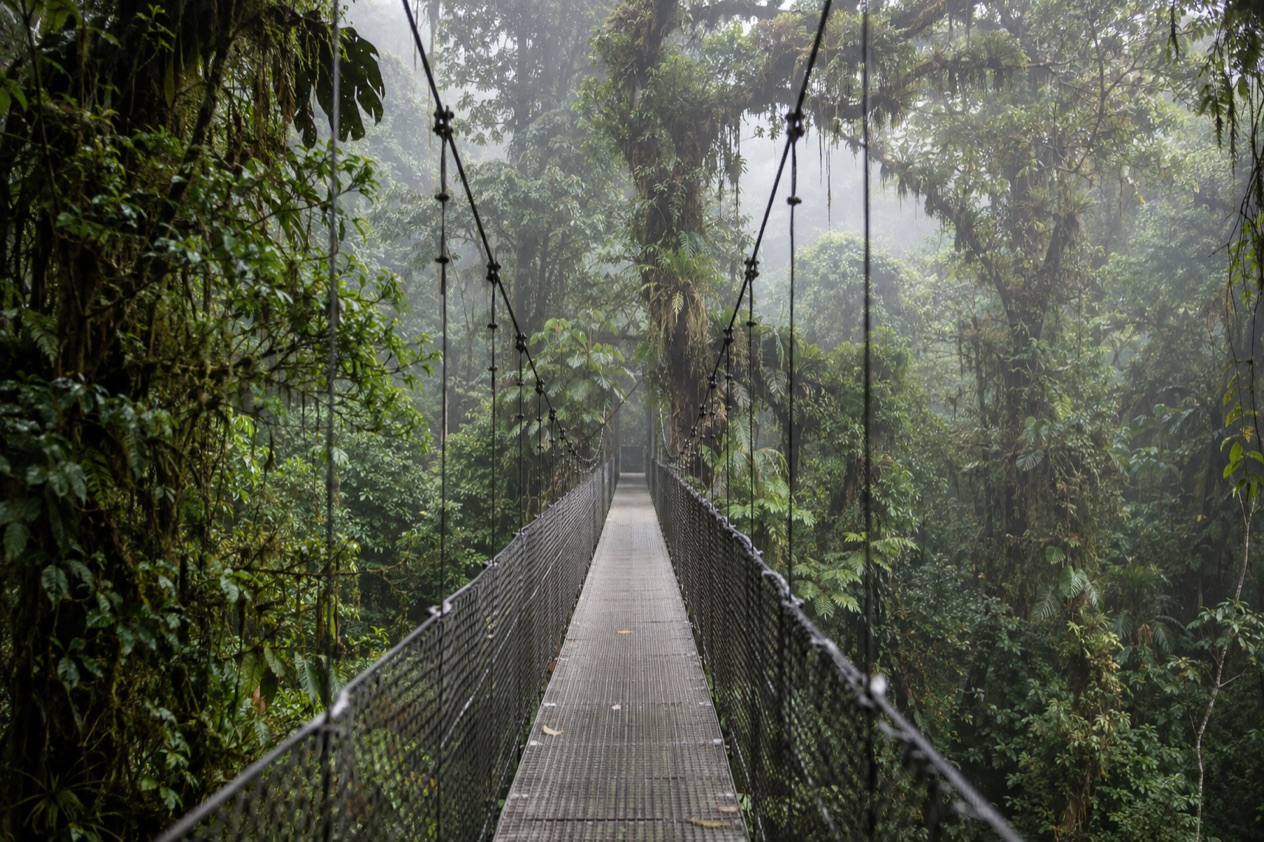
- Cross the hanging bridges, which put you at eye level with the canopy and its birds.
- Take a guided evening stroll to search for frogs, insects and birds at rest.
- Zip-line over the treetops if you want your cloud forest with a rush of speed.
- Watch hummingbirds crowd the feeders at a garden or gallery, an easy hour for any traveler.
- Tour a coffee farm and taste what grows on these mountain slopes.
- Visit the frog pond, butterfly garden and other small wildlife exhibits around Santa Elena.
- Spend a day away at Arenal, with its volcano views and hot springs.
Think of the list as a rhythm rather than a checklist. Mornings suit the trails, when birds are active and the mist has not yet thickened. Afternoons suit the indoor and covered options, because rain in this part of Costa Rica often arrives after midday.
Many visitors pick one big forest outing for the first day, a canopy activity for the second and keep the evening for a guided night walk. A coffee tour or a visit to the cheese factory slides in nicely on the gray afternoons. If you have more time, a day trip to Arenal gives the visit a very different landscape.
Walking shoes with real grip matter more here than any gadget, since the trails stay damp and muddy. A light rain jacket and a warm layer for the evening complete the kit. The rest, from binoculars to a hat, is a matter of how much you want to see up in the leaves.
Sights and landmarks in Monteverde
Monteverde has no cathedral or colonial plaza. Its landmarks are forest reserves, a Quaker-founded farming community and a handful of small, well-run exhibits, all spread along the winding road between Santa Elena and the reserve entrances. The story helps: families of Quakers settled here in the early 1950s, farming dairy cattle and setting aside the watershed forest that became the heart of today’s protected area.
Monteverde Cloud Forest Reserve
This is the landmark that put Monteverde on the map. Its trails run through dense, mossy forest, past giant strangler figs, tree ferns and branches loaded with bromeliads. Short loops are easy enough for most walkers, while longer trails climb toward lookouts that, on a clear moment, open toward the continental divide.
Go early, since birds and mammals are most active in the morning and the clouds often thicken later. Resplendent quetzals are a hope rather than a promise, and a naturalist guide is the best way to spot them along with the smaller creatures you would walk past alone. Rules and access can change, so check the reserve’s official page before you plan your day around it.
Santa Elena Cloud Forest Reserve
Run by the local community and a school, this reserve sits higher up the road and tends to feel quieter. The forest is just as mossy and dripping, and the trails are a good alternative when the main reserve is crowded. Some paths lead to lookouts where, with luck, the view stretches toward the Arenal volcano and the lake.
It suits travelers who prefer smaller groups and a slightly wilder feel. Plan on sturdy shoes and a rain layer, as the clouds can wrap the forest in minutes. A guided walk adds a lot here, since the trail signs only tell part of the story.
Santa Elena town and the cheese factory
Santa Elena is the practical heart of the area, a small town of tour offices, cafés, craft shops and bakeries that hums at the end of the day when guides return. Its main street is easy to cover on foot, and a slow wander through the craft stores turns up carved wood, textiles and photographs of local wildlife.
On the road toward Monteverde proper, the cheese factory descends from the Quaker dairy tradition. It is a simple stop for a taste of local cheese and ice cream, and a pleasant way to understand how farming and conservation grew up side by side here.
Small exhibits around town
The frog pond, or ranario, shows red-eyed tree frogs, poison dart frogs and glass frogs in lit enclosures, a good rehearsal for a night walk. The butterfly garden walks you through the life cycle from egg to wing, and the bat jungle and orchid garden fill out the picture. Hummingbird gardens near the reserve entrances let you sit with a coffee while dozens of tiny birds flicker around the feeders.
These are the places to pick on a drizzly afternoon, when the trails are less pleasant. Each takes about the time of a long coffee break, so you can combine two in a single outing. Together they make the forest’s smaller creatures easy to see up close.
Outdoor things to do in Monteverde
Outdoors in Monteverde means walking among the trees or hovering above them. The area’s cool, damp air smells of leaf litter and wet bark, and every trail has a different mood depending on the light and the mist. Guided outings are the usual way to see animals, and the Costa Rica Tourism Institute keeps a list of certified tour guides for anyone choosing one.
Hanging bridges and canopy walks
A string of hanging bridges links platforms and trails high in the forest, so you walk at the level where orchids, bromeliads and birds actually live. Several private reserves around Santa Elena and Monteverde run them, among them Selvatura and Sky Adventures, each with its own mix of bridges, trails and viewpoints. The bridges swing a little but are broad and well-railed, and the views down into the ravines can be remarkable.
Morning is the best time, with more birds and softer light, and many visitors pair the walk with a guided naturalist who can point out what the canopy hides. Mist can turn the view into a white room, which is part of the charm. A rain jacket and a camera with a wrist strap are the two things you will use most.
Zip-lines and other canopy rides
Monteverde claims a long tradition of canopy tours, and cables run over deep valleys and between big trees. Operators combine zip-lines with a Tarzan swing, a rappel or a tram ride, so the choice is a matter of how much speed you want. Some travelers find the quiet gliding above the treetops more memorable than the thrill.
A sober note: U.S. citizens have died in Costa Rica while doing adventure sports, so pick an established operator, listen closely to the safety briefing and skip anything that feels rushed. Closed shoes, long hair tied back and a windbreaker for the cool air are the easy preparations. Morning rides tend to offer clearer views before the afternoon cloud builds.
Coffee farms and countryside
The slopes around Monteverde grow coffee in cool, high conditions, and several farms open for tours. You follow the path from the bush to the roaster, tasting along the way, and often finish with chocolate or sugarcane juice. It is an easy, relaxed outing that fits any weather and any age.
Beyond the farms, quiet country roads and small trails let you walk through pastures and patches of forest at a slow pace. Birders often head out at dawn along these edges, where the light reaches the treetops first and activity peaks. Bring a layer for the damp, because the wind here can bite, particularly from December to February.
Day trips from Monteverde
The last stretch of road in and out of Monteverde is steep, bumpy and partly unpaved, so every day trip takes longer than the map suggests. That is a reason to leave early and keep the plan modest. Most visitors choose between the Arenal side, with its volcano and lake, and the lowland rivers and forests beyond.
Arenal volcano and La Fortuna
The classic outing links Monteverde with the Arenal area, either by road around the lake or by the popular taxi, boat and taxi combination across it. La Fortuna, the town at the foot of the volcano, is the base for hot springs, waterfall walks and the lava fields where old eruptions left black rock. Whether the summit shows depends on the clouds, so treat the view as a bonus.
Many travelers add an evening soak in a hot spring resort, a pleasure after a day of walking, with warm mineral pools set among tropical gardens. It suits anyone who wants a change of scene and some rest. Starting early gives you more time at the foot of the volcano and a smoother return on that slow road.
Lake Arenal and Tilarán
Lake Arenal curves through the hills beneath the volcano, and its shore is known for steady winds that attract windsurfers and kitesurfers. A drive along it reveals pasture, small towns and open views over the water, with the cone sometimes rising in the distance. Tilarán, a quiet cattle and farming town, is a good stop for a lunch and a stroll around its central plaza.
This is an outing for travelers who prefer scenery and a slow pace to organized activities. It works well as a half day, or as part of the trip toward La Fortuna. Bring a warm layer, since the wind off the lake is brisk.
Río Celeste and the Tenorio area
Farther north, the Tenorio volcano area is known for a river of unusual turquoise blue, caused by minerals in the water. A forest trail leads to a waterfall and viewpoints along the river, and the color can vary with recent rain. It is a rewarding day for hikers who like a long walk and a payoff.
Because trail conditions and access change, check the park’s official page before you go. Wear good shoes, since the path is often muddy, and expect the day to be long given the road out of Monteverde. It suits travelers who want a second dose of nature with a different palette.
Smaller options
Some visitors head down toward Puntarenas and the Gulf of Nicoya for a look at the Pacific coast, with its warm air and sea breezes. Others stay local and spend a day at a private reserve, a coffee farm or the community reserves above Santa Elena. Both options give a taste of how quickly the climate changes with altitude in Costa Rica.
What to eat in Monteverde
Eating in Monteverde means mountain comfort food: warm soups, rice and beans, fresh cheese and plenty of coffee. The cool air makes a hot bowl especially welcome, and the local dairy heritage shows up in everything from ice cream to simple cheese plates. Small family restaurants called sodas do the traditional dishes best, and cafés handle the lighter meals.
Casado and the everyday plate
The casado is Costa Rica’s everyday lunch: rice, black beans, a fried plantain, a small salad and a choice of chicken, beef, fish or pork. In a soda it arrives on one plate, simple and filling, usually with a fruit drink on the side. Gallo pinto, the rice and bean mix stirred with onion and pepper, is the breakfast version, often served with eggs, fresh cheese and a spoonful of sour cream.
Sopa negra, a black bean soup with an egg, and olla de carne, a beef and vegetable stew with cassava and corn, suit the damp evenings. Trout from nearby mountain farms is another regional dish, grilled or fried. Plantain patacones and chicharrones show up as snacks with a cold drink.
Coffee, cheese and chocolate
Coffee is the obvious signature, grown on the surrounding slopes and served in nearly every café. Try it brewed through a chorreador, the traditional cloth filter on a wooden stand, for a clean and gentle cup. Many farms roast on site and sell bags to take home.
Cheese traces back to the Quaker dairies, and the local ice cream is a pleasant afternoon stop. Chocolate has its own place too, with small producers showing how cacao turns into bars and drinks. Together they make a good snack route for a gray afternoon.
Cafés, bakeries and fruit
Santa Elena’s bakeries sell empanadas, pan de yuca and pastries that make easy breakfasts before an early trail. Cafés serve sandwiches, crêpes and salads for a light lunch, often with garden seating and views of the clouds rolling in. Vegetarian and international dishes are easy to find, a nod to the many travelers and long-term residents.
Fruit stands and juice counters offer the tropical side of the menu: pineapple, papaya, passion fruit, mango and the sweet, sticky tamarind. A cold fresco natural, a fruit blended with water or milk, is the usual drink. Tres leches cake and arroz con leche are the standard sweet endings.
Things to do in Monteverde at night
Evenings in Monteverde are quiet and cool, and the most distinctive activity is a guided night walk. The town winds down early compared with the beach resorts, so expect a few cozy restaurants, a small brewery and a handful of bars rather than late-night clubs. Bring a light jacket for evenings no matter the month, because the temperature drops fast once the sun goes down.
Guided night walks
A night walk follows forest trails with a guide, flashlights and sharp eyes, looking for frogs, insects and sleeping birds. Tarantulas, stick insects, glass frogs, sleeping toucans and even a kinkajou can appear, though nothing is guaranteed. The forest sounds change completely after dark, with a chorus of frogs and the rustle of small animals.
It works for most ages that can stay up and walk in the dark, and it rewards patience more than speed. Wear closed shoes and a warm layer, and keep the light low so as not to disturb the animals. The best guides can spot a motionless creature from a distance and explain what it is doing.
Dinner, drinks and music
After the trails, dinner is the main event. Restaurants range from sodas serving casados to garden spots with pasta, trout and vegetarian plates, and many have fireplaces or heaters that suit the chill. A local craft beer or a hot coffee with dessert rounds off the evening.
Some bars and cafés host live music on certain nights, usually acoustic sets or small bands, with a relaxed crowd of travelers and residents. Nightlife here is mellow by design, and most people are in bed by a reasonable hour to be fresh for an early walk. The mood is closer to a mountain lodge than a party town.
Quiet evenings
If you prefer a slower night, many lodges have porches where you can watch the mist drift through the trees and listen to the forest. Some hotels host talks on wildlife or small tastings, and a few have hot tubs set in the garden. When the sky clears, the stars can be bright at this altitude, though cloud often covers them.
A short, careful walk back along the road should be done with a flashlight, as the road is dark, steep and uneven in places. Taxis are common in Santa Elena and the usual way to move between restaurants and lodges after dark. Keep an eye on your belongings, since petty crime exists everywhere in Costa Rica.
Things to do in Monteverde with kids
Monteverde is a good place for curious children, since the animals, bridges and little exhibits work like a living classroom. The cool air spares kids the sticky heat of the coast, but the damp and the muddy trails call for the right clothes. Parents should also plan around the road, which is steep and bumpy, and can upset small stomachs.
Animals up close
The frog pond is a favorite, with its glowing red-eyed tree frogs and tiny poison dart frogs that children can spot behind glass. The butterfly garden lets kids watch caterpillars, chrysalises and fluttering adults moving through the greenery. Hummingbird gardens are quiet, easy and mesmerizing for any age, and the birds sometimes hover only inches from your face.
These stops are short and flexible, which suits young attention spans and rainy afternoons. A guide at each place can point out what to look for and answer questions. Seeing wildlife in the forest itself is a chance, never a promise, so these exhibits give a reliable backup.
Bridges, trails and zip-lines
Hanging bridges make a good adventure for children who like heights, with sturdy rails and the thrill of walking among the treetops. Short, easy trails in the reserves give a taste of the forest without exhausting little legs. Kids often enjoy hunting for the smallest things: a bright mushroom, a leafcutter ant line or a giant leaf.
Zip-lines and other canopy rides depend on the operator’s own rules for age and size, so ask before you promise anything to a child. Listen to the safety briefing together, and skip anything that makes a child truly uneasy. A quieter alternative is a tram or a canopy walk where the speed is gentle.
Farms and treats
A coffee or chocolate tour gives children something to touch, smell and taste, and many include a chance to try the process by hand. The cheese factory’s ice cream is an easy reward after a morning of walking. Fresh fruit juices and pastries from the bakeries keep energy up between activities.
For comfort, pack a warm layer, a rain jacket and shoes that can get muddy, as the air is cooler and wetter than at the coast. Sunscreen and a hat are still useful, because the sun can break through strongly between clouds. Plan fewer activities per day than you would elsewhere, since the winding roads add to the time.
Good to know before you go
The U.S. State Department rates Costa Rica Level 2, ‘Exercise increased caution,’ due to crime; it says petty crime is common throughout Costa Rica and that violent crime also affects tourists, including armed robbery, homicide and sexual assault.
High in the Tilarán mountains lies Monteverde, where the final leg of the drive into Santa Elena turns steep, bumpy and partly unpaved, so plan for more time than the map leads you to expect. Taxis and organized shuttles handle most local movement, and the town itself is easy to cover on foot. Compared with the coast, this region runs breezier and chillier, above all between December and February, which means a light jacket deserves a spot in your bag no matter the month.
For guided walks and adventure activities, the Costa Rica Tourism Institute keeps a list of certified tour guides, which is a useful place to start. Wear shoes with good grip, carry a rain layer and keep valuables out of sight, as petty theft happens throughout the country. The Atlantic hurricane season can bring extra rain to the mountains, so keep your plans flexible.
Sources
- Open-Meteo / ECMWF ERA5, normals 1991-2020 computed for the grid cell at 10.3009N 84.8248W, checked October 8, 2026
- U.S. Department of State, Costa Rica Travel Information, Safety and security (https://travel.state.gov/content/travel/en/international-travel/International-Travel-Country-Information-Pages/CostaRica.html), checked October 8, 2026
- U.S. Department of State, Costa Rica Travel Advisory, issued April 1, 2026 (https://travel.state.gov/content/travel/en/traveladvisories/traveladvisories/costa-rica-travel-advisory.html), read via the State Department open data API on October 8, 2026
To plan your stay
- Best Time to Visit Monteverde: Dry Season, Green Season, Weather by Month and Holiday Crowds
- Where to Stay in Monteverde: Santa Elena, Cerro Plano, Forest Lodges and How to Choose
- Monteverde in January: Cloud Forest Weather, Hanging Bridges and Night Walks
- Monteverde in February: Dry-Season Weather, Cloud Forest Walks and a Two-Day Plan