
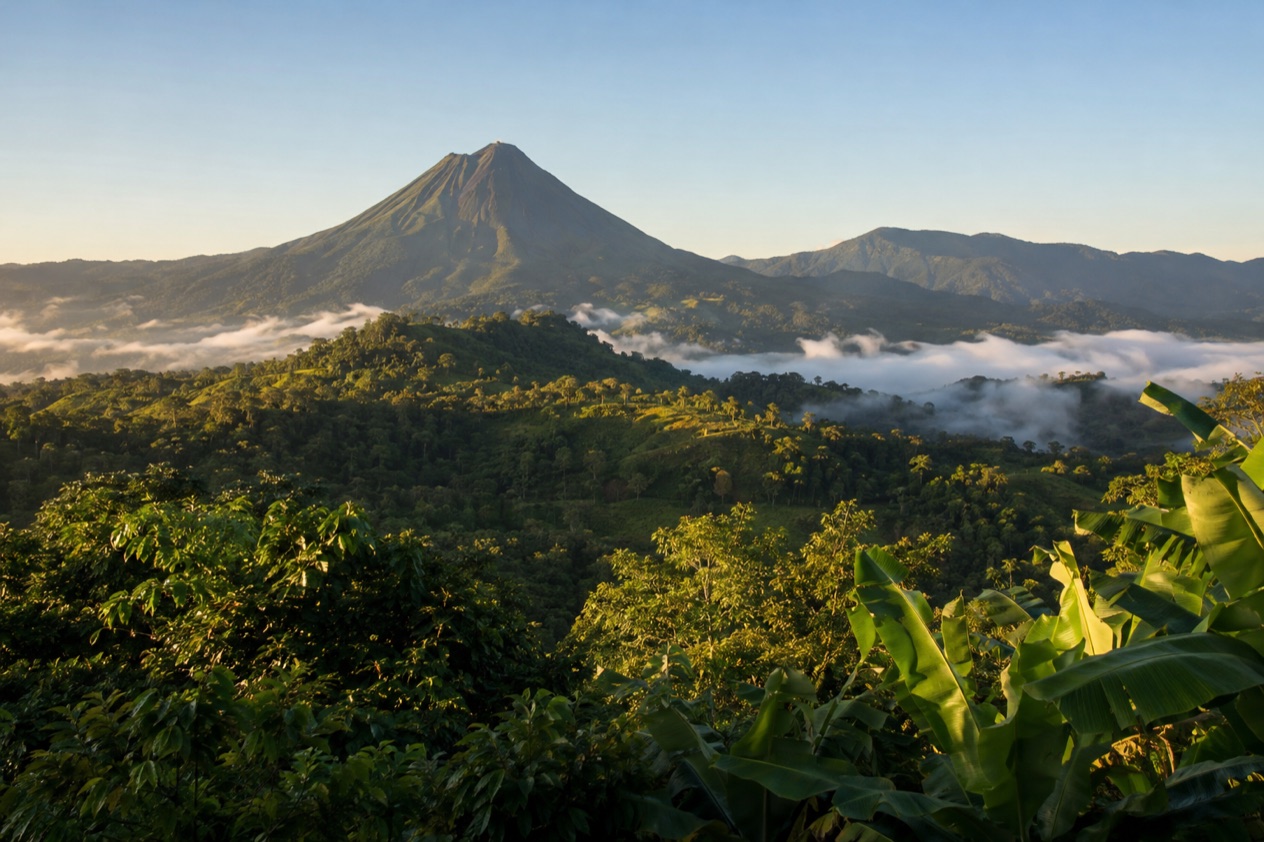
On New Year’s morning in Costa Rica, the beaches of Guanacaste are already dotted with families who came straight from the night before, and a few weeks later the town of Santa Cruz fills with bull-riding, brass bands and the smell of street food. In the Central Valley the coffee hills are brown and gold, the sky is a hard blue, and the mornings are cool enough for a sweater. January is the heart of the dry season on the Pacific side, a month for beaches, volcano trails and cloud forest walks, with the Caribbean coast following its own, wetter rhythm.
What is the weather like in Costa Rica in January?
January is hot and dry on the northern Pacific coast, mild and mostly clear in the Central Valley and the highlands, showery on the central Pacific coast near Manuel Antonio and rainy at times on the Caribbean side. The volcanic range running down the middle of the country creates that contrast, which means two places an hour apart can seem to sit in different climates.
| Place | Region | Average high (°F) | Average low (°F) | Rain (in) | Rain days | Sea (°F) |
|---|---|---|---|---|---|---|
| San Jose | Central Valley | 75.9 | 61.7 | 3.73 | 7.1 | — |
| Monteverde | Highlands, cloud forest | 76.3 | 63.1 | 1.10 | 2.6 | — |
| Tamarindo | North Pacific (Guanacaste) | 88.5 | 75.2 | 0.16 | 0.4 | 83.0 |
| Manuel Antonio | Central Pacific | 80.4 | 71.1 | 7.88 | 19.6 | 85.7 |
| Puerto Viejo de Talamanca | Caribbean coast | 79.2 | 70.5 | 8.78 | 13.8 | 83.1 |
Tamarindo is the hot, dry extreme. Afternoons run close to ninety, nights stay warm, and a rainy day is a rarity, so you can plan around the sun with confidence. The sea there is warm enough that you stay in the water for as long as the waves and currents let you.
Manuel Antonio is the surprise. Even in the dry season, the central Pacific coast gets frequent showers in January, and the forest around the park stays deep green. Puerto Viejo sees heavy downpours, though they tend to come as bursts between stretches of sun. San Jose and Monteverde sit in between, with cool mornings, pleasant afternoons and only a few damp days, though Monteverde’s clouds and mist can roll in at any hour.
Where to go in Costa Rica in January
Choose your region first and the rest follows. January rewards the Pacific northwest for sun, the highlands for walking and the Caribbean for a slower, greener alternative.
Guanacaste and Tamarindo: the sunniest beaches
The northwest is where January feels most like a classic beach vacation. Around Tamarindo the hills are dry and tawny, the days are long and bright, and the surf breaks along the coast bring in both beginners and experienced riders. Many visitors fly into Liberia, the closest airport to these beaches, then settle into a base by the sand.
Dry means hot here, so mornings are the time for walks, surf lessons and hikes, and the afternoons belong to shade, a cold fruit smoothie and the water. Rip currents are a real hazard on many Pacific beaches, and most do not have lifeguards or warnings about unsafe conditions.
Manuel Antonio and the central Pacific: green and showery
Manuel Antonio suits travelers who want rainforest right beside the beach. Trails thread through trees where you may spot capuchin monkeys, sloths and coatis, and guided walks are how most visitors find the animals that hide in plain sight. Beaches here are backed by thick forest, which is part of why the showers come so often.
Count on rain on most days, usually in bursts, and plan your outdoor time for the clearer stretches. The sea is very warm, and the green landscape looks its best when many other regions have dried out. It suits people who care more about scenery and wildlife than about guaranteed sun.
Puerto Viejo and the Caribbean coast: its own calendar
The Caribbean side does not follow the Pacific’s dry season. It gets rain all year, and January brings a mix of heavy showers and bright spells. Bicycles, reggae, rice and beans simmered in coconut milk, and dark sand beaches a short ride away on the coast road give Puerto Viejo de Talamanca its easygoing beach town feel.
It suits travelers who like a relaxed, tropical mood and do not mind getting wet. Surf here can be strong and the same rip current warnings apply, so watch what the water is doing before you go in. When the rain is steady, the jungle walks and chocolate farm visits around town are good ways to spend the day.
San Jose and Monteverde: cool air and cloud forest
The Central Valley and the mountains offer a different kind of January. San Jose is mild and mostly bright, with museums, markets and cafés serving good local coffee, and it is where the main international airport sits, near the capital. It also works as a base for volcano outings above the valley.
Monteverde is calmer and cooler still, with suspension bridges, hummingbird gardens and night walks through misty forest. Even in the dry season, the clouds drift through the trees, so a light rain layer is useful and you should not count on a clear view at any moment.
What to do in Costa Rica in January
New Year’s Day and the Fiestas Civicas of Santa Cruz
New Year’s Day on January 1 is a national holiday, and the country slows down after a night of family gatherings. Beaches fill, many locals are on vacation and restaurants in tourist towns stay busy through the afternoon.
In mid-January, the Fiestas Civicas of Santa Cruz in Guanacaste take over the town. You get bull-riding in the ring, parades with marching bands and dancers, and stalls serving chorreadas, rosquillas and other Guanacaste specialties. It is the biggest local party of the month and a window into Guanacaste cowboy culture. It is easy to pair with a stay at the beaches nearby.
Volcanoes and cloud forest walks
Poas and Irazu rise above the Central Valley, but each volcano has its own access rules, and clouds often hide the summit by midday.
The dry season suits long walks, and Monteverde’s trails and canopy bridges are good for a full day, ideally with a guide who can point out birds and plants you would otherwise miss.
Beach days, surf and wildlife
January is the month for sand and sea. On the Guanacaste coast you can surf, paddle, snorkel or simply watch the sun go down over the Pacific. Manuel Antonio adds monkeys and sloths in the trees, which you may see on a guided forest walk, and the Caribbean coast offers snorkeling and jungle strolls.
No matter which beach you visit, keep in mind that lifeguards are absent at most of them, rip currents pose a serious hazard, and every year these currents have led to several drownings of tourists from the United States.
Is Costa Rica busy in January?
Yes, January is one of the busier months, especially on the Pacific beaches. The dry season draws visitors from colder climates, and Costa Rican schools are on their long summer break from December into early February, which keeps beach towns lively with local families.
The busiest places are the Guanacaste beaches, Manuel Antonio and the well-known stops around La Fortuna and Monteverde. Rooms and tours fill earlier than in the green season, so book ahead, especially around New Year’s Day and the days of the Santa Cruz fiestas, when the town itself is crowded.
If you want more breathing room, aim for weekdays and early mornings at popular parks, and look at the quieter corners of the country. The Caribbean side keeps a different rhythm from the Pacific, and the highlands outside the main tourist towns are calmer still. Even in busy places, the beach at sunrise is usually peaceful.
San Jose is a working capital and less affected by the beach crowds, though flights in and out are full of vacationers. Spanish is the official language, English is widely spoken in tourist towns, and the greeting pura vida works everywhere, whether the place is packed or empty.
What to pack for Costa Rica in January
Packing depends on where you are going. For Guanacaste, think hot, dry and sunny, with light clothes and strong sun protection. For Manuel Antonio and the Caribbean coast, add rain gear, since showers can arrive at any hour. For San Jose and Monteverde, bring layers, because mornings and evenings are cool and the mist in the mountains can feel chilly.
- Light, breathable clothes and a hat, plus sunscreen and sunglasses for the Pacific beaches.
- A light rain jacket or poncho, useful on the central Pacific and Caribbean coasts and in the cloud forest.
- A sweater or fleece for cool mornings in San Jose and Monteverde.
- Sturdy walking shoes or trail sandals with good grip for muddy forest paths and volcano trails.
- A swimsuit and a quick-dry towel, along with a dry bag for phones and cameras.
- Insect repellent and a refillable water bottle for hikes and long days outside.
Good to know before you go
The U.S. State Department rates Costa Rica Level 2, ‘Exercise increased caution,’ due to crime; it says petty crime is common throughout Costa Rica and that violent crime also affects tourists, including armed robbery, homicide and sexual assault.
The U.S. State Department rates Costa Rica Level 2, ‘Exercise increased caution,’ due to crime, and says petty crime is common throughout the country.
When you head to the shore, keep in mind that lifeguards are absent at most beaches, as are any alerts about dangerous conditions, so check with locals before you go in the water. At most restaurants the bill typically comes with sales tax and a service charge already added, which means any extra tip is your call.
Is January a good time to visit Costa Rica?
Yes, especially for the northern Pacific coast, where Guanacaste’s beaches have sun, heat and almost no rain, and for the Central Valley and highlands, where mild days suit sightseeing and hiking. If sun is your priority, Tamarindo and the Guanacaste coast are the best choice this month. If you prefer lush forest and wildlife, Manuel Antonio is rewarding, with the understanding that showers are frequent.
Compared with December, January is steadier. The dry season is well settled, the holiday rush around Christmas has passed, and the landscape is still green from the rainy months. February is similar in character, with the countryside drying further and the school break ending early in the month, so beach towns gradually grow calmer.
The Caribbean side is the exception to all of this. It has no real dry season, so a January there means mixed weather, which suits travelers who like a relaxed pace and do not need guaranteed sun.
What sets January apart is the pairing of a settled dry season with the Fiestas Civicas of Santa Cruz. You can spend the morning in a Guanacaste bullring, cheering the riders and eating from the street stalls, then spend the afternoon on a warm beach nearby.
Sources
- Open-Meteo / ECMWF ERA5, normals 1991-2020 computed for the grid cell at 9.9281N 84.0907W, checked October 8, 2026
- Open-Meteo / ECMWF ERA5, normals 1991-2020 computed for the grid cell at 10.3009N 84.8248W, checked October 8, 2026
- Open-Meteo / ECMWF ERA5, normals 1991-2020 computed for the grid cell at 10.2993N 85.8371W, checked October 8, 2026
- Open-Meteo Marine API, average 2015-2024, checked October 8, 2026
- Open-Meteo / ECMWF ERA5, normals 1991-2020 computed for the grid cell at 9.392N 84.1366W, checked October 8, 2026
- Open-Meteo / ECMWF ERA5, normals 1991-2020 computed for the grid cell at 9.6558N 82.7541W, checked October 8, 2026
- U.S. Department of State, Costa Rica Travel Information, Safety and security (https://travel.state.gov/content/travel/en/international-travel/International-Travel-Country-Information-Pages/CostaRica.html), checked October 8, 2026
- U.S. Department of State, Costa Rica Travel Advisory, issued April 1, 2026 (https://travel.state.gov/content/travel/en/traveladvisories/traveladvisories/costa-rica-travel-advisory.html), read via the State Department open data API on October 8, 2026
- U.S. Department of State, Costa Rica Travel Information, Entry and exit requirements (https://travel.state.gov/content/travel/en/international-travel/International-Travel-Country-Information-Pages/CostaRica.html), checked October 8, 2026
To plan your stay
- Things to Do in Costa Rica: Volcanoes, Beaches, Wildlife and Day Trips
- Where to Stay in Costa Rica: Beach Towns, Cloud Forest, Volcano Views and Which Base Fits Your Trip
- Costa Rica Airports: San Jose or Liberia? Beaches, Drive Times and Getting to Your Hotel
- Know Before You Go to Costa Rica: Entry Rules, Money, Getting Around and Local Customs