
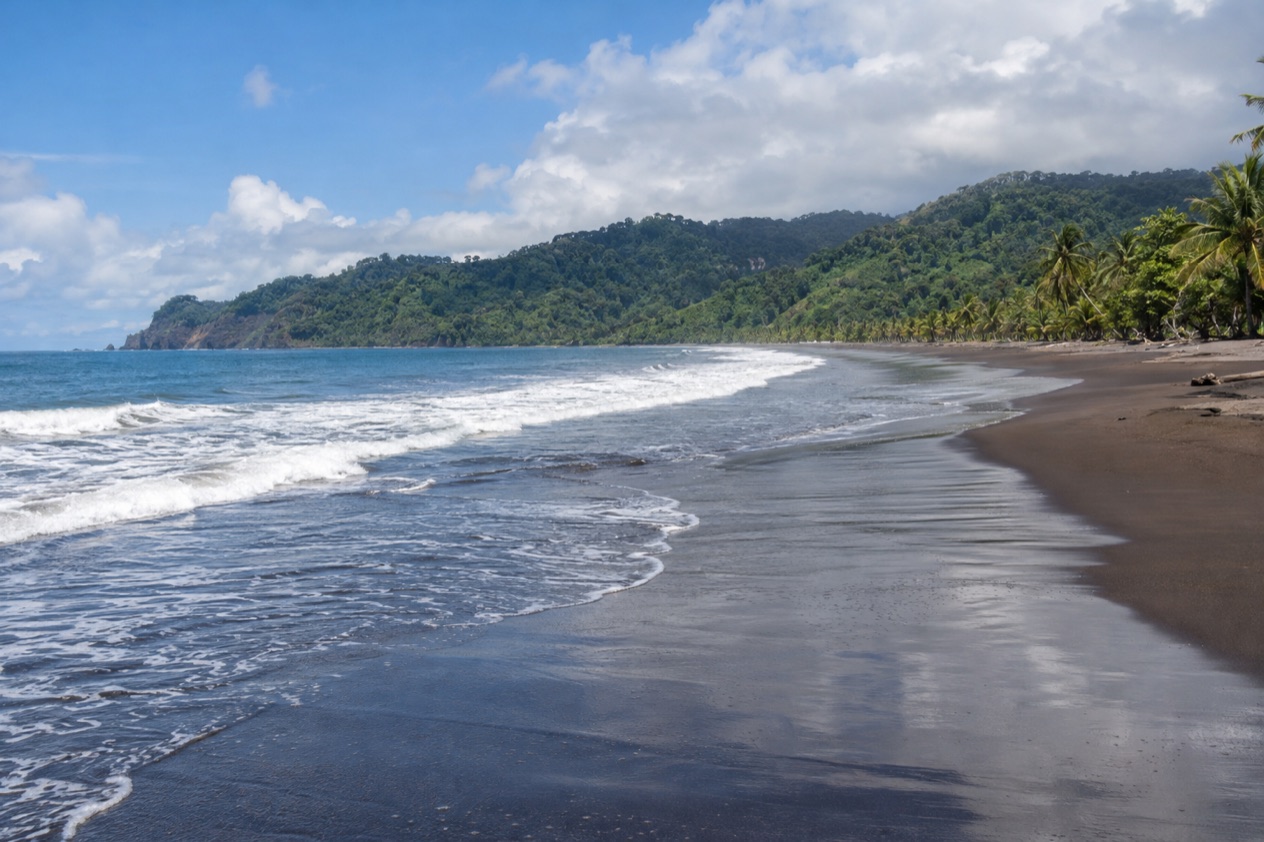
In July the afternoon sky over Jaco turns the color of slate, the palms along the beach start to sway, and surfers keep paddling out anyway, shining against the dark sand. The hills behind town are at their greenest, the sea is as warm as bathwater, and families on school break fill the sidewalk cafés. This is Jaco in the green season, a good month for surf lessons, rainforest walks and slow evenings for travelers who don’t mind a shower.
What is the weather like in Jaco in July?
July in Jaco is warm, humid and wet, with showers close to daily and plenty of sunshine in between. Come July, the warmth holds steady from June through August, and the rain keeps its easy rhythm.
| Month | Average high (°F) | Average low (°F) | Rain days | Sea (°F) |
|---|---|---|---|---|
| June | 81.8 | 76.1 | 29.1 | 85.9 |
| July | 81.4 | 75.8 | 30.2 | 85.4 |
| August | 81.4 | 75.7 | 30.3 | 85.7 |
Mornings are usually the best part of the day. The light is soft, the air feels fresher and the sky is often clear enough for a long beach walk, a surf session or a hike. Clouds tend to build through the late morning, and the heaviest rain often arrives in the afternoon or evening, sometimes as a short downpour and sometimes as a long gray soak.
Shorts and sandals work fine after dark, since the temperature seldom drops much even when a light rain falls. Expect humid air, damp towels that never quite dry and a faint green smell after the rain. You will see a little over twelve hours of daylight, so plan your outdoor hours early and leave the afternoon flexible.
Dress in light, quick-drying clothes and carry a thin rain jacket in your day bag. Showers pass quickly, and the dramatic skies make for some of the best photos of the year, especially over the water around sunset when the clouds break.
Can you swim in Jaco in July?
The ocean stays in the mid-80s, but waves and rip currents can make swimming dangerous. The challenge here is not the temperature but the waves and currents. Jaco’s long dark-sand beach is a surf beach, and in the rainy season the swell and the shifting sandbars can make the water lively.
Each year, several U.S. tourists drown on this coast because rip currents pose a serious hazard. Most beaches in Costa Rica have no lifeguards or warnings about unsafe conditions, and rip currents pose a serious hazard.
Bring a rash guard for sun and for board contact, a dry bag for your phone and a towel you don’t mind getting sandy.
Snorkeling is not what Jaco is known for. The town’s strength is surf, and the beach break suits beginners as well as experienced surfers.
What to do in Jaco in July
July brings a national holiday on the 25th, the Annexation of the Partido de Nicoya, which marks Guanacaste joining Costa Rica. It is a day for parades, school events and family trips, and many Costa Ricans head to the coast for the long weekend feeling. The beach fills with picnics, music from parked cars and kids running into the surf.
The Costa Rican schools also take a two-week break in July, so the town has a relaxed, family mood. Food stalls and sodas (small local restaurants) do steady business with casados, the plate of rice, beans, plantain, salad and a protein that anchors a Costa Rican lunch. Order a gallo pinto breakfast, ceviche by the water and a cold coconut or fresh fruit juice after the morning heat.
Surf lessons on the beach break
Jaco is a classic first surf stop. Along the main road you will find board rentals and lessons all over town, and the beach break suits experienced surfers and beginners alike. In July the green-season swell often gives the waves more push, which suits those with some experience, while newcomers can stay in the whitewater with an instructor.
Go early, when the water is smoother and the sky is clearer. A morning session leaves the afternoon free for the showers, and instructors will tell you how the tide and the current are behaving that day. Bring sunscreen, a rash guard and a hat for the walk back. Surfing here suits teenagers, couples and groups of friends. Nervous swimmers can watch from a beach bar instead.
Carara National Park and the Tarcoles river
Carara National Park lies a short drive north of town, at the meeting point of the northern dry forest and the southern wet forest, and during the rainy season frogs and birds make its trails lush and loud. Scarlet macaws are a highlight for many visitors, and you may spot monkeys, coatis or colorful butterflies. Spotting animals is never guaranteed, and most visitors rely on a guided walk to find them.
The trails get muddy, so wear shoes with grip and bring insect repellent. Nearby, the Tarcoles river is known for its crocodiles, which people watch from a bridge or from a boat. Check the park’s official page for current rules and entry before you go, since conditions change.
Evenings on the main strip
After a day of surf and rain, Jaco comes alive at night. The main road fills with restaurants serving fresh fish, tacos, wood-fired pizza and Costa Rican plates, and bars put tables near the street. In July the crowd is a mix of young surfers, families on break and Costa Rican weekenders, so the mood is easygoing and a little loud.
Walk the strip in the early evening, when the heat has eased, and pick a spot with a roof in case a shower returns. Craft stalls and ice cream shops stay open late, and a dinner of grilled snapper with a cold beer is the usual way to end a surf day.
Beyond these, the shorter beaches nearby, such as Playa Hermosa to the south, draw experienced surfers, while quieter coves reward a walk when the tide is out. On a wet afternoon, shops, cafés and spas keep visitors dry.
A two-day itinerary for Jaco in July
Day 1 is for the beach and the surf. Start at dawn with coffee and a gallo pinto breakfast at a small soda, then book a morning surf lesson while the sky is clear and the water is at its smoothest. Rinse off, rest in the shade and have an early lunch of ceviche or a casado before the clouds build.
When the afternoon rain comes, step into a café, browse the craft shops along the main road or book a massage. If the sky clears, walk the beach as the light turns gold and watch the surfers who stay out late. For dinner, choose a seafood restaurant on the main strip, then an ice cream and an early night.
Day 2 belongs to the rainforest. In the morning, go north to Carara National Park for a guided walk among the trees, at the time of day when the air is coolest and the birds are most active. Afterward, stop at the Tarcoles river to watch the crocodiles from the bridge, then eat a simple lunch at a roadside spot.
Return to town in the afternoon and let the rain decide the plan. If it pours, spend the time in a cafe or by a hotel pool under cover. If it eases, take a short drive to a quiet cove for a last swim, staying close to shore. Finish with a relaxed dinner and a stroll along the lit part of the strip.
Is Jaco busy in July?
Jaco is moderately busy in July, with a steady stream of families and weekend visitors rather than the crush of the dry-season peak. Midway through the month, Costa Rican families head to the coast for the two-week school break, and that weekend picks up extra energy thanks to the holiday on the 25th. Surf schools, restaurants and the beach itself all see more people during those days.
Rooms near the beach and rental cars fill first around the school break and the holiday weekend, so book early for those dates. For the quieter weeks at the start or the end of the month, you can usually plan later and still find a choice of hotels. Restaurant tables rarely need long planning, though popular spots on the main strip can fill on weekend evenings.
Carara and other national parks are popular with visitors on rainy-season trips, and guided walks are worth arranging a little ahead. Since entry methods and regulations may change, check the park’s official page before choosing your day. Surf lessons are easy to arrange in town, often the day before.
If you prefer a quieter beach and a calmer street, aim for the days just outside the school break and the holiday weekend. The rain keeps some travelers away, which leaves more space on the sand and shorter waits at the cafés.
What to pack for Jaco in July
Pack for heat, humidity and showers that can arrive on short notice. Light, quick-drying fabrics matter more than anything else, and a small dry bag will save your phone and documents.
- A light rain jacket, for the afternoon downpours that often arrive without warning.
- Quick-drying shirts and shorts, since nothing dries slowly in this humidity.
- Sandals with a good grip and closed shoes for muddy forest trails.
- For surf lessons, plus sunshine that breaks through the clouds, bring sunscreen and a rash guard.
- Insect repellent, for the forest and for evenings after rain.
- A dry bag, to protect your phone and wallet at the beach.
Good to know before you go
The U.S. State Department rates Costa Rica Level 2, ‘Exercise increased caution,’ due to crime; it says petty crime is common throughout Costa Rica and that violent crime also affects tourists, including armed robbery, homicide and sexual assault.
July sits in the green season, and the Atlantic hurricane season also runs through the summer, so keep an eye on forecasts and keep your plans flexible. The road from San Jose is the usual way into Jaco. Beach flags and local advice matter more than any schedule, since the sea changes with the swell and the tide.
Before departure, check Costa Rica’s official passport, permitted-stay and proof-of-exit requirements. Surf lessons, parks and guided walks are easier to fit once you see how the weather behaves in your first days. Carry some cash for small sodas and roadside stands, and keep a copy of your documents apart from the originals.
Jaco in July vs June and August
Moving the trip to June brings nearly the same warm sea and air, with a bit less rain and a calmer feel before the school break begins. The beaches are quieter, rooms are easier to find and the green season is just getting going, so the hills are lush but the showers are slightly less relentless.
August is almost identical in temperature, and the rain is as steady as in July or a touch more. The school break and the holiday weekend are behind you, so the town returns to a lower gear and surf lessons and tables are easier to get. The rain can make some afternoons long and gray, which suits readers, spa visitors and anyone who likes a quiet town.
Choose July if you want the family energy, the holiday on the 25th and a lively beach scene. Shift to June for a calmer start to the rainy season, or to August for the quietest streets and a slower rhythm. Surfers can pick any of the three, since the swell and the water stay warm throughout.
Is July a good time to visit Jaco?
Absolutely, July suits travelers seeking waves, warm water and lush forest, and who don’t mind that rain comes with the day. It suits families with children on break, beginner surfers, wildlife fans on guided walks and anyone happy to plan mornings outdoors and afternoons flexibly.
It is a weaker fit for those who want guaranteed blue skies, long sunny afternoons on the sand or a very quiet beach. If dry weather matters most, another time of year will serve you better.
On arrival, check the beach conditions and book a surf lesson or a morning walk first, so the best hours of the day are taken. Then let the afternoons find their own rhythm, with a café, a shop or a swim between showers. What makes July special in Jaco is the contrast, a warm dark-sand beach with surfers at dawn, a green wall of forest behind the town and the smell of rain on hot pavement as the evening lights come on.
Sources
- Open-Meteo / ECMWF ERA5, normals 1991-2020 computed for the grid cell at 9.6145N 84.6285W, checked October 8, 2026
- Open-Meteo Marine API, average 2015-2024, checked October 8, 2026
- sunrise-sunset.org, sunrise and sunset calculated for the 15th of the month, checked October 8, 2026
- U.S. Department of State, Costa Rica Travel Information, Safety and security (https://travel.state.gov/content/travel/en/international-travel/International-Travel-Country-Information-Pages/CostaRica.html), checked October 8, 2026
- U.S. Department of State, Costa Rica Travel Advisory, issued April 1, 2026 (https://travel.state.gov/content/travel/en/traveladvisories/traveladvisories/costa-rica-travel-advisory.html), read via the State Department open data API on October 8, 2026