
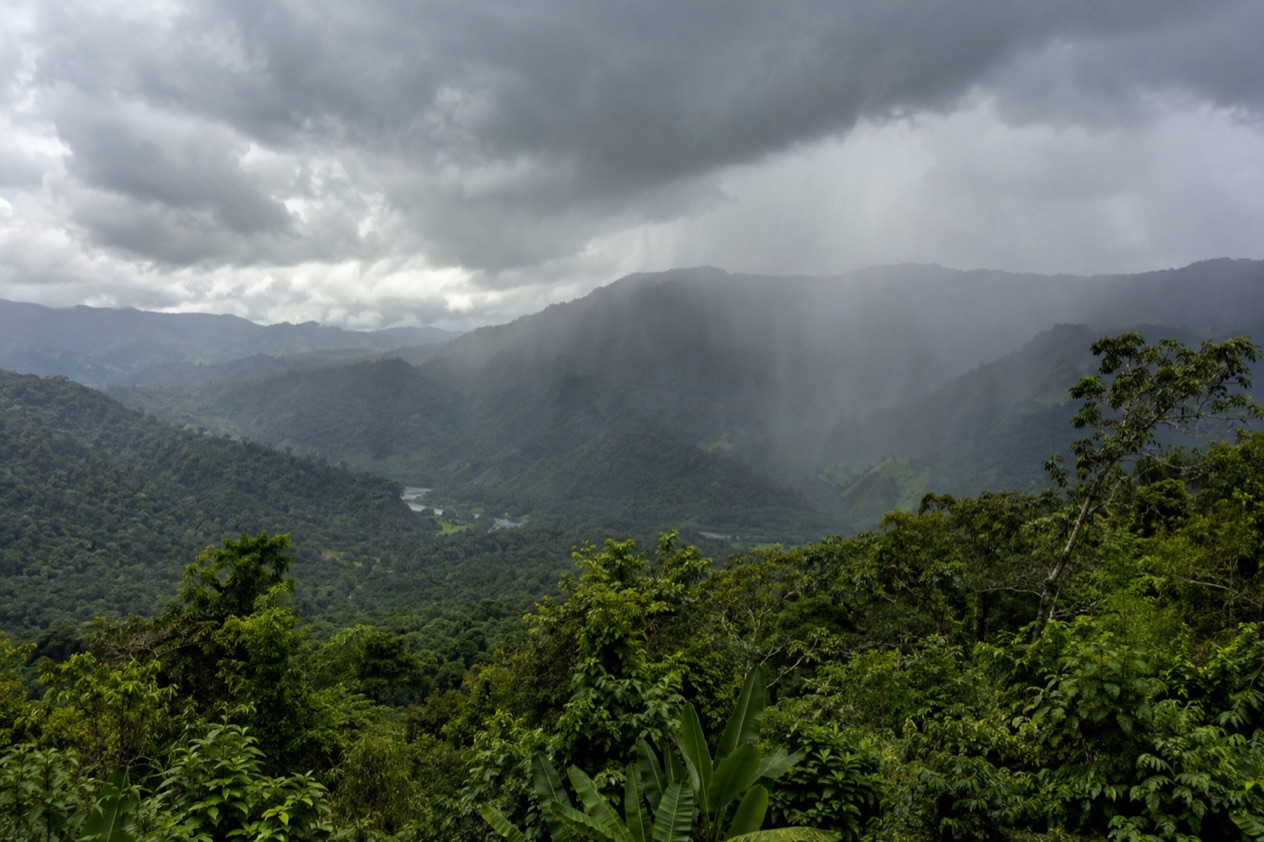
On a September afternoon in the Central Valley, the sky turns slate gray around two o’clock, the first fat drops hit the tin roofs, and the cafés fill with people waiting it out over a cup of coffee. That is the moment travelers start wondering about hurricanes. Costa Rica sits in the zone where both the Atlantic and the Pacific hurricane seasons are tracked, and what you will actually meet in the green months is mostly rain, not a named storm.
Does Costa Rica have a hurricane season?
Costa Rica borders two hurricane basins, whose official seasons overlap with much of the country’s green, rainy season. The calendar is simple to read, and what matters for a vacation is how it lines up with the weather you will feel on the ground.
Costa Rica’s Pacific coast and its Caribbean coast belong to different basins, which is why you will see two sets of dates quoted. The Atlantic basin includes the Atlantic Ocean, the Caribbean Sea and the Gulf of America, and the eastern Pacific basin stretches from Central America westward across the open ocean. Both are watched by forecasters, and both have their own start dates.
| Basin | Season runs | Average season (named storms / hurricanes / major hurricanes) |
|---|---|---|
| Atlantic (includes the Caribbean Sea) | June 1 to November 30 | 14 / 7 / 3 |
| Eastern Pacific | May 15 to November 30 | 15 / 8 / 4 |
How the Atlantic season unfolds
The Atlantic season opens quietly. The first named storm typically forms in mid to late June, the first hurricane tends to appear in early to mid-August, and the first major hurricane arrives in late August or early September. Most of the activity packs into the stretch between mid-August and mid-October, with the peak on September 10.
For a traveler on the Caribbean side, that means the early summer months fall inside the official season but sit well before the busiest weeks. The late summer and early fall are when forecasters are watching the ocean most closely, and when it makes sense to follow the news before you fly.
The eastern Pacific season and the Pacific coast
The Pacific calendar starts two weeks earlier, in mid-May, and ends on the same day as the Atlantic one. That start lines up with the moment the Pacific side turns from dry and golden to green, since the rainy season there runs from about May to November, with rain that usually falls in the afternoon.
A season being open does not mean a storm is on the way. It means the ocean can brew one up, and over time many such systems wander the whole basin, most of them far from any coast. For your trip, the practical habit is simple: watch the forecast in the days before you travel, and keep an eye on it while you are there.
Which parts of Costa Rica get the most storm rain?
For travelers, the clearest official risk distinction is flooding: it is common from April to October, especially in Limon, Puntarenas and Guanacaste provinces. Flooding is common there from April to October, so these are the regions where a wet spell can actually change a day.
Costa Rica’s rain is shaped by a mountain spine and two coasts, which is why one country holds several different climates. The weather in a beach town on the Pacific can look nothing like the weather in a cloud-forest lodge or on the Caribbean shore on the very same afternoon.
The Pacific side and the Central Valley
Most of the Pacific side and the Central Valley has a dry season from about December to April and a green, rainy season from about May to November. In the green months the pattern is a familiar one: mornings often start bright, clouds build through the middle of the day, and rain tends to arrive in the afternoon.
That rhythm shapes how people plan. Hikes, zip lines, surf lessons and wildlife walks go in the morning, and the afternoon is for lunch, a long coffee, a spa or a museum. Guanacaste and Puntarenas are on the list of provinces where flooding is common, so heavy spells there can mean flooded roads or river crossings, and a change of plan is part of the season.
The Caribbean side
The Caribbean side gets rain all year and follows a different pattern from the rest of the country. There is no single dry season to rely on, so a trip to the Caribbean coast always comes with a few showers packed in, whatever the month.
Limon province is among those where flooding is common during the rainy season. The upside is that the coast stays lush and green year-round, and rain is part of the landscape rather than an interruption. Pack a light rain jacket, quick-drying clothes and a dry bag for your phone and camera, and keep some flexibility in the schedule for river and boat outings.
Planning around the wettest places
If your itinerary includes one of the three provinces with frequent flooding, build in slack. Leave a spare day around a flight home, avoid stacking tight connections after a long drive, and treat a heavy rain warning as a reason to rearrange rather than push through.
Rain does not fall evenly even inside one province, so ask locally about conditions before setting out. Asking the front desk or your guide how the morning looks is a habit that serves you well in any season.
Should you travel to Costa Rica during hurricane season?
Yes, many travelers do, as long as they come ready for rain and a flexible plan rather than for a beach week with guaranteed sun. The official seasons cover the months from mid-May through November, and those are also the green months, when the countryside is at its lushest and the trails and waterfalls are full.
What the green months feel like
On the Pacific side and in the Central Valley, the rainy season usually means sunny mornings and afternoon downpours. You can still spend most of the day outdoors if you start early, and the rain often clears by evening, leaving cool air and a loud chorus of frogs and insects after dark.
The trade-off is that some days are simply gray and wet, and a few rough ones can disrupt roads.
Timing your trip
If you want to lean toward the quieter edge of the calendar, the start of the seasons falls in May and June, well before the Atlantic peak on September 10. The weeks between mid-August and mid-October are the busiest in the Atlantic basin, but Costa Rica’s Caribbean coast follows its own rainfall pattern, so check conditions for your destination.
If you prefer the driest conditions on the Pacific side and in the Central Valley, December to April is the stretch to aim for. The Caribbean side keeps its own rhythm and gets rain all year, so its timing does not follow the same logic.
Smart habits for a rainy-season trip
- Plan outdoor activities for the morning and keep the afternoon flexible.
- Follow the forecast in the days before you fly and while you travel.
- Leave breathing room around flights and long drives, especially in Limon, Puntarenas and Guanacaste.
- Pack a rain jacket, quick-drying layers and a waterproof bag for electronics.
- Check the beach flags and ask locally before swimming.
- Ask about a flexible cancellation policy when you book lodging or tours.
Good to know before you go
The U.S. State Department rates Costa Rica Level 2, ‘Exercise increased caution,’ due to crime; it says petty crime is common throughout Costa Rica and that violent crime also affects tourists, including armed robbery, homicide and sexual assault.
Pack for rain as a matter of course between May and November, and keep your passport, cards and electronics in a waterproof pouch. Take the usual precautions with your belongings in towns and at beaches, and keep flexible dates where you can, since a heavy rain spell can slow roads and delay plans. Travel insurance that covers weather disruptions is a sensible companion for a trip in the green months.
Sources
- NOAA National Hurricane Center, Climatology (https://www.nhc.noaa.gov/climo/), checked October 8, 2026
- U.S. Department of State, Costa Rica Travel Information, Safety and security (https://travel.state.gov/content/travel/en/international-travel/International-Travel-Country-Information-Pages/CostaRica.html), checked October 8, 2026
- U.S. Department of State, Costa Rica Travel Advisory, issued April 1, 2026 (https://travel.state.gov/content/travel/en/traveladvisories/traveladvisories/costa-rica-travel-advisory.html), read via the State Department open data API on October 8, 2026
To plan your stay
- Things to Do in Costa Rica: Volcanoes, Beaches, Wildlife and Day Trips
- Where to Stay in Costa Rica: Beach Towns, Cloud Forest, Volcano Views and Which Base Fits Your Trip
- Costa Rica Airports: San Jose or Liberia? Beaches, Drive Times and Getting to Your Hotel
- Know Before You Go to Costa Rica: Entry Rules, Money, Getting Around and Local Customs