
In early August, the roads out of San Jose fill with walkers heading for Cartago, some carrying small figures of the Virgin, while the mountains around them turn a deep, dripping green. Mornings are often bright, afternoons bring rain to the Pacific slopes, and the beaches stay warm. August is the middle of the green season, a month for cloud forests, quiet beach towns and wildlife walks planned around the showers.
What is the weather like in Costa Rica in August?
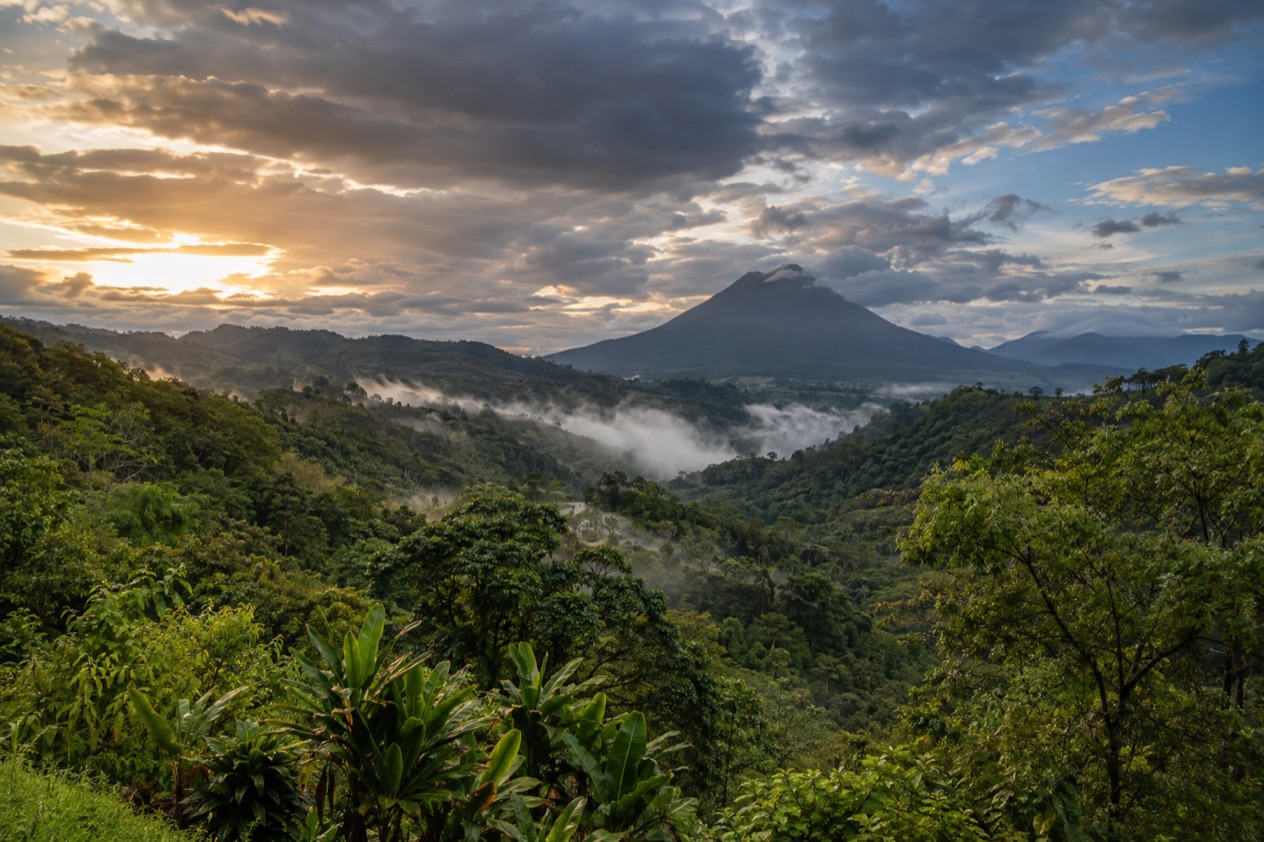
August is green, humid and showery almost everywhere: hot on the northern Pacific coast, steamy on the Caribbean side, mild and often cloudy in the mountains, and soaking on the southern Pacific coast around Manuel Antonio. Costa Rica’s center holds a volcanic range that carves the nation in two, which means places an hour apart may feel like they sit in separate months.
| Place | Region | Average high (°F) | Average low (°F) | Rain (in) | Rain days |
|---|---|---|---|---|---|
| San Jose | Central Valley | 75.4 | 64.2 | 13.85 | 23.9 |
| Monteverde | Highlands (cloud forest) | 75.9 | 65.7 | 10.03 | 19.3 |
| Tamarindo | North Pacific coast | 84.7 | 76.3 | 10.59 | 21.9 |
| Manuel Antonio | Central-south Pacific coast | 79.8 | 70.8 | 36.98 | 29.9 |
| Puerto Viejo de Talamanca | Caribbean coast | 81.6 | 72.4 | 13.88 | 26.6 |
The biggest contrast is rain. Among these five destinations, Manuel Antonio stands apart: rain falls on almost every day in August, and quite a few heavy soakings arrive too.
Tamarindo and Monteverde get less water than Manuel Antonio, while Tamarindo’s rain often arrives in the afternoon. San Jose is gray and wet in the afternoons, with mornings that are usually the best part of the day.
Temperature follows altitude and coast. The capital and Monteverde stay comfortable enough for a light jacket after dark, while Tamarindo is the hottest of the five places, with nights that barely cool.
Puerto Viejo falls in between, humid and heavy, with rain that comes as short, frequent showers rather than long storms. On both coasts the sea runs in the mid-80s, warm enough that you get out when you are bored, not when you are cold.
Where to go in Costa Rica in August
Pick a region by the kind of rain you can live with. August rewards travelers who plan mornings outdoors and keep the afternoons flexible.
The Caribbean coast: Puerto Viejo de Talamanca
Rain falls on the Caribbean coast every month, and the Pacific’s seasonal pattern does not apply there, so a wet August is simply business as usual, not a red flag. Puerto Viejo serves up reggae, rice and beans cooked in coconut milk, bicycles cruising sandy paths, and jungle pressing nearly to the edge of the beach. Showers tend to be frequent but short, and the jungle behind town is at its loudest.
It suits travelers who like a relaxed, slightly damp beach town and do not need a fixed day on the sand. Watch the surf and never rely on warning flags: most beaches have no lifeguards or warnings, and rip currents are a real hazard. August also falls inside the Atlantic hurricane season, so keep an eye on forecasts for the Caribbean.
The North Pacific coast: Tamarindo
Tamarindo is the hot, bright option. Days begin early, with surf lessons and long walks on the beach before the heat builds, and the sky often clouds over by mid-afternoon. A shower at the end of the day cools the street, and sunsets over the water can still be good afterward, though nothing is guaranteed.
This is a good base for travelers who want a real beach vacation with a little green-season discount in atmosphere: fewer people on the sand, a quieter surf scene and tables available at restaurants. Most beaches here have no lifeguards, so swim near others, read the water and stay out when the surf is rough.
The central-south Pacific coast: Manuel Antonio
Manuel Antonio is lush, loud with birds and very wet in August. In that dripping forest, the national park trails offer possible sightings of white-faced monkeys, sloths and toucans, and someone guiding you locally will find many more than you would on your own. The best hours are usually early, before the clouds build.
Bring patience and a flexible plan. Beach days can turn into a café afternoon with the rain drumming on the roof, then clear up for a sunset walk. It suits wildlife lovers and travelers who do not mind getting wet, less so anyone who needs a guaranteed sunny beach day. Before you head out, look at the park’s official page for entry details and the latest regulations.
The central highlands: San Jose and Monteverde
The Central Valley is cool enough to walk around comfortably, with museums, markets and coffee-farm visits that work well on a rainy afternoon. San Jose is mainly a gateway, but a day in the capital shows another side of the country, from the Central Market’s sodas serving casados to the café culture of the old neighborhoods.
Monteverde is the August highlight for anyone who loves mist. Cloud forest is meant to be wet and drifting with fog, hummingbirds feed at the garden feeders, and hanging bridges and night walks add some extra mystery. Expect clouds more than long views, and carry a rain layer even when the morning is clear.
What to do in Costa Rica in August
The pilgrimage to Cartago
The biggest day of the month is August 2, when hundreds of thousands of Costa Ricans walk to the Basilica of Our Lady of the Angels in Cartago. Many set out from San Jose and other towns, often walking through the night. They carry small statues of the Virgin, known affectionately as La Negrita, and stop at roadside stands for water, coffee and snacks.
It is the country’s great act of faith, and it is best to approach it as a witness, not a spectator. Watch from the roadside, expect crowds around Cartago and busy highways, and be ready for delays if you are driving that day. The basilica and its surrounding gardens are the heart of the event.
Mother’s Day on August 15
August 15 is Mother’s Day and a national holiday, when families gather for long lunches. Restaurants fill with large tables, florists are busy, and the mood in towns is warm and slightly festive. Many Costa Ricans also travel to beach towns or visit relatives, so roads feel busier around the holiday.
Wildlife and green-season walks
August is a good month for rainforest and cloud forest because everything is growing, flowering and fruiting. These are chances, not promises, and rain can scatter the animals as well as the crowds.
Start early. Mornings are the most reliable time for birds and for clear paths, and a rainy afternoon is a good time for a coffee farm, a chocolate tasting or a spa. Pack a light rain jacket and shoes that dry quickly.
Is Costa Rica busy in August?
Costa Rica is moderately busy in August, with steady visitors but fewer than in the dry months at the end of the year. The month sits in the green season, so beach towns and national parks feel more relaxed, and rooms and tours are easier to find.
The crowds that do come are mostly U.S. families on summer vacation and travelers who prefer a green country to a dry one. Popular spots such as Manuel Antonio, Monteverde and Tamarindo still have lively days, especially on weekends, but they rarely feel packed. Costa Rican families are on the move around the pilgrimage to Cartago and the Mother’s Day holiday, so roads and hotels near those places can be busier than usual.
Quiet places are easy to find. The Caribbean coast is often calm in August, and smaller beach towns are pleasantly empty. The highlands feel peaceful, with mist rolling across ridges in the afternoon. For best results, plan big sights for the morning and keep afternoons open, because the rain makes the whole country slow down a little.
Pacific beach towns have long, open stretches of sand where you can walk without bumping into anyone. In towns such as Tamarindo, a table at a good sunset restaurant is usually easy to get, and surf schools have room for another student.
What to pack for Costa Rica in August
Pack for rain and for two kinds of climate. The beaches call for light, quick-drying clothes and sun protection, while the mountains need a warmer layer for cool mornings and evenings. Everywhere, assume a shower will find you at some point in the day.
- A light, packable rain jacket, since afternoon showers are common on both coasts and in the mountains.
- Shoes with good grip that dry quickly, for muddy trails and wet park paths.
- A fleece or light sweater for Monteverde and San Jose evenings.
- Sunscreen, a hat and sunglasses for the clear morning hours at the beach.
- For keeping your phone, passport and camera dry, bring a compact waterproof pouch or case.
A small daypack with a rain cover is useful on every trip. Swimwear dries slowly in humid weather, so bring two sets, and insect repellent is a good idea on forest walks and at dusk.
Good to know before you go
The U.S. State Department rates Costa Rica Level 2, ‘Exercise increased caution,’ due to crime; it says petty crime is common throughout Costa Rica and that violent crime also affects tourists, including armed robbery, homicide and sexual assault.
August falls inside the Atlantic hurricane season, which covers the Caribbean coast and runs from June 1 to November 30, with most activity arriving between mid-August and mid-October.
Swimming hazards include powerful rip currents at plenty of beaches, where you will usually find neither lifeguards nor any warning signs. The U.S. State Department rates Costa Rica Level 2, exercise increased caution, because of crime, so check the advisory for each region before you book.
Is August a good time to visit Costa Rica?
August is a good month for travelers who want a green, wildlife-rich Costa Rica with fewer crowds, and the best region for most of them is the northern Pacific coast and the highlands, where the rain is lighter than farther south. If you want guaranteed beach sun, a different month fits better.
Compared with July, August is much the same: the rains are well established, and the short lull in the weather that sometimes appears in July has usually passed. September tends to be wetter on much of the Pacific side and sits at the peak of the Atlantic hurricane season, so August is gentler for planning. Crowds in August are modest and the landscape is most lush.
The trade-off is simple. You give up the long dry afternoons of the winter months and gain empty trails, dripping forest and a country in full leaf.
What is special about August is the pilgrimage. On the road to Cartago, thousands of walkers move through the rain and mist with candles and small statues of the Virgin, and the sight is something no other month offers.
Sources
- Open-Meteo / ECMWF ERA5, normals 1991-2020 computed for the grid cell at 9.9281N 84.0907W, checked October 8, 2026
- Open-Meteo / ECMWF ERA5, normals 1991-2020 computed for the grid cell at 10.3009N 84.8248W, checked October 8, 2026
- Open-Meteo / ECMWF ERA5, normals 1991-2020 computed for the grid cell at 10.2993N 85.8371W, checked October 8, 2026
- Open-Meteo Marine API, average 2015-2024, checked October 8, 2026
- Open-Meteo / ECMWF ERA5, normals 1991-2020 computed for the grid cell at 9.392N 84.1366W, checked October 8, 2026
- Open-Meteo / ECMWF ERA5, normals 1991-2020 computed for the grid cell at 9.6558N 82.7541W, checked October 8, 2026
- U.S. Department of State, Costa Rica Travel Information, Safety and security (https://travel.state.gov/content/travel/en/international-travel/International-Travel-Country-Information-Pages/CostaRica.html), checked October 8, 2026
- NOAA National Hurricane Center, Climatology (https://www.nhc.noaa.gov/climo/), checked October 8, 2026
- U.S. Department of State, Costa Rica Travel Advisory, issued April 1, 2026 (https://travel.state.gov/content/travel/en/traveladvisories/traveladvisories/costa-rica-travel-advisory.html), read via the State Department open data API on October 8, 2026
- U.S. Department of State, Costa Rica Travel Information, Entry and exit requirements (https://travel.state.gov/content/travel/en/international-travel/International-Travel-Country-Information-Pages/CostaRica.html), checked October 8, 2026
To plan your stay
- Things to Do in Costa Rica: Volcanoes, Beaches, Wildlife and Day Trips
- Where to Stay in Costa Rica: Beach Towns, Cloud Forest, Volcano Views and Which Base Fits Your Trip
- Costa Rica Airports: San Jose or Liberia? Beaches, Drive Times and Getting to Your Hotel
- Know Before You Go to Costa Rica: Entry Rules, Money, Getting Around and Local Customs