
As evening settles over Old San Juan, the blue-gray cobblestones keep the day’s final warmth, a trio performs beside a plaza, and fried plantain’s aroma floats through a doorway. Puerto Rico brings together a walled colonial city, a rainforest, surf beaches, quiet offshore islands and glowing bays in one Caribbean destination. It suits Americans who want a Caribbean vacation with no passport to worry about, and who like to eat well between swims.
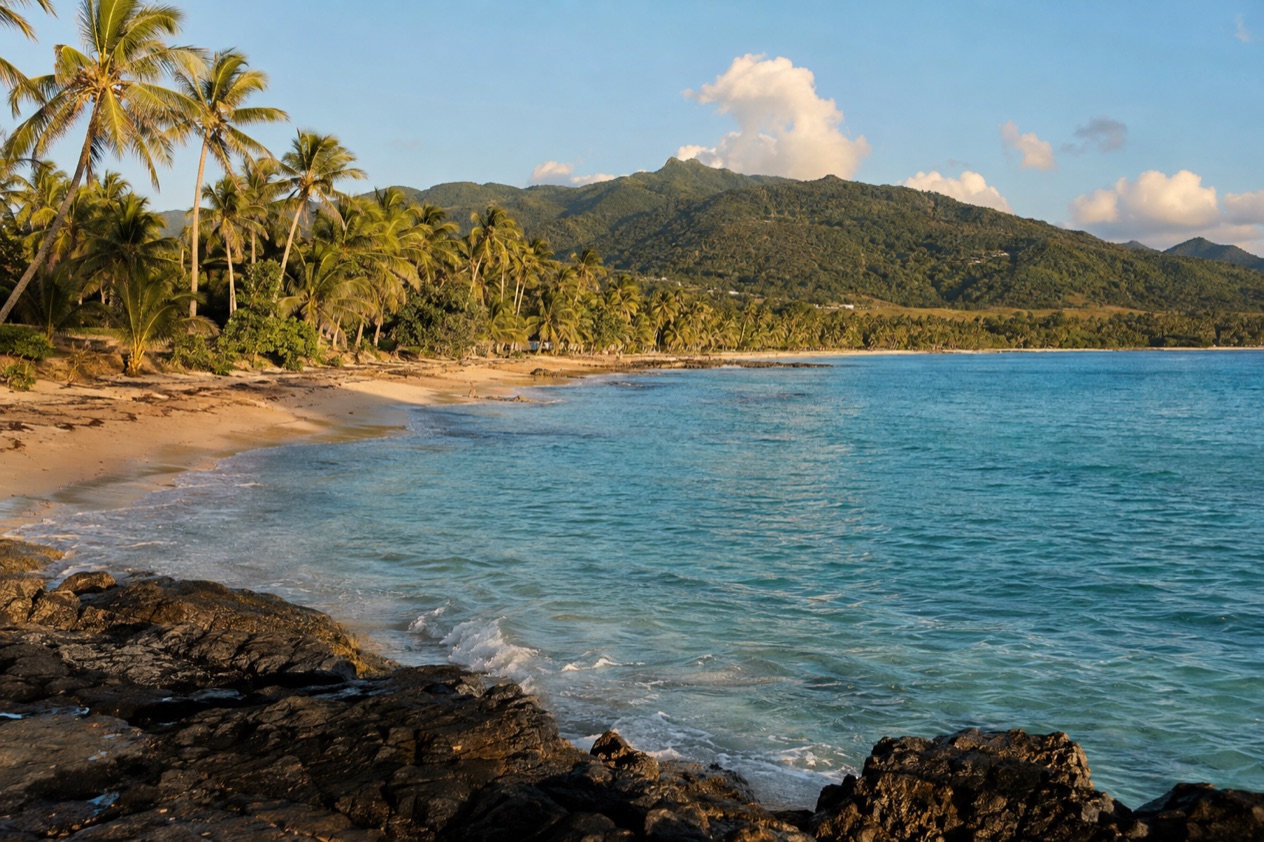
What are the best things to do in Puerto Rico?
The best things to do are walking Old San Juan, eating your way through the island’s fritters and roast pork, and getting out to the water, whether that means a surf beach, a snorkeling cay or a bay that glows at night. These are the essentials.
- Stroll through Old San Juan and its pair of Spanish forts, El Morro and San Cristobal, to take in cobblestones, pastel townhouses and views of the harbor.
- Once night falls, kayak out onto a luminous bay, whether that is Mosquito Bay in Vieques, Laguna Grande by Fajardo or La Parguera, and watch the glow peak beneath a sky with no moon.
- Spend a day on Culebra, where Flamenco Beach and its rusted tanks sit beside some of the clearest snorkeling water around.
- Eat mofongo, alcapurrias and lechon asado at chinchorros and beachside kiosks, because food is a main reason to come.
- Visit El Yunque, the rainforest in the northeast, for waterfalls, ranger walks and a chance to see Puerto Rican parrots.
- Head to Rincon for winter surf, summer snorkeling and some of the island’s best sunsets.
- Take a day in Ponce, the Pearl of the South, for its striped firehouse, art museum and plaza life.
- Pick a coffee town in the central mountains for cooler air and a cup grown nearby.
Most visitors base themselves in San Juan, then add one island or one region. Stretching roughly 100 miles from end to end, the main island makes the west and the south worth planning as separate getaways, ideally with a night or two spent in each.
Sights and landmarks in Puerto Rico
Sightseeing centers on Old San Juan, a colonial city with walls, set on a tiny islet that causeways link to the mainland. Beyond it, Ponce and the rainforest of El Yunque give very different pictures of the island. Plan to wander without a fixed route in the old city: the best moments tend to be small ones, a courtyard, a plaza with pigeons, a view down a steep street to the bay.
Old San Juan and its forts
The San Juan National Historic Site is made up of those forts and walls, and it belongs to a UNESCO World Heritage Site listed in 1983. El Morro stands on the headland at the tip of the islet, with grassy lawns where families fly kites and thick stone walls that look out over the Atlantic. San Cristobal is the larger, more maze-like fort, with tunnels and outworks guarding the land approach.
Between the two, you can walk the streets of the old city for hours. Expect pastel townhouses with wrought-iron balconies, plazas with benches in the shade, small galleries, cafes and shops selling rum and local crafts. The cobblestones are uneven and the sun is strong, so go early or late, and wear shoes you can walk in.
| Site | Open |
|---|---|
| El Morro and San Cristobal (San Juan National Historic Site) | Standard pass valid 24 hours, covers both forts |
Free entrance days fall on a handful of dates during the year, including October 27 and November 11.
Ponce, the Pearl of the South
Ponce is the island’s second city, and its historic center feels like a different island from San Juan. Plaza Las Delicias serves as the anchor for it all, and there the town’s most photographed structure is the firehouse known as Parque de Bombas, with its red-and-black stripes, while the Ponce Museum of Art sits just a brief stroll from the square. Benches fill with locals in the evening, and ice cream and coffee vendors work the edges of the square.
Two other stops round out a visit. Perched on a hill overlooking the city, Castillo Serralles is a 1930s mansion with vistas of the sea, while La Guancha, the boardwalk beside the water, hums with families and music on weekends. The south is drier and hotter than the north, so plan walking for the morning.
The weeks leading up to Lent are the ideal time to visit Ponce, since Carnaval de Ponce then brings parades of vejigantes in horned masks pouring through the streets. At any other time, it is a calm and rewarding stop on a loop around the island.
El Yunque rainforest
El Yunque National Forest is in the northeast, near Luquillo, and its main visitor center is El Portal. The redesigned center has an accessible trail, a film shown in Spanish and English, a full restaurant and live Puerto Rican parrots you can see. Daily ranger walks and talks are offered, and children can always take part in the Jr Ranger program.
Expect green, humid, dripping forest, and bring a light rain layer, because the northeast is among the wettest parts of the island. Mornings are generally the most comfortable time to walk.
| Site | Open |
|---|---|
| El Yunque (El Portal) | Tickets valid 8am to 4pm on the selected date; come and go all day |
Beaches and outdoor things to do in Puerto Rico
The island’s beaches range from city sand with Atlantic surf to long, nearly empty stretches on the small islands. Day to day and beach to beach, things shift, so watch for flags, signs and lifeguards, and do what they say wherever you find them.
Culebra
Roughly 17 miles east of the main island lies Culebra, reachable by public ferry from Ceiba or on a short flight. Dewey is its only town, there’s a peaceful harbor, big resorts are absent, and rented bikes and golf carts are how most visitors travel. The standout is Flamenco Beach, a broad crescent of light-colored sand and transparent shallow water, where rusted military tanks remain resting on the beach.
On the west side, Tamarindo Beach is a snorkeling spot, and green sea turtles can frequently be spotted grazing above the seagrass. A coral reef sits near the shore at Carlos Rosario Beach, which is a short walk from Flamenco, while Zoni Beach, at the eastern end, stretches long and quiet and draws far fewer visitors.
A large part of the island lies within the Culebra National Wildlife Refuge, established in 1909, where trails and public areas welcome visitors every day between 6:00 AM and 6:00 PM. More than 30,000 pairs of sooty terns nest on the Flamenco Peninsula, so you may see them overhead. Each year in the middle of July, boats parade through Dewey harbor to pay tribute to the Virgen del Carmen, the patron saint of fishermen.
Vieques
You can get to Vieques, which is bigger and more untamed, by public ferry out of Ceiba or on a small plane. A large part of the island once belonged to the U.S. What used to be a U.S. Navy training ground is today a wildlife refuge, and because of that, long stretches of beach remain untouched, while wild horses wander its roads and shores. The most visited spots include Sun Bay, Red Beach and Blue Beach.
On the north coast, Isabel Segunda serves as the ferry town, whereas Esperanza, a relaxed waterfront village on the south coast, offers guesthouses and open-air restaurants. By day it suits beach hopping and horse-spotting, by night it suits a kayak trip into Mosquito Bay, whose glow is strongest on moonless nights.
Rincon and the west coast
Rincon is the island’s surf capital and hosted the 1968 World Surfing Championships. When winter arrives, north swells send sizable waves toward spots like Domes and Tres Palmas, and even if you never pick up a board, the spectacle viewed from land is worth your time. In summer the water flattens, and the same beaches suit swimming, snorkeling and paddleboarding.
The town draws a crowd to the lighthouse grounds at Punta Higuero, and its westward view has made sunsets its signature. Between roughly January and March, humpback whales migrate past the coast, and from that spot you might spot them now and then.
San Juan beaches and the east coast
Capital beaches look out on the Atlantic and enjoy dependable waves. Folks know the Balneario de Escambron, a public beach park right beyond Old San Juan, for waters that stay calmer thanks to a reef. The two beach-and-hotel strips, Condado and Isla Verde, make it easy to squeeze in a swim between meals.
Farther east, Luquillo beach has a row of food kiosks, and Fajardo is the marina town for catamaran and sailing trips to the cays. For the quintessential outing featuring white sand and snorkeling, head by boat to Icacos, a tiny cay with no residents. In certain years, sargassum seaweed may spread to the eastern and southern shores during spring and summer.
Day trips from Puerto Rico
From San Juan, the northeast is the easiest direction for day trips, with the rainforest, the beach kiosks and the marinas all along one route. Rincon and Ponce are bigger journeys that work better with an overnight.
El Yunque and Luquillo
El Yunque is the obvious first day trip, and it pairs naturally with Luquillo because the beach and its kiosks lie along the coast road close to the turnoff for the forest. Start early, spend the morning on a ranger walk or a trail, and let the rainforest cool you before heading down to the coast.
At Luquillo, the row of food kiosks is the draw. Order a few fritters, take them to the beach and swim before the drive back. It suits families, couples and anyone who wants a full day without changing hotels. Remember that your El Yunque tickets work only from 8am to 4pm on the day you pick.
Fajardo, Icacos and the cays
On the island’s northeast corner lies Fajardo, where catamaran and sailing day trips set out from. The usual outing heads to Icacos, an uninhabited cay with white sand and snorkeling, and some boats stop at other cays for a second swim. Fajardo is the base for catamaran and sailing day trips to Icacos and the other cays offshore.
Take sunscreen, a hat and a light cover-up, because there is little shade on the cays. It is a good day for groups and families who want boat time without arranging anything themselves.
Laguna Grande by kayak
Laguna Grande lies within the Las Cabezas de San Juan Nature Reserve near Fajardo, and it is one of Puerto Rico’s three bioluminescent bays. It is usually visited at night by kayak with a guide, paddling through a mangrove channel to the open lagoon. Where you dip a paddle, you may see a blue glow, strongest on dark, moonless nights.
Because it is a night outing, it is easiest if you stay in the northeast or are happy to return late to San Juan. Bring insect repellent and clothes that can get wet.
Culebra or Vieques for the day
Both islands are reached by public ferry from Ceiba, which is a short drive south of Fajardo, though a night or two is far better. On a day visit to Culebra, head straight to Flamenco Beach and add Carlos Rosario for snorkeling. On Vieques, choose among Sun Bay, Red Beach and Blue Beach, and look for the wild horses.
What to eat in Puerto Rico
Puerto Rican cooking is built on plantain, pork, rice and fritters, and the best of it is often eaten with your hands at a roadside counter. Start with mofongo, mashed fried plantain, usually packed with garlic and served with pork, shrimp or a broth on the side. Tostones, twice-fried green plantain slices, come with almost every meal.
Lechon asado, slow-roasted pork with crackling skin, is the celebration dish, and pasteles, a kind of tamale of grated green banana and meat wrapped in leaves, are a staple of the Christmas season. The season runs from late November to mid-January and reaches its peak with the Calle San Sebastian street festival in Old San Juan.
Fritters and kiosks
Pinones, east of the San Juan airport, is a coastal stretch of beachside kiosks selling fritters such as alcapurrias and bacalaitos. Alcapurrias are fritters of grated root vegetable and plantain filled with seasoned meat, and bacalaitos are crisp salt cod fritters. Eat them hot, with a cold drink, looking at the water. Luquillo has its own row of kiosks along the coast road, so the northeast has plenty of options on the way to or from the rainforest.
Chinchorros, cafes and sweets
Chinchorros are casual roadside restaurants, found in and around San Juan and across the island, and they are where locals eat on weekends. Expect simple tables, loud music and big plates. In the city, cafes serve strong coffee grown in the central mountains, a good reason to try a cup before you head to the beach.
For dessert, tembleque is a coconut pudding set with cornstarch and dusted with cinnamon. On a hot afternoon, piraguas, shaved ice with fruit syrup, are sold from carts and are the classic cooler. The island is famous above all for rum, and a fine place to enjoy it with inventive cuisine is Santurce, the arts and food neighborhood near Calle Loiza.
Things to do in Puerto Rico at night
Evenings in Puerto Rico are warm and social, and the best ones begin outdoors. In Old San Juan, plazas fill with strollers once the sun is low, and the streets stay lively with live music drifting from bars and courtyards. A slow walk along the walls at dusk, with the forts lit and the bay darkening, is a simple pleasure.
San Juan after dark
Old San Juan suits an early dinner and a stroll, while Santurce, around Calle Loiza, is where the younger crowd goes for food, art and music. Condado and Isla Verde, the beach-and-hotel strips, have restaurants and hotel bars with views of the water. You can drink a rum cocktail on a terrace in any of them.
Puerto Rico’s long holiday season includes parrandas, when neighbors go from home to home singing, and ends with the crowded Calle San Sebastian street festival in Old San Juan.
Glowing bays
The island’s most memorable night outing is a bioluminescent bay. The main attraction is Mosquito Bay on Vieques, where guided trips go by kayak or electric boat, while Laguna Grande by Fajardo sits nearest to San Juan. The third one sits on the southwest coast, in Lajas, at La Parguera. All glow throughout the year, and best on moonless nights, so check the moon before you book.
The glow is a chance, not a promise, and it appears as blue sparks when the water is disturbed. Bring a change of clothes and expect to return after dark.
Quiet evenings
If you prefer calm, the best evenings are on the beach. Rincon is known for its sunsets, with people gathering at the lighthouse area at Punta Higuero. On Culebra and in Esperanza on Vieques, dinner is outdoors and early nights are the norm.
Things to do in Puerto Rico with kids
Children do well in Puerto Rico because so much of it is outdoors and informal. The forts in Old San Juan are a natural first stop, with open lawns for running, tunnels to explore and wide views, and children under 16 do not need an entrance pass.
Forts, parrots and rainforest
At El Yunque, the visitor center is made for families. Children can see live Puerto Rican parrots, watch the film in the theater and follow the always-available Jr Ranger program, while the accessible trail is easy for strollers. A full restaurant on site makes lunch simple.
At El Morro, kite flying on the lawn is a local habit, and the cannons and sentry boxes keep children interested. Go in the morning, since the stone and grass have little shade later.
Beaches, boats and animals
Families often find Balneario de Escambron, only a short distance from Old San Juan, a fine place for a first beach outing because a reef keeps the water gentler, but since conditions shift, you should always obey the flags and lifeguards. On Culebra, snorkeling at Tamarindo Beach often turns up green sea turtles, and the rusted tanks at Flamenco Beach are a hit with children.
On Vieques, wild horses along the roads and beaches are a thrill, and a catamaran day from Fajardo to Icacos gives children a boat ride and shallow snorkeling. Sun, heat and humidity are constant, so plan water breaks, hats, sunscreen and a long midday rest. Distances on the main island add up, so keep driving days short.
Good to know before you go
Puerto Rico is a U.S. territory, so U.S. citizens need no passport and no visa, the currency is the dollar and flights from the mainland are domestic. Both Spanish and English hold official status, and locals always appreciate even a small attempt at Spanish. You can also fly into Aguadilla in the northwest or Ponce in the south, though San Juan’s main airport remains the primary entry point.
A car is the easiest way to cover the main island, and golf carts and bikes work on Culebra. The Atlantic hurricane season runs from June 1 to November 30, with the peak in September, so in those months follow the National Hurricane Center and local official alerts.
Sources
- National Park Service, San Juan National Historic Site, Fees & Passes (https://www.nps.gov/saju/planyourvisit/fees.htm), checked October 8, 2026
- Recreation.gov, El Yunque National Forest tickets (https://www.recreation.gov/ticket/facility/10089811), checked October 8, 2026
- U.S. Fish and Wildlife Service, Culebra National Wildlife Refuge (https://www.fws.gov/refuge/culebra), checked October 8, 2026
- NOAA National Hurricane Center, Climatology (https://www.nhc.noaa.gov/climo/), checked October 8, 2026
To plan your stay
- Best Time to Visit Puerto Rico: Dry Season, Hurricane Season, Beaches and Festivals
- Where to Stay in Puerto Rico: San Juan, Rincon, Vieques and the Best Areas for Your Trip
- Getting Around Puerto Rico: Rental Cars, Tolls, Carros Publicos and Ferries to Culebra and Vieques
- Know Before You Go to Puerto Rico: ID, Money, Getting Around and Local Customs