
On an October evening in Old San Juan, the cobblestones are still warm from the day, kids in costumes trail along Calle del Cristo, and the smell of frying alcapurrias drifts out of the open doorways. Out on the west coast, the surf town of Rincon settles into its slow late-season rhythm, while up in the coffee mountains the air turns a little softer after dark. October is a green, warm, showery month on the island, and it rewards travelers who are happy to plan around the afternoon clouds.
What is the weather like in Puerto Rico in October?
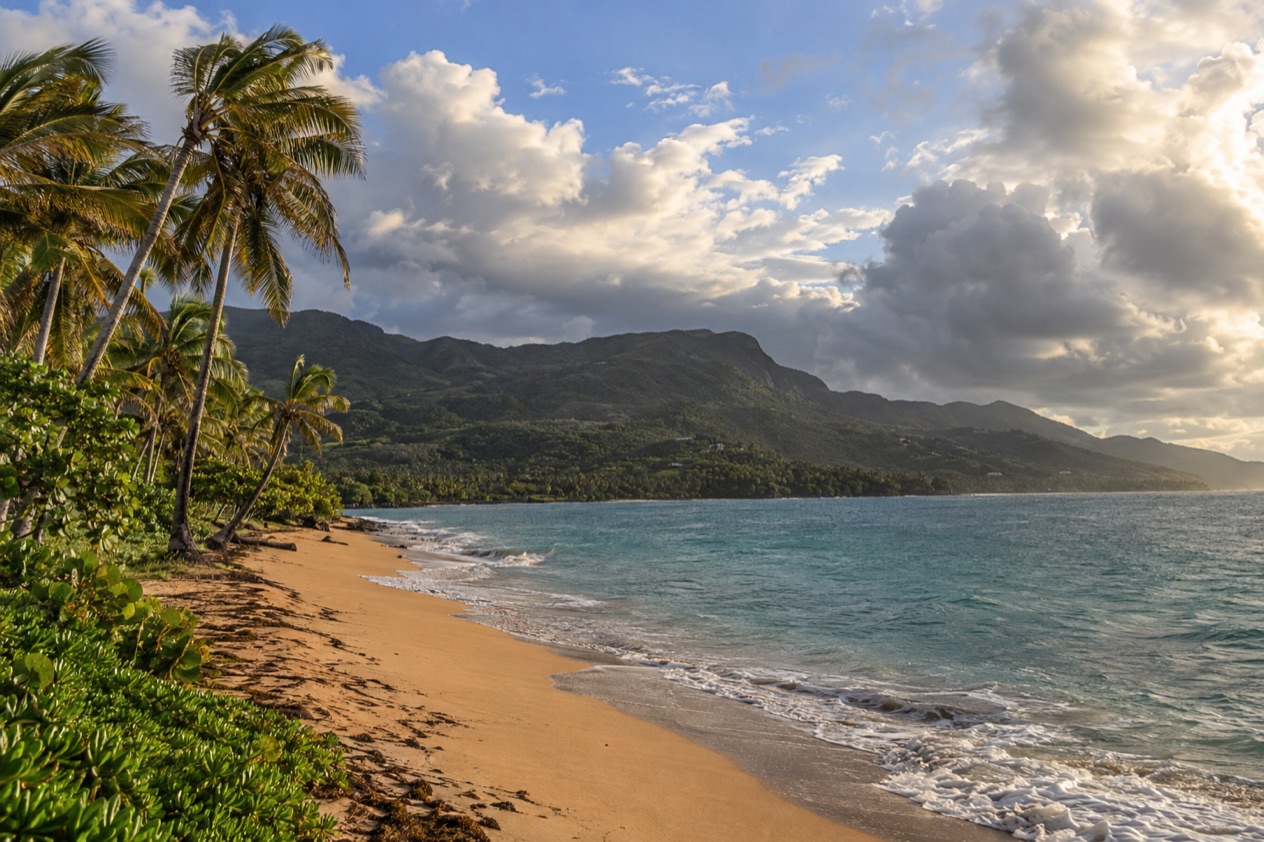
Across Puerto Rico, October brings heat, humidity and passing showers, and while the north and east coasts see the most dampness and heaviest rain, the south and west stay somewhat drier, with ocean water that remains as warm as a bath throughout. Mornings are usually the brightest part of the day, and clouds tend to build over the mountains and drift toward the coast by afternoon.
| Place | Region | Average high (°F) | Average low (°F) | Rain (in) | Rain days | Sea (°F) |
|---|---|---|---|---|---|---|
| San Juan | North coast | 88.6 | 76.7 | 5.21 | 10.6 | 87.0 |
| Fajardo | Northeast coast (Ceiba area) | 88.3 | 75.7 | 5.75 | 10.1 | 87.3 |
| Culebra | Small islands, east | 82.4 | 79.4 | 5.18 | 12.8 | 86.6 |
| Ponce | South coast | 84.1 | 74.9 | 4.20 | 12.0 | 88.0 |
| Rincon | West coast | 84.9 | 77.8 | 3.11 | 8.4 | 88.2 |
The north and northeast coasts run the hottest in the afternoon, with San Juan and the Fajardo area sitting in the upper 80s and feeling heavier than the thermometer says once the breeze drops. Those are also the places with the most rain in the table, so a bright morning can turn into a loud, short downpour by midafternoon. The central mountains, which are not in the table, are cooler and wetter than the coast, with mist hanging in the valleys.
The west is the easy one. Rincon has the least rain of the five places and the fewest wet days, so beach plans tend to survive better there. Ponce is drier in total but not by many days, which fits its pattern of a few strong afternoon storms rather than all-day drizzle.
Culebra stays the mildest in the afternoon thanks to the sea around it, and its nights are the warmest of all, so you rarely need more than a T-shirt after dinner. The sea is warm enough everywhere that the water never feels like a shock.
Where to go in Puerto Rico in October
San Juan and the north coast
San Juan works well in October because so much of it happens under a roof or in the shade. In the morning, explore Old San Juan’s forts and walls, its plazas and streets paved with blue cobblestones, then linger over a long lunch of mofongo (fried plantain mashed, typically with garlic and pork or shrimp) as the first showers move through. Museums, galleries and the covered stretches of the Santurce food halls fill the middle of the day.
Evenings are when the city is at its friendliest, with cooled-down air, open bars and live music spilling onto the sidewalks. The beaches of Condado and Isla Verde are fine for a morning swim, but the Atlantic side can bring surf, so look for flags or lifeguards and follow them where they are posted. Day to day and beach to beach, the situation shifts.
The northeast: El Yunque, Fajardo, Culebra and Vieques
The northeast is the greenest corner of the island, and October makes it greener. El Yunque rainforest sits in the wettest part of the island, so go early, expect rain on the trails and bring something dry for the drive back. The forest is loud with coquí frogs after dusk.
Fajardo is the gateway to the sea. From Laguna Grande, which is one of the three bioluminescent bays, kayaks and boats set out, and since it glows all year and looks its best on nights without a moon, the water next to your paddle may start to sparkle right in front of you. If you want to reach Culebra or Vieques by public ferry, head to Ceiba instead of Fajardo.
Culebra and Vieques offer quiet beaches, warm-water snorkeling and a slow pace, but conditions vary from one shore to another. Showers are common on the small islands, but they usually pass quickly, and the water is a comfortable temperature for long swims. At some times of year, sargassum can reach the coasts on the east and south, so whether a given beach has it or not is never guaranteed.
Rincon and the west coast
The west is the drier side, and October is a gentle month there. Rincon is the surf town, but its big winter swells have not arrived yet, so the water is often easier and clearer, good for snorkeling and for paddle sessions in the early morning. Sunsets over the Caribbean are the evening ritual, with beach bars and food trucks along the coast road.
Around Aguadilla there are more beaches and a more local feel, and the coastline between the two towns suits a day of stopping wherever you like. Swell can still show up from storms far out in the Atlantic, so check flags and local signs before getting in. Fewer wet days make this the side to pick if you want a hammock, a book and a plan with some slack.
Ponce, the south and La Parguera
Ponce is hotter and more sheltered, and October gives it a good mix of mornings for wandering and afternoons for ducking into museums. Start in the morning, while the air is cooler, to take in the plaza, the red and black firehouse, the cathedral, and the arcade-lined streets, then pick up a cold piragua (shaved ice with fruit syrup) from a cart.
On the coast to the southwest, the third bioluminescent bay is La Parguera in Lajas, and moonless nights give its glow the best showing. In the mountains behind the south coast, the coffee towns are cooler and misty, with roadside stands selling hot coffee and fritters. Storms can build quickly over the highlands, so keep mountain drives to the morning.
What to do in Puerto Rico in October
Halloween on October 31 is also a real event in the cities, especially in San Juan, where children trick-or-treat and Old San Juan fills with costumes. Puerto Rico’s long Christmas season begins in late November and runs into mid-January.
Eat your way through the island
October is a month of comfort food, which suits the weather: rain outside, a bowl of something hot inside. Try mofongo, lechon asado (slow-roasted pork, best at the roadside lechoneras in the hills above the coast), pasteles (green banana and meat parcels, more common as Christmas nears), tostones and alcapurrias. Finish with tembleque, a coconut pudding, and a piragua as the heat peaks.
The coffee to seek out comes from the central mountains, and when rain interrupts your day, a morning spent at a hillside coffee farm is a fine plan. Rum tastings suit the afternoon, and many bars in Old San Juan serve a pina colada or a simple rum-and-lime in the evening. Food in October is also easier to enjoy because crowds in restaurants are lighter.
Glowing bays and night-time water
Every one of these three spots brings something different: Mosquito Bay in Vieques is far out and unlit, Laguna Grande near Fajardo offers a channel through mangroves, and La Parguera in Lajas is a bustling village of fishermen. Moonlight can dim the experience, and the glow is a chance rather than a promise, so pick the darkest night available.
Beaches, snorkeling and rainy-day plans
The sea is warm all over the island, so snorkeling is pleasant on Culebra, Vieques and the west coast, where the water is often clearer in the morning. Hike or kayak early, and keep the afternoon flexible for showers. Rain days call for the forts of Old San Juan, a rum distillery, a coffee farm, the museums of Ponce or a long lunch at a kiosk in Luquillo.
Is Puerto Rico busy in October?
October ranks among the island’s calmer months, when the beaches and hotels hold fewer guests than they do in winter. Families are back in school, the peak winter crowd from the mainland has not arrived yet, and the hurricane season keeps some travelers away. That leaves restaurants, trails and the old city with room to breathe.
The exception is the long weekend around the second Monday, when locals travel too. Beaches near San Juan, the kiosks of Luquillo, the east-coast ferries and the mountain towns can feel busy, especially on Saturday and Sunday. If you can, plan the ferries to Culebra and Vieques outside that weekend and stay flexible on timing.
Old San Juan still gets visitors every day, especially when cruise ships are in port, so mornings and evenings feel calmer than the middle of the day. Rincon and the west coast are relaxed, with smaller surf crowds until winter swell arrives. The central mountains are quiet during the week, and weekends bring day-trippers for lunch.
Halloween weekend brings a different kind of crowd to San Juan, with costumes, parties and late nights in Old San Juan. If you want a quiet room, book somewhere a little away from the main plazas. Rates and room availability tend to be easier than in winter, but weather can change plans, so keep some flexibility.
What to pack for Puerto Rico in October
Pack for heat and rain on the coasts, and add a light layer for the mountains. San Juan and the northeast need breathable clothes that dry fast, while the south and west are a little drier but just as hot.
If you are heading to El Yunque or the coffee towns, a light jacket and shoes with grip make the day easier. Island-hopping to Culebra and Vieques calls for a dry bag and water shoes.
- Lightweight, quick-drying clothes for hot, humid days and sudden showers
- A compact rain jacket or poncho, plus a dry bag for your phone and camera
- Sturdy sandals or water shoes for beaches, rocks and rainforest trails
- Sunscreen, a hat and sunglasses, because clouds do not stop the sun
- Insect repellent for evenings, mangroves and the rainforest
- Pack something light for chilly mornings in the mountains and for restaurants with air conditioning.
Good to know before you go
October is still inside the Atlantic hurricane season, which runs through the end of November. Most activity falls between mid-August and mid-October, so the early part of the month is still active even though the peak has passed.
Keep an eye on National Hurricane Center bulletins and pay attention to what local officials advise, and stay flexible with your itinerary, since conditions can shift at any moment. In certain years, sargassum seaweed washes up on the eastern and southern shores, so it is worth checking the condition of the beach ahead of your trip. United States citizens may visit Puerto Rico with no passport and no visa required, and the local currency there is the U.S. dollar.
Is October a good time to visit Puerto Rico?
October suits travelers who enjoy uncrowded beaches, balmy water and plans that can shift, and this month the west coast near Rincon and Aguadilla makes the ideal base, since it sees the least rain. The northeast is greener and more dramatic, but it asks for more rain planning. Culebra and Vieques suit snorkelers who do not mind showers, and San Juan works for anyone who likes food, history and evenings out.
Compared with September, October is slightly past the peak of the hurricane season, though the early weeks can still be unsettled, and crowds are similar. Compared with November, October is hotter and wetter, with a lower chance of that dry-season feeling, and fewer visitors. November brings the first signs of the Christmas season and a gentler breeze, and prices and crowds start to rise toward winter.
What is special about October is the feel of the island between seasons. The beaches are quiet, the rainforest is lush, the sea is warm, and the Christmas rush has not yet begun. It is a month for long meals, early starts on the water and evenings in Old San Juan, with a glowing bay on a dark night as the last chapter of the day.
Sources
- NOAA NCEI, monthly normals 1991-2020, station RQW00011641 (San Juan L M Marin International Airport), checked October 8, 2026
- Open-Meteo Marine API, average 2015-2024, checked October 8, 2026
- Open-Meteo / ECMWF ERA5, 1991-2020 normals calculated on the grid cell 18.0111N 66.6141W, checked October 8, 2026
- Open-Meteo / ECMWF ERA5, 1991-2020 normals calculated on the grid cell 18.3403N 67.2499W, checked October 8, 2026
- NOAA NCEI, monthly normals 1991-2020, station RQW00011630 (Roosevelt Roads (Ceiba)), checked October 8, 2026
- Open-Meteo / ECMWF ERA5, 1991-2020 normals calculated on the grid cell 18.3N 65.28W, checked October 8, 2026
- NOAA National Hurricane Center, Climatology (https://www.nhc.noaa.gov/climo/), checked October 8, 2026
To plan your stay
- Things to Do in Puerto Rico: Old San Juan, Beaches, Bioluminescent Bays and Island Food
- Where to Stay in Puerto Rico: San Juan, Rincon, Vieques and the Best Areas for Your Trip
- Getting Around Puerto Rico: Rental Cars, Tolls, Carros Publicos and Ferries to Culebra and Vieques
- Know Before You Go to Puerto Rico: ID, Money, Getting Around and Local Customs