
On an August afternoon in Old San Juan, warmth rises from the cobblestones, a piragua seller scrapes ice into a paper cone and drenches it with tamarind syrup, and folks drift toward whatever shade the balconies throw. Out on the east coast, boats cross to Culebra with their decks full of coolers, while in the western surf towns the ocean has gone flat and glassy. August is Puerto Rico at full summer heat, with warm seas, thinner crowds in some corners and an eye kept on the tropics.
What is the weather like in Puerto Rico in August?
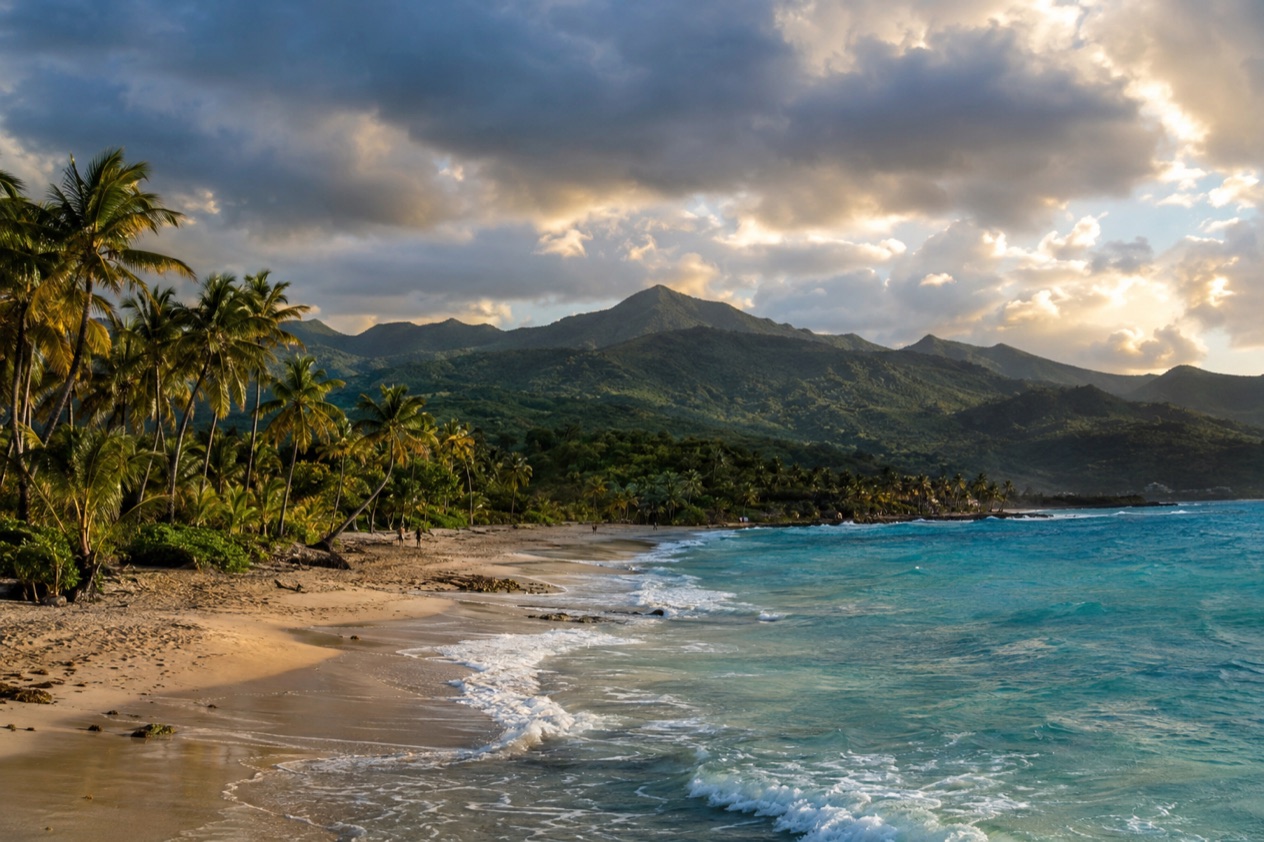
The whole island stays hot and humid in August, and rain usually comes as short afternoon downpours, with more falling on the north and east coasts and less on the south and west. The sea is bathwater-warm all around, and nights bring very little relief. The figures for San Juan are recorded at the airport on the north coast, and those for Fajardo at the old naval station in Ceiba, a few miles to the south.
| Place | Region | Average high (°F) | Average low (°F) | Rain (in) | Rain days | Sea (°F) |
|---|---|---|---|---|---|---|
| San Juan (airport) | North coast | 89.1 | 77.8 | 6.29 | 11.0 | 85.6 |
| Fajardo (Ceiba) | Northeast | 89.1 | 77.6 | 4.32 | 8.9 | 86.2 |
| Culebra | East islands | 82.8 | 79.9 | 4.49 | 10.7 | 85.6 |
| Ponce | South coast | 86.8 | 76.4 | 3.18 | 7.8 | 86.4 |
| Rincon | West coast | 86.6 | 78.6 | 2.81 | 7.5 | 88.0 |
The biggest contrast is rain. San Juan and the north coast are wetter than Ponce and Rincon, leaving the south and west with more rain-free days to plan around. Fajardo and Culebra sit in between, with squalls that sweep across from the east and move on quickly.
Heat feels different from one place to the next. San Juan and Fajardo have the hottest afternoons, and the humidity makes them heavier still. Culebra runs cooler by day thanks to the breeze off the water, but its nights barely cool at all. Rincon has the warmest sea, and the central mountains, which have no reference place in our table, stay noticeably fresher than the coast.
Where to go in Puerto Rico in August
Pick your region by what you want from the day. The coasts offer water and sea breezes, the mountains offer cooler air, and the whole island rewards an early start before the afternoon cloud builds.
San Juan and the north coast
The capital is hot and humid this month, so plan Old San Juan for the morning. Walk the blue-tinted cobblestone streets, duck into a café for a cortadito, and finish at the old forts while the sea breeze still helps. Midday belongs to museums, air-conditioned lunches and a mofongo stuffed with shrimp or pork.
Afternoons often bring a short downpour that clears fast, so a beach day in Condado or Isla Verde works best early. Before you swim, look at the flags and the signs posted there, because the north coast meets the open Atlantic and every day and every beach can bring different conditions. The city suits food lovers, history fans and anyone using it as a base.
Fajardo, Culebra and Vieques
The east pairs days on the water with a visit to El Yunque rainforest. From Ceiba you can catch the public ferries to Culebra and Vieques, and once you are on those islands, your days go to beaches like Flamenco on Culebra, to snorkeling over turtle grass and coral, and to fried fish at a roadside kiosk. The Caribbean side is generally calmer than the north coast, though conditions still vary.
Evenings are for the bioluminescent bays. Mosquito Bay on Vieques and Laguna Grande by Fajardo both glow all year long, but the best display comes when no moon is out, so check the lunar calendar before planning. Squalls can interrupt a day, and sargassum can sometimes reach east-facing shores in summer, so treat clear water as a chance rather than a certainty.
Rincon and the west coast
Rincon is the island’s surf town in winter, and in August it turns into a snorkeling and sunset town. Summer is its calm season, and the Atlantic swells that draw surfers in January mostly go quiet. Locals and visitors drift between beach bars, fresh ceviche and long swims, with the best light just before the sun drops into the sea.
The west is among the lighter-rain parts of the island, which helps plan outdoor days, though a late-afternoon shower can still blow through. Aguadilla’s beaches are close by, and the airport there makes the west easy to reach. Water conditions change fast around the points, so follow any flag or lifeguard instructions where they are present.
Ponce and the south coast
Ponce is hot and relatively dry, which suits a city of plazas and museums. Start at the Plaza Las Delicias, with its red-and-black striped firehouse, then cross to an art museum or stroll the pedestrian streets before the heat peaks. A late lunch of lechon asado or a cold coconut drink fits the rhythm here.
The south coast also holds La Parguera in Lajas, the third bioluminescent bay, which glows all year and is best on moonless nights. It suits travelers who want culture in the morning and a night on the water.
The central mountains
When the coast starts to feel like too much, head for the coffee towns up in the central mountains. The air is cooler and the roads wind past plantations, roadside stands and cafés serving coffee from the hills. Clouds gather early in the afternoon, so do the drives and farm visits in the morning.
A rain layer comes in handy in these highlands, which rank among the island’s wettest spots. The reward is green views, slow lunches of pasteles and pork, and a break from the beach routine.
What to do in Puerto Rico in August
August has few headline festivals compared with winter, which means the pleasures are mostly natural and culinary. The Christmas season is months away, so August lends itself to water, food and slow days.
Glowing bays and night water
The three bioluminescent bays are the signature August night out. All year long, La Parguera in Lajas, Laguna Grande by Fajardo and Mosquito Bay on Vieques light up, and the best moment to go falls on those dark nights around the new moon. When the water shimmers, every paddle stroke or boat wake leaves a trail of blue light, though you cannot count on the show being strong.
Choose by the rest of your trip. Vieques pairs with an island stay, Fajardo works from the northeast and San Juan, and La Parguera suits a southwest circuit with Ponce. Evening showers are common in August, so keep a flexible plan for the night.
Beaches, snorkeling and sea turtles
Warm seas make August a snorkeling month. Culebra, Vieques and the west coast offer reef and seagrass, where you may spot turtles feeding. Sea turtles also nest on island beaches in spring and summer, so you might come across a roped-off nesting area. Give it space and follow any posted signs.
Go early, since mornings are calmer and cooler, and bring a rash guard and sunscreen for the strong sun. Lifeguards and flags are not on every beach, so ask locally about conditions, and remember that sargassum can reach some east and south shores in summer.
Eating your way around the island
Heat is the excuse for the island’s cold things. Piraguas, shaved ice with fruit syrup, come from carts in every plaza, and tembleque, a coconut pudding, cools the end of a meal. For heavier fare, order mofongo, alcapurrias (fritters of green banana and taro) and tostones, or head to a kiosk for fried fish and pasteles.
In the mountains, coffee is the draw, and in the cities a rum tasting makes a good shaded afternoon. Lechon asado, slow-roasted pork, is the dish for a long Sunday lunch in the hills.
Is Puerto Rico busy in August?
August is moderately busy, with families still traveling early in the month and the crowd thinning as schedules turn back toward school. It is not the peak of winter, when mainland visitors flee the cold, so many places feel easier than in the high season.
Beaches near San Juan fill on weekends with local families, and the ferries and island beaches at Culebra and Vieques can be lively on Saturdays and Sundays. Weekdays feel calmer. Old San Juan has steady visitors, especially when cruise ships dock, but the heat sends many people indoors by midday.
Summer is not the high season there, so the west near Rincon and the south near Ponce tend to be calmer. The mountain towns are calm during the week and busier with locals on weekends, when families come for lunch. Rooms are often easier to find than in winter, though popular island stays and holiday weekends can still fill up.
For the quietest days, aim for midweek and for the less-visited coasts. The late-August stretch tends to be calmer as vacations end, which suits travelers who like open beaches and unhurried restaurants.
What to pack for Puerto Rico in August
For the coast, bring airy, lightweight clothing, and for the mountains, toss in an extra layer, since mornings and evenings there are chillier. On the north and east coasts, plan for showers. In the south and west, sun protection matters more than rain gear.
- Lightweight, quick-drying clothes and a hat for the strong sun.
- A compact rain jacket or small umbrella for afternoon downpours in San Juan, Fajardo and the highlands.
- Swimwear, a rash guard, a snorkel mask and sunscreen for the water.
- Water shoes for rocky entries and boat landings.
- Insect repellent for evenings by the bays and mangroves.
- A light sweater for air-conditioned rooms and cooler mountain evenings.
Good to know before you go
August sits inside the Atlantic hurricane season, which runs from June 1 to November 30, and the most active weeks arrive from mid-August into mid-October. Keep an eye on updates from the National Hurricane Center and local officials, and get ready to adjust your plans. Sargassum can reach some east and south coasts in summer. When visiting, people from the United States do not require a passport or visa.
Is August a good time to visit Puerto Rico?
August is a good month for beach and water lovers, especially in the west and south, where showers are lighter, and in the east islands, where snorkeling and glowing bays are the draw. It is less ideal if you dislike heat or want to hike all day, since the humidity is steady and the sun strong.
Compared with July, August is much the same in weather but a little calmer in crowds as the summer break winds down. September is the peak of the hurricane season, so that month asks for more caution and more flexibility, and some visitors find rooms easier to get then. August sits just before that peak, with the season already active.
The best approach is a coastal trip with morning activities, an indoor midday and an evening on the water. Pair Rincon or Ponce with a few days in the east, and add a mountain lunch for a break from the heat. Flexible bookings give you room to adjust your plans if a system forms.
What sets August apart is the sea. It is at its warmest, the bays glow on dark nights, and the island settles into a slower summer rhythm of shaved ice, long lunches and sunsets over the western water.
Sources
- NOAA NCEI, monthly normals 1991-2020, station RQW00011641 (San Juan L M Marin International Airport), checked October 8, 2026
- Open-Meteo Marine API, average 2015-2024, checked October 8, 2026
- Open-Meteo / ECMWF ERA5, 1991-2020 normals calculated on the grid cell 18.0111N 66.6141W, checked October 8, 2026
- Open-Meteo / ECMWF ERA5, 1991-2020 normals calculated on the grid cell 18.3403N 67.2499W, checked October 8, 2026
- NOAA NCEI, monthly normals 1991-2020, station RQW00011630 (Roosevelt Roads (Ceiba)), checked October 8, 2026
- Open-Meteo / ECMWF ERA5, 1991-2020 normals calculated on the grid cell 18.3N 65.28W, checked October 8, 2026
- NOAA National Hurricane Center, Climatology (https://www.nhc.noaa.gov/climo/), checked October 8, 2026
To plan your stay
- Things to Do in Puerto Rico: Old San Juan, Beaches, Bioluminescent Bays and Island Food
- Where to Stay in Puerto Rico: San Juan, Rincon, Vieques and the Best Areas for Your Trip
- Getting Around Puerto Rico: Rental Cars, Tolls, Carros Publicos and Ferries to Culebra and Vieques
- Know Before You Go to Puerto Rico: ID, Money, Getting Around and Local Customs