
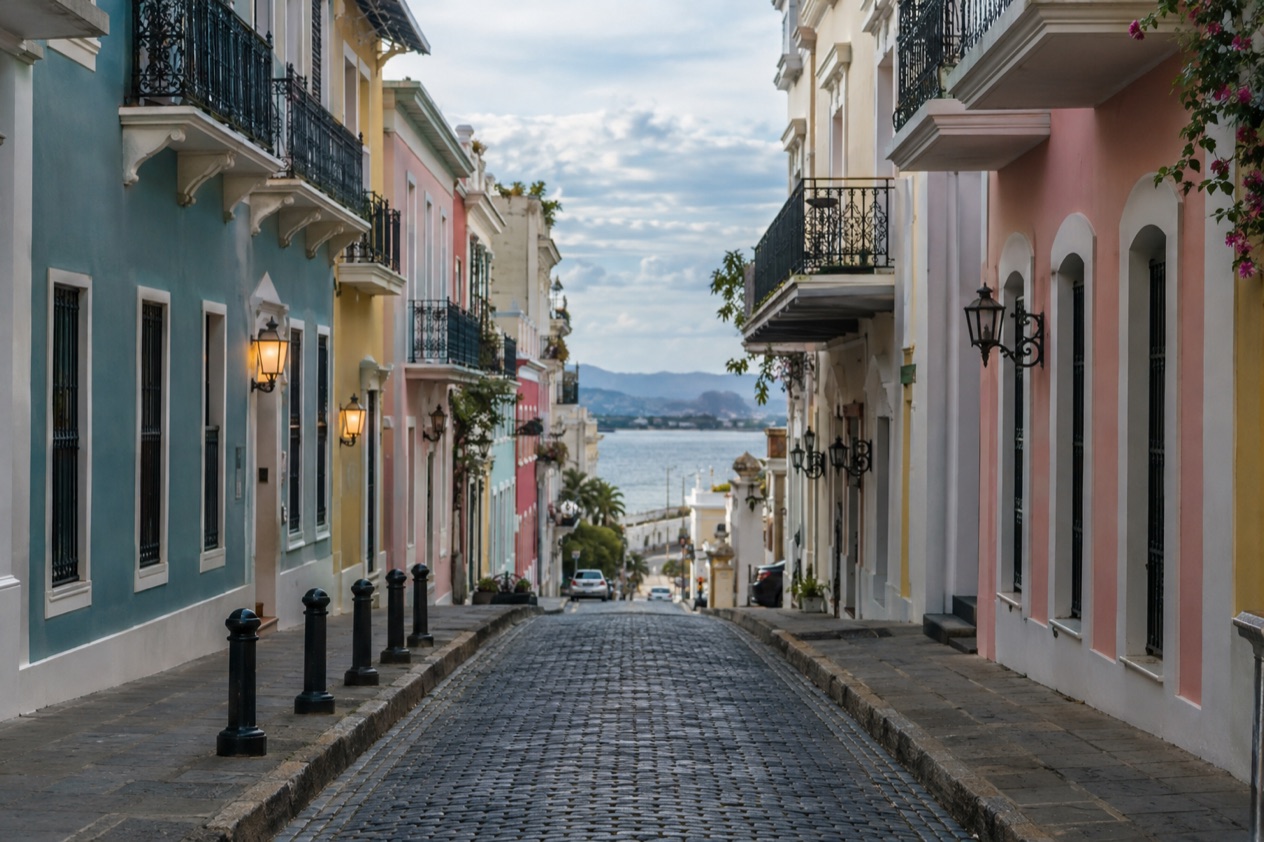
As dawn breaks, Old San Juan’s blue-gray cobblestones remain damp and hushed, corner cafés are pouring that first cup of coffee, and rental cars are already crowding the road heading east. Within reach of the capital lie a rain forest with waterfalls, roadside kiosks frying fritters, a bay that glows at night and a southern city of grand plazas. This is a page for travelers who want to leave the city for a day and sleep in the same bed that night.
What are the best day trips from San Juan?
From San Juan, the finest day trips travel east and south toward the island’s lush, rainier regions, and El Yunque rain forest is the destination nearly everyone chooses. The north coast also offers a string of beaches and food stops, so you can build a day around a swim and a plate of something fried. The outings that work best are worth building your day around, with details to follow.
- El Yunque National Forest, for waterfalls, humid trails and the sound of coquí frogs at dusk.
- Pinones and Loiza, for beachside fritters and the island’s strongest Afro-Puerto Rican traditions.
- Luquillo and its beach kiosks, for a long lunch with the sea in view.
- Laguna Grande in Fajardo, for a chance at glowing water on a dark night.
- Culebra and Vieques, for island beaches reached by ferry from Ceiba.
- Ponce, for a southern city of plazas, museums and a very different light.
- Rincon on the west coast, for surf in winter and snorkeling in summer, best treated as a longer stay.
Several of these outings require advance planning, so check current access and booking requirements before choosing your day. The rain forest and the bioluminescent bay fit a single long day together if you are willing to finish late. The islands and the west coast reward an overnight, and we say so where it matters.
The best day trips from San Juan
All of these start from the metropolitan area, so it helps to know that Condado, Isla Verde and Old San Juan are on the same north coast and that the road east leaves from near the airport. Leaving from Isla Verde saves time on the way out. Staying in Old San Juan, plan to be on the road before the morning traffic builds.
El Yunque National Forest
El Yunque is the island’s rain forest, in the mountains east of the capital, and it is the trip that most feels like leaving the city behind. Trails run beneath tall tree ferns and dripping canopy, past waterfalls and small viewpoints that open onto the coast when the clouds allow. The air is cooler than on the beach and damp almost year-round, so showers can arrive at any hour.
Go early, when the forest is quiet and the light is soft, and plan the walk first and the swim or lunch second. You will hear the coquí, the tiny tree frog that is a national symbol, mostly around dusk, though a morning visit still brings birdsong and rushing water. Wear shoes with grip, bring a light rain jacket and expect wet, slippery stretches.
It suits walkers, photographers and anyone who needs a break from heat and pavement. Pair it with a lunch stop at the coastal kiosks on the way home, which turns the outing into a full and satisfying day. Check El Yunque National Forest’s official alerts and reservation information before setting out, because access conditions can change.
Pinones and Loiza
The nearest escape is also the most local. East of the airport lies Pinones, a stretch of coastal kiosks right on the beach where you can buy fritters like alcapurrias (fried masa stuffed with meat) and bacalaitos (salt cod fritters), and eat them on your feet or at plastic tables with the Atlantic at your back. Loiza, a little farther along, is known for its Afro-Puerto Rican culture, its music and its mask traditions.
Come hungry and keep the plan loose. Eat, walk along the sand or the mangrove edge, and look at the carved coconut masks and local crafts that Loiza is known for. The surf here is often strong, so watch the water from the shore, follow any flag or sign you see and treat swimming as a day-by-day decision.
This is a half-day outing at an easy pace, ideal for the morning of a departure or for a day when the forest is socked in with cloud. Late July is when Loiza celebrates its Santiago Apostol festival, with processions and masked dancers, which makes the town especially lively then.
Luquillo and the beach kiosks
On the road toward El Yunque, Luquillo is where the coast turns into a long, palm-lined beach with a row of open-air kiosks behind it. Menus tend to mix fried snacks with grilled fish, seafood and cold coconut water, and the food is meant to be shared and lingered over. Families, surfers and locals on a Sunday outing all end up here.
It works well as the second half of a rain forest day: hike in the morning while the air is cool, then rinse off at the beach and eat in the afternoon. The water depends on the day and the beach, so look at the conditions before wading in and follow any lifeguard or flag you find. Sargassum seaweed can reach east-facing shores in some springs and summers, which is a chance, not a rule.
Laguna Grande and the bioluminescent bay
Near Fajardo, Laguna Grande is a mangrove-lined lagoon where microscopic organisms can make the water glow blue when it is disturbed. Three famous bioluminescent bays lie in Puerto Rico, and Laguna Grande counts among them, alongside Mosquito Bay on Vieques and La Parguera in Lajas. The glow is present all year and is strongest on moonless nights, but you may see less when the moon is bright or clouds and rain interfere.
This is an evening outing, so it pairs naturally with a late lunch in Luquillo or a walk on a nearby beach in the afternoon. The return to San Juan happens in the dark, so many travelers prefer to have a driver or to be clear about who is behind the wheel. Ask the operator what the tour involves, since the rules about swimming, kayaking and boats are set locally.
Culebra and Vieques from Ceiba
, and that small fact shapes the whole trip. Both islands have sheltered coves and exposed shores, with bright sand, clear water and a slower rhythm than the main island. Culebra is known for beaches that look like a postcard, and Vieques for wild horses on the roads and its glowing Mosquito Bay.
As a day trip it is ambitious. You spend a good part of the day getting to the dock and onto the boat, which leaves only a few hours on the sand. Many travelers decide it is better with a night on the island, but if you only have a day, choose one island and one beach rather than trying to see both.
Ponce and the south coast
Ponce faces the Caribbean, and the change in landscape and mood is the point. The center is built around a plaza with a red-and-black firehouse, a cathedral and shaded benches, and the streets around it are lined with pastel buildings, museums and ice-cream stands. The south is also generally drier than the north coast, so the sun is a common companion.
Spend the day on foot: the plaza in the morning, a museum or two in the heat of midday, a long lunch with local dishes such as lechon asado or mofongo, and a stroll as the light softens. The weeks before Lent are Carnaval time in Ponce, with parades and the vejigante masks that are a Puerto Rican signature.
It suits people who like architecture, culture and food more than beaches. It is a long day across the island, so it is best started early and approached as one destination rather than a stop on a loop.
Day trips from San Juan compared
| Trip | Best for | What you do |
|---|---|---|
| El Yunque | Nature and waterfalls | Walk rain forest trails, stop at viewpoints |
| Pinones and Loiza | Food and local culture | Eat fritters at kiosks, see crafts and masks |
| Luquillo | Beach and a long lunch | Swim, then eat at the open-air kiosks |
| Laguna Grande, Fajardo | An evening on the water | Look for glowing water on a dark night |
| Culebra and Vieques | Island beaches | Take the ferry from Ceiba and pick one beach |
| Ponce | Culture and architecture | Walk the plaza, visit museums, eat local dishes |
To choose, start from your energy and the weather. If it is clear and you want a challenge, go to El Yunque. If it is raining in the mountains or you are short on time, Pinones is the easiest day and leaves you back in the city by afternoon.
Culture-minded travelers should give Ponce a full day, and anyone chasing a night on the water should pick the bioluminescent bay and plan around the moon. The islands are best kept for a trip with an overnight.
Tour or on your own?
A tour makes sense when the logistics are the hard part: a boat after dark, a guided kayak in a bioluminescent bay, or a long day across the island when you would rather not drive. A guide also adds context at the forest and in Ponce, where the history sits in the details of the buildings. You can read, nap and look out the window instead of watching the road.
Going on your own makes sense when you want to stop where you like. A rental car lets you linger at a kiosk, add a beach on the way back or leave the forest early when the weather turns.
The north coast kiosk towns and the forest sit on the same general route east, so a car makes a combined day easy.
Before you book anything, ask what is included, and whether it covers the entrance or reservation the place needs. Find out exactly where the pickup is, since some leave from Condado or Isla Verde and others from Old San Juan. Ask how long you will actually spend at the site, how the operator handles bad weather, and what happens to the plan if the sea is rough or the sky is gray.
For a night tour, ask how you get back to San Juan afterward. For a ferry day, confirm the departure dock with the operator or the ferry office so you do not end up in the wrong town. A short list of questions saves a lot of rushing on the morning of the trip.
Good to know before you go
U.S. citizens can travel to Puerto Rico without a passport or visa, and the currency there is the U.S. dollar. The Atlantic hurricane season runs from June 1 to November 30, so between those dates follow the National Hurricane Center and local official alerts, since forecasts change fast and a gray day can close trails or cancel boats.
If you plan to visit the forts when you are back in the city, remember that the park does not accept cash. Keep a light layer and a phone charger in your bag, and take your valuables with you rather than leaving them in a parked car at a trailhead or beach.
Sources
- National Park Service, San Juan National Historic Site, Fees & Passes (https://www.nps.gov/saju/planyourvisit/fees.htm), checked October 8, 2026
- National Park Service, San Juan National Historic Site, Hours & Operating Seasons (https://www.nps.gov/saju/planyourvisit/hours.htm), checked October 8, 2026
- Wikipedia, Old San Juan (https://en.wikipedia.org/wiki/Old_San_Juan), checked October 8, 2026
- Wikipedia, Condado (https://en.wikipedia.org/wiki/Condado,_Puerto_Rico), checked October 8, 2026
- Wikipedia, Isla Verde (https://en.wikipedia.org/wiki/Isla_Verde,_Puerto_Rico), checked October 8, 2026
- NOAA National Hurricane Center, Climatology (https://www.nhc.noaa.gov/climo/), checked October 8, 2026