
After dark in La Parguera, the small boats nose out from the waterfront and the wake behind them begins to glow a pale blue-green. On shore, the smell of fried fish drifts from the open-air restaurants, music spills from a dock, and families stroll the seafront in no particular hurry. This is a small fishing town on Puerto Rico’s southwest coast, built around mangrove cays and a famous glowing bay, and it suits travelers who like a slow, salty, unpolished place.
Where is La Parguera and what is it like?
La Parguera is a seaside village in the municipality of Lajas, on the dry southwest coast of Puerto Rico, a short way from Cabo Rojo, San Germán and the Guánica dry forest. It is a fishing town first, and a modest, easygoing vacation spot second, with a single waterfront where the boats, the restaurants and the evening crowds all meet.
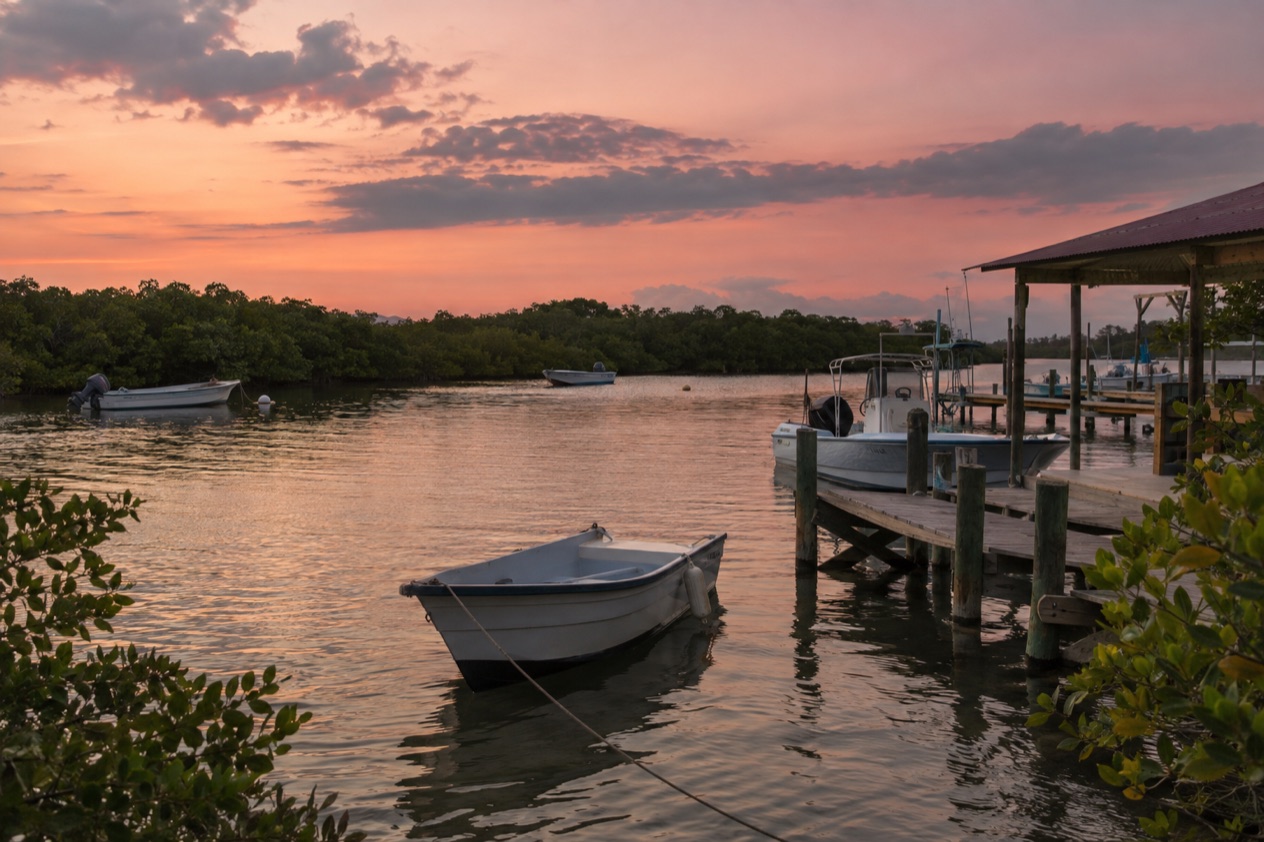
The setting is what gives the place its character. Behind the town the land is dry and open, the kind of country where pineapple fields once covered the hillsides, and in front of it the water breaks up into mangrove islets and shallow, grassy channels.
The sea here faces the Caribbean, so the feel is different from the surf towns of the west and north coasts. Conditions change from day to day and from spot to spot, so where a sign, a flag or a lifeguard is present, follow it.
The pace is the real draw. Days start early with fishermen on the docks and pelicans watching from the pilings. Afternoons are hot and slow, a good time for a long seafood lunch in the shade. Evenings are when the town wakes up, with people walking the waterfront, boats heading out and weekend crowds from other parts of the island arriving for music and food.
La Parguera loves visitors who want a village rather than a resort: kayakers, birders, anyone happy to eat grilled fish and watch the water. It is less suited to people who want a polished beach strip, big hotels or a packed nightlife scene. It is also a place where the weekend and the weekday feel quite different, with the waterfront livelier when islanders come down for a few days off.
Lajas itself was founded in 1883, and the fishing tradition still shapes daily life. The town is also known for its pineapples, an industry that took a heavy blow when Hurricane Maria passed over the island in 2017 and destroyed hundreds of roofs in the municipality. The farms and the village have continued, and the Pineapple Festival still celebrates that harvest.
What is there to do in La Parguera?
The big reason to come is the water: see the bay after dark, then explore the mangrove cays by boat or kayak, snorkel or dive, or head out fishing. La Parguera is different from its neighbors because it is a place you stay on the water, while Cabo Rojo offers cliffs and salt flats, San Germán offers colonial streets and Guánica offers dry forest.
The glowing bay at night
La Parguera is famous for Bahía Fosforescente, where tiny bioluminescent dinoflagellates give off colored light when the water moves. A paddle stroke, a fish darting under the boat or a hand trailing through the surface can leave a shimmering trail. The glow is present all year, and it is generally easiest to see on moonless nights, when there is no competing light.
Treat it as a chance rather than a promise. Cloud, moonlight and the state of the water all change what you see, so a darker night usually gives the better show. It suits couples, families with older children and anyone curious about the natural world. Choose a boat or kayak outing for the bay, and bring a light layer for the breeze on the water.
Mangrove cays and the waterfront
By day, the draw is the water itself: the mangrove islets just offshore, the pelicans and herons on the roots, and the small boats that come and go from the docks. Along the waterfront, look for whole fried fish, seafood stews, fritters and mofongo.
A slow walk along the seafront in late afternoon is the easiest plan, with a stop for a cold drink as the light softens. It suits anyone who wants to feel the village without a schedule. A tip: eat on the early side on weekends, when the restaurants fill with visitors from across the island.
Wildlife and dry-forest country nearby
The area is rich for nature lovers. Laguna Cartagena National Wildlife Refuge protects wetland habitat in Lajas, and the Cabo Rojo National Wildlife Refuge is home to native birds including the endangered yellow-shouldered blackbird. Nearby, Guánica State Forest, a subtropical dry forest and a UN Biosphere Reserve, shelters about half of Puerto Rico’s birds and has 12 hiking trails.
Early morning is the best time for birds and for walking, before the heat builds. Dry-forest trails can be hot and exposed, so bring water and a hat. It suits birders and hikers who like a landscape of cacti and twisted trees rather than rainforest.
Festivals through the year
The local calendar gives a good reason to time a visit. Lajas hosts a Kite Festival in February or March, the Blue Marlin Fishing Festival in May, the Pineapple Festival in May or June, and the Fiesta de San Pedro in June, a nod to the town’s fishing life. The Pineapple Festival can draw up to 50,000 people for crafts, music and pineapple in every form.
These weekends bring crowds, music and a festive mood, and they are a fun way to see how locals celebrate. They also mean a busier waterfront and fuller restaurants, so plan accordingly if you prefer calm.
How many days do you need in La Parguera?
A long weekend, two or three nights, is enough to settle into La Parguera and see the bay, while four or five nights let you add the surrounding southwest without rushing.
In a short stay, the rhythm is simple. Spend a morning on the water or the waterfront, linger over a seafood lunch, rest through the hottest hours, and go out on the bay once it is fully dark.
A second day can be a loop to Guánica State Forest for an early walk, or a visit to the wildlife refuge for birds. A single night is possible, but you would be leaving just as the pace begins to sink in.
With more time, the southwest opens up. Cabo Rojo is an easy day trip, with the Los Morrillos Lighthouse (El Faro) on limestone cliffs, the red salt flats that give the cape its name, and a long list of beaches including Playa Sucia. The Puerto Real fishing village and the seafood restaurants of Joyuda are natural lunch stops. The visitor center at the salt flats offers free guided tours of the area.
San Germán is the other classic outing. As the second oldest city in Puerto Rico, it keeps a preserved historic district, Plaza Santo Domingo and the Porta Coeli church, one of the earliest Spanish churches built in the Americas. It is also known as the Cradle of Puerto Rican Basketball. Pair it with a slow lunch and an afternoon wander on foot.
If you like a festival, add a weekend that matches one on the local calendar. Five nights is a comfortable length for combining the bay, the forest, Cabo Rojo and San Germán, with a lazy day in the middle for doing nothing at all.
Where to stay in La Parguera
The simplest base is La Parguera itself, close to the waterfront, the restaurants and the departures for the bay. Staying in the village means you can walk to dinner, step out for an evening on the water and wake up to the sound of the docks. It suits anyone who wants the fishing-town atmosphere and does not want to drive after dark.
The second option is to stay in a nearby town and visit La Parguera for the evening. Cabo Rojo has beaches, seafood and a coastline of cliffs and salt flats, and it suits travelers who prefer more beach time and are happy to drive. San Germán offers a historic center with colonial streets and a calmer, small-city pace, a good choice for people who care more about architecture and history than the sea.
Guánica, on the other side of the dry forest, works for hikers and birders who want early access to the trails. It is a quieter base, with a sleepy feel and less in the way of evening activity.
Weekends and festival dates tend to be busier along the waterfront, so if you want to be in the village for a specific event, plan your stay early. Weekdays are calmer and give you a more local feel. Whichever base you choose, think about the evening: the bay is the main event in La Parguera, so being nearby makes the night easier.
How do you get to La Parguera and get around?
Most visitors arrive by road, and the nearest airport with international destinations is Rafael Hernández Airport in Aguadilla, about forty-five minutes from Cabo Rojo. From there the drive south and west across the southwest coast takes you into Lajas and down to the waterfront. Flights from the mainland are domestic for U.S. citizens, who need no passport and no visa.
Once you are in La Parguera, the village is small enough to explore on foot. The waterfront, the restaurants and the dock departures for the bay are all close together, so a car is not needed for an evening in town. A walk along the seafront in the cooler hours is the easiest way to see it.
To see the wider southwest, a car is the practical way to link La Parguera with Cabo Rojo, San Germán and Guánica State Forest, because the sights are spread out along the coast and inland. Plan the longer drives in daylight and keep the evening for the bay. Distances between the towns are short on a map, but allow time for stops, since each place rewards a slow visit.
If you do not drive, think about basing yourself in the village and spending your days on the water and the waterfront, keeping the day trips for the days you can arrange transport.
When is the best time to visit La Parguera?
The southwest has a tropical savanna climate, and it is the drier side of the island, so La Parguera suits the drier season from about December to April. These months are hot but generally less rainy, with the trade winds helping, and they are good for walking in the dry forest and for evenings on the water. The glow of the bay is present all year, so the season does not decide whether you can go.
Summer and early fall are hotter and wetter, and the Atlantic hurricane season runs from June 1 to November 30, with most activity from mid-August to mid-October. In those months, follow the National Hurricane Center and local official alerts, and keep your plans flexible. Dry-forest trails can be very hot in the middle of the day, and early starts make a real difference.
Festivals can shape your choice. The Kite Festival comes in February or March, the Blue Marlin Fishing Festival in May, the Pineapple Festival in May or June, and the Fiesta de San Pedro in June. These weekends are lively and crowded, ideal if you want music and local food, and less so if you want a quiet waterfront. For calm, pick a weekday outside festival dates.
Good to know before you go
Puerto Rico uses the U.S. dollar, and Spanish and English are both official, so a few words of Spanish go a long way in a small fishing town. Take the usual habits of any beach village: keep valuables out of sight, follow any beach flags or signs, and bring sunscreen, a hat and water for the heat. Local conditions on the water vary, so listen to the boat crews on the night you go out.
Sources
- Wikipedia, La Parguera (https://en.wikipedia.org/wiki/La_Parguera), checked October 8, 2026
- Wikipedia, Guánica State Forest (https://en.wikipedia.org/wiki/Guánica_State_Forest), checked October 8, 2026
- Wikipedia, Cabo Rojo (https://en.wikipedia.org/wiki/Cabo_Rojo,_Puerto_Rico), checked October 8, 2026
- Wikipedia, San Germán (https://en.wikipedia.org/wiki/San_Germán,_Puerto_Rico), checked October 8, 2026
- NOAA National Hurricane Center, Climatology (https://www.nhc.noaa.gov/climo/), checked October 8, 2026
To plan your stay
- Best Time to Visit Puerto Rico: Dry Season, Hurricane Season, Beaches and Festivals
- Where to Stay in Puerto Rico: San Juan, Rincon, Vieques and the Best Areas for Your Trip
- Getting Around Puerto Rico: Rental Cars, Tolls, Carros Publicos and Ferries to Culebra and Vieques
- Know Before You Go to Puerto Rico: ID, Money, Getting Around and Local Customs