
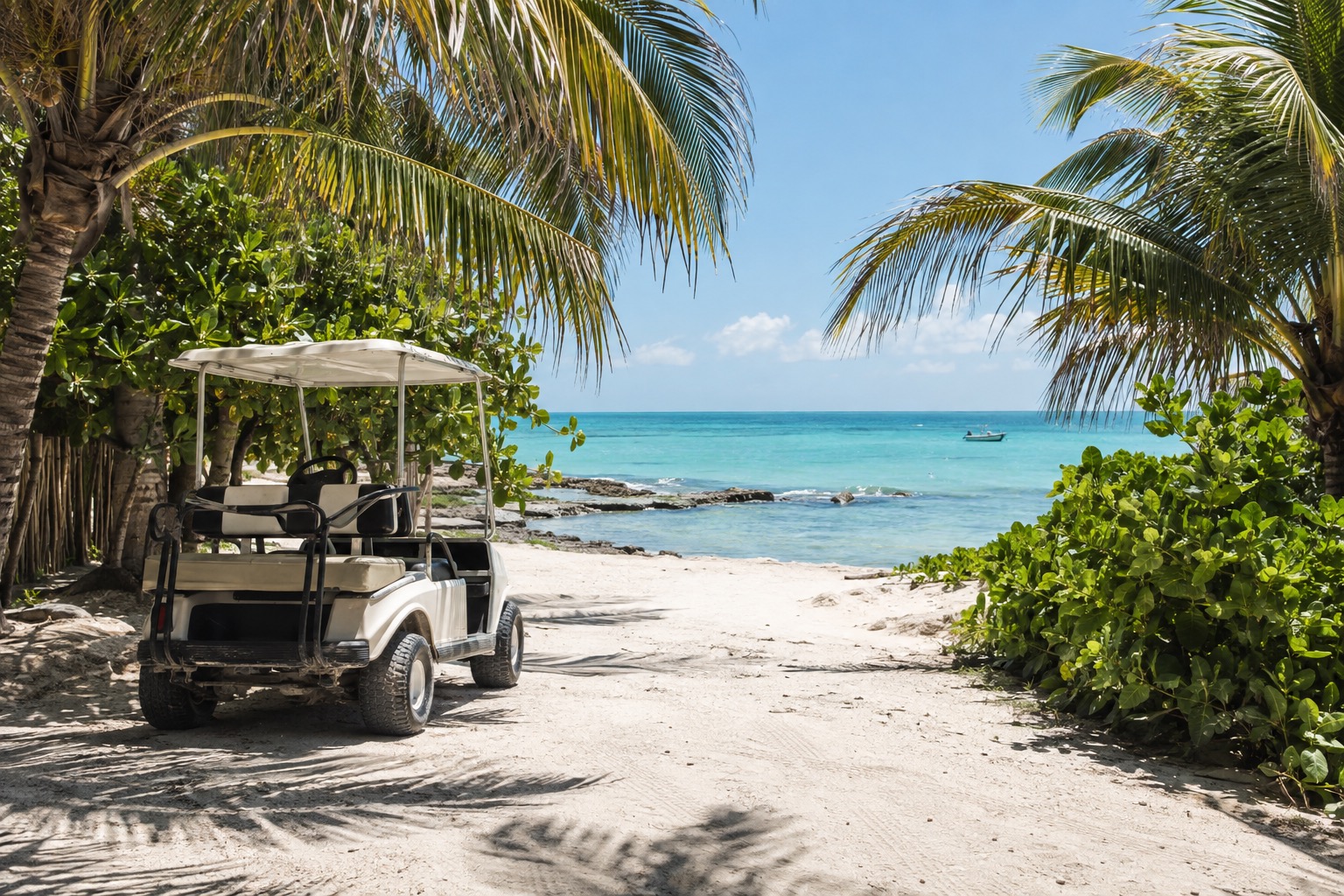
Early on Holbox, the first sound is often a golf cart rattling over sand past painted walls, while pelicans drop onto the water at the lagoon edge. By evening the scene shifts: music drifts from the bars around the main square, and a few streets away the north shore is nearly silent but for the surf. Where you sleep decides which of those islands you wake up on.
What is the best area to stay in Holbox?
For a first visit, Centro is the easiest base, the beachfront suits a classic beach vacation, the lagoon side works for travelers watching their budget, and Punta Cocos is for those who want seclusion. Nightlife, such as it is on a small island, belongs to Centro.
The areas differ less in distance than in mood. Everything sits on a sandy strip of island, yet one corner has bars and shops, another has the best swimming sand, another has mangroves and sunsets, and the far end has no streetlights at all.
The best areas to stay in Holbox
Centro
Centro is the main village, with sandy streets, colorful low-rise buildings and a lively but laid-back local feel. Restaurants, shops and the ferry pier are all here, so you can do almost everything on foot. Some corners get noisy at night, especially on weekends, when bars and restaurants play music.
Lodging consists mostly of compact guesthouses, hostels, and inexpensive hotels, along with a handful of apartments, frequently a few blocks from the beach. It suits budget travelers, backpackers and anyone who likes stepping out the door into the middle of things. From the airport at Cancun, count on about 2.5 to 3.5 hours door to door including the shuttle to Chiquilá and the crossing, and then a 5 to 10 minute walk from the pier.
Tip: staying here can save you the cost of renting a golf cart, since the beach and most restaurants are walkable. Ask for a room away from the main square if you sleep lightly.
The beachfront
Couples, families and beach lovers pick this north-facing stretch because its sand is soft and white, its turquoise water is shallow and typically calm. Evenings are quieter than in town, with little street noise, though a beach club may play music during the day.
Expect boutique hotels and small cabañas, with a few larger properties, many opening straight onto the sand. There are no big all-inclusive resorts here. Leave the pier and you can walk 5 to 15 minutes on sandy streets or hop in a golf cart taxi for a short ride, while the trip from the airport takes about as long as the one to Centro, with ferry waits shaping the time. Tip: rooms right on the beach go first in high season, so reserve them early.
Punta Cocos
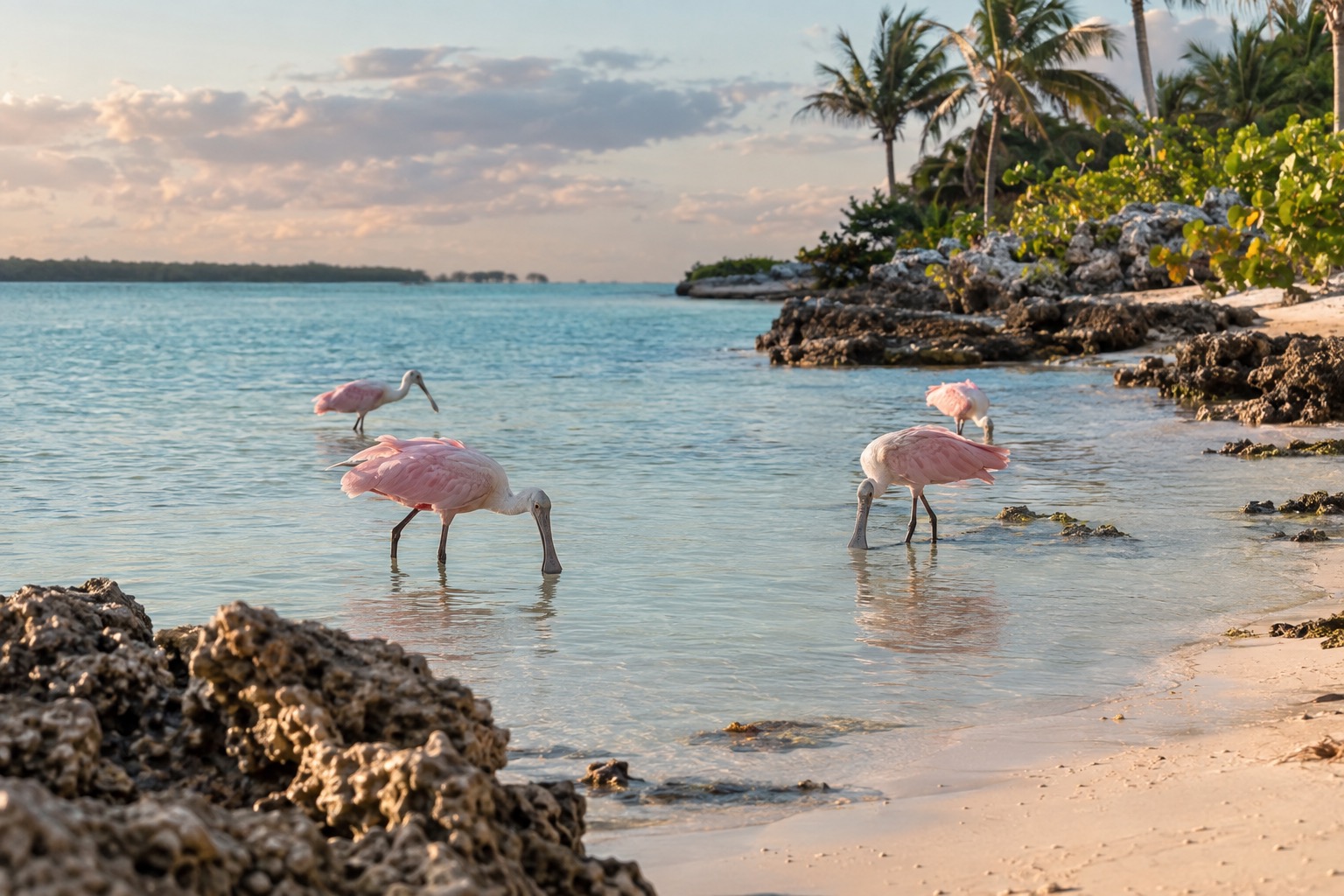
At the quiet western end, the beach is more natural, buildings are few, and the shallow lagoons catch the sunset. There are no paved roads or streetlights, so nights are very dark and still. Couples, families with young children and anyone after real peace tend to love it.
Lodging is a handful of small boutique hotels, beach houses and eco-lodges, often spaced far apart. Centro is a 10 to 15 minute golf cart taxi ride away, or a 30 to 40 minute walk along the beach or sandy roads. Add that local transfer to the usual trip from Cancun. Tip: bring insect repellent, since the stretch near the lagoon and vegetation can have more mosquitoes at dusk.
The lagoon side
Here the water is the calm, shallow Yalahau Lagoon, edged with mangroves and washed in colorful sunsets, with less beach sand than the north shore. The sandy streets are less busy than the center, yet restaurants stay close.
Guesthouses, apartments and budget hostels line the waterfront, often with docks or terraces over the water. It suits budget travelers, long stays and people who prefer local life to a beach at the door. The ferry arrives right here, so most places are within a 5 minute walk of the pier. Tip: prices tend to be lower and boat tours leave from nearby, but boat traffic can make mornings noisy.
Holbox areas compared
| Area | Best for | Feel | Getting around | Airport by car |
|---|---|---|---|---|
| Centro | Budget travelers, backpackers, first visit | Lively but laid-back, can be noisy at night | Walk to beach, restaurants and pier | 2.5 to 3.5 hours including shuttle and ferry |
| Beachfront | Couples, families, beach lovers | Calm evenings, soft white sand | 5 to 15 minute walk or golf cart taxi from the pier | About 2.5 to 3.5 hours |
| Punta Cocos | Couples, families with young children, seclusion | Dark, quiet, natural | 10 to 15 minute golf cart taxi from Centro | 2.5 to 3.5 hours plus local transfer |
| Lagoon side | Budget travelers, long stays | Mangroves, sunsets, local life | Within a 5 minute walk of the pier | 2.5 to 3.5 hours |
The trade-off is mostly beach against convenience. The sand is best on the north shore and at Punta Cocos, while Centro and the lagoon side keep you near food and boats. Quiet costs you a golf cart ride, and nightlife costs you some sleep.
How to choose your hotel in Holbox
Do not look for an all-inclusive: the island has none. Lodging here means guesthouses, boutique hotels, cabañas and apartments, with meals eaten in the village restaurants. That keeps the choice simple and ties it mostly to location.
Beachfront gives you sand at the door, while the lagoon side gives you sunsets and a lower price. If you plan to come in high season or around a festival, book early, especially on the beach. Families do well on the beachfront or at Punta Cocos, where the water is shallow and the pace slow, but remember that streets are sand and Punta Cocos has no lighting.
Before booking, ask about night noise near the square, boat traffic on the lagoon, and how the transfer from the pier works if you are staying far out. Because hurricane season lasts from June 1 through November 30, a trip during that stretch requires a cancellation policy with flexibility.
Good to know before you go
The U.S. State Department rates Quintana Roo Level 2, ‘Exercise increased caution’.
Most visitors reach the island by shuttle or bus from Cancun to Chiquilá and then the ferry, which drops you in the village. Plan on paying the state fees below in addition to your room rate.
| Fee | Amount | Who pays |
|---|---|---|
| Lodging tax (Impuesto Sobre Hospedaje) | 5% of the billed value, or 6% when a host or booking platform collects payment for a short-term rental | Guests staying in paid accommodation |
| Visitax | 2.50 UMA, about 293 pesos | Every foreign visitor entering Quintana Roo |
Sources
- Congreso del Estado de Quintana Roo, Ley del Impuesto al Hospedaje del Estado de Quintana Roo, art. 8, congresoqroo.gob.mx, checked September 29, 2026
- Ley de Derechos del Estado de Quintana Roo, art. 51-Octies, congresoqroo.gob.mx, checked September 29, 2026
- U.S. Department of State, travel.state.gov, checked September 29, 2026 (date issued May 29, 2026)
- NOAA National Hurricane Center, nhc.noaa.gov, checked September 29, 2026