
Early in the morning, fishing boats rest on the sand in Mahahual while the first snorkelers walk the malecón toward the water, and the smell of grilled fish starts drifting from the beach shacks. Costa Maya takes its name from the cruise terminal beside this small fishing town on the southern Quintana Roo coast. It suits travelers who want a barefoot Caribbean beach, a reef close to shore and a quiet pace, far from the big resort strips farther north.
What are the best things to do in Costa Maya?
The best things to do in Costa Maya revolve around the sea: floating over the reef, eating fresh fish with your toes in the sand, and then venturing inland to lagoons and Maya ruins.
- Snorkel the barrier reef, which sits close enough to shore for a short boat ride.
- Stroll the Mahahual malecón, the beachfront promenade that serves as the town’s main street.
- Spend an afternoon at a beach club with a lounger and a cold drink.
- Dive the walls and coral gardens just offshore.
- Take a day trip to Bacalar and its lagoon of many blues.
- Visit Maya ruins in the jungle south and west of the coast.
- Eat grilled fish, ceviche and lionfish at a beachfront table.
Sights and landmarks in Costa Maya
Costa Maya has few formal monuments. Its sights are a stretch of sand, a pier and a town that grew up around the sea, and the pleasure is in walking it slowly.
The Mahahual malecón
The malecón is a long beachfront promenade lined with open-air restaurants, dive shops, hammocks, small souvenir stands and palm-shaded bars. Mahahual began as a fishing settlement, and you still see that in the boats pulled up near the shore and in the menus that lean hard on the day’s catch.
You reach it on foot from the cruise terminal, or by a short taxi ride if you drove in from Chetumal or the north. Early morning is the calm hour, with soft light and few people. Midday brings the busiest stretch when ships are in, and sunset is a lovely moment for a slow walk. It suits everyone, and the flat promenade is easy for strollers.
The cruise terminal and its surroundings
The terminal is the reason the place has a name, and its shops, bars and pools make a pleasant first stop for arriving cruise passengers. Beyond its gates the town feels much more local, with small stands, taquerías and fishermen mending nets.
If you want a sense of Mahahual rather than the port, walk out past the terminal and let the malecón lead you along. The farther you go from the pier, the quieter and more rustic the scene becomes. It is a good half-day for anyone who likes to wander without a plan.
Beaches and outdoor things to do in Costa Maya
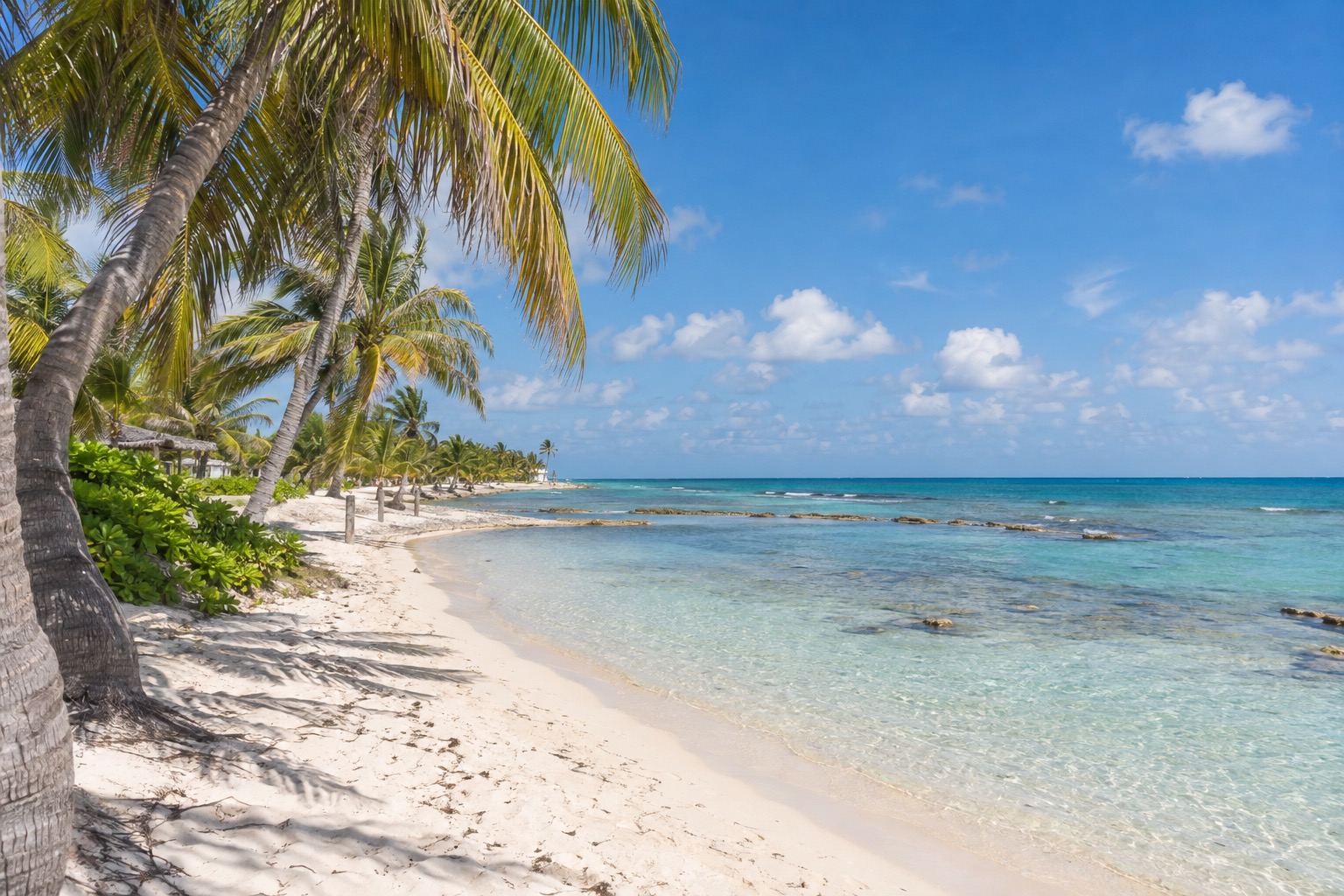
The beaches of Costa Maya are narrow, sandy and lined with palms, and the water just offshore is generally calm because the reef breaks the swell.
Snorkeling the barrier reef
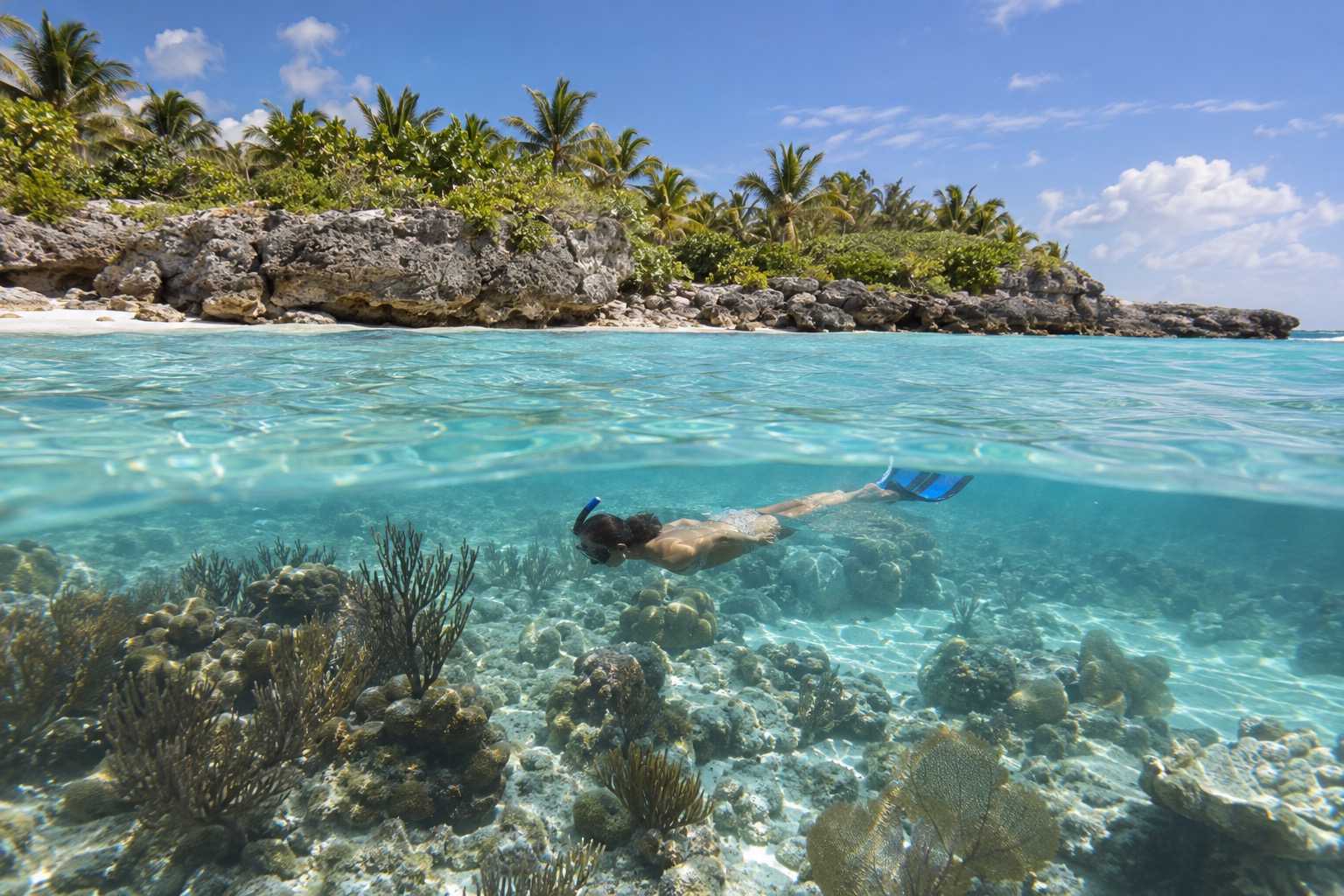
The barrier reef runs close to Mahahual’s shore, so snorkeling trips reach it by a short boat ride. Underwater you find coral heads, sea fans, parrotfish, angelfish and the occasional turtle gliding through the shallows. Boats leave from the beachfront, and the operators along the malecón can set you up with masks and fins.
Morning is usually the calmest time on the water, with gentler seas and clearer views. The trip suits confident swimmers and beginners alike, since the guides stay close and the pace is easy. Wear a rash guard or reef-safe sunscreen, because the sun on the water is strong.
Beach clubs and the shoreline
South and north of the pier, small beach clubs set out loungers, umbrellas, hammocks and bars right on the sand. You can spend a whole afternoon alternating between a swim, a plate of ceviche and a nap in the shade. Some have small pools and play relaxed music, and others stay quiet and rustic.
They suit families, couples and groups of friends who simply want a good spot by the sea. Walk along the shore until one feels right, since each has its own mood. Sargassum can wash up on this coast at times, so some days the beach looks different from others.
Diving and other water activities
The same reef that draws snorkelers draws divers, with shop-run boats heading out to walls, coral gardens and small drop-offs. The diving here is known for being relaxed and uncrowded, with plenty of marine life and few other boats around.
Kayaking and paddleboarding are also popular on calm days, and some visitors simply wade out and watch the fish. Dive shops along the malecón handle certification courses and guided dives for experienced divers.
Day trips from Costa Maya
The favorite day trips go inland to a lagoon and a few Maya sites, and most visitors who drive rather than sail in use Chetumal or the coastal highway as their gateway.
Bacalar and its lagoon
Bacalar is a lakeside town known for a lagoon of strikingly different blues, from pale turquoise to deep indigo. You can walk the waterfront, visit the old Spanish fort that overlooks it, and stop at small lakeside restaurants for a long lunch.
It is reached by road, since the coast has no full-service international airport and most travel is by car or organized excursion. Plan a full day, and go in the morning when the light on the water is at its clearest. It suits couples, families and anyone who likes a calm, scenic setting. Take a hat and a swimsuit.
Maya ruins in the jungle
The southern part of Quintana Roo holds several Maya sites set among forest, including Kohunlich and Chacchoben, known for their quiet, uncrowded settings and the calls of birds and howler monkeys in the canopy. You walk shaded paths between temples and plazas, hearing more wildlife than people.
Go early to stay cool and to catch the soft light on the stone. These visits suit travelers who enjoy history and walking, and who do not mind a drive inland. Bring water and bug repellent, since the forest can be humid.
Chetumal and the border region
Chetumal, the state capital, sits on a bay near the Belize border and has a relaxed riverside promenade, a regional museum devoted to Maya culture and good local seafood. It is a pleasant stop for a late lunch and a stroll beside the water.
It is also where many road visitors enter the region, so it works well as a first or last stop. It suits curious travelers who like a real town with fewer tourists.
What to eat in Costa Maya
Eating in Costa Maya means seafood, simple and fresh, served at tables set directly on the sand. Grilled fish, often served whole with rice, beans and tortillas, is the standard order. Ceviche with lime, onion and cilantro arrives cold and bright, and shrimp, conch and octopus appear in cocktails and tacos. Lionfish, an invasive species that divers help hunt, has become a local specialty, with a firm white flesh that is mild and sweet.
Beyond the beach, look for Yucatecan classics such as cochinita pibil, panuchos and salbutes, usually from small taquerías a few streets from the malecón. Cold beer, fresh coconut water and agua de jamaica are the drinks of the day, and a michelada suits a long afternoon.
Things to do in Costa Maya at night
Evenings in Mahahual are low-key, with the malecón turning into a string of lit-up restaurants and bars. After sunset, people drift to open-air tables for grilled fish, cocktails and live music, which ranges from acoustic guitar to reggae and cumbia.
Some bars set out candles and lanterns on the sand, and the sound of waves replaces any traffic. It is a place for talking late over a drink rather than for big clubs.
If you prefer quiet, a walk along the dark shore under a wide sky is hard to beat. Stargazing is excellent when the moon is low, since there is little light pollution beyond the town.
Things to do in Costa Maya with kids
Children do well in Costa Maya because the water near shore is calm and the beaches are easy to enjoy at their own pace. Shallow wading, building sandcastles and watching small fish near the rocks keep them busy for hours, and many beach clubs have shaded areas and pools. Older kids can try snorkeling with a guide, which feels like an adventure without being demanding. Boat rides to the reef are a highlight for most.
Keep in mind the strong Caribbean sun, and bring hats, rash guards and plenty of water. Distances in town are short and flat, which makes walking simple, though day trips inland involve longer drives that suit patient travelers.
Good to know before you go
The U.S. State Department rates Quintana Roo Level 2, ‘Exercise increased caution’.
Most visitors arrive by cruise ship, while others drive in from Chetumal or from the north along the coastal highway, since there is no full-service international airport here. The Atlantic hurricane season runs from June 1 to November 30, so the late-year months fall inside it.
| Fee | Amount | Who pays |
|---|---|---|
| Visitax (state visitor fee) | 2.50 UMA, about 293 pesos | Foreign visitors entering Quintana Roo |
| Cruise passenger fee | 5 US dollars, collected by the cruise line | Cruise passengers, instead of Visitax |
| Lodging tax (Impuesto Sobre Hospedaje) | 5% of the billed accommodation value | Guests staying in lodging |
| Lodging tax, short-term rental | 6% when a host or booking platform collects payment | Guests in short-term rentals |
Sources
- Reportur, "Royal Caribbean toma el control del puerto en Mahahual", 16 juillet 2025 ; Milenio, checked September 29, 2026
- APIQROO, "Empresa" (apiqroo.com.mx), checked September 29, 2026
- Congreso del Estado de Quintana Roo, Ley del Impuesto al Hospedaje del Estado de Quintana Roo, art. 8, congresoqroo.gob.mx, checked September 29, 2026
- Ley de Derechos del Estado de Quintana Roo, art. 51-Octies and 51-Nonies, congresoqroo.gob.mx, checked September 29, 2026
- U.S. Department of State, travel.state.gov, checked September 29, 2026
- NOAA National Hurricane Center, nhc.noaa.gov, checked September 29, 2026