
On a December evening in Acapulco, the cliff divers at La Quebrada drop into the dark water while the crowd on the rocks goes silent, and the Costera fills with families walking off dinner. The dry months from winter into spring bring blue skies and warm nights, the summer and early fall bring heavy afternoon downpours and a bath-warm sea, and the bay stays lively through most of it. Acapulco rewards a trip timed to the rain, the crowds and the holidays you want to share it with.
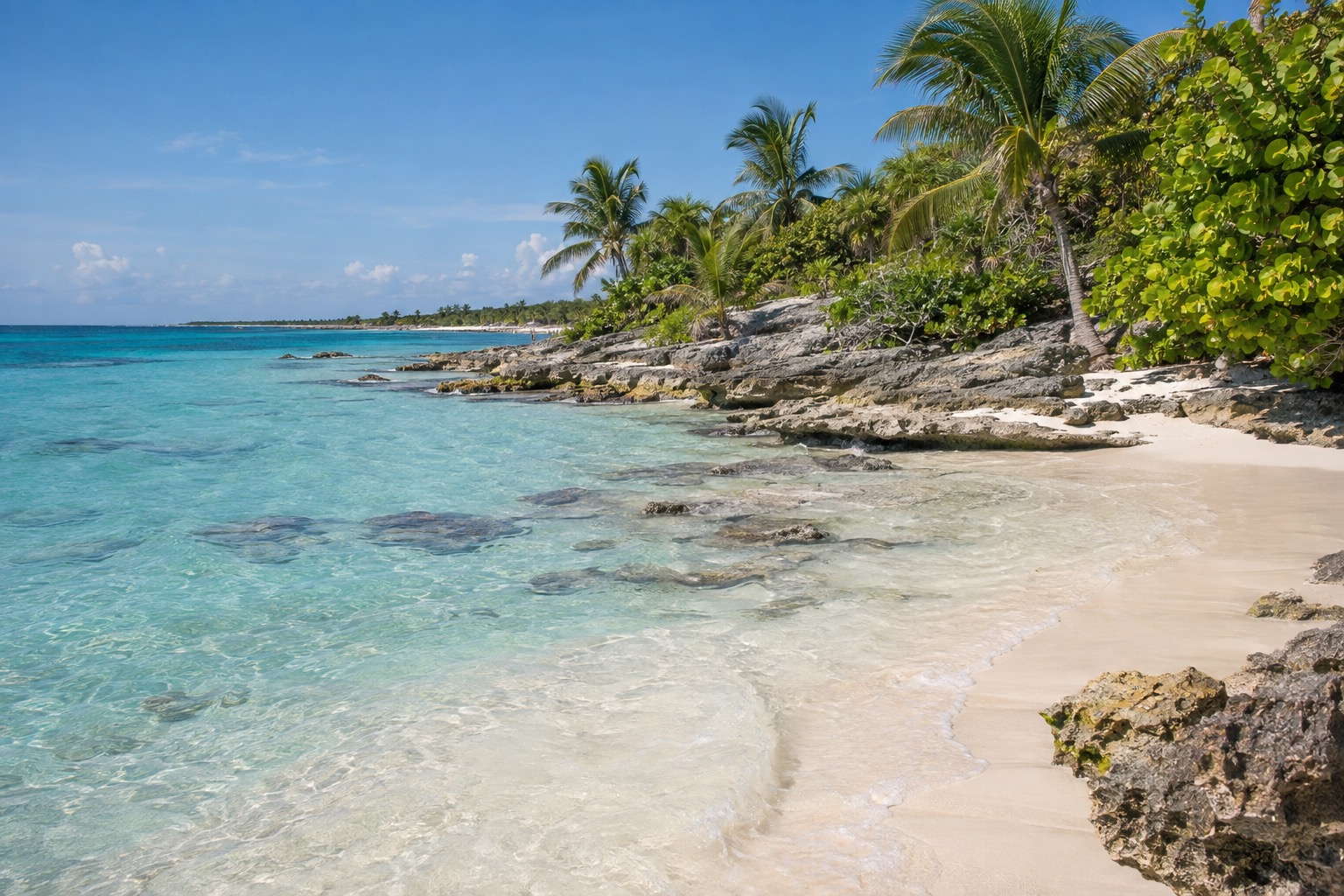
When is the best time to visit Acapulco?
The best months are December through April for most travelers, when the rain nearly disappears and the days are hot and bright, with November just behind them as the wet season loosens its grip. The heat never really leaves, so the real difference between months is how much rain falls and how busy the beaches are.
For beach and sea, February and April are the sweet spot. Skies are clear, the surf on the bay is gentle, and you can swim in the morning, nap in the shade, and eat grilled fish on the sand without watching the clouds. Sightseeing suits the same months, since the old town, the fort on the hill and the cliff-diving shows at La Quebrada are far more pleasant when you are not ducking into doorways during a downpour.
For quiet and lower prices, look to May, June and the weeks after the summer rush, when the bay empties and hotels are easier to bargain with. The trade is humidity and storms, usually arriving late in the afternoon and clearing by evening.
Families should know that March brings spring break, and the Costera and the beach clubs turn loud, with music late into the night. If your children like calm, choose late January, February or April instead.
Acapulco weather by month
Heat is constant here, so this table is mostly about water falling from the sky and the sea you will be swimming in.
| Month | Average high (°F) | Average low (°F) | Rain (in) | Rain days | Sea (°F) |
|---|---|---|---|---|---|
| January | 88.5 | 71.4 | 0.28 | 0.9 | 83.1 |
| February | 88.7 | 71.1 | 0.18 | 0.3 | 83.7 |
| March | 88.9 | 71.1 | 0.24 | 0.4 | 82.6 |
| April | 89.6 | 72.0 | 0.01 | 0.2 | 83.7 |
| May | 91.2 | 75.6 | 1.34 | 2.7 | 86.0 |
| June | 91.6 | 77.4 | 9.55 | 12.4 | 87.5 |
| July | 92.1 | 77.0 | 8.03 | 11.5 | 88.9 |
| August | 91.9 | 77.2 | 10.91 | 13.4 | 89.1 |
| September | 90.9 | 76.8 | 11.06 | 15.4 | 88.8 |
| October | 90.7 | 76.5 | 5.93 | 8.6 | 87.2 |
| November | 90.5 | 75.0 | 1.00 | 1.9 | 86.6 |
| December | 89.4 | 72.5 | 0.31 | 2.6 | 84.4 |
The year splits in two. From November to April rain is rare and mostly a passing sprinkle, and nights are a little cooler. Then May tips into a wet season that peaks in September, when rain falls on more days than not, usually as heavy storms rather than all-day drizzle. October is the bridge, with the downpours thinning out and the air still thick and warm.
When is Acapulco cheapest and least crowded?
Acapulco is quietest in the wet months, from May through much of October, apart from the summer school vacation. Weekdays in September and early October are the emptiest of all, with room on every stretch of sand and hotels glad to see you.
The crowded weeks are easy to spot. Christmas and New Year fill the bay, Easter week brings Mexican families in large numbers, and spring break in March adds a loud, young crowd from the U.S. and Mexico.
Mexican school vacation, from about early July to late August, packs the beaches again even though it is rainy, because families travel when the children are free. Weekends are busier all year, since Mexico City is a drive away.
In the quiet months, rooms are easy to find and restaurant tables need no planning. In peak weeks, the best beachfront hotels fill early and peak-season rates apply, so booking ahead matters more than at any other time.
Which months should you avoid in Acapulco?
Avoid September and early October if you want reliable beach days, since this is the heart of hurricane season and the wettest stretch of the year. Tropical storms and hurricanes can arrive from the Pacific in the wet months, and the city lived through Hurricane Otis in late October 2023, a Category 5 storm that arrived after a night of explosive growth.
Rebuilding was still under way in parts of Acapulco, so it is wise to check current conditions before planning. The U.S. State Department rates Guerrero at Level 4, “Do not travel,” which every traveler should weigh.
June through August is hot, sticky and stormy, with showers on more than half the days. May is the hottest and most humid stretch before the rains settle in. Sargassum, the brown seaweed that piles up on some Caribbean and Pacific shores, is usually worst from spring into summer and can spoil a beach morning, so no beach is guaranteed clean in those months.
Winter has its own small quirks. Cold fronts, the nortes that chill the Gulf, barely reach this coast, so December and January may bring a breezier day or a cooler night but no real interruption. They matter little here compared with the summer storms.
When can you swim in Acapulco?
You can swim in Acapulco every month of the year, because the Pacific never drops below pleasantly warm. Even the coolest stretch, around March, feels like a gentle dip rather than a shock.
From June to October the water is as warm as a bath, so warm that it hardly refreshes you, and swimming is best in the early morning before the afternoon storms build. In winter and spring the sea is a touch cooler and more refreshing in the heat of the day, and the calm, clear weather makes it the easiest time to float in the bay or take a boat to quieter coves.
After heavy rain the water near river mouths and city outlets can turn cloudy, so the rainy months favor the beaches farther from town. In dry months, the bay stays calm and inviting from dawn until sunset.
Festivals and events in Acapulco through the year
Winter holidays and Carnival
Christmas and New Year are the biggest party of the year. Families pack the Costera, the bay glows with fireworks at midnight on December 31, and hotels hold posadas, the traditional pre-Christmas gatherings with piñatas and hot punch, in the days before December 25. The mood is warm, noisy and festive, and the sea is still swimmable on New Year’s Day.
Carnival arrives in February or early March depending on the calendar, with parades, costumes and music along the waterfront. It is best for travelers who like a crowd and a street-party mood, and less so for anyone seeking quiet. Easter week, Semana Santa, brings processions in the old town and a flood of Mexican vacationers to the beaches. Come early in the day if you want a spot on the sand.
Fall traditions and Día de Muertos
Día de Muertos, October 31 to November 2, is quieter here than in central Mexico but still felt. Families decorate altars with marigolds, candles, fruit and favorite foods, and cemeteries are busy with relatives. In shops and restaurants you will see small altars and sugar skulls, and bakeries sell pan de muerto.
This is also the tail of the rainy season, so storms can still roll in. It is a good moment for travelers who care about culture more than a perfect beach day, and the town is calmer than at any other holiday.
Nature seasons and nightly traditions
Sea turtles nest on beaches along the Guerrero coast in the rainy months, usually from summer into fall, and some stretches of sand outside town host release events where hatchlings are sent to the sea. These are small, local and informal, so ask your hotel what is happening nearby rather than expecting a big show.
The one tradition that never takes a month off is the nightly cliff diving at La Quebrada. Divers climb the rock face and plunge into a narrow channel of open sea as the crowd watches from the platforms. Evening is the moment to go, when the light turns gold and the shows feel most dramatic, and it works for travelers of any age at any time of year.
Sources
- Servicio Meteorologico Nacional (CONAGUA), normales climatologicas 1991-2020, estacion 12002 (Acapulco De Juarez (Obs), Acapulco De Juárez), checked September 29, 2026
- Open-Meteo Marine API, average 2015-2024, checked September 8, 2026
- sunrise-sunset.org, sunrise and sunset on the 15th of the month, checked September 8, 2026
- NOAA National Hurricane Center, Tropical Cyclone Report on Hurricane Otis, publie le 7 mars 2024, checked September 29, 2026
- The Weather Channel, « Cat. 5 Hurricane Otis Mexico's Record-Costliest », 7 mars 2024, checked September 29, 2026
- INAH, Lugares INAH, page for Museo Historico de Acapulco Fuerte de San Diego, checked September 29, 2026
- U.S. Department of State, Mexico Travel Advisory (travel.state.gov), updated/issued on August 11, 2026, checked September 29, 2026
- El Contribuyente and J.A. del Rio, ISH tables by State 2026; Ley Numero 419 de Hacienda del Estado de Guerrero (Article 57, purpose of the tax), read on 29 September 2026
- SECTUR, gob.mx blog, actualite « Acapulco amplia su conectividad aerea y fortalece su actividad turistica », 24 September 2026, checked September 29, 2026