
In Rincon, the afternoon ends on a bluff or a beach bar, with surfers sitting on their boards while the sun drops into the Mona Passage and a crowd of strangers claps when it touches the horizon. A few miles up the coast in Aguadilla, the mood is that of a working town: fishermen on the old pier at Crash Boat, kids jumping into blue water, planes lifting off from the airfield that was once a U.S. air base.
Both sit on Puerto Rico’s west coast and both are built around the sea, yet they feel quite different. Pick the one that fits your vacation, or split your time between them.
Which is better, Rincon or Aguadilla?
Rincon is better for travelers who want a small surf town with sunsets, a beach-bar rhythm and the sea at the center of every day, while Aguadilla is better for those who want a real Puerto Rican town with more variety, festivals, a busy waterfront and the airport on its doorstep. Rincon is the place to slow down. Aguadilla is the place to dip into local life and still reach the beach in minutes.
Neither is a loser. The two towns share the same coastline, the same trade winds and the same sunsets, and many visitors end up spending time in both. The table sums up the differences, and the sections that follow explain them.
| Category | Rincon | Aguadilla |
|---|---|---|
| Beaches | 53 beaches, including Domes, Steps and Tres Palmas | 32 beaches, including Crash Boat |
| Vibe | Small surf town, sunset-focused, relaxed | Larger town with a working waterfront and a lively local calendar |
| Things to do | Surf, snorkel, lighthouse at Punta Higuero, Thursday Art Walk, whale watching in winter | Crash Boat, historic sites, ice skating arena, festivals, a base for day trips |
| Nightlife | Casual evenings, beach bars and the Thursday plaza gathering | Town-style evenings, with fiestas and local events through the year |
| Weather | Hot and humid all year, winter swells from the north | Hot and humid all year, same trade winds and same hurricane season |
| Getting there | Fly into the Aguadilla airport and continue along the coast | Rafael Hernández Airport is inside the municipality |
| Best for | Surfers, sunset lovers, snorkelers, whale watchers | Families, food and festival fans, short stays near the airport |
Beaches and the sea
Rincon’s beaches are the main reason people come, and the choice is wide. Domes Beach sits next to the dome of a decommissioned nuclear plant, a landmark that gives the break its name. Steps Beach is known for its rocky reef and its snorkeling, and Tres Palmas is a marine reserve where the coral is the draw. Balneario de Rincon is the town’s public beach, handy for a swim and a picnic.
What the sea does depends on the season. Winter sends northern swells that build hefty waves at spots like Domes and Tres Palmas, and when those days peak, the surf may reach 25 to 30 feet.
That is a show for experienced surfers and an excellent reason to stay on the sand and watch. When summer arrives, the surf calms down, and those very beaches become great for swimming, snorkeling and paddleboarding. The water shifts daily and varies by beach, so keep an eye on it and obey whatever flags, signs or lifeguard guidance you find on site.
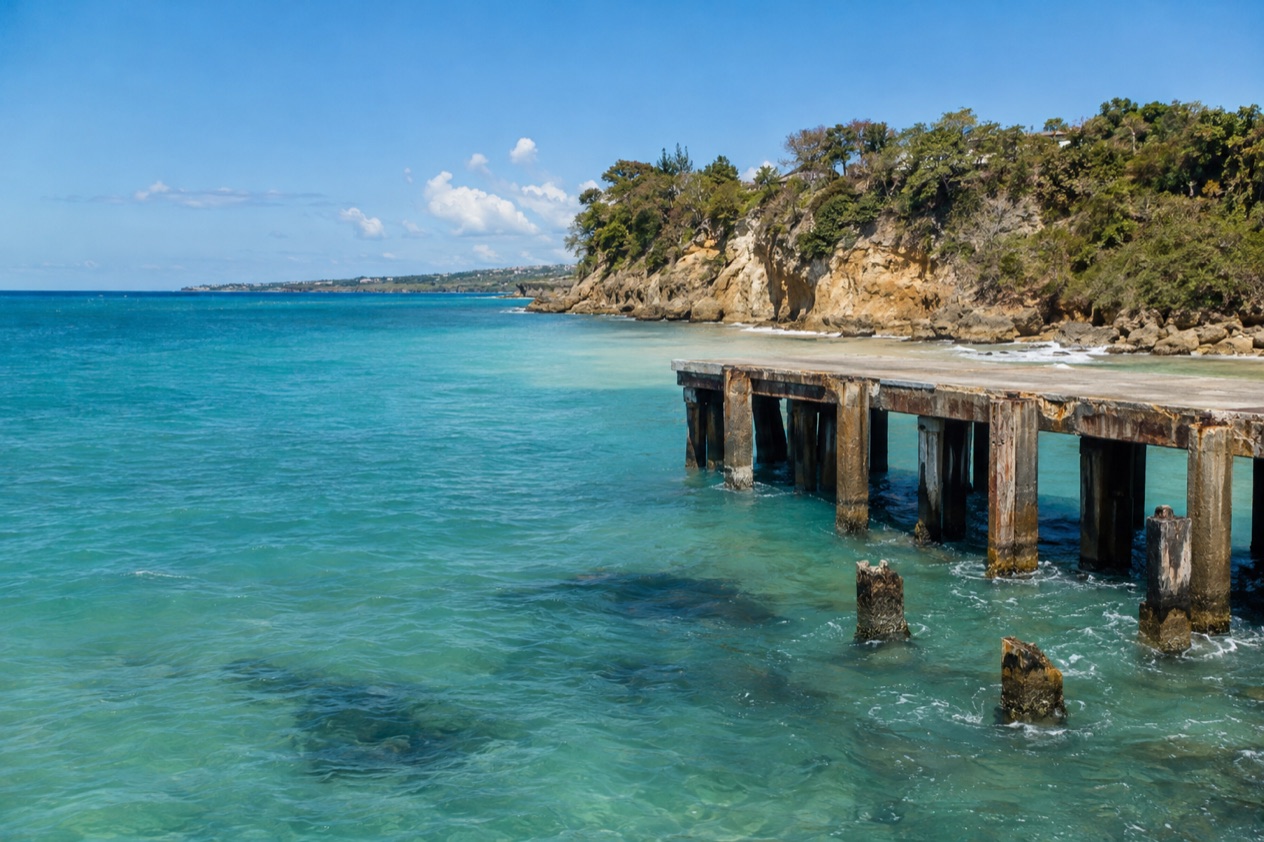
Crash Boat, the beach most people in Aguadilla know best, takes its name from the U.S. military rescue boats whose pier served as the pickup point for downed airmen from the air base close by. Sand eventually built up around the pier and made it useless for docking, so today the remains serve as a fishing and recreation spot. People swim, sunbathe, surf and snorkel here, and the remains of the old pier now serve as a fishing and recreation spot.
Beyond Crash Boat, the town’s shoreline is a mix of broad sandy stretches, rocky points and surf breaks that have drawn international competitions before. Like Rincon, Aguadilla faces the Atlantic, so winter brings bigger waves and summer is the time when many beaches are gentler. In certain springs and summers, sargassum seaweed turns up more along the east and south coasts, yet it can appear anywhere on the island, so check the shoreline before you settle in.
Who wins? For sheer choice, atmosphere and snorkeling, Rincon. Surfers get more breaks within walking distance of each other, and the beach scene revolves around the sunset.
For a single iconic beach with a story, a pier and a local crowd, Aguadilla’s Crash Boat is hard to beat. If you want a beach day that is also a cultural scene, Crash Boat on a weekend is the more colorful one. If you want a beach day that is also a sunset ritual, Rincon is.
Things to do
Rincon’s list is short but satisfying, and nearly everything is outdoors. Aguadilla’s list is longer and more varied, with a mix of beaches, history, festivals and unexpected attractions. Neither is a place for a packed itinerary, and the best days in both start early and end with a sunset.
Rincon: sunsets, snorkeling and the lighthouse
Punta Higuero Lighthouse is the town’s natural gathering point. The grounds give you an unobstructed view out over the water, and humpback whales travel through these waters from about January to March, occasionally visible from the lighthouse area. They are a chance, not a promise, so bring patience and binoculars. January and February make up the whale watching season, with March bringing the Humpback Whale Festival.
For snorkeling, Steps Beach and the Tres Palmas Marine Reserve are the names to know, best in the calmer months when the water is clearer and flatter. For a view from above, La Bandera, also called Pico Atalaya, is a lookout that shows the coast in a long sweep.
On Thursday evenings, an Art Walk fills the main square, Plaza de Recreo, with local artists, crafts and food. It is the town’s weekly social event and an easy way to meet people after a day on the water.
Aguadilla: Crash Boat, history and festivals
Start at Crash Boat for the pier and the water. The beach sits halfway between the former air base, now the airport, and the town center, so it is an easy first or last stop on a trip. History fans can seek out the nine places in Aguadilla listed on the U.S. National Register of Historic Places, a reminder that this stretch of coast has been a strategic point for centuries.
Aguadilla also has surprises. The Aguadilla Ice Skating Arena is the only ice skating complex in the Caribbean.
The town has a lively festival calendar too: the Kite Festival in April, the Festival del Atun in July, which celebrates tuna fishing, and the patron saint festival of San Carlos Borromeo in October, with parades, games, artisans, rides, regional food and live music. The town’s old water park, Las Cascadas, has been closed since Hurricane Maria, so leave it off your list.
Isabela and the coast beyond
Isabela, east of Aguadilla, answers to two nicknames: Garden of the Northwest, thanks to its wildflowers, and Town of Leaf Cheeses, after a fresh white cheese that comes wrapped in banana leaves. It is unusual among Puerto Rican coastal towns because it has both beaches and mountains. The coastal cliffs nearby are an Important Bird Area where seabirds nest, so it is a pleasant detour for anyone who likes cliffs, birds and a slower road.
Weather and the best time to go
Rincon and Aguadilla share the same weather, because they share the same coast. Both remain hot and humid all year, with cooling trade winds to thank, and the drier period lasts from roughly December through April, while the wetter period lasts from roughly May through November. The west coast tends to be among the drier parts of the island compared with the north coast and the central mountains, but showers still arrive, usually as short bursts that pass quickly, and a gray, damp stretch is possible at any time.
The real difference between seasons is the sea. From late fall through early spring, swells from the north reach the Atlantic-facing beaches, and surfing is at its peak.
Rincon becomes a surf town in earnest, with the best waves from November through March, and Aguadilla’s breaks also come alive. This is the time for watching surfers, whale watching and cool-ish evenings on a terrace. Summer storms can also kick up the surf in late summer, a reminder that the sea changes with the weather.
From about May on, the water flattens and the beaches turn to swimming, snorkeling and paddleboarding. This is when Rincon’s calm side shows, and when Crash Boat is at its friendliest for a dip. Sea turtles nest on some Puerto Rican beaches in spring and summer, and you may sometimes come across a marked nesting area. Treat it as a chance and keep your distance.
The calendar adds its own reasons to pick a month. Winter is whale season and Rincon’s peak. March brings the Humpback Whale Festival, April the Kite Festival in Aguadilla, July the Festival del Atun, and September and October the patron saint festivals of Rincon and Aguadilla. Travelers who like events will find something in almost every season, and those who want empty sand will find it in the shoulder months.
Hurricane season is the one caution. It affects both towns equally, and the peak of the season is in September, with most activity between mid-August and mid-October. If you go in that stretch, watch the National Hurricane Center and local officials’ alerts, since forecasts change quickly. The weeks outside the official season are simpler for planning.
Getting there and getting around
Rafael Hernandez Airport, sometimes called Rafael Hernandez International Airport, sits in the municipality of Aguadilla and is one possible gateway for both towns. It was once Ramey Air Force Base and was handed over to the Government of Puerto Rico in 1973.
Its runway is the longest in the Caribbean, and the passenger terminal is compact, with just two gates. For U.S. citizens, arriving from the mainland counts as a domestic flight, so no passport or visa is needed.
For an Aguadilla stay, that is as simple as it gets: you land in the town, and Crash Boat sits halfway between the airport and the town center. The airport is reached from the main road, PR-2, by two highways, so the connection to the rest of the coast is direct. The airfield is also home to a Coast Guard air station, so you may see helicopters overhead now and then.
For Rincon, you land in Aguadilla and continue south along the coast. The trip is a scenic transition from airport town to surf town, and it makes the two places feel like parts of one region rather than separate destinations. Isabela lies to the east of Aguadilla, so a day out in that direction is easy to build into a longer stay.
Once you are there, both towns are places where the day is organized around the water, and you will spend your time moving between beaches, a plaza, a lighthouse or a lookout. Choose a place to stay near the beaches and sunset spots you most want to visit. Plan around the beaches you want rather than around a long list of sights, and leave room for slow mornings and evenings.
Who should choose which
Choose Rincon if the sea is the point of the trip. Surfers will find the breaks that put the town on the world map after it hosted the world championships in 1968, snorkelers will find the reefs at Steps and Tres Palmas, and whale watchers have the lighthouse in winter.
It also suits couples and friends who like unhurried days, the Thursday Art Walk and a nightly ritual of watching the sun go down. Should your perfect day mean time on the water in the morning, a leisurely lunch and a drink at sunset, this town is made for you.
Choose Aguadilla if you want a bit more of Puerto Rico around the beach. Families will like the range of things to do, from Crash Boat to the ice skating arena, and visitors who care about local life will enjoy the festivals, the history and the sense of a place that does not exist only for tourists.
It also works well when you have a short stay or an early flight, since the airport is right there and you lose no time getting to the water. The town’s surf history is proud too, with a world championship held here in 1988.
Can you combine them? Easily. The two towns lie on the same coast, and a split stay gives you a surf-town sunset base and a town-life base.
A simple plan is to start or end in Aguadilla near the airport, spend most of your nights in Rincon, and make day trips to Crash Boat, Isabela or the lighthouse. That gets you both flavors of the west coast without feeling rushed.
Good to know before you go
The U.S. dollar is the currency you’ll use here, and although English and Spanish are both widely spoken, a few words in Spanish always go over well.
The Atlantic hurricane season runs from June 1 to November 30, so keep an eye on official forecasts if you travel in those months. Sunscreen, a hat and plenty of water matter more than any other item in your bag.
Sources
- Wikipedia, Rincón (https://en.wikipedia.org/wiki/Rincón,_Puerto_Rico), checked October 8, 2026
- Wikipedia, Rafael Hernández Airport (Aguadilla) (https://en.wikipedia.org/wiki/Rafael_Hernández_Airport), checked October 8, 2026
- Wikipedia, Crash Boat Beach (https://en.wikipedia.org/wiki/Crash_Boat_Beach), checked October 8, 2026
- Wikipedia, Aguadilla (https://en.wikipedia.org/wiki/Aguadilla,_Puerto_Rico), checked October 8, 2026
- Wikipedia, Isabela (https://en.wikipedia.org/wiki/Isabela,_Puerto_Rico), checked October 8, 2026
- NOAA National Hurricane Center, Climatology (https://www.nhc.noaa.gov/climo/), checked October 8, 2026
To plan your stay
- Best Time to Visit Puerto Rico: Dry Season, Hurricane Season, Beaches and Festivals
- Things to Do in Puerto Rico: Old San Juan, Beaches, Bioluminescent Bays and Island Food
- Where to Stay in Puerto Rico: San Juan, Rincon, Vieques and the Best Areas for Your Trip
- Getting Around Puerto Rico: Rental Cars, Tolls, Carros Publicos and Ferries to Culebra and Vieques