
At the entrance of a ryokan, a row of slippers waits on the wooden step, and suddenly the question of socks without holes feels very real. The same question returns at a temple gate, on a rainy afternoon in a city, and beside a hot spring. The short answer is layers you can add and remove, shoes that slip on and off, and a little respect for the places where clothes come into play.
What should you wear in Japan?
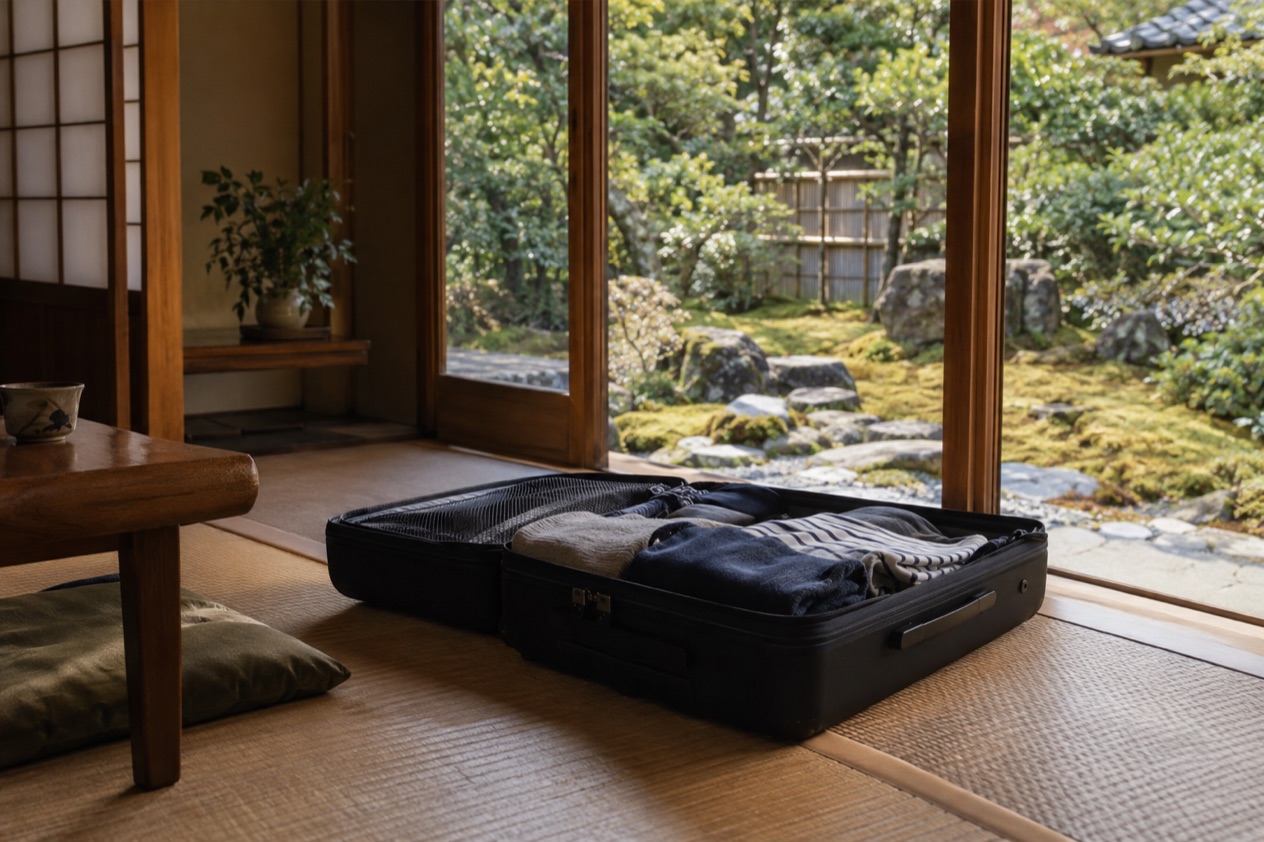
Wear clothes you can layer, shoes that are comfortable for long days on foot and easy to take off, and modest, tidy pieces that suit both a city street and a shrine. Japan is a country of dense cities, mountain ranges and subtropical islands, so no single outfit fits every trip, but that formula works almost everywhere you go.
Day to day, the look in Japanese cities leans neat and understated. Plain colors, simple cuts and clean shoes blend in on a Tokyo train or in a Kyoto side street. Nobody expects formal dress for sightseeing, and a pair of good jeans or trousers with a clean top carries you through a museum, a department store food hall and a casual izakaya (a pub-style restaurant) in the same day.
Shoes that come off easily
Shoes are the piece of clothing that matters most. Days in Japan tend to involve a great deal of walking, through station corridors, across temple grounds with gravel paths and up stone steps. A cushioned pair that is already broken in is a better companion than anything new.
They also come off often. Shoes are removed at the entrance of a ryokan, in many temple halls, in some restaurants with tatami floors and in homes. Slip-ons or shoes with easy laces save you from kneeling at a doorway, and socks without holes spare you a small embarrassment. Travelers tuck a spare pair of socks into a daypack for exactly this reason.
Layers for trains, streets and indoor spaces
A light cardigan, an overshirt or a thin jacket does a lot of work. Outdoors, a day can start cool and warm up by lunch. Indoors, shops, trains and museums can feel warmer or cooler than the street, and a layer you can slip into a bag keeps you comfortable through all of it.
Fabrics that dry quickly and do not wrinkle are a quiet advantage. You will likely wash a few things in a hotel sink or a coin laundry, and a shirt that dries overnight means a smaller suitcase. Dark, simple tops hide the marks of a day of travel and pair with nearly anything.
Choosing for a country that stretches far
Japan runs from Hokkaido, the northernmost island, to the subtropical region of Okinawa, and mountains and forests cover 70% of the territory. A trip that stays in the cities of Honshu asks for different clothes than one that climbs into the Japan Alps or heads for the southern islands.
If your route crosses several regions, pack for the most demanding stop and treat the rest as variations. Rain gear earns its place on almost any itinerary.
How does it change by season?
Your wardrobe shifts with four distinct seasons, each with its own weather and its own reason to travel, so the clothes follow the calendar and the region you visit. Blossoms, rain, typhoons and leaves each move across the country at different times, and your packing list moves with them.
Spring: blossoms and changing weather
Cherry blossoms open from south to north between March and May, depending on where you are. That means a spring trip can span very different conditions, with the south already in lighter clothes while the north still calls for a coat. Plan on layers that adjust as you move.
A scarf, a light jacket and comfortable pants make that kind of lingering pleasant, and shoes that slip off help when you step onto a picnic sheet.
Early summer rain and the heat that follows
The rainy season begins between May and June, as summer approaches. Days can be gray and damp, and an umbrella or a light rain jacket becomes part of the outfit. Shoes that tolerate puddles, or a pair you can swap out in the evening, make a wet day easier to enjoy.
As summer takes hold, breathable fabrics like cotton and linen are the comfortable choice, along with a hat and sunglasses for time outdoors. A small towel or handkerchief is a common companion in Japan, used to wipe the face and hands. Shorts and sleeveless tops work in the city, though a thin layer to cover your shoulders is handy for temples and for cool, air-conditioned interiors.
Late summer and early autumn: typhoon months
Typhoon season in August and September can disrupt travel plans. For clothing, this means a compact, truly waterproof jacket rather than a flimsy poncho, and a bag liner or dry sack to protect electronics and a change of clothes. Quick-drying fabrics are a better choice than denim, which stays wet for hours.
Keep a flexible mindset about outdoor plans, and keep a dry outfit in reserve for the evening. A day spent indoors in a museum, a covered arcade or an onsen town feels far nicer in a dry shirt.
Autumn leaves and the cold months
Autumn foliage colors spread from Hokkaido in the north to the south between late September and early December. Walking beneath maples calls for a medium layer, a scarf and shoes with some grip, since leaves on stone steps and wet paths can be slippery.
In the colder months, especially in the north and in the mountains, think like a winter traveler: a warm coat, a hat, gloves, thermal underlayers and shoes with real traction. Heated trains and shops can be warm, so a coat that opens easily and layers beneath it that you can peel off are more useful than one very heavy garment.
What about temples and onsen?
At temples, shrines and onsen (hot spring baths), dress modestly and neatly and expect to take your shoes off, and at an onsen you bathe without a swimsuit, following the customs of the house. These are places where small gestures of respect count more than any fashion choice.
Temples and shrines
There is no uniform for a visit, but covered shoulders and knees, and a tidy appearance, fit the atmosphere of a place of worship. A light scarf or shawl in your bag solves the question quickly in warm weather, when a tank top or short shorts would feel out of tune.
Stepping into a temple hall often means removing your shoes and walking in socks on polished wooden floors, sometimes cool underfoot. Shoes that come off easily and clean socks matter here. Hats and sunglasses are usually taken off inside a hall, and a small bag or a daypack worn in front is kinder in tight spaces.
Onsen: what you wear and what you do not
At a traditional onsen, bathers wash first at a row of low stools and taps, rinse off the soap, and then enter the shared bath without clothing. Swimsuits are not worn in the water at traditional baths. A small towel accompanies you into the bathing area, and tradition is to keep it out of the water, often resting it on your head or beside the bath.
Long hair is commonly tied up so it stays out of the water. Rules differ between baths, so look at the signs posted at the entrance and follow them. The changing room is where your clothes stay, usually in a basket or a locker, and a simple, easy-to-change outfit makes the transition smoother.
Ryokan: yukata and slippers
A ryokan, the traditional Japanese inn, usually provides a yukata, a light cotton robe, for wearing around the building and often to and from the bath. Slippers are worn in the corridors and set aside at the edge of the tatami mats in the room, where you move in your socks or bare feet.
The yukata is worn with the left side folded over the right and tied with a sash. Many guests enjoy dinner in it, then wander the corridors of the inn, and in some onsen towns, the streets nearby. Bring easy sleepwear for the rest of the night and a change of clean clothes for the next morning’s departure.
Good to know before you go
Pack light, since you will carry your own bags up station stairs and through narrow streets, and leave a little room for souvenirs and for clothes you may buy along the way. The rainy season between May and June and the typhoon season in August and September are the moments when a waterproof layer and a flexible plan matter most. A compact umbrella, a small towel and a pair of spare socks are the modest items that most often prove their worth, and a thin bag for dirty shoes or damp clothes keeps the rest of your luggage fresh.
Sources
- Japan National Tourism Organization, weather and seasons in Japan (https://www.japan.travel/en/plan/weather/), checked October 11, 2026
To plan your stay
- Best Time to Visit Japan: Cherry Blossoms, Autumn Colors, Weather and Festivals
- Things to Do in Japan: Kyoto Temples, Onsen, Street Food and Day Trips
- Where to Stay in Japan: Ryokan, Temple Stays, Capsule Hotels and the Best Cities to Base In
- Know Before You Go to Japan: Entry, Money, Etiquette and Getting Around