
After dark in Shinjuku, neon signs stack up the sides of narrow buildings, and in Golden Gai a door the width of a closet opens onto a bar with a handful of stools. A few blocks away, glass towers hold their lights against the night sky. Shinjuku is the Tokyo ward where the city shows its offices, its nightlife, its rail traffic and its green lawns all within one walk, and it suits travelers who want to be in the middle of things.
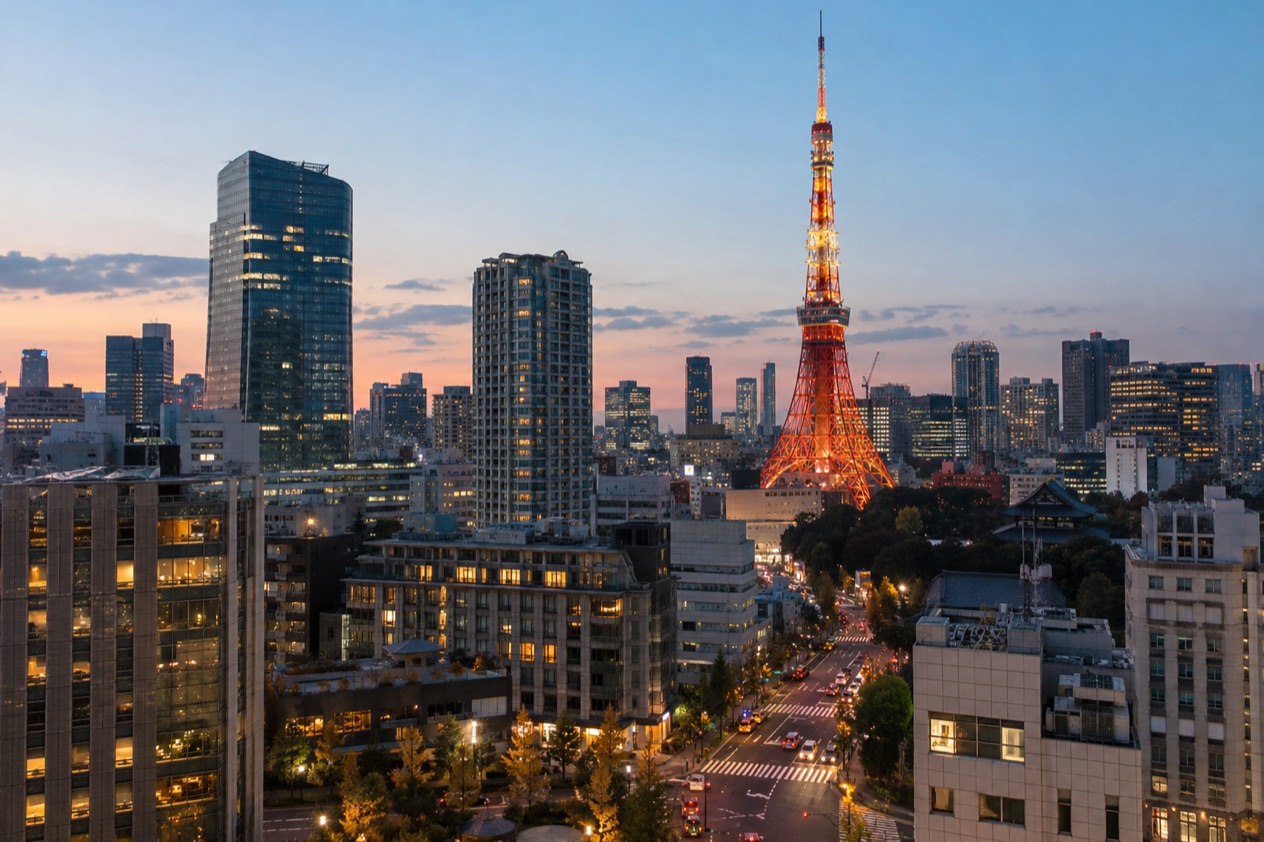
What is Shinjuku like?
Shinjuku is a ward of contrasts in the plainest sense: a business center of towers on one side, an entertainment quarter on the other, and a very large garden in between. It is one of the 23 special wards of Tokyo, and it is known as the metropolis’ second center. Over 300,000 people live here, a good number of them foreign residents, which you notice in the range of restaurants and the languages on the signs.
The ward splits into distinct moods. Nishi-Shinjuku, the western side, holds Tokyo’s largest concentration of skyscrapers, among them the Tokyo Metropolitan Government Building, the KDDI Building and Park Tower.
The east side is where Kabukicho sits, Tokyo’s largest red-light district, with its bars, restaurants and adult entertainment. Close by is Golden Gai, a grid of tiny shanty-style bars where musicians, artists, journalists, actors and directors used to gather, and Shinjuku Ni-chome, Tokyo’s best-known gay district.
Even Godzilla has a job here: the monster serves as Tourism Ambassador for Shinjuku City, a nod to the film-loving, slightly theatrical spirit of the east side. People who love Shinjuku tend to love density, late nights, small rooms with strong personalities and a station that works as a destination in itself. If you prefer a calm, low-rise neighborhood, you will feel the pace here, but the garden gives you a way out.
Things to do in Shinjuku
The Tokyo Metropolitan Government Building observatories
The Tokyo Metropolitan Government Building in Nishi-Shinjuku houses the administrative center of the city government, and its observatories give you a look across the sprawl of Tokyo from above. The view takes in the dense grid of low roofs, the towers around you and, on a clear day, the horizon beyond. There are two observatories, North and South, and each has its own schedule.
The building stands among the other Nishi-Shinjuku towers, so the visit pairs naturally with a stroll around the plazas and the glass-and-steel canyons at their feet. Seeing the city lit after dark is a different experience from the daytime view, and both observatories stay open until the same late hour on certain days.
| Site | Open |
|---|---|
| North Observatory | Daily 09:30 to 23:00, closed second and fourth Mondays of each month |
| South Observatory | Daily 09:30 to 17:30, until 23:00 on days the North Observatory is closed, closed first and third Tuesdays of each month |
| Both observatories | Last entry 30 minutes before closing |
Shinjuku Gyo-en National Garden
Shinjuku Gyo-en is a large park that blends three traditions: Japanese traditional garden, English landscape and French formal style. You can walk from clipped formal lines to open lawns to ponds and teahouse-style corners without leaving the grounds, and the change of mood from one section to the next is the point of the visit.
It makes a useful counterweight to the rest of the ward. After a morning among towers and station concourses, the trees and water change the scale of everything. Bring a picnic mindset rather than a checklist: this is a place for wandering, sitting on a lawn and watching the seasons turn the foliage.
Golden Gai
Golden Gai is a patch of tiny shanty-style bars, each one with room for only a few people, packed along narrow lanes. Many have a distinct theme, from film posters to jazz records, and the history of the area as a gathering place for artists and writers still colors its character. You come here to see the lanes, the hand-lettered signs and the small doorways, and to step into one of the little rooms.
The atmosphere is intimate rather than loud. Conversations across a short counter are the norm, and the bars are as much about the people on the next stool as about the drinks. It sits in the same stretch of the east side as Kabukicho, so you can fold both into one evening.
Kabukicho and the east side at night
Kabukicho, near Seibu-Shinjuku Station, is Tokyo’s largest red-light district, and it is known for bars, restaurants and sex-related establishments. Walking through it is mostly a matter of looking up: signs, screens and lit facades in every color crowd the narrow streets, and Godzilla, the ward’s tourism ambassador, watches over the area.
It is a district to see as a spectator, absorbing the neon and the energy rather than committing to a plan. Restaurants and late-night bars line the streets, so it also works as a place to eat before moving on to Golden Gai. Within reach of Shinjuku by train are Ginza and Nihonbashi, with upscale restaurants, luxury shops and the main financial district of Japan, and Roppongi and Akasaka, which can be reached from Shibuya Station in about 10 minutes.
Eating and drinking in Shinjuku
Eating in Shinjuku means choosing among kinds of places rather than a single dish, and the ward has them all. Izakaya, the Japanese pubs where small plates arrive one after another beside beer, sake and highballs, fill the upper floors of the narrow buildings on the east side. Many are tucked behind a sliding door at street level or up a stairway, so looking at the signboards along a lane is part of the hunt.
Ramen shops, with their steaming bowls of noodles in pork, soy or miso broth, are an easy fit for a solo dinner at a counter, and yakitori grills serve skewers of chicken and vegetables over charcoal. Department stores near the station have food halls on their lower floors, where counters sell bento boxes, pastries, pickles and sweets, and where you can put together a picnic for the garden.
For drinking, the tiny bars of Golden Gai are the signature experience. Each seats only a few guests, so the evening is a series of small stops rather than one long sit. Cafés and kissaten, the old-style coffee rooms, offer a quieter option for the morning or the afternoon between sights.
Around Ni-chome, Tokyo’s best-known gay district, the bars and cafés have their own regulars and atmosphere. In Nishi-Shinjuku, the tower complexes house restaurants with views, which suit a meal timed around a visit to the observatories. Order the seasonal dish a place recommends, share plates the way the locals do, and let one stop lead to the next.
Staying in Shinjuku
Shinjuku suits travelers who want a base with the city’s largest transit hub at their feet and a wide choice of evenings outside the door. The lodging runs from compact business hotels to tower hotels in Nishi-Shinjuku, and the character of the stay depends mostly on which side of the station you choose.
The west side, with its skyscrapers and the Metropolitan Government Building, is where the large hotels stand, and the surroundings are office towers and plazas that empty out after working hours. That energy is the draw for some people, and a reason to ask for a higher floor or a room facing away from the street for others.
Compared with the neighboring areas in Tokyo, Shinjuku is a hub rather than a refined enclave. Ginza is an upscale downtown area with high-end restaurants and luxury shops, and Nihonbashi is the main financial district, with a strong sense of heritage. Roppongi and Akasaka are districts of their own. Shinjuku gives you more range at once: a garden, a nightlife quarter, towers and rail lines in several directions.
A base here works well if your plans take you out of the city, since the Odakyu line toward Hakone, the Keio line toward Hachioji and the Narita Express all start from the station. It also works for a first visit to Tokyo, when you want to try different moods without changing hotels.
Getting to Shinjuku
Shinjuku Station is the way in, and it is a major railway station serving as the main connecting hub for rail traffic between central and eastern Tokyo and Western Tokyo. It holds the record as the busiest station in the world, with an estimated 3.64 million passengers passing through each day, and the JR East section alone handles an average of 1.5 million.
From the airports, Narita Express services to and from Narita International Airport begin and end at Shinjuku Station. Haneda Airport, officially Tokyo International Airport, is the other nearest airport to Tokyo. Busta Shinjuku, the expressway bus terminal near the south exit of the station, opened on April 4, 2016, and considerable numbers of coaches and airport buses depart from it.
Beyond the JR lines, the Tokyo Metro Marunouchi Line station opened on 15 March 1959 and the Toei Oedo Line station on 19 December 1997. Private railways add more directions: the Odakyu Odawara Line runs southwest to the coastal city of Odawara and the mountains of Hakone, and the Keio Line links to the city of Hachioji to the west.
Inside the station, the east-west free passageway, opened in 2020, shortened the time required for pedestrians to pass between the east and west exits by 10 minutes. Since the west side holds the towers and the east side holds Kabukicho, that passage matters for anyone moving between the observatories and the evening districts.
Good to know before you go
Think of Shinjuku as a ward that changes character by the hour: office towers and plazas by day, bars, neon and small stools at night. Yen is the currency, and the sights in the west and the nightlife in the east sit far enough apart that the station passages become part of your day.
In Kabukicho and Golden Gai, keep your usual city habits with belongings and stay aware of your surroundings. Plan the observatories around their closing days, since each one has its own, and keep the garden for a slower stretch of the day.
Sources
- Wikipedia, Shinjuku (https://en.wikipedia.org/wiki/Shinjuku), checked October 11, 2026
- Wikivoyage, Tokyo/Shinjuku (https://en.wikivoyage.org/wiki/Tokyo/Shinjuku), checked October 11, 2026
- Japan National Tourism Organization, Tokyo (https://www.japan.travel/en/destinations/kanto/tokyo/), checked October 11, 2026
To plan your stay
- Best Time to Visit Japan: Cherry Blossoms, Autumn Colors, Weather and Festivals
- Where to Stay in Japan: Ryokan, Temple Stays, Capsule Hotels and the Best Cities to Base In
- Sending Luggage from the Airport in Japan: Hands-Free Travel, Hotel Delivery and Coin Lockers
- Know Before You Go to Japan: Entry, Money, Etiquette and Getting Around