
A crowd gathers at the curb, the lights change, and people step off in every direction across Shibuya Crossing, weaving past one another without a pause. Shibuya is the Tokyo district of department stores, basement food halls, young shoppers and a forested shrine just beyond the glass towers, a place to wander, eat and watch the city move.
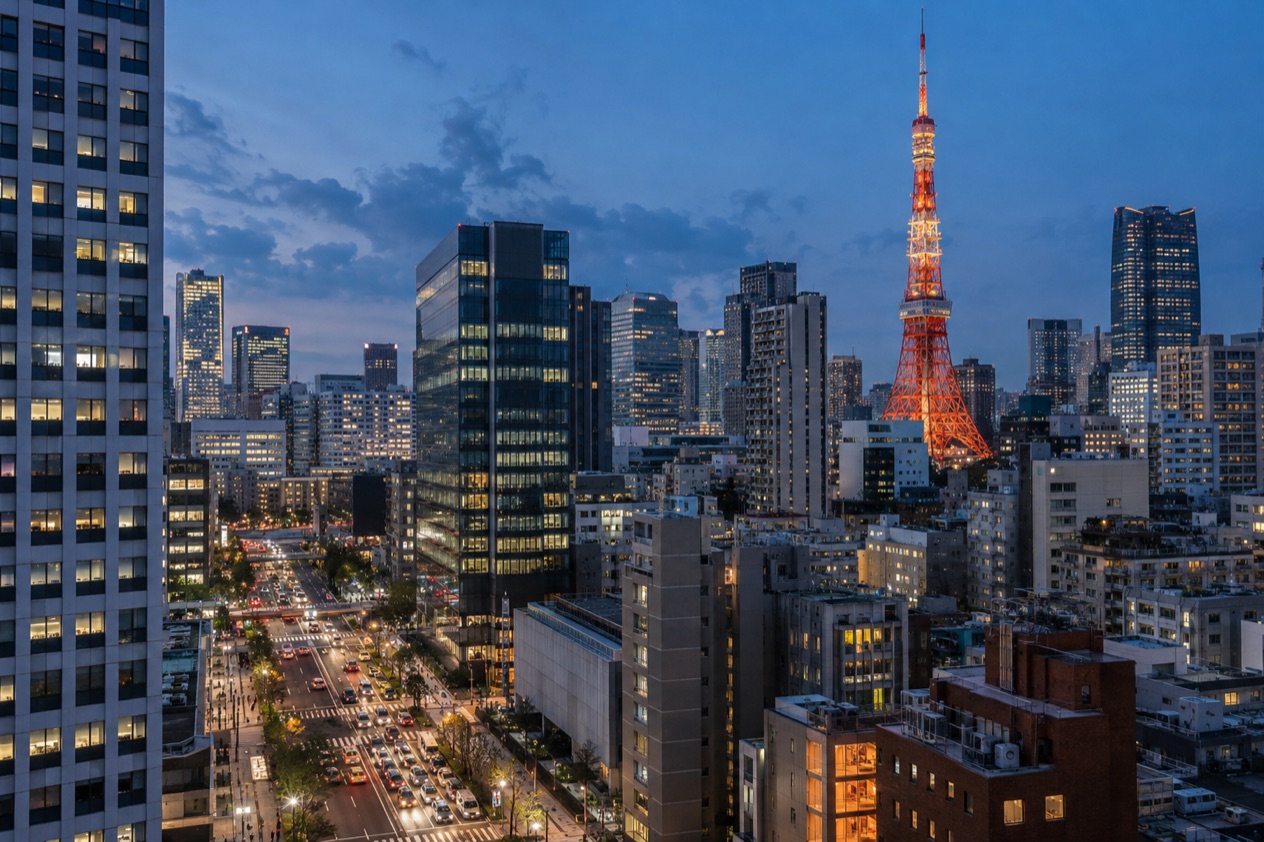
What is Shibuya like?
Shibuya is a shopping and eating district of Tokyo, popular with a lot of young Tokyoites, and it feels like one: shop windows, screens, café terraces and streets that fill with people heading to dinner. It is also a full residential ward, home to an estimated 230,609 people, so the district around the station is only one face of it. Walk far enough and you reach the green space of a large shrine forest and a wide public park.
The station is the heart of the place. Shibuya houses two of the busiest railway stations in the world, Shibuya Station and the southern half of Shinjuku Station, and the tangle of lines, exits and shopping buildings around the first one explains why the area feels like a crossroads. Tokyo itself is the capital of Japan and the most populous metropolitan area in the world, and Shibuya is where a good part of its energy collects.
The district has layers of history that sit side by side. Meiji Shrine honors Emperor Meiji and Empress Shoken. Yoyogi Park was once a housing compound for U.S. personnel called Washington Heights during the occupation of Japan.
The dog Hachiko, now a statue at the station, gives the neighborhood its best-loved story. It suits people who like to graze through food halls, browse stores, people-watch and then step into a shrine forest within the same day.
Things to do in Shibuya
Shibuya Crossing
Shibuya Crossing is the world’s busiest pedestrian crossing, with upwards of 3,000 people at a time. When the signals turn, traffic stops in all directions and the pavement floods.
You can also watch it rather than join it, from a window or terrace in one of the buildings facing the intersection. Seen from above, the crowd forms and dissolves in patterns that repeat with each signal change. Walk across once, then find a spot to watch the next wave. A camera or phone ready before the light changes helps, since each crossing is over quickly.
Hachiko Square and the station exits
A statue of the dog Hachiko stands outside Shibuya Station, and the square around it is a common meeting place. The statue is a diminutive figure, smaller than most first-time visitors expect, and it is one of the many exits of the station. People wait here with a phone in hand, scanning the crowd for a friend.
The dog is known across Japan for his loyalty, and the statue gives the square a story as well as a function. Stop for a moment, take your photo, and then look across the street at the crossing, which is right in front of you. Picking the Hachiko exit as your meeting point with a travel companion is easy to explain and hard to miss.
Shibuya Sky
Shibuya Sky is a 360-degree open-air observatory on top of Shibuya Scramble Square, the highest point in Shibuya overlooking the city. From up there the crossing becomes a small grid of moving dots, and the rest of Tokyo spreads out in every direction around you. With no roof between you and the sky, the view feels open and exposed in a way that indoor observation decks are not.
It is a good stop for getting your bearings, because you can see how the station, the towers, the shrine forest and Yoyogi Park relate to each other. Look for the dark green patch of trees that marks the shrine, and trace the lines of the railways as they fan out from the station.
Meiji Shrine
Meiji Shrine is a Shinto shrine dedicated to Emperor Meiji and Empress Shoken, surrounded by a vast forest. The approach is lined with trees, and the sounds of the city fade as you walk toward the shrine buildings. Visitors pass under large wooden torii gates, the entrances that mark the shrine grounds.
At a Shinto shrine, people often rinse their hands at the water pavilion, bow slightly at the main hall and make a short offering. You can also read the small wooden plaques where visitors write their wishes. After the glass and neon of the station area, the contrast is sharp, which is part of why people pair the shrine with a day in the shopping streets.
Yoyogi Park
Yoyogi Park has an unusual past: it was once a housing compound for U.S. personnel known as Washington Heights during the occupation of Japan. Today it is open parkland in the middle of the city, with lawns and tree-lined paths that give the district room to breathe.
It is the kind of park where you can bring a takeout bento from the food halls and eat on the grass, or simply walk between the trees. Pair it with the shrine forest for a day that moves from crowds to greenery and back to the shops. Within reach of Shibuya Station by train are other Tokyo districts, such as Roppongi and Akasaka, as well as the upscale shopping streets of Ginza.
Eating and drinking in Shibuya
The most memorable meal in Shibuya may be a lunch of free samples in the basement of the Shibuya MarkCity building. The Tokyu Food Show there offers enough tastes to make a full lunch, if you don’t mind not having a place to sit. You wander between counters of pickles, sweets, dumplings, grilled skewers and prepared dishes, accepting small bites as you go.
Basement food halls like this one, called depachika in Japanese, are a Tokyo habit worth knowing. They are where shoppers pick up beautifully packed bento boxes, seasonal sweets and gifts. Even if you only browse, the displays are a pleasure, and you can take a bento to eat on a park bench or back at your hotel.
For a sit-down meal, the streets around the station are full of the kinds of places a young, shopping-minded district tends to support: ramen counters where you order from a ticket machine, conveyor-belt sushi bars, small izakaya (Japanese pubs serving skewers, fried chicken, edamame and beer), curry shops and cafés with pastries and coffee. Tiny places often seat only a handful of people at a counter, so groups may need to split up.
Cafés are a good way to rest between stores. A kissaten, a traditional coffee shop, serves toast, egg sandwiches and strong coffee, while newer cafés lean toward pour-over coffee and desserts. Convenience stores nearby sell onigiri rice balls and sandwiches for a fast bite, and travelers rely on them between sights.
Staying in Shibuya
Shibuya suits travelers who want to be at the center of Tokyo’s shopping and nightlife, with trains at the door. It is a base for people who like to walk out of the hotel into a lit-up street and find dinner within minutes. The station is served by the JR Yamanote Line, Saikyo Line, Shonan-Shinjuku Line, Tokyu Toyoko Line, Den-en-toshi Line, Keio Inokashira Line, and the Tokyo Metro Ginza, Hanzomon and Fukutoshin Lines, which keeps the rest of the city within reach.
Lodging here ranges from business hotels and larger towers near the station to smaller properties on the side streets. The station area is the district’s busiest part, so rooms facing the main streets can pick up the sound of the crowds and the screens, while rooms higher up or on side streets may feel more removed. If sleep matters to you, it is worth asking about the room’s location in the building.
Compared with the neighboring areas, Shibuya’s character is youthful and commercial. Ginza is an upscale downtown area with high-end restaurants and luxury shops, and Roppongi and Akasaka are districts reached by train from Shibuya Station. Staying in Shibuya means that Meiji Shrine, Yoyogi Park and the crossing are all part of your daily surroundings, and the evening scene is on your doorstep.
Getting to Shibuya
Visitors arrive at Shibuya Station by train, and the station is one of the main hubs of Tokyo. Nine lines call there: the JR Yamanote, Saikyo and Shonan-Shinjuku Lines, the Tokyu Toyoko and Den-en-toshi Lines, the Keio Inokashira Line, and the Tokyo Metro Ginza, Hanzomon and Fukutoshin Lines. Whichever side of Tokyo you start from, one of these is likely to bring you in.
From Shibuya Station, Roppongi and Akasaka can be reached in about 10 minutes by train. Roppongi Station is served by the Tokyo Metro Hibiya Line and Toei Oedo Line, Nogizaka Station by the Tokyo Metro Chiyoda Line, and Roppongi-Itchome Station by the Tokyo Metro Namboku Line. These give you several ways into that part of the city once you have left the station.
The station is large, with many exits, and the Hachiko exit is the one people use as a landmark. Once you are out, the district is arranged around the crossing and the surrounding streets, which you can cover on foot. Tokyo is on Tokyo Bay, in the Kanto region, and the nearest airports to the city are Haneda Airport (officially Tokyo International Airport) and Narita Airport, Japan’s largest international airport.
Good to know before you go
Shibuya is among the most crowded places in Tokyo, so keep your belongings close, as you would in any large city crowd, and keep to the flow of people when you cross. The station has many exits, and picking a clear meeting point such as the Hachiko statue saves time if you are traveling with others. If you plan to graze in the basement food halls, remember that the Tokyu Food Show has no place to sit, so plan your seat elsewhere.
Check the weather before heading to the open-air observatory or the forest paths, and bring an umbrella if rain is forecast.
Sources
- Wikipedia, Shibuya (https://en.wikipedia.org/wiki/Shibuya), checked October 11, 2026
- Wikivoyage, Tokyo/Shibuya (https://en.wikivoyage.org/wiki/Tokyo/Shibuya), checked October 11, 2026
- Japan National Tourism Organization, Tokyo (https://www.japan.travel/en/destinations/kanto/tokyo/), checked October 11, 2026
To plan your stay
- Best Time to Visit Japan: Cherry Blossoms, Autumn Colors, Weather and Festivals
- Where to Stay in Japan: Ryokan, Temple Stays, Capsule Hotels and the Best Cities to Base In
- Sending Luggage from the Airport in Japan: Hands-Free Travel, Hotel Delivery and Coin Lockers
- Know Before You Go to Japan: Entry, Money, Etiquette and Getting Around