
Along the ginkgo avenue at Meiji Jingu Gaien in Tokyo, the leaves turn the color of butter and fall in drifts on the pavement. Far to the north, Sapporo is getting its snow, and in Okinawa the air still feels like early summer. November is the month when autumn travels the length of Japan, and it suits anyone who wants to walk among colored maples, eat seasonal food and still find a mild day or two.
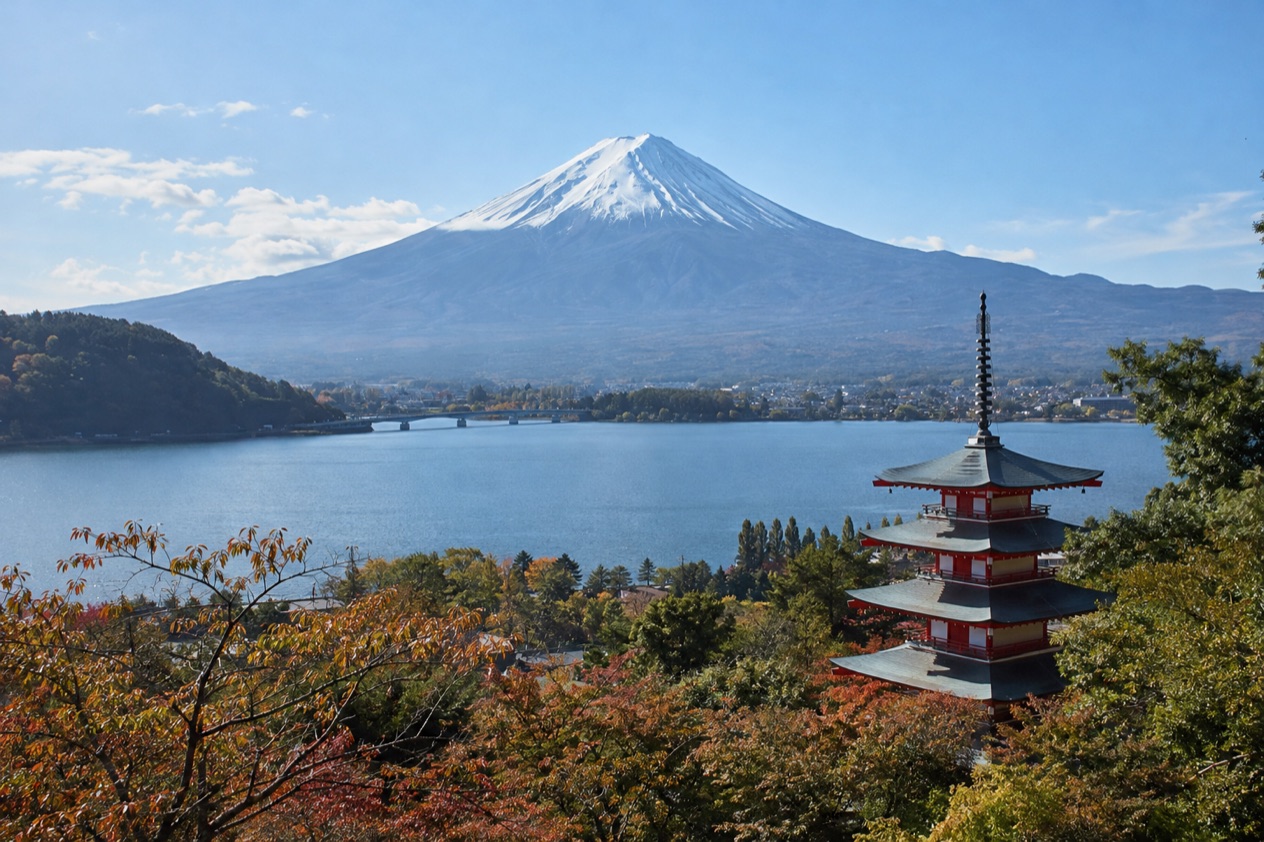
What is the weather like in Japan in November?
November is cool and mostly drier on the main islands of Honshu and Kyushu, wintry in Hokkaido, wet on the Sea of Japan side around Kanazawa, and still warm in Okinawa.
| Place | Average high (°F) | Average low (°F) | Precipitation (in) | Daylight on the 15th (hours and minutes) |
|---|---|---|---|---|
| Tokyo | 62.1 | 47.8 | 3.79 | 10 h 19 min |
| Kyoto | 63.1 | 47.1 | 2.91 | 10 h 22 min |
| Osaka | 64.0 | 50.4 | 2.85 | 10 h 23 min |
| Sapporo | 47.7 | 34.9 | 4.48 | 9 h 46 min |
| Okinawa (Naha) | 77.0 | 68.7 | 4.69 | 10 h 53 min |
| Fukuoka | 64.8 | 51.1 | 3.60 | 10 h 27 min |
| Kanazawa | 60.6 | 46.6 | 9.87 | 10 h 15 min |
| Hiroshima | 63.9 | 48.0 | 2.73 | 10 h 24 min |
Tokyo, Kyoto, Osaka, Hiroshima and Fukuoka sit in a similar band, with afternoons in the low to mid 60s that suit a day of walking and evenings that call for a sweater. Rain comes on only six to eight days in these cities, and Osaka and Fukuoka keep slightly milder nights than Kyoto or Tokyo, where mornings feel properly crisp.
Kanazawa is the wet exception. Rain or snow falls there on seventeen days of the month, and a trace of snow is already possible. Sapporo is a different season altogether, with highs in the 40s and snow or sleet on about half the days. Okinawa stays in the 70s by day, with a few showers, and the sea around Naha averages 79.3°F.
Where to go in Japan in November
Tokyo and the Kanto region
Tokyo in November is a city of gold and red. The autumn color is most vibrant this month, and the rows of ginkgo trees at Meiji Jingu Gaien turn a bright yellow that people photograph from one end of the avenue to the other. The maple leaves in the city usually reach their color change around the end of the month, so the park walks get better as November goes on.
Shinjuku Gyoen National Garden is a good place to see the season, with its lawns, ponds and trees changing color. The garden prohibits drinking alcohol, smoking, using sports equipment and playing musical instruments, which shapes the visit into a slow stroll with a thermos of tea in your bag. Between parks, Tokyo is a city for eating inside: steaming bowls of ramen, oden stewing in convenience-store counters, and izakaya (casual pubs) serving hot nabe pots.
Early in the month, the Dream Yosacoy Festival fills the streets with dancing teams. It suits visitors who want to see the city celebrating rather than only sightseeing, and anyone is free to join a group, whatever their nationality, age or gender.
Kyoto, Osaka and the Kansai region
In Kyoto the color change of the maples usually arrives in early December, so November is the lead-up: leaves begin to blush in the temple gardens and the hills, and the days are cool enough that walking from one temple to the next is pleasant. Kyoto keeps lower rainfall than Tokyo this month, which helps on days spent outdoors going from shrine to garden.
Osaka is the warmer, noisier companion, with the mildest nights of the three big Honshu cities. It is a place to spend evenings on street food, takoyaki (octopus balls) and okonomiyaki (savory pancakes) eaten steaming hot, in the cool air. Hiroshima, with plenty of sunshine this month and little rain, rewards travelers who want to see its memorial sites and the waterfront in clear light.
Hokkaido
Sapporo is where winter arrives. Snow falls in the city during the month, with about a foot of it in total, and the leaves that turned color in late October are mostly down. The streets of Odori Park take on a gray, white and evergreen palette, and you will want a proper coat.
This is a month for bowls of miso ramen, soup curry and seafood, eaten in warm rooms while snowflakes drift past the window. Hokkaido suits travelers who like their autumn turning into winter, who enjoy cold air and are happy to trade long sightseeing days for cozy meals.
Okinawa
Okinawa is the place to go in November if you want warmth. Daytime reaches the upper 70s, the nights stay mild, and the sea around Naha is warm. You can wander Naha’s markets, taste Okinawa soba, goya champuru (a bitter melon stir-fry) and sata andagi, the sweet fried dough balls.
Showers do pass through on some days, so the island works best with a flexible plan: castle ruins and the aquarium in a gray spell, the coast whenever the clouds lift. It suits travelers who want to add a few relaxed days to a trip on the main islands.
What to do in Japan in November
Chasing the autumn leaves
The leaves move across the country over several weeks. The color change begins in mid-October in eastern Hokkaido, reaches the Tohoku region and eastern Hokuriku around November 20, and arrives in Kanto, Hokuriku, Tokai, Chugoku, Shikoku and northern Kyushu around November 30. The Pacific coasts of Kanto and Tokai, the Kinki region and southern Kyushu come in early to mid December.
At single stations the usual dates tell the same story. Aomori’s maples usually turn in mid-November, Tokyo’s around the end of the month, Fukuoka’s at the start of December and Kyoto’s in the first week of December, while Sapporo’s come in late October.
Dates move from one autumn to the next, so treat them as a guide rather than a promise. Mid-November to early December is when the trees show red, yellow and orange.
Festivals and seasonal rituals
The Dream Yosacoy Festival, a dance festival held in Tokyo in early November, is counted among the city’s biggest annual events. Teams in bright costumes dance in the streets to a lively beat, and it is a good way to see the capital at play. Because any group can perform, the crowd of dancers is as varied as the audience.
Another November tradition is Shichi-go-san on November 15, when families bring children of three, five and seven to shrines, the girls and boys often in kimono. It is a gentle thing to come across at a shrine in the city. Tokyo also holds its rake-selling fairs at shrines on certain days this month, where stalls sell decorated lucky rakes.
Eating the season
November food is warm and earthy. Roasted sweet potatoes come from street vendors, chestnuts and persimmons show up in sweets and markets, and hot pots such as oden and nabe are everywhere. In Hokkaido, ramen and seafood are the comfort of cold evenings, while in Okinawa the menu stays lighter, with soba noodles and stir-fries.
A hot spring bath is a natural way to end a cool day, and a ryokan (traditional inn) dinner of small seasonal dishes suits the month. Shoes come off at the entrance, and guests often change into a yukata (cotton robe).
Is Japan busy in November?
Japan is lively in November, mainly because the autumn color draws visitors and locals to gardens, temples and parks. Tokyo in particular is active, with the ginkgo avenue of Meiji Jingu Gaien in full color and the Dream Yosacoy Festival at the start of the month. The Tokyo color season runs longer than a week, so the leaves can be enjoyed across the later part of the month.
Kyoto’s color arrives later, so early November there is a gentler time before the maples peak in December. Kanazawa and the Sea of Japan side are grayer and wetter, which can keep some day-trippers away. Sapporo is in a seasonal change, and with the snow arriving the city has a winter mood that suits those who like a cozy town. Okinawa stays a warm-weather escape.
What to pack for Japan in November
Pack for layers on Honshu and Kyushu, for real cold in Hokkaido and for summer clothes in Okinawa. Rain can arrive anywhere, and Kanazawa needs the most protection.
- A light jacket and a sweater for Tokyo, Kyoto, Osaka and Hiroshima, where afternoons are mild and evenings cool.
- A warm coat, hat and gloves for Sapporo, where snow and sleet fall on many days.
- A compact umbrella or rain jacket, especially for Kanazawa and Okinawa.
- Waterproof shoes with a good grip for wet leaves and snowy sidewalks.
- Light clothes and sunscreen for Okinawa, where the days stay warm.
- Shoes that slip off easily for temples, ryokan and some restaurants.
Good to know before you go
Rain and snow matter more than heat this month. Kanazawa gets the most wet days, Sapporo gets snow and sleet, and Okinawa sees passing showers, so allow slack in a plan that depends on views. Daylight is short in the north and noticeably longer in Okinawa, so sightseeing days in Hokkaido are shorter than in summer. The closures that come with the New Year holidays, when many restaurants and attractions shut, fall after November.
Is November a good time to visit Japan?
Travelers drawn to hot springs, ramen and snow can head to Sapporo, and those who want warmth can add Okinawa.
Compared with October, the days are cooler and drier. Tokyo’s highs drop from the low 70s, and Kyoto loses its last warm afternoons. Compared with December, November is gentler, since Tokyo’s afternoons then fall into the low 50s and Sapporo’s stay below freezing. Kyoto’s maples, which peak in early December, are a reason to come later, while Tokyo’s ginkgo avenue is a reason to come now.
What is special about November is the movement of color across the map, from Hokkaido’s early snow through Tokyo’s golden avenues to Kyoto’s maples just beginning to redden.
Sources
- Japan Meteorological Agency (JMA), Normal values 1991-2020, monthly (https://www.data.jma.go.jp/stats/etrn/view/nml_sfc_ym.php?prec_no=44&block_no=47662), station Tokyo, elevation 25 m, checked October 11, 2026
- Computed from the date and the latitude of the place (sunrise equation, solar elevation -0.833 degrees), October 11, 2026
- Japan Meteorological Agency (JMA), Normal values 1991-2020, monthly (https://www.data.jma.go.jp/stats/etrn/view/nml_sfc_ym.php?prec_no=61&block_no=47759), station Kyoto, elevation 41 m, checked October 11, 2026
- Japan Meteorological Agency (JMA), Normal values 1991-2020, monthly (https://www.data.jma.go.jp/stats/etrn/view/nml_sfc_ym.php?prec_no=62&block_no=47772), station Osaka, elevation 23 m, checked October 11, 2026
- Japan Meteorological Agency (JMA), Normal values 1991-2020, monthly (https://www.data.jma.go.jp/stats/etrn/view/nml_sfc_ym.php?prec_no=14&block_no=47412), station Sapporo, elevation 17 m, checked October 11, 2026
- Japan Meteorological Agency (JMA), Normal values 1991-2020, monthly (https://www.data.jma.go.jp/stats/etrn/view/nml_sfc_ym.php?prec_no=91&block_no=47936), station Naha, elevation 28 m, checked October 11, 2026
- Open-Meteo Marine API, average 2015-2024, checked October 11, 2026
- Japan Meteorological Agency (JMA), Normal values 1991-2020, monthly (https://www.data.jma.go.jp/stats/etrn/view/nml_sfc_ym.php?prec_no=82&block_no=47807), station Fukuoka, elevation 2 m, checked October 11, 2026
- Japan Meteorological Agency (JMA), Normal values 1991-2020, monthly (https://www.data.jma.go.jp/stats/etrn/view/nml_sfc_ym.php?prec_no=56&block_no=47605), station Kanazawa, elevation 6 m, checked October 11, 2026
- Japan Meteorological Agency (JMA), Normal values 1991-2020, monthly (https://www.data.jma.go.jp/stats/etrn/view/nml_sfc_ym.php?prec_no=67&block_no=47765), station Hiroshima, elevation 4 m, checked October 11, 2026
- Japan Meteorological Agency, maple color-change dates 2025-2026 with difference from the 1991-2020 normal (https://www.data.jma.go.jp/sakura/data/phn_014.html), checked October 11, 2026
- Japan Meteorological Agency, kaede2020.pdf (https://www.data.jma.go.jp/sakura/data/kaede2020.pdf), checked October 11, 2026
- Japan National Tourism Organization, winter in Japan (https://www.japan.travel/en/guide/winter-guide/), checked October 11, 2026
- Japan National Tourism Organization, autumn in Japan (https://www.japan.travel/en/guide/autumn-guide/), checked October 11, 2026
- Japan National Tourism Organization, spring in Japan (https://www.japan.travel/en/guide/spring-guide/), checked October 11, 2026
- Japan National Tourism Organization, summer in Japan (https://www.japan.travel/en/guide/summer-guide/), checked October 11, 2026
- GO TOKYO, best things to do and see in Tokyo in November (https://www.gotokyo.org/en/story/guide/november/index.html), checked October 11, 2026
- Japan Meteorological Agency, Emergency Warnings (https://www.jma.go.jp/jma/en/Emergency_Warning/ew_index.html), checked October 11, 2026
- Wikipedia, Climate of Japan (https://en.wikipedia.org/wiki/Climate_of_Japan), checked October 11, 2026
- Wikipedia, Japan (https://en.wikipedia.org/wiki/Japan), checked October 11, 2026
To plan your stay
- Things to Do in Japan: Kyoto Temples, Onsen, Street Food and Day Trips
- Where to Stay in Japan: Ryokan, Temple Stays, Capsule Hotels and the Best Cities to Base In
- Sending Luggage from the Airport in Japan: Hands-Free Travel, Hotel Delivery and Coin Lockers
- Know Before You Go to Japan: Entry, Money, Etiquette and Getting Around