
On the third of March, red-felt tiers of dolls in imperial court dress appear in hotel lobbies and old wooden houses, while the first cherry buds swell on the branches in Kyushu. In Sapporo the snow is still falling on the streets, and in Okinawa the air already feels like early summer.
March in Japan is the month when winter lets go at different speeds from one end of the country to the other. It suits travelers who want the start of the sakura season, doll festivals and a choice between snow and warmth.
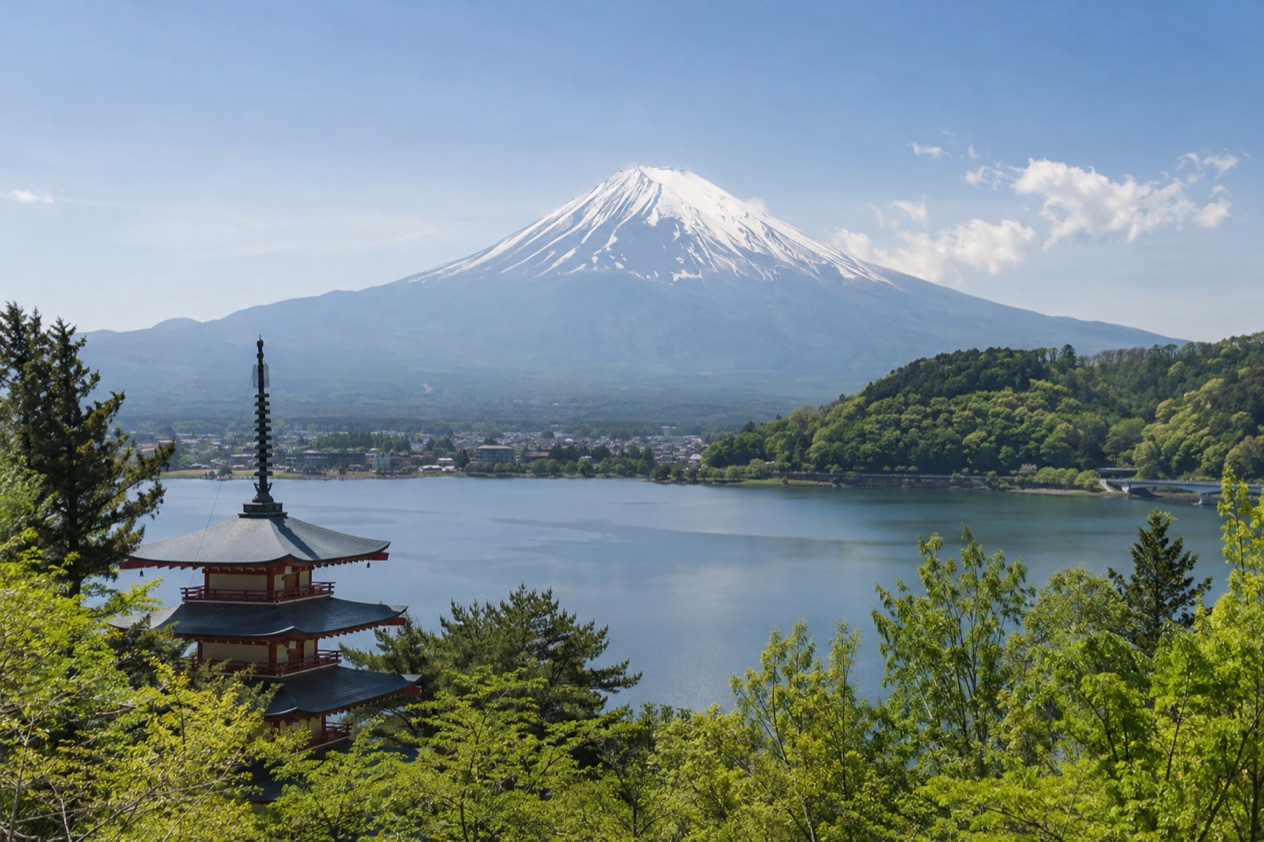
What is the weather like in Japan in March?
March weather in Japan depends on where you stand: Sapporo is still wintry, Okinawa is mild and humid, and the main cities of Honshu and Kyushu sit in a cool, changeable early spring that warms as the weeks pass.
| Place | Average high (°F) | Average low (°F) | Precipitation (in) | Daylight on the 15th (hours and minutes) |
|---|---|---|---|---|
| Tokyo | 57.6 | 41.0 | 4.57 | 11 h 54 min |
| Kyoto | 57.4 | 39.7 | 4.18 | 11 h 54 min |
| Osaka | 57.6 | 42.8 | 4.06 | 11 h 55 min |
| Sapporo | 40.1 | 27.7 | 3.06 | 11 h 51 min |
| Okinawa (Naha) | 71.4 | 62.1 | 5.62 | 11 h 58 min |
| Fukuoka | 59.0 | 45.0 | 4.08 | 11 h 55 min |
| Kanazawa | 52.9 | 38.1 | 6.19 | 11 h 54 min |
| Hiroshima | 58.1 | 41.2 | 4.66 | 11 h 55 min |
March is cool in these cities, and a light jacket or sweater is useful. Kyoto has the coolest nights of the group, and a few flurries of snow or sleet can still pass through, though they rarely settle. Hiroshima and Fukuoka log some of the sunniest hours among these cities.
Kanazawa gets less sunshine than Tokyo, Osaka, Kyoto, Hiroshima and Fukuoka in March. Kanazawa gets rain or wet snow on about half the days of the month, and a little snow still falls there.
Sapporo remains in full winter, with snow or sleet on all but a handful of days and a total snowfall of 29.1 inches across the month. Naha in Okinawa sits at the other extreme, with highs in the low 70s, clouds that come and go, and air that feels damp at 71 percent humidity.
Where to go in Japan in March
Tokyo and the Kanto region
Tokyo in March is the city between seasons. Coats come off in the afternoon sun and go back on by evening, and the parks begin to show the first pink. The cherry blossom first bloom at the Tokyo reference tree usually comes around March 24, with full bloom around March 31, though from one spring to the next those dates can slip earlier or later by more than a week.
This is also the month for doll displays. Hotels and gardens set out Hina Matsuri tiers, and the temple town of Jindaiji holds its Daruma fair. Showa Kinen Park offers wide lawns for walking while the buds open. Rain falls on nearly one day in three, so a museum, a department store food hall or a covered shopping street makes a good backup for a wet afternoon.
Kyoto, Osaka and the Kansai region
Kyoto’s temples and gardens wake up slowly in March. The cherry blossom first bloom there usually arrives around March 26, so many trees are still bare or just budding, while evergreen moss gardens and the lines of vermilion torii at Fushimi Inari look the same as ever. Evenings are cold, with the occasional shower or flurry, which makes a bowl of hot udon or a stop at a tea house especially welcome.
Osaka is a few degrees milder at night and has a lot of sunshine for the month. It is the city to pair with Kyoto if you want street food after sightseeing: takoyaki, okonomiyaki and kushikatsu in the Dotonbori area. Nara and Kobe are also in the Kansai region, and Hiroshima sits to the west for travelers extending the trip with a quieter, sunnier stretch.
Hokkaido
Hokkaido in March is still a winter destination. Sapporo’s streets are lined with snowbanks, the sky is often gray, and the days are nearly as long as in Tokyo, which gives you light for walking around town. Ramen, miso-butter corn and grilled seafood suit the cold, and the city’s food halls are warm places to spend a snowy afternoon.
February was colder still, with highs at the freezing mark, and by April the highs are in the low 50s and the snow retreats. March sits in the middle, a good moment for travelers who want a snowy setting without the deepest cold of midwinter. Cherry blossoms are far off in Hokkaido, so this trip is about snow rather than blooms.
Okinawa
Okinawa is the place to go in March if you want to leave winter behind completely. Naha is warm enough for short sleeves in the afternoon, with a light layer for breezy evenings, and the sea surface near Naha averages 71.1°F. The cherry trees of Okinawa, the Hikan-zakura, flower around mid-January, so the pink has come and gone and what remains is green hills and a damp, subtropical feel.
Rain is recorded on roughly one day in three, so keep plans flexible. Naha’s Kokusai-dori and the covered Makishi Public Market give you something to do in any weather, with Okinawa soba, goya champuru and tropical fruit.
What to do in Japan in March
Hina Matsuri, the Doll Festival
The big date of the month is Hina Matsuri, held on March 3 in Tokyo and across the country. Families with daughters set out tiered displays of dolls dressed as the emperor, empress and their court, and wish for the girls’ health and happiness. The dolls go back into their boxes soon afterward, so the display belongs to the first days of the month.
In Tokyo you can see a spectacular display at the Keio Plaza Hotel, and at Komorebi Village in Showa Kinen Park a set of dolls is arranged inside a traditional house. Both give a sense of how the festival looks at home, with pale peach blossoms in vases and sweets such as hishi mochi in diamond layers of pink, white and green.
Jindaiji Daruma Fair
At Jindaiji Temple in Tokyo, the Daruma doll fair (Jindaiji Daruma-ichi) takes place on the same day as Hina Matsuri and the day after. Stalls sell round, red Daruma dolls in every size. The tradition is to paint one eye when you make a wish and the other when it comes true, and at the fair you can have a priest inscribe an eye in Sanskrit on a doll you have bought.
The temple grounds are also a place for soba, the buckwheat noodles the Jindaiji area is known for, and for a walk past the old wooden hall. It is a lively, local event rather than a sightseeing set piece, and it suits travelers who like markets and ritual objects.
Cherry blossoms begin
The cherry blossom (sakura) is one of Japan’s most iconic symbols and a harbinger of spring, and March is when it begins. The Japan Meteorological Agency tracks first bloom and full bloom on sample trees, mainly the Somei-Yoshino, and the blossoms reach Kyushu, Chugoku, Shikoku, Kinki, Tokai and Kanto in late March. In Fukuoka the first flowers usually open around March 22, and full bloom comes on about the same day as in Tokyo.
Dates move from one spring to the next, so treat them as a rough guide. Hokuriku and the southern Tohoku region wait until around April 10, which means Kanazawa is still waiting. Plum blossoms, which flower from January to late February in East Asia, have mostly finished, so March is the bridge between the two seasons. Picnics under the trees, called hanami, begin as soon as the first branches open.
Is Japan busy in March?
March gets busier as it goes, because the cherry blossom is the draw and the trees open in the big cities toward the end of the month. The doll festivals fill early March with local visitors in Tokyo, especially around Jindaiji and the hotel displays, and the Daruma fair is a lively event in its own right.
The blossom moves north day by day, so the crowds follow it. Tokyo, Kyoto and Fukuoka see the first buds in the last week or so, and travelers who time a trip to the bloom should expect those cities to feel more crowded than at the start of the month.
In Hokkaido and in Okinawa, where the cherry season is either far off or already over, the draw is snow or sunshine rather than sakura. Kanazawa also has no blossoms yet, since Hokuriku has to wait until around April 10.
What to pack for Japan in March
Packing for March in Japan means layers, with a different top layer depending on the region. For most of the country a light jacket or a simple sweater is enough in the daytime, but Hokkaido needs winter gear and Okinawa needs summer clothes.
- A light jacket or sweater for the main cities, where afternoons are mild and nights cool.
- A warm coat, hat and gloves for Sapporo, where snow falls on most days.
- Waterproof boots with grip for snow and slush in Hokkaido and on the Sea of Japan side.
- A compact umbrella or rain shell, because rain falls on about one day in three in Tokyo, Kyoto and Osaka and more often in Kanazawa.
- Short sleeves for Okinawa, with a thin layer for evenings.
- Comfortable walking shoes for long days among parks, temples and cherry trees.
Good to know before you go
The rainy season in East Asia, the meiyu or plum rain, comes in early summer, around June and July, so March has ordinary spring showers rather than that long wet spell. Days are close to twelve hours long everywhere from Sapporo to Naha, which leaves plenty of daylight for sightseeing.
Dates for the cherry blossom shift from one year to the next, and the temperature swing between day and night is wide enough that clothing choices matter. Hina Matsuri and the Daruma fair fall early in the month, so plan those first, and leave the second half for the blossom.
Is March a good time to visit Japan?
March is a good time to visit Japan for travelers who want the start of spring in Tokyo, Kyoto, Osaka and Fukuoka, especially in the last week or so when the first cherry blossoms open. It also suits those who prefer snow in Sapporo or warmth in Okinawa, and it works best if you pick one or two regions rather than the whole country.
Compared with February, March is gentler. March is warmer and has higher monthly precipitation than February in both Tokyo and Kyoto. April is warmer again, with highs in the upper 60s in both cities and the cherry blossom at or past its peak in many places, while Sapporo has largely thawed by then. March keeps some winter in the air and some spring in the trees.
What is special about March is the overlap. You can see dolls on red steps on the third, buy a Daruma with one eye still blank, and watch the first Somei-Yoshino open in Fukuoka and Tokyo before the month ends.
Sources
- Japan Meteorological Agency (JMA), Normal values 1991-2020, monthly (https://www.data.jma.go.jp/stats/etrn/view/nml_sfc_ym.php?prec_no=44&block_no=47662), station Tokyo, elevation 25 m, checked October 11, 2026
- Computed from the date and the latitude of the place (sunrise equation, solar elevation -0.833 degrees), October 11, 2026
- Japan Meteorological Agency (JMA), Normal values 1991-2020, monthly (https://www.data.jma.go.jp/stats/etrn/view/nml_sfc_ym.php?prec_no=61&block_no=47759), station Kyoto, elevation 41 m, checked October 11, 2026
- Japan Meteorological Agency (JMA), Normal values 1991-2020, monthly (https://www.data.jma.go.jp/stats/etrn/view/nml_sfc_ym.php?prec_no=62&block_no=47772), station Osaka, elevation 23 m, checked October 11, 2026
- Japan Meteorological Agency (JMA), Normal values 1991-2020, monthly (https://www.data.jma.go.jp/stats/etrn/view/nml_sfc_ym.php?prec_no=14&block_no=47412), station Sapporo, elevation 17 m, checked October 11, 2026
- Japan Meteorological Agency (JMA), Normal values 1991-2020, monthly (https://www.data.jma.go.jp/stats/etrn/view/nml_sfc_ym.php?prec_no=91&block_no=47936), station Naha, elevation 28 m, checked October 11, 2026
- Open-Meteo Marine API, average 2015-2024, checked October 11, 2026
- Japan Meteorological Agency (JMA), Normal values 1991-2020, monthly (https://www.data.jma.go.jp/stats/etrn/view/nml_sfc_ym.php?prec_no=82&block_no=47807), station Fukuoka, elevation 2 m, checked October 11, 2026
- Japan Meteorological Agency (JMA), Normal values 1991-2020, monthly (https://www.data.jma.go.jp/stats/etrn/view/nml_sfc_ym.php?prec_no=56&block_no=47605), station Kanazawa, elevation 6 m, checked October 11, 2026
- Japan Meteorological Agency (JMA), Normal values 1991-2020, monthly (https://www.data.jma.go.jp/stats/etrn/view/nml_sfc_ym.php?prec_no=67&block_no=47765), station Hiroshima, elevation 4 m, checked October 11, 2026
- Japan Meteorological Agency, cherry blossom first-bloom dates 2021-2026 and 1991-2020 normal (https://www.data.jma.go.jp/sakura/data/sakura003_07.html), checked October 11, 2026
- Japan Meteorological Agency, cherry blossom full-bloom dates 2021-2026 and 1991-2020 normal (https://www.data.jma.go.jp/sakura/data/sakura004_07.html), checked October 11, 2026
- Japan Meteorological Agency, sakura2020.pdf (https://www.data.jma.go.jp/sakura/data/sakura2020.pdf), checked October 11, 2026
- Japan National Tourism Organization, flowers by season: cherry blossom, plum, wisteria, hydrangea, where and when (https://www.japan.travel/en/see-and-do/flowers/), checked October 11, 2026
- Wikipedia, Prunus mume (https://en.wikipedia.org/wiki/Prunus_mume), checked October 11, 2026
- Japan National Tourism Organization, spring in Japan (https://www.japan.travel/en/guide/spring-guide/), checked October 11, 2026
- Japan National Tourism Organization, autumn in Japan (https://www.japan.travel/en/guide/autumn-guide/), checked October 11, 2026
- Japan National Tourism Organization, summer in Japan (https://www.japan.travel/en/guide/summer-guide/), checked October 11, 2026
- GO TOKYO, best things to do and see in Tokyo in March (https://www.gotokyo.org/en/story/guide/march/index.html), checked October 11, 2026
- Japan Meteorological Agency, Emergency Warnings (https://www.jma.go.jp/jma/en/Emergency_Warning/ew_index.html), checked October 11, 2026
To plan your stay
- Things to Do in Japan: Kyoto Temples, Onsen, Street Food and Day Trips
- Where to Stay in Japan: Ryokan, Temple Stays, Capsule Hotels and the Best Cities to Base In
- Sending Luggage from the Airport in Japan: Hands-Free Travel, Hotel Delivery and Coin Lockers
- Know Before You Go to Japan: Entry, Money, Etiquette and Getting Around