
On Mount Koya, the day starts with monks chanting in a temple hall while incense drifts out across cedar-shaded paths. Elsewhere on the peninsula, pilgrims in rain jackets follow stone-paved trails through forest, and a train rattles along a coastline of small harbors. The Kii Peninsula is a place of mountains, shrines and sea air, for travelers who would rather walk, listen and stay in a temple lodging than tick off a list of city sights.
Where is the Kii Peninsula and what is it like?
The Kii Peninsula is the largest peninsula on the island of Honshu, in the Kansai region of Japan, and it is a land of forested mountains, sacred sites and a long, indented coast. Wakayama Prefecture covers much of it, including the entire southern part, while Osaka, Nara and Mie Prefectures also have land on the peninsula. That mix explains why the area feels like several places at once, from the temple settlements in the hills to the shrine town of Ise in Mie and the shoreline towns of Wakayama.
What ties it together is pilgrimage. The peninsula holds a UNESCO World Heritage Site named Sacred Sites and Pilgrimage Routes in the Kii Mountain Range, and the idea of walking to a holy place, or sleeping among monks, runs through the whole region.
Mount Koya is a large temple settlement to the south of Osaka. The Kumano Kodo is a web of ancient pilgrimage routes that crisscross the peninsula. Ise Grand Shrine, in central Mie Prefecture, is the most sacred Shinto shrine in Japan.
The pace here is slower than in Osaka or Kyoto. Days are organized around a walk, a ritual, a bath and a meal rather than a string of museums. Travelers who like forest trails, temple architecture and the rhythms of religious life will feel at home. Anyone who wants nightlife, shopping streets or a packed sightseeing schedule may find the peninsula too spread out and too contemplative, and it rewards those who accept that the journey between places is part of the visit.
What is there to do in the Kii Peninsula?
The big reasons to come are three sacred destinations, each with its own character: a mountain of temples, a network of forest trails and a shrine rebuilt on a fixed cycle. Together they set the peninsula apart from its neighbors. Kyoto and Nara offer temples within city streets, while here the holy places sit in the mountains and woods, and reaching them is part of the experience.
Mount Koya, a mountain town of temples
Mount Koya was first settled in 819 by the monk Kukai and is known as the world headquarters of the Koyasan Shingon sect of Japanese Buddhism. It is a whole settlement of temples set high in the hills, where you walk between wooden halls, pass under tall cedars and hear bells and chanting. Visitors spend a night in a temple lodging, a habit that has long been part of the Koya experience.
A temple stay usually brings vegetarian temple cooking and shoes left at the entrance, with tatami floors and sliding paper doors in the rooms. Because the mountain is noticeably cooler than Osaka, a layer for the evening is a sensible thing to carry. The settlement suits travelers drawn to Buddhist culture and to long slow walks beneath old trees.
The Kumano Kodo pilgrimage routes
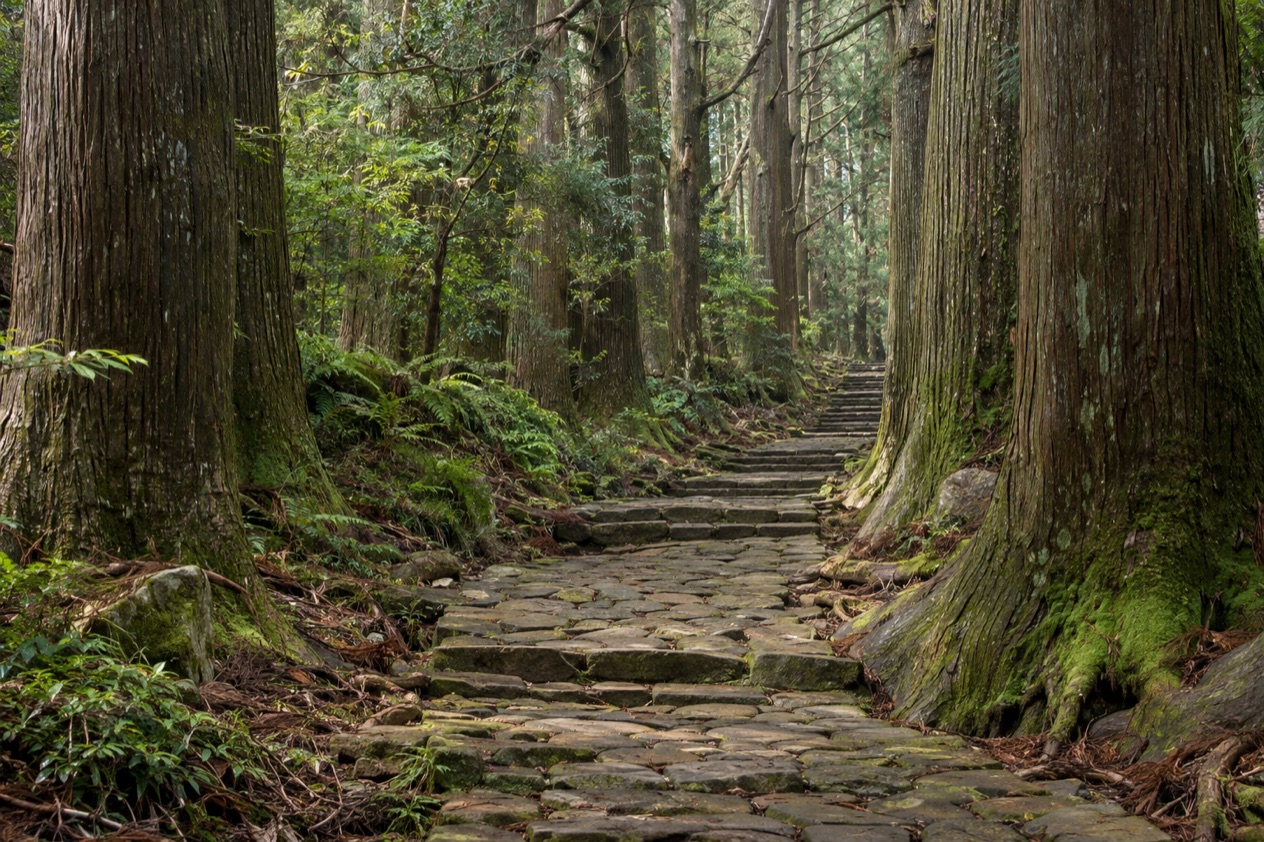
The Kumano Kodo is a series of ancient pilgrimage routes that crisscross the Kii Peninsula. Rather than a single path, it is a network of trails through forest, past small shrines, moss-covered stones and wooden waymarkers, leading toward the great shrines of the Kumano area. Walking even a portion of it gives a sense of why this landscape has long been treated as sacred.
The trails suit travelers who enjoy being outdoors and are ready for mountain weather, with sturdy shoes and rain gear in the bag.
Ise Grand Shrine in Mie
Ise is a city in central Mie Prefecture and home to Ise Grand Shrine, the most sacred Shinto shrine in Japan. The shrine buildings are dismantled and rebuilt to exacting specifications every 20 years. The present buildings date from 2013 and are the 62nd iteration, with the next rebuilding scheduled for 2033.
A visit here is mostly about walking, through gravel paths, over a bridge and into groves of tall trees, toward plain wooden halls with thatched roofs. The architecture is deliberately simple, and the interest lies in the idea of renewal rather than in decoration. Visitors with a taste for Shinto traditions and Japanese history will find it rewarding, and it pairs well with the temple-and-trail side of the peninsula.
How many days do you need in the Kii Peninsula?
A long weekend is enough for one focused stay, such as a night on Mount Koya, but a full week lets you combine several parts of the peninsula without rushing.
A short stay works best when you pick one or two places and let the rest wait for another trip.
With a week, the Kumano Kodo comes into reach. You can walk a section of the trails, stay in the villages along the way, and then move on to the coast of Wakayama Prefecture, where Shirahama is the town served by the peninsula’s southern airport.
Travelers with even more time can follow the Kisei Main Line along the shoreline and stop in small coastal towns, leaving room for rain or a late start. People return to Osaka afterward, which makes the region an easy complement to a city-based trip in Kansai.
Where to stay in the Kii Peninsula
The best base depends on what you came for. On Mount Koya, the temple lodgings are the classic choice, with tatami rooms, temple meals and the chance to hear morning prayers. They suit travelers curious about Buddhist life who are comfortable with a communal, early-to-bed rhythm.
Along the Kumano Kodo, guesthouses and village inns serve walkers who plan to cover the trails over several days, and staying in the area helps you start on the path without a long transfer. Ise, in central Mie Prefecture, is the base for the Grand Shrine, a good fit for travelers who want to spend time with Shinto culture and the town around the shrine grounds.
On the Wakayama coast, Shirahama is useful for anyone arriving by air, since Nanki-Shirahama Airport serves the southern part of the peninsula. Staying near a station on the Kisei Main Line also keeps the coast within reach. Travelers who prefer a mix often split their nights between a mountain lodging and a coastal town, giving the trip two very different moods.
How do you get to the Kii Peninsula and get around?
The southern part of the peninsula has its own airport, Nanki-Shirahama Airport in Shirahama, and it serves as an air gateway to the area. Other travelers come from Osaka, since Mount Koya lies to the south of the city, and the region sits within Kansai, so it fits easily into an itinerary that begins in the big cities.
On the ground, the Kisei Main Line connects Wakayama to Mie Prefecture and runs along the Kii Peninsula’s coastline, giving the shoreline towns a rail spine. Beyond the coast, the mountains and trail areas are reached on routes of their own, and the layout of the peninsula, with sacred sites spread over several prefectures, means you will move between very different landscapes during a longer trip.
Once you arrive at a destination, the pace changes. Mount Koya is a settlement you explore on foot among its temples, and the Kumano Kodo is by definition a walking experience. At Ise, the shrine grounds are made for strolling along gravel paths. Plan around where you want to spend your time rather than trying to cover the whole peninsula in one sweep.
When is the best time to visit the Kii Peninsula?
April stands out for Mount Koya, because cherry blossom season there typically comes around mid-April, a few weeks later than the lowlands. That timing lets you follow the blossoms uphill after they have faded in the cities, and the temple grounds take on a soft pink among the dark cedars.
The mountain is noticeably cooler than Osaka, by a few degrees, so even a mild day in the lowlands can feel crisp among the temples, and the evenings call for a warm layer. Autumn is the other season many walkers and temple visitors think of, when maples add color to the temple grounds and forest trails, while the Kumano Kodo can be walked in different seasons with the right gear and a readiness for rain in the mountains.
The coast follows its own weather and light, and the shrine at Ise is a place to visit in any mood of the sky, since its appeal lies in walking beneath the trees. Because rain and mist are part of mountain life here, the best plan is one that leaves a little room to adjust, with indoor temple halls and onsen baths as backups when the clouds settle in.
Good to know before you go
Yen is the currency in Japan, and it is worth carrying some with you in the mountain villages and along the trails, where small guesthouses and shops may be far from a city. Temple lodgings and traditional inns have their own customs, such as removing shoes at the entrance and keeping voices low in shared spaces, and following them is part of the stay.
Mountain weather changes, so pack for rain and cooler air if you plan to hike the Kumano Kodo or sleep on Mount Koya, and give yourself time between stops, since the sacred sites are spread across several prefectures.
Sources
- Wikipedia, Kii Peninsula (https://en.wikipedia.org/wiki/Kii_Peninsula), checked October 11, 2026
- Wikipedia, Kumano Kodō (https://en.wikipedia.org/wiki/Kumano_Kod%C5%8D), checked October 11, 2026
- Wikipedia, Mount Kōya (https://en.wikipedia.org/wiki/Mount_K%C5%8Dya), checked October 11, 2026
- Wikivoyage, Koyasan (https://en.wikivoyage.org/wiki/Koyasan), checked October 11, 2026
- Wikipedia, Ise, Mie (https://en.wikipedia.org/wiki/Ise,_Mie), checked October 11, 2026
- Wikivoyage, Ise (https://en.wikivoyage.org/wiki/Ise), checked October 11, 2026
- Wikipedia, Kinosaki Onsen (https://en.wikipedia.org/wiki/Kinosaki_Onsen), checked October 11, 2026
- Wikivoyage, Kinosaki (https://en.wikivoyage.org/wiki/Kinosaki), checked October 11, 2026
To plan your stay
- Best Time to Visit Japan: Cherry Blossoms, Autumn Colors, Weather and Festivals
- Where to Stay in Japan: Ryokan, Temple Stays, Capsule Hotels and the Best Cities to Base In
- Sending Luggage from the Airport in Japan: Hands-Free Travel, Hotel Delivery and Coin Lockers
- Know Before You Go to Japan: Entry, Money, Etiquette and Getting Around