
Under the covered arcade of Teramachi, shop shutters roll up one by one, a stall hands over a skewer of grilled dumplings, and a steady current of shoppers drifts toward the wide crossing at Shijo. Kawaramachi is Kyoto’s downtown, the place where department stores, side-street izakaya and the Kamo River all sit within a few blocks of each other. It suits travelers who want a base for eating, shopping and wandering after dark.
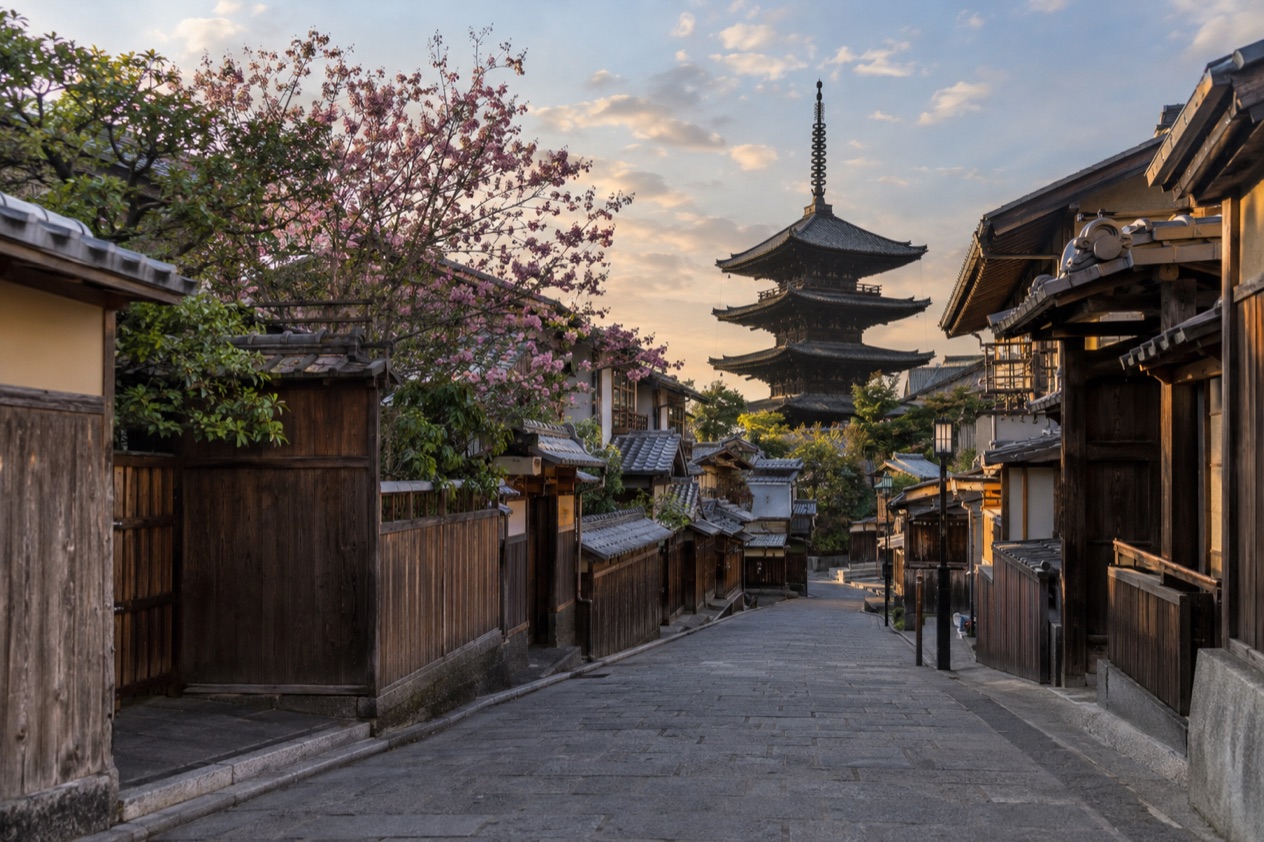
What is Kawaramachi like?
Kawaramachi is the commercial heart of eastern Kyoto, a district built around an avenue that runs parallel to the west bank of the Kamo River. The name belongs to the avenue first, and the neighborhood grew around it. At the crossing with Shijo Street, known as Shijo Kawaramachi, you reach what is described as a leading shopping district of the city, and the stretch between Sanjo Street and Shijo Street is one of Kyoto’s downtown shopping streets.
The avenue itself has a long reach. It begins at Aoibashi Nishizume, where it takes the name Shimogamo Main Street farther along, and it ends at Jujo Street, beyond which it curves with the river and joins Kuzebashi Street.
Between Shijo and Kamijuzuyacho Streets it bends on a diagonal, which is why it meets Teramachi Street and Gokomachi Street at angles instead of the neat grid that organizes the rest of the old city. That slight tilt gives the area its look: small lanes spill off in unexpected directions, and you can lose a quarter hour among them without noticing.
Kyoto’s cultural heritage has developed over 1,200 years, and the city’s traditions include machiya townhouses and the Gion Matsuri festival. Kawaramachi is where that old city meets daily commerce.
Temples such as Honno-ji and Honzen-ji stand among office buildings, a cathedral dedicated to St. Francis Xavier sits near the department stores, and the avenue passes a museum, a cultural center and the city office. It tends to win over people who like to shop in the afternoon, eat late and still have a river bank to walk afterward.
Things to do in Kawaramachi
Most of what you do here is walk, and the avenue gives the walk its spine. Both Shijo Street and Kawaramachi Street are protected by smoking bans, so the pavements are easier to share when the crowds thicken.
Shijo Kawaramachi and the department stores
Takashimaya Kyoto Branch and KYOTO MARUI stand along the avenue, with Mina Kyoto among the other buildings, and their lower floors are where Kyoto sweets, tea and pickles are wrapped up as gifts. Food halls in department stores in Japan are an attraction in themselves, with counters of bento, pastries and wagashi (traditional confectionery) arranged like jewelry displays.
Spend a while simply watching the crossing, then follow the avenue between Sanjo and Shijo, the stretch known as one of the downtown shopping streets. Fashion shops, bookstores and drugstores alternate with small cafés tucked above street level. If rain arrives, the department stores and the Zesuto-Oike underground shopping street give you somewhere to keep browsing.
Teramachi and Gokomachi streets
Because the avenue runs on a diagonal, it crosses Teramachi Street and Gokomachi Street, two north to south lanes that are lined with shops. Teramachi is a covered arcade, which means you can browse out of sun and drizzle alike. Teramachi and Gokomachi are north–south streets that intersect Kawaramachi Avenue.
The name Teramachi means temple town, and a few small temple gates still open between the storefronts, a reminder of what stood here before shopping took over. Gokomachi is narrower and feels more like a local street, with bakeries and small restaurants. It is a pleasant way to cut between the main avenues without following the main flow of visitors.
The Kamo River bank
The avenue follows the west bank of the Kamo River, and the river is the place people go when the shops tire them out. Steps lead down to a broad bank where people sit in the open, eat convenience-store snacks, practice instruments or simply watch the water. In warm months, restaurants on the river side build raised terraces over the bank for dining outdoors, a Kyoto habit that draws people out in the evening.
The narrow alley of Pontocho, with lantern-lit restaurants, lies close by and makes a natural pairing with the riverside. Come in the evening for the lights, and carry on along the water if you want a break from the arcades.
Honno-ji and the temples along the avenue
Honnō-ji is among the points of interest along Kawaramachi Avenue. Honno-ji carries a place in Japanese history as the temple linked with the death of the warlord Oda Nobunaga, and its grounds offer a pause from the avenue. The others are smaller and tend to reward those who look for a gate or a courtyard between buildings.
Kyoto’s visitors are recommended to see shrines at less crowded times, such as early morning, or late evening when they are illuminated. Shosei-en Garden, also on the list of points along the avenue, belongs with the day’s quieter stops, a place for strolling beyond the shopping blocks.
Within reach of Kawaramachi are other parts of the city. Nijo Castle, built in 1603 by Tokugawa Ieyasu, has nightingale floors that chirp underfoot as an old alarm for intruders, and the Kyoto International Manga Museum and the Kyoto Imperial Palace lie in central Kyoto as well. They are outings for another part of the day.
Eating and drinking in Kawaramachi
Eating in Kawaramachi means choosing among very different kinds of places, from a counter with a few stools to a river terrace, and the district rewards wandering without a plan. The department stores have restaurant floors and basement food halls, the arcades hide noodle shops and sweet counters, and the lanes behind them are packed with izakaya, Japanese pubs where small plates arrive one after another with beer, sake or shochu.
Izakaya and small lanes
You order several dishes to share, such as grilled chicken skewers, simmered vegetables, tempura, pickles and rice balls, and you keep ordering as the night goes on. Many are tucked up a stairway or behind a curtain at the entrance, so look up as well as ahead when you walk the side streets.
Kyoto cooking leans on vegetables, tofu, yuba (the skin of soy milk) and pickles, and you will see them on menus at the better-known izakaya and the small counters. Kaiseki, the multi-course style associated with Kyoto, appears in more formal restaurants, where the meal follows the season and the plates are arranged as carefully as the food is cooked.
Cafés, sweets and tea
Matcha shows up in nearly everything in Kyoto, and Kawaramachi’s cafés and arcade counters serve it as soft-serve ice cream, in parfaits, in cakes and in the bowl. Wagashi, the sweets served with tea, are shaped to the season, and department-store counters are a gentle place to try them. Old-style coffee shops, called kissaten, also remain, with dark wood, siphon coffee and thick toast.
A meal by the Kamo River can be as simple as a bento from a food hall eaten on the bank, or as formal as a seated dinner. Both are part of how people here eat outdoors in warm weather.
Ramen and quick meals
For a quick bowl, noodle shops are never far, with ramen, udon and soba counters serving diners who sit shoulder to shoulder and slurp. The Kyoto Station building has a full floor of ramen restaurants if you arrive hungry from the Shinkansen, but you do not need to go there to find a bowl in Kawaramachi.
It is a system that makes ordering without Japanese straightforward in a small shop.
Staying in Kawaramachi
Kawaramachi suits travelers who want restaurants, shops and the river on their doorstep and are happy to sleep in the middle of a working city. Kyoto Hotel Okura stands on Kawaramachi Avenue.
The trade-off is the evening. Izakaya and bars stay lit after the shops close, so a room facing the main avenue or the lanes behind the arcades can carry some street sound, and a room on a higher floor or a side street may suit light sleepers better. In return you walk home after dinner, and the stations along the avenue are close at hand.
Compared with the area around Kyoto Station, the character differs. The station building holds a Granvia hotel, an Isetan department store, a theater and a floor of ramen restaurants, and the Tokaido Shinkansen stops there, so it works for a short stay built around train connections.
Kyoto Tower stands just outside its main entrance and is visible across the city. Kawaramachi trades that convenience for being in the middle of the shopping and dining streets, with the Kamo River close and the old city around it.
Choose Kawaramachi if the evening matters to you as much as the sights. Choose the station area if the train matters more. Either way, central Kyoto is arranged so the other parts of the city are reachable from here.
Getting to Kawaramachi
Travelers arrive at Kyoto Station, which is served by the Tokaido Shinkansen and connects to major cities across Japan. Getting to Kawaramachi, which lies on the eastern side of the city, parallel to the west bank of the Kamo River.
Two stations carry the name of the district’s streets: Kyoto-kawaramachi Station and Kyoto Shiyakusho-mae Station, the latter named for the Kyoto City Office on the avenue. They are your landmarks for arriving by rail, and both are among the points of interest listed along the avenue, so you will find them on the map beside the shops.
Once in the district, you can follow the avenue on foot. The stretch between Sanjo Street and Shijo Street is the core of the shopping area, and the crossings with Teramachi Street and Gokomachi Street, both north to south lanes, give you ways to cut across. The avenue extends from Aoibashi Nishizume to Jujo Street, so what you see in the district is only part of its length.
If you are heading out toward the temples and palaces of central Kyoto, the Kyoto City Office and the Kyoto Prefectural Centre for Arts and Culture, both on the avenue, help you place yourself on the map as you go.
Good to know before you go
Smoking is banned on both Shijo Street and Kawaramachi Street, so if you smoke, plan your breaks away from the main shopping streets. The department stores and arcades are made for browsing, and the underground Zesuto-Oike shopping street offers shelter if weather turns.
If you want to see Kyoto’s temples and shrines at less crowded times, early morning is recommended, and late evening works for those that are illuminated. That leaves the middle of the day free for the shops and the long lunches the district is built for.
Sources
- Wikipedia, Kawaramachi (https://en.wikipedia.org/wiki/Kawaramachi), checked October 11, 2026
- Wikivoyage, Kyoto/Central (https://en.wikivoyage.org/wiki/Kyoto/Central), checked October 11, 2026
- Japan National Tourism Organization, Kyoto (https://www.japan.travel/en/destinations/kansai/kyoto/), checked October 11, 2026
To plan your stay
- Best Time to Visit Japan: Cherry Blossoms, Autumn Colors, Weather and Festivals
- Where to Stay in Japan: Ryokan, Temple Stays, Capsule Hotels and the Best Cities to Base In
- Sending Luggage from the Airport in Japan: Hands-Free Travel, Hotel Delivery and Coin Lockers
- Know Before You Go to Japan: Entry, Money, Etiquette and Getting Around