
A traveler with the Japan Rail Pass walks up to the gate, shows the pass and steps through to a Shinkansen platform without stopping at a ticket machine, and the day’s route becomes a matter of picking a destination. A traveler with individual tickets stands in front of the fare map, finds the station name, and pays for exactly the ride ahead, whether it is a subway hop to a temple or a limited express into the hills. Both ways of riding suit a different kind of trip, and the choice comes down to how much ground you plan to cover.
The Japan Rail Pass belongs to long, multi-city itineraries, while single tickets belong to trips built around one region, a couple of bases or a lot of local railways.
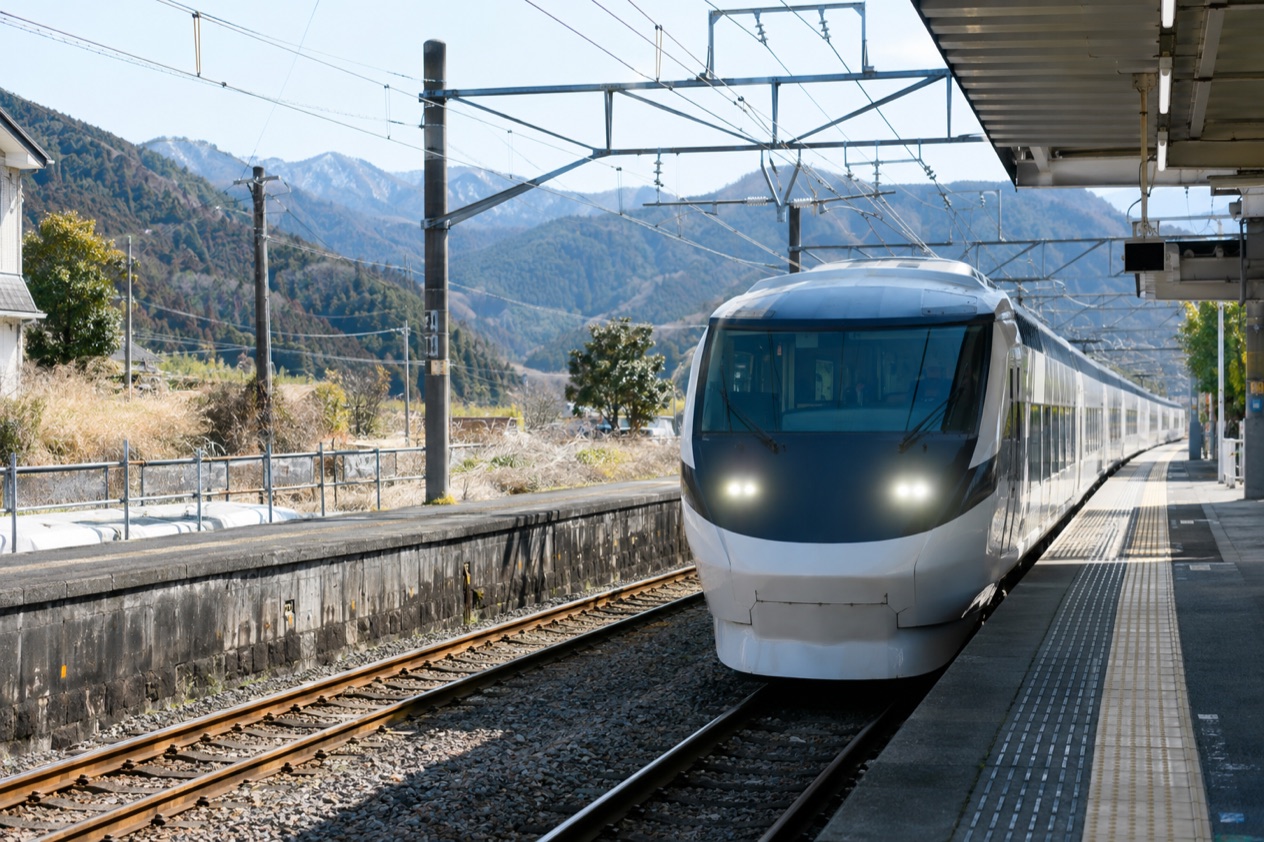
Which is better, the Japan Rail Pass or individual tickets?
The Japan Rail Pass suits travelers who plan to cross the country by JR trains and want one pass to carry them, while individual tickets suit travelers who stay in one city or region, or who spend most of their time on subways and private railways. Neither one is better in general. What matters is the shape of your route and how many of its legs run on JR lines.
The pass is sold by the Japan Railways Group exclusively for overseas visitors, and it is designed to stimulate travel and tourism throughout Japan. Individual tickets have no such framing: you buy a ride, take it, and move on. The table sets the two approaches side by side.
| Category | The Japan Rail Pass | Individual tickets |
|---|---|---|
| Sights | Temples, castles and gardens in several cities along JR lines, from Tokyo toward Kyoto, Hiroshima and beyond | Sights around one base, reached by JR, subway or private railway as each day requires |
| Vibe | Always moving, with a new city every few days and a Shinkansen platform as a regular scene | Settled, with time to return to the same neighborhood and learn a station |
| Things to do | Day trips and long hops between regions on JR trains | Neighborhood walks, museum days and short rides on local lines |
| Food | Station bento and regional specialties sampled city by city | Local counters and izakaya around one base, explored in depth |
| Weather | Tied to a block of consecutive days, so a gray day still counts as a pass day | Free of any clock, so plans can shift to a clearer day |
| Getting there | Covers almost all JR trains including the Shinkansen, plus the Tokyo Monorail to Haneda Airport | Each leg bought as needed, on JR or any other operator |
| Best for | Itineraries crossing the country on JR lines | Trips built around one city or region, or around subways and private railways |
Read that way, the question is really about your map. A route that links several far-apart regions leans toward the pass. A route that circles one metropolitan area leans toward tickets, often with a regional pass added in.
Sights and food
With the Japan Rail Pass, the sights come as a chain. The pass allows unlimited travel on almost all JR trains, so the sights are the ones that sit on or near JR lines, and a traveler can decide on a new city the night before.
Food follows the same rhythm. Stations in Japan sell regional bento boxes, rice and grilled fish packed in neat wooden or paper trays, and a pass holder who changes cities often eats a different one on each ride. Each city brings its own table: ramen styles that shift from place to place, okonomiyaki griddles in Osaka, sushi counters near fish markets. You taste widely and briefly.
Individual tickets reward depth. Someone based in Tokyo can spend a day in Asakusa near Senso-ji, another wandering the lanes of Yanaka, and another in a department store food hall, using JR trains, Tokyo Metro lines and Toei Subway lines as the day demands. Each of those operators sells its own fares, so the ride matches the errand.
The same goes for Osaka, where JR runs beside Hankyu Railway, Hanshin Electric Railway and Keihan Railway. A traveler paying ride by ride can follow a private line to a neighborhood a JR map would skip. Food becomes a matter of repeat visits: the same standing bar twice, a market breakfast and a late izakaya dinner in the same quarter.
On sights and food, the pass wins for breadth, since each new city adds a new set of temples, gardens and dishes. Individual tickets win for depth, since a single neighborhood can fill days. If your wish list reads like a map of Japan, take the pass. If it reads like a list of streets and counters, buy tickets as you go.
Things to do
A pass holder’s days are built around day trips and long jumps. From Tokyo, the JR TOKYO Wide Pass reaches Lake Kawaguchiko, the Mount Fuji area, as well as Nikko and the Izu Peninsula, which gives a traveler three very different outings: a lakeside view toward Fuji, shrines and carved gates in the forest at Nikko, and a peninsula of coast and hot spring towns at Izu.
The JR EAST PASS stretches further, covering Tokyo, Tohoku, Nagano and Niigata. That opens mountain towns, snow country and northern castle towns to a traveler who would otherwise pay for each leg. The JR East-South Hokkaido Rail Pass reaches the eastern part of Japan and southern Hokkaido for a chosen period, and the Hokkaido Rail Pass covers JR Hokkaido trains, with the Hokkaido Shinkansen line and the SL Fuyu-no-Shitsugen train excepted.
The Hokuriku Arch Pass links Tokyo and Osaka by way of Nagano, Toyama, Ishikawa and Fukui. That is a route through places that many itineraries skip, with Kanazawa’s gardens and old districts in Ishikawa among the stops. For someone who wants to see Japan’s far side of the main island, it turns a long transfer into a trip of its own.
Individual tickets suit evenings and neighborhoods. Nightlife in Japan lives in small places: izakaya with paper lanterns, tiny bars seating a handful of guests, karaoke rooms, late-night ramen counters. These sit along subway and private lines, and a traveler paying per ride gets there without thinking about which operator runs the track.
Day trips work with tickets too, only priced one by one. Local trains stop at every station and suit short distances. Rapid trains skip the smaller stations and need no supplement. Express trains serve fewer stops and a supplement may apply, while Limited Express and Special Express trains have reserved seats, run faster between cities and typically require a supplement. For a traveler on tickets, choosing the train type is part of planning the outing.
Weather and the best time to go
A rail pass does not change the seasons, but it changes how a bad day feels. The Japan Rail Pass runs on consecutive days, so a rainy morning still counts toward the pass.
That fits the way Japan’s seasons arrive in layers. Spring brings cherry blossoms and picnics under the trees, summer brings festival evenings with lanterns, drums and summer kimono called yukata, autumn brings maple leaves on temple hillsides, and winter brings snow in the mountains and steaming outdoor baths. A pass holder on a long itinerary can follow a season across regions, and the passes that reach Nagano, Niigata, Tohoku and Hokkaido pull the traveler toward the northern landscapes.
The pass has one drawback in bad weather: its days are fixed once they start. If a storm sits over a city on day three, that day has already been spent, and unused travel can’t be moved to another week. For a traveler who likes to pick a clear day for a mountain view or a lakeside walk, that rigidity matters.
Individual tickets give the opposite freedom. Nothing runs out on a gray day, so a traveler can spend it in a museum, a covered arcade or an onsen, and save the lakeshore for a better morning. Because tickets are bought ride by ride, a change of plan costs only the ride you skip. This suits a trip centered on one region over several weeks, where the weather can be waited out.
A regional pass sits between the two. The JR TOKYO Wide Pass or the Hokuriku Area Pass covers a smaller territory for a set length, so a traveler can choose the days for the Fuji, Nikko or Kanazawa outing after looking at the sky.
Getting there and getting around
The Japan Rail Pass is valid on the Tokyo Monorail, and it covers travel from Haneda Airport to Hamamatsucho in Tokyo, including stopovers. That makes the first leg from that airport part of the pass. After that, the pass covers almost all JR trains, the Shinkansen included, for seven, fourteen or twenty-one consecutive days, and also certain segments of private railways.
Some trains need more than the pass. The Nozomi service on the Tokaido and Sanyo Shinkansen lines and the Mizuho service on the Sanyo and Kyushu Shinkansen lines require an additional special ticket for pass holders. JR trains that run on tracks not owned by JR also carry surcharges: the Tokyo Waterfront Railway Rinkai Line between Osaki and Shin-Kiba, the Izukyu Railway from Ito to Shimoda, and the Kyoto Tango Railway from Fukuchiyama to Toyooka.
Individual tickets work anywhere and with anyone. In Tokyo that means JR trains, Tokyo Metro lines and Toei Subway lines, and in Osaka JR, Hankyu, Hanshin and Keihan. Apps such as Japan Travel by NAVITIME, Japan Transit Planner by Jorudan and Google Maps find routes and calculate fares, so a traveler can see what each ride costs before stepping on.
Japanese trains have a reputation for being always on time, which lets a traveler plan connections to the minute. That holds for both ways of riding, and it makes a tight transfer between a Shinkansen and a local line less of a gamble than it would be elsewhere.
Regional passes carry their own prices. The Hokuriku Area Pass gives unlimited rides only in Toyama, Ishikawa and Fukui prefectures, and a holder can accompany up to two children ages 1 to 5 for free. From the third child onward, a Child’s rail pass is required for each.
| Pass | Rider | Price (yen) |
|---|---|---|
| Hokuriku Area Pass, 4-day | Adult, age 12 or over | 7,000 yen |
| Hokuriku Area Pass, 4-day | Child, ages 6-11 | 3,500 yen |
Who should choose which
The Japan Rail Pass fits the traveler whose route is a line across the map: Tokyo, then Kyoto or Osaka, then Hiroshima or farther, with a few long JR rides between them. It also fits someone who likes to decide the next stop the evening before, since a pass turns every JR departure into an option. Travelers heading into Hokkaido, Tohoku or the Nagano and Niigata mountains can look at the matching regional pass, which narrows the territory to the trip they are actually taking.
Individual tickets fit the traveler who stays put. A week in Tokyo with days among temples, markets and neighborhoods, or a stay in Kyoto and Osaka that leans on private railways and subways, is a trip where each ride is short and the operators vary. Tickets also suit anyone who doesn’t want a fixed clock on their days, or who expects to spend a day or two doing nothing but soaking in a hot spring.
The two can be combined. A traveler can use the pass for a long journey across the country, then buy single tickets for the subway and private-line rides in the city at the end.
A regional pass, such as the JR TOKYO Wide Pass for Fuji, Nikko and Izu, can sit on top of ticket-based city days, giving a block of outings without a nationwide pass. Because Nozomi and Mizuho trains need an extra ticket on the pass, the mix is also useful when part of the trip runs on trains the pass does not fully cover.
A useful way to decide is to list the cities you want to sleep in, in order, and then note which legs run on JR lines. A long list of far-apart cities points toward the pass. A short list points toward tickets, with a regional pass added where a side trip calls for one.
Good to know before you go
Trains in Japan run to the schedule printed on the timetable, so a tight connection is a reasonable plan. Keep some yen for small purchases such as station bento, a vending machine drink or a local ticket, and carry a route app for moments when the fare map in a station is hard to read. The Japan Rail Pass is a ticket for overseas visitors, and it is available in lengths of consecutive days that start when you first use it, so it pays to line the first ride up with the first real travel day.
On the train itself, habits are quiet ones: voices low, phone calls kept for the platform, and luggage kept close.
Sources
- Japan National Tourism Organization, Japan Rail Pass and regional passes (https://www.japan.travel/en/plan/jr-rail-passes/), checked October 11, 2026
- Wikipedia, Japan Rail Pass (https://en.wikipedia.org/wiki/Japan_Rail_Pass), checked October 11, 2026
- Wikivoyage, Japan Rail Pass (https://en.wikivoyage.org/wiki/Japan_Rail_Pass), checked October 11, 2026
- Japan National Tourism Organization, trains and buses (https://www.japan.travel/en/guide/how-to-travel-by-train-and-bus-in-japan/), checked October 11, 2026
- Japan National Tourism Organization, traveling by rail (https://www.japan.travel/en/guide/traveling-by-rail/), checked October 11, 2026
- West Japan Railway Company, Hokuriku Area Pass (https://www.westjr.co.jp/global/en/ticket/pass/hokuriku/), checked October 11, 2026
To plan your stay
- Best Time to Visit Japan: Cherry Blossoms, Autumn Colors, Weather and Festivals
- Things to Do in Japan: Kyoto Temples, Onsen, Street Food and Day Trips
- Where to Stay in Japan: Ryokan, Temple Stays, Capsule Hotels and the Best Cities to Base In
- Sending Luggage from the Airport in Japan: Hands-Free Travel, Hotel Delivery and Coin Lockers