
You step through the door of a ryokan, the floor rises a few inches, and a row of slippers waits exactly where your shoes are about to go. That small moment is where most first-time slips happen in Japan. The mistakes that matter are rarely dramatic. They live at doorways, on sidewalks, in bathrooms and in the pocket where your passport sits.
What mistakes do visitors make in Japan?
The most common mistakes are small breaches of everyday habit: keeping shoes on where they come off, wearing the wrong slippers in the wrong room, lighting a cigarette on the street and leaving identification at the hotel. None of them is serious in intent, but each one is noticed. Japan runs on a shared set of daily gestures, and visitors who miss them tend to miss them in the same few places.
Keeping your shoes on at the entrance
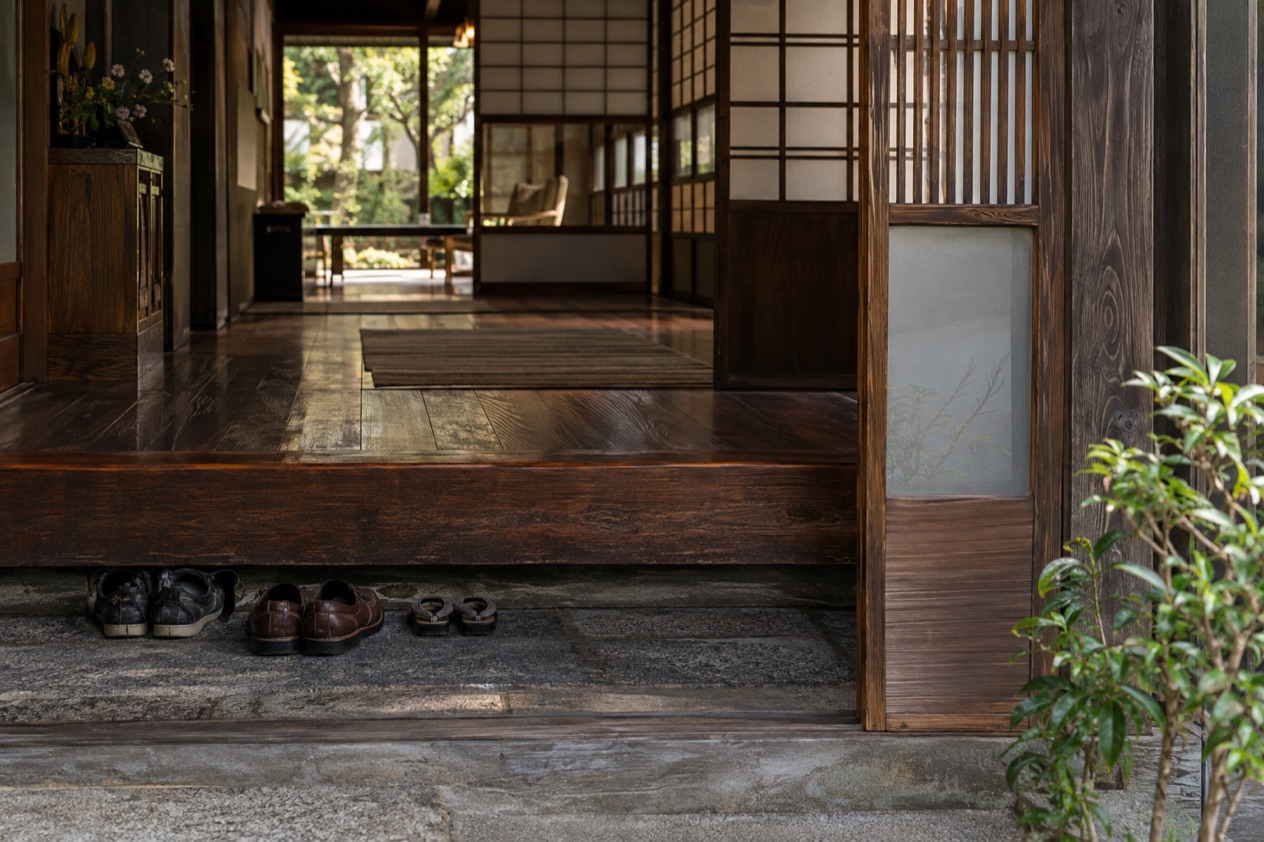
In Japan it is customary to take off your shoes at the entrance of a building, step into indoor slippers and leave your shoes in a shoe box or neatly to the side. The entrance usually has a change in floor level, a step up that marks where the outside world ends. Walking past that step in street shoes is the single mistake travelers describe most often.
The habit shows up in homes and ryokan, the traditional inns with tatami floors. It also appears in some temples, some restaurants and some small shops. Look at the floor before you walk in. A raised platform, a row of slippers or a wall of shoe cubbies tells you what to do before anyone says a word.
Once your shoes are off, point them toward the door or tuck them to the side so they are ready when you leave. Socks without holes are a small kindness to yourself, since you will be taking your shoes off in front of other people more often than you expect.
Wearing slippers on tatami and into the bathroom
Indoor slippers solve one problem and create another. Inside a Japanese home or ryokan, it is customary to take the slippers off before stepping onto tatami mats, the woven straw flooring of traditional rooms. You walk on tatami in socks or bare feet, and the slippers wait at the edge.
The bathroom works the other way around. A separate pair of toilet slippers is often provided, and the habit is to switch into them at the bathroom door and switch back when you leave. Wearing toilet slippers back into the hallway or onto the tatami is a classic slip, and the one that gets a quiet laugh from hosts. A glance at the doorway usually shows you where the swap happens.
Smoking while you walk
Smoking while walking on the street, or dropping cigarette butts, is prohibited in Japan and can bring a fine. Visitors from places where lighting up on a sidewalk is ordinary are often caught off guard. Designated outdoor smoking areas are limited, so a smoker has to plan around them rather than light up wherever the urge arrives.
The practical habit is to look for the nearest designated zone, often marked with a sign, an ashtray stand or a small enclosure, and finish the cigarette there. Walking on with a lit cigarette in hand, even briefly, is the version of the mistake that draws attention from people around you.
Leaving your passport behind
Foreigners must carry their passport or trusted traveler card at all times while in Japan. The rule does not carry an exception for short outings.
A small zip pocket or an inner pouch keeps it with you without turning it into a worry. Travelers find that moving it to the same pocket every morning, the way you would a wallet, makes the habit stick.
How do you avoid them?
You avoid them by watching what the room is telling you and by building four small habits before you land: look at the floor, carry your litter, find the smoking zone and keep your passport with you. Japan is a place where the environment explains the rule. A step, a mat, a row of slippers or a sign does most of the teaching if you slow down enough to read it.
Read the floor before you step
Every entrance where shoes come off has clues. The floor level changes, a mat or a stone slab marks the boundary, and shoes already sit in rows or cubbies. When you see any of those, stop at the edge, slip off your shoes and step up in your socks. If you are unsure, pause at the threshold and watch what the person ahead of you does. A pause is never wrong.
Slip-on shoes make the routine lighter, because you will be doing it at ryokan, at some restaurants and at some temples. Laced boots turn each entrance into a small chore. Pack footwear with that in mind, and keep a clean pair of socks in your bag.
At a ryokan, the sequence is a good one to learn once. Shoes come off at the entrance, slippers go on for the corridors, slippers come off before tatami, and toilet slippers wait by the bathroom. After one night it becomes automatic, and it carries into every other setting.
Plan your smoking around the zones
If you smoke, treat the designated area as part of your route. Because outdoor smoking areas are limited, the useful habit is to look for the nearest zone when you arrive in a new district, not when the craving hits. Finish your cigarette inside the zone and put the butt where the zone expects it.
If you are traveling with someone who smokes and someone who does not, agree on a meeting point. It saves the awkward wandering with a cigarette in hand, which is exactly the situation that leads to a fine.
Keep your identification on you
The cleanest way to avoid the passport mistake is to decide where it lives. Some travelers use a neck pouch under a shirt, others a zipped jacket pocket. A trusted traveler card, which the rules also accept, is valid for 3 years or until the passport expires, whichever comes first, so check the date before you rely on it.
A photo of the passport page on your phone is a useful backup for your own peace of mind, but it is not a substitute for the document itself. Keep the physical copy where you can reach it without unpacking anything.
Carry your own trash
The smoking rule hints at a wider habit: litter is not left on the street. A small bag in your daypack for wrappers, empty bottles and tissues lets you hold on to them until you find a bin, or take them back to your room. It is a habit that costs nothing and spares you the sense of being the one person on the block with a wrapper in hand.
What do locals expect?
Locals expect consideration for shared space: clean floors, tidy streets, a low voice in close quarters and a visible effort to follow the way things are done. Nobody expects perfection from a visitor. What registers is the attempt, the shoes lined up at the door, the cigarette finished in its zone, the slippers swapped at the bathroom.
Clean floors and the line between inside and outside
The shoe habit is not about rules for their own sake. It keeps the floor, where people sit, sleep and eat in a traditional room, clean. That is why the step at the entrance matters, and why a host will often gesture toward the slippers before saying hello. Treat the gesture as a welcome, not a correction.
When you visit a home, a ryokan or a small guesthouse, the same logic applies to your bag. Setting it on tatami after it has been on a street or a train floor is a small lapse many hosts would rather not see. A luggage rack or a spot by the door usually exists for this purpose.
Courtesy in public space
On trains and in shops, Japanese manners lean toward not imposing on others. A low voice, a phone kept on silent and a bag held close in a crowded car are courtesies you will see around you. Eating while walking is less common than in some countries, and people finish a snack beside the stall where they bought it.
At the table, chopsticks have their own etiquette. Sticking them upright in a bowl of rice is avoided because of its funeral associations, and passing food from one pair of chopsticks to another carries the same association. Resting them on the holder or across the bowl is the habit to follow.
Baths, onsen and shared rooms
In a ryokan or an onsen, the hot spring bath, the habit is to wash thoroughly at the washing stations before stepping into the shared water, which is for soaking and not for cleaning. Towels stay out of the bath, and the small towel often ends up folded on your head or set on the edge. Staff at each place can tell you the rules specific to their baths, including any about tattoos.
Yukata, the light cotton robes provided at many inns, are worn wrapped left side over right. It is a detail locals notice, and a quick look at someone else wearing one, or a word with the staff, fixes it in a moment.
Staying within the rules of the street
Fines for smoking on the street are a reminder that public order is taken seriously, but the daily experience is far gentler. If you follow the signs, use the designated zone and keep your passport on you, you will rarely find yourself explaining anything. When you do, a polite apology and a willingness to correct course go a long way.
Good to know before you go
A few practical details round out the picture. Electricity in Japan is 100 volts, and the frequency is split between 50 hertz and 60 hertz depending on the region, so check your chargers and small appliances before you pack. Japan Standard Time, UTC+09:00, applies across the whole country. For emergencies, dial 119 for fire, 110 for police and 118 for the Japan Coast Guard.
Japan is an island nation divided into 47 prefectures, and habits can vary a little from one to the next. The doorway, the bathroom and the street are the places where small gestures count, and a visitor who watches them closely rarely goes far wrong.
Sources
- Japan National Tourism Organization, manners, etiquette, shoes, bowing, chopsticks, public behavior (https://www.japan.travel/en/guide/understanding-and-mastering-japanese-manners-and-etiquette/), checked October 11, 2026
- Wikivoyage, Japan (https://en.wikivoyage.org/wiki/Japan), checked October 11, 2026
To plan your stay
- Best Time to Visit Japan: Cherry Blossoms, Autumn Colors, Weather and Festivals
- Where to Stay in Japan: Ryokan, Temple Stays, Capsule Hotels and the Best Cities to Base In
- Sending Luggage from the Airport in Japan: Hands-Free Travel, Hotel Delivery and Coin Lockers
- Know Before You Go to Japan: Entry, Money, Etiquette and Getting Around