
You are standing at a counter in a Ginza department store with a camera, a box of tea and a handful of small gifts, and the clerk asks whether you would like to buy tax free. Japan does let visitors skip the consumption tax on many purchases, but only under conditions, and those conditions changed for parcels sent home. What follows is how the system works, what you prove, and what you can put in the bag.
How does tax-free shopping work in Japan?
Tax-free shopping in Japan means a foreign visitor buys goods without the consumption tax, on the condition that the goods leave Japan with that visitor. It is not a discount a store offers to anyone who asks. It is a government system with conditions, and the Japan National Tourism Organization states plainly that the exemption is available only under certain conditions.
In practice, the idea is simple to hold in your head. You are treated as someone who will consume the goods outside the country, so the tax does not apply, provided you really do take them out.
Who qualifies as a visitor
The condition on the traveler is a limit on the stay. Foreign tourists qualify when they spend no more than 6 months in Japan, which means the system is aimed at people on a trip and not at residents. A visitor on a vacation, a honeymoon or a long itinerary through several cities fits comfortably inside it.
The second condition is about the goods themselves. To receive the benefit, you bring the items out of Japan when you leave. A bag of anime figures bought in Tokyo and a ceramic bowl found in Kyoto are both covered by the same principle: they are meant to go home in your luggage, not to be kept or consumed in the country.
What changed for parcels in April 2025
Since April 1, 2025, tax exemption no longer applies when the purchaser sends items abroad via international parcel. That matters to anyone who used to buy a heavy souvenir, stop by a post office and mail it home, expecting the tax to be waived. Under the revised rules, that route no longer qualifies.
Direct shipping arranged by the store may still be available for tax-free purchases after that date. The difference is who sends the goods.
When the store handles the shipment itself, the arrangement can still work, while a parcel you mail on your own does not. If you plan to buy something large, such as a piece of furniture or a bulky set of tableware, it is worth asking the store whether it offers this kind of shipping.
Where the official explanations live
Several Japanese government bodies publish material for visitors. The Ministry of Land, Infrastructure, Transport and Tourism has a page with the details of the tax exemption system, and JNTO provides a PDF in English that explains the refund method. The Japan Tourism Agency offers a video that walks through the system with a focus on how the refund works, which suits people who would rather watch than read.
The National Tax Agency also provides a notice addressed to foreign travelers who buy tax-free goods in Japan, and Japan Customs publishes the procedures for passenger clearance when you leave with those goods. The JNTO website itself runs in English, including a version for readers in the United States, so none of this requires reading Japanese.
What do you need to show?
What you need to show comes down to two things: that you are a short-term visitor, and that the goods you bought are leaving the country with you. The rules are built around those two points, and each official source describes them from its own side, the tax authority from the purchase, customs from the departure.
Proving you are a visitor
The exemption is for foreign tourists whose stay in Japan is within the limit of 6 months. That is the status you are demonstrating each time you buy tax free: not a resident, not someone settling in, but a traveler passing through. The National Tax Agency notice for foreign travelers who purchase tax-free goods is the document that frames this from the tax side.
Treat the visitor status as the thing the whole system rests on. Stores that take part in tax-free sales are applying a national rule, so the question at the counter is really the government’s question, not the clerk’s. If you have read the English material from JNTO beforehand, the exchange at the register will make sense and nothing about it will feel arbitrary.
Showing the goods leave with you
The second half of the proof is physical. The goods must go out of Japan when you do, and Japan Customs provides the procedures for passenger clearance for travelers leaving with tax-free goods. That means the purchases are part of how you leave the country, so they belong in the luggage you carry or check, not in a box you left behind or a parcel you posted yourself.
This is also why the April 2025 change to international parcels matters. A parcel you send yourself no longer qualifies, so the cleanest picture is the one the system was designed around: you, your bags and your purchases, leaving together. The store-arranged shipping that may still be available is the exception, and it works because the store, not the purchaser, is sending the goods.
Consumables and their sealed bags
Consumable items carry their own condition. Tax-free consumables must be taken out of Japan within 30 days, in their sealed bags. Think of the snacks, teas and sweets that fill the basement food halls of the big department stores. The sealed bag is part of the deal, which is a good reason to keep it closed and not tear it open on the train to the next city.
If you buy a box of green tea in Kyoto or a stack of regional sweets in Osaka, the practical habit is to pack them untouched and eat them at home. A tasting in your hotel room is a different pleasure from a sealed gift, and the tax-free rule assumes the second one. Non-consumables such as clothing, cameras and ceramics do not come with the sealed-bag condition.
What can you buy tax free?
Many things a visitor naturally wants to take home can be bought tax free, from electronics and anime merchandise to tea and sweets, as long as the purchase meets the conditions above. The official sources describe the system as a whole and do not give a shopping list, so the useful way to think about it is by kind of purchase: goods that travel in your bag, and consumables that stay sealed.
Akihabara and the collector’s haul
Akihabara in Tokyo is widely known as an otaku mecca, a district of stores and booths selling anime, manga, merchandise, video games, household electronics and vintage film cameras. It is the kind of place where a single afternoon turns into a bag of figures, magazines and small gadgets, exactly the sort of goods that suit a tax-free purchase because they ride home in your luggage.
One thing to know about discs. Anime DVDs sold in Japan are all region 2 NTSC, which makes them unplayable in most DVD players in the U.S. and Canada, where the standard is region 1. Blu-rays are a different story. Those sold in Japan are region A, which includes North and South America, so a Blu-ray from Akihabara should be compatible with players back home.
Department stores and shopping streets
Ginza and Nihonbashi in Tokyo are known shopping areas, and JNTO highlights them under its cuisine theme, which tells you something about the pairing of shopping and food in these districts. A walk there can mean a department store basement of edible gifts one hour and a boutique the next. Consumables bought this way come with the sealed-bag condition, so the box of sweets stays closed until you are home.
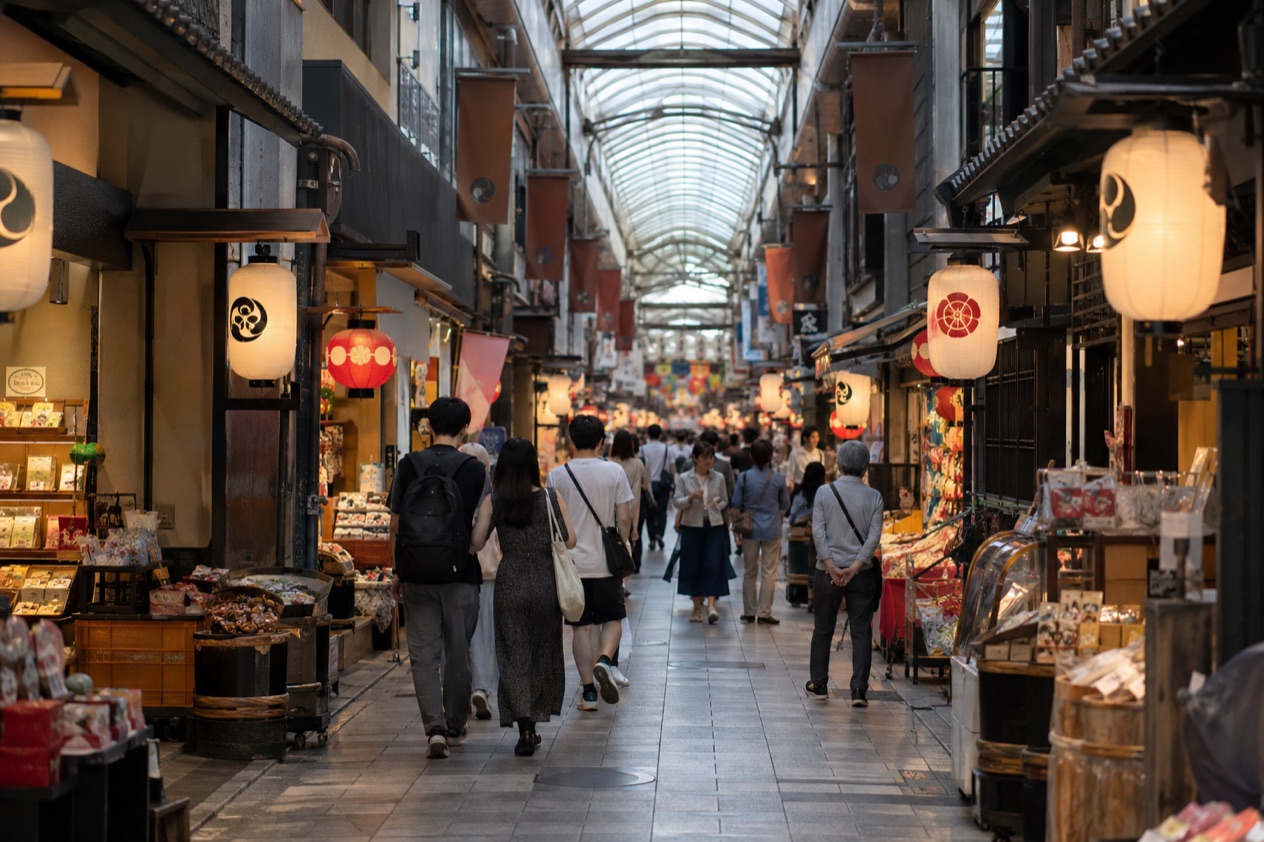
In Osaka, Dotonbori and Shinsaibashi are listed by JNTO as popular places. Here the shopping runs alongside entertainment, with stores, snack stalls and neon signs sharing the same streets. It is a good setting for the lighter purchases, the small gifts and keepsakes that fit in a carry-on, and for picking up a last-minute souvenir before heading to the airport.
When the stores are open
Shopping hours shape a day more than people expect. Most shops are open on weekends and public holidays except New Year, and most close one day a week.
Convenience stores such as 7-Eleven, Family Mart and Lawson stay open around the clock and carry a wider range of products than their counterparts in the U.S. or Europe, which makes them handy for snacks and small items. Pachinko parlours, the loud gaming halls you will pass on many main streets, are obliged to close at the hour shown.
| Type of place | Open |
|---|---|
| Most shops | 10:00 to 20:00 |
| Convenience stores (7-Eleven, Family Mart, Lawson) | 24 hours, 7 days a week |
| Pachinko parlours | Close at 23:00 |
Good to know before you go
The U.S. State Department rates Japan Level 1: Exercise Normal Precautions.
Cash machines are worth a thought before a shopping day. Many Japanese ATMs are closed at night and during weekends, so banking is best done in office hours, with the exception of the machines in convenience stores such as 7-Eleven, FamilyMart, Lawson and Ministop in larger cities. Keep your tax-free purchases together as you travel from city to city, so that everything that has to leave Japan with you is in one place when the day comes.
Sources
- Japan National Tourism Organization, shopping (https://www.japan.travel/en/guide/shopping-in-japan), checked October 11, 2026
- Japan National Tourism Organization, tax-free shopping for foreign visitors, minimum purchase, passport, how it works (https://www.japan.travel/en/plan/japans-tax-exemption/), checked October 11, 2026
- Wikivoyage, Shopping in Japan (https://en.wikivoyage.org/wiki/Shopping_in_Japan), checked October 11, 2026
- U.S. Department of State, Japan travel advisory (https://travel.state.gov/content/travel/en/traveladvisories/traveladvisories/japan-travel-advisory.html)
To plan your stay
- Best Time to Visit Japan: Cherry Blossoms, Autumn Colors, Weather and Festivals
- Where to Stay in Japan: Ryokan, Temple Stays, Capsule Hotels and the Best Cities to Base In
- Sending Luggage from the Airport in Japan: Hands-Free Travel, Hotel Delivery and Coin Lockers
- Know Before You Go to Japan: Entry, Money, Etiquette and Getting Around