
A bowl of ramen arrives at a wooden counter, steam fogging the glasses of the person beside you, and nobody expects a word of conversation. Down the street a shrine bell rings once, a salaryman bows to a vending machine of canned coffee, and the evening settles into the glow of paper lanterns. Japan, across its cities, mountain towns and temple gardens, suits a traveler who wants to move at their own pace.
Is Japan good for solo travelers?
Yes, because so much of daily life in Japan is arranged around the individual: the counter seat, the single bowl, the quiet walk through a garden. A trip alone here rarely feels like a trip with something missing. You choose the temple, the noodle shop and the hour you head back, and the country’s rhythm leaves room for that. What follows is less a checklist than a sense of how a day alone unfolds, from breakfast to the last drink, and where it asks a little more attention than you might expect.
Eating alone, and enjoying it
Japanese food culture has plenty of dishes built for one person at a time. Ramen is the obvious example, a single deep bowl of broth, noodles and pork or egg eaten in a few absorbed minutes. Soba and udon shops, curry counters, tempura bars and sushi counters all follow the same idea, with the cook working just across from you.
An izakaya, the Japanese pub, is where a longer evening happens. Skewers of grilled chicken, pickles, fried tofu and cold beer or sake arrive in small plates, so you can order as slowly as you like. Sitting at the bar often means watching the cook work the grill, and the person on the next stool may start a conversation or may simply nod. Either is fine.
Convenience stores and department store food halls are the other half of eating alone. Rice balls, egg sandwiches, bento boxes and seasonal sweets are laid out like a small gallery, and a picnic on a park bench or a hotel windowsill is a real meal rather than a compromise.
Ryokan, onsen and sleeping well alone
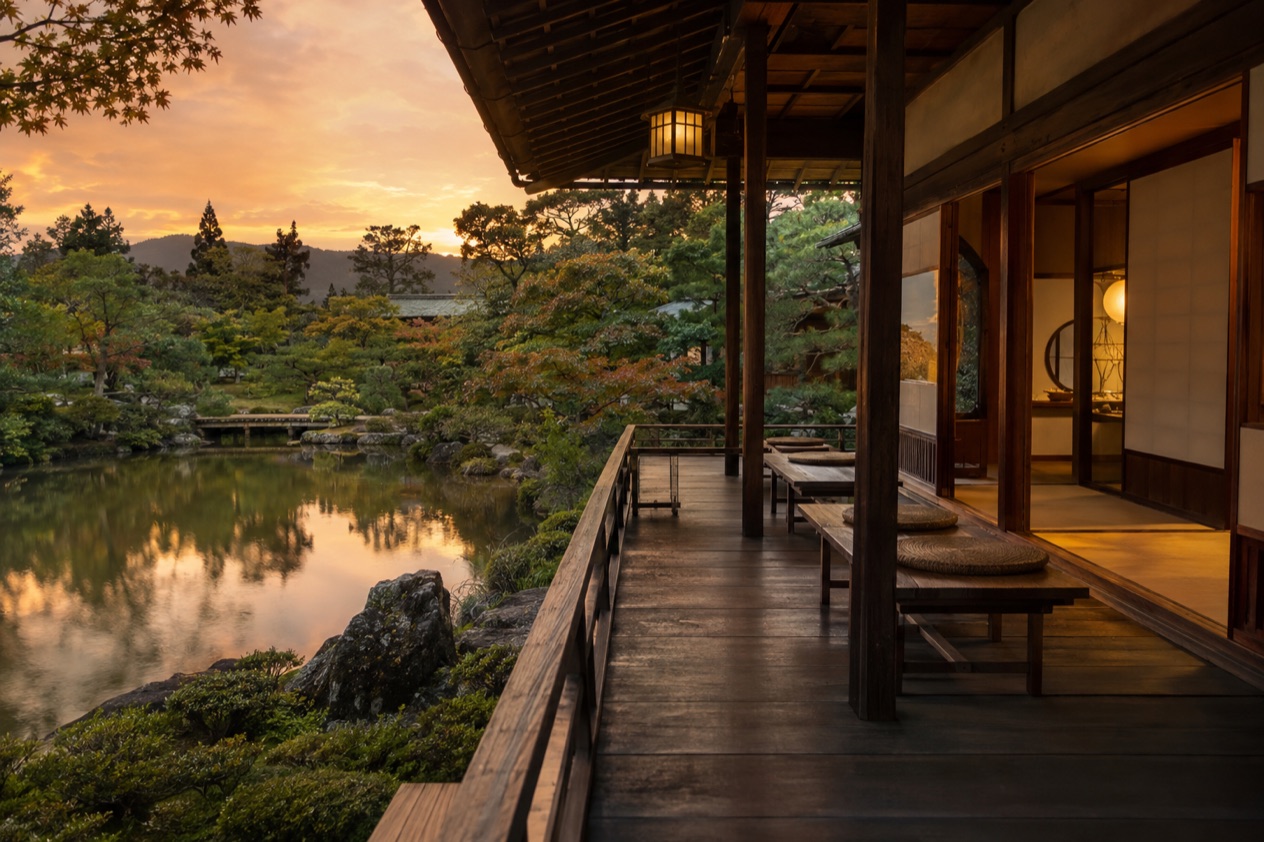
A ryokan, the traditional inn with tatami floors and futon beds laid out in the evening, is a very good place to be by yourself. The ritual can be the point: you may change into a yukata, read or sit by the window, and linger over a dinner of seasonal dishes.
The onsen, or hot spring bath, adds to it. The onsen, or hot spring bath, adds a quiet stretch of soaking to the stay. Some travelers prefer the simplicity of a city business hotel or a hostel instead, where a small room and a dormitory bunk give you a base and the common room offers company when you want it.
Temples, gardens and your own pace
Sightseeing alone means you never have to negotiate. You can stand in front of a garden pond for as long as the light on the moss holds your attention, or walk a shrine path lined with torii gates without anyone asking to move on. A notebook and a camera fit this kind of day.
Seasons shape what you do. Spring brings hanami, picnics under cherry trees, and autumn turns maple gardens red and gold. Summer is the season of matsuri, the neighborhood festivals with drums, food stalls and lanterns, and winter makes hot baths and steaming bowls feel like the whole plan. Each one gives a solo traveler something to walk toward.
Meeting people when you want to
Company is there if you look for it. Hostel common rooms, small bars with only a handful of seats and cooking classes put you beside other travelers and sometimes beside locals.
Where do solo travelers go?
Most solo itineraries link a few cities and then add a mountain, a hot spring town or a coast. The country is divided into 47 prefectures, and the Shinkansen, the world’s first high-speed rail line, ties together many of the cities below.
Tokyo
Tokyo is a city of neighborhoods, each with its own mood. Asakusa has Senso-ji and its lantern gate, shops selling sweets and crafts on the approach, and the old-fashioned feel of a temple town. Shibuya and Shinjuku bring the neon, department stores and the crossing everyone has seen in photographs, while Meiji Jingu sits among trees as a shrine of tall wooden gates and gravel paths.
The city rewards wandering, and a single traveler can duck into a coffee shop or a bookstore whenever a street looks interesting.
Kyoto and Nara
Kyoto is the city of temples, tea houses and wooden machiya townhouses. Kinkaku-ji, the golden pavilion, glimmers across its pond, Kiyomizu-dera stands on its wooden stage over the hillside, and Fushimi Inari winds through thousands of red torii gates up a wooded slope. Between the big names, small lanes in Gion and along the canals reward slow walking.
Nara pairs well with Kyoto. Todai-ji holds a giant bronze Buddha in an enormous wooden hall, and deer wander the park around it, ready to bow for rice crackers. The two cities together give a solo traveler gardens, tea, temples and some of the best vegetarian temple cooking in the country, all at a pace you set yourself.
Osaka and Kobe
Osaka is the city for eating. Takoyaki, the octopus dumplings cooked on dimpled griddles, okonomiyaki, the savory cabbage pancake, and kushikatsu, skewers of fried meat and vegetables, are everyday food here, and the nightlife glows along the canal. It is a lively place for a solo traveler because the food stalls and counters keep everything informal.
Kobe, with its port and its hillside streets, adds a more relaxed contrast, along with cafés, bakeries and the beef the city is known for. Both fit into a Kansai base alongside Kyoto and Nara.
Hiroshima
Hiroshima is a city travelers visit alone, partly because the main sights call for reflection. The experience is sober, and time on your own lets you move through it without hurry.
The city is also a place to eat, with okonomiyaki layered with noodles in the Hiroshima style and oysters from the surrounding bay. A day or an evening here balances the weight of the museum with a good meal.
Smaller bases: Kanazawa, Hakone and Nikko
Kanazawa has Kenrokuen, one of the country’s great strolling gardens, along with samurai and geisha districts and a market for seafood. Nikko, with its richly decorated shrines among cedar trees, sits in a mountain landscape.
These smaller bases suit a traveler who wants a slower rhythm, a bath, a long dinner and a walk before bed. Hokkaido and Okinawa are further options for those who want ski slopes or a tropical sea, but they usually deserve a trip of their own.
What should you know before you go?
The first thing to know is that the nightlife districts of big cities call for the same judgment you would use at home. The U.S. State Department advises caution in the entertainment and nightlife areas of Tokyo, especially Roppongi, Kabuki-cho, Shibuya and Ikebukuro. Reports from U.S. citizens in those areas include spiked drinks, drug overdoses, thefts of purses, wallets and cards, and physical and sexual assaults.
Robberies can happen when someone has been drugged by a spiked drink, so a solo traveler who goes out at night benefits from keeping an eye on the glass and knowing the way back. Some U.S. citizens have also reported being forced to take money out of ATMs, or being robbed, after being unable to pay very large bar tabs.
Crowds, trains and petty theft
Pickpocketing can occur in crowded shopping areas, on trains and at airports.
Keeping the day’s cash and a card separate from your main wallet is a simple way to lose less if something does go missing. The same goes for a copy of your hotel’s name written in Japanese, which helps if your phone dies late in the evening.
If something goes wrong
Police reports must be filed before you leave Japan, because Japanese police will not accept reports filed from overseas. If a credit card is stolen or used fraudulently, the police usually give a report number rather than a full report, and that number can be passed to the card company. Sexual assaults are not often reported in Japan, but they do occur, and victims may be randomly targeted.
Some U.S. citizens have also reported discrimination in Japan because of their nationality or race. Knowing these things in advance is not a reason to stay in, only a reason to keep a clear head.
Rhythms that suit one person
A solo trip is shaped by small decisions, and a few rhythms help. Changing base every few days rather than every night saves energy, and a laundry day gives you a natural pause.
A little curiosity helps too. Reading the menu pictures, pointing at a neighbor’s dish and learning a few words of Japanese all lead to small exchanges, and those exchanges are often the part of the trip you remember.
Good to know before you go
Japan is on Japan Standard Time, nine hours ahead of UTC, and the electricity is 100 volts, so check that your chargers and devices are rated for it. In an emergency, dial 110 for the police and 119 for fire or an ambulance, and 118 reaches the Japan Coast Guard.
Typhoons and the rainy season touch parts of the country at certain times of year, so a flexible plan with a few indoor options such as museums, food halls and hot baths keeps a solo trip comfortable when the weather turns.
Sources
- U.S. Department of State, Japan travel information, safety and security (https://travel.state.gov/content/travel/en/international-travel/International-Travel-Country-Information-Pages/Japan.html), checked October 11, 2026
- Wikivoyage, Japan (https://en.wikivoyage.org/wiki/Japan), checked October 11, 2026
To plan your stay
- Best Time to Visit Japan: Cherry Blossoms, Autumn Colors, Weather and Festivals
- Where to Stay in Japan: Ryokan, Temple Stays, Capsule Hotels and the Best Cities to Base In
- Sending Luggage from the Airport in Japan: Hands-Free Travel, Hotel Delivery and Coin Lockers
- Know Before You Go to Japan: Entry, Money, Etiquette and Getting Around