
At a shrine gate in Kyoto, a visitor tosses a coin into the offering box, rings the bell and claps twice. A few streets away, at a temple, the same person stands in a drift of incense smoke with palms pressed together.
Both places belong to Japan’s two main traditions, Shinto and Buddhism, which sit side by side in almost every town. Knowing which is which makes every gate, statue and festival you pass on a trip make more sense.
What are Shinto and Buddhism?
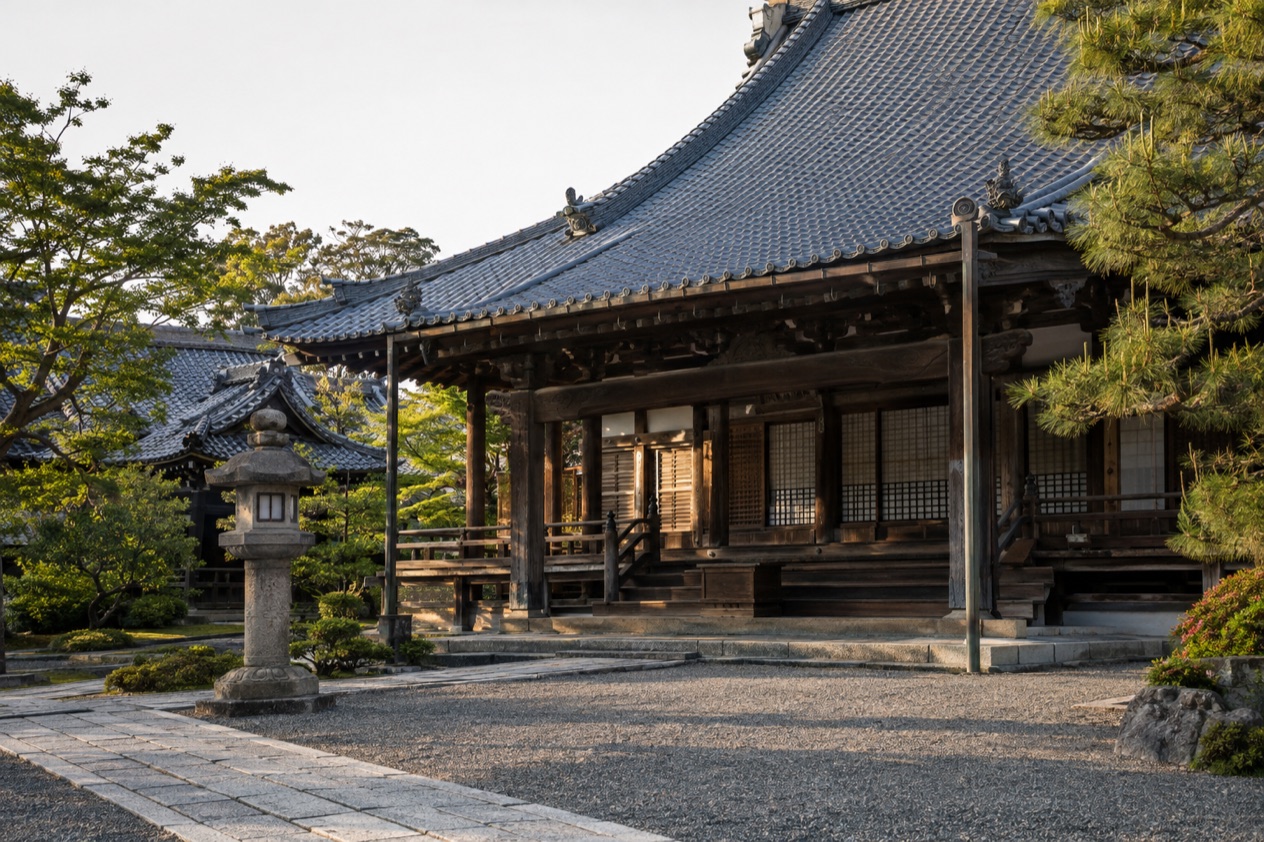
Shinto and Buddhism are the two religious traditions you meet most often in Japan, one rooted in the land and its spirits, the other brought in from the Asian mainland. Between them they explain nearly every gate, hall, bell and festival on a sightseeing route, from a wooded shrine in Tokyo to a great temple hall in Nara.
Shinto and the kami
Shinto, sometimes called Shintoism, is a religion from Japan, often regarded by its practitioners as the country’s indigenous religion and as a nature religion. It revolves around kami, supernatural entities believed to inhabit all things, including forces of nature and prominent places in the landscape. A mountain, a waterfall, an old tree or a river bend can be the home of a kami.
That idea shows in the way shrines are built. Their entrances are marked by a torii, a two-post gateway, and many shrines have komainu, the paired guardian statues, and sit within gardens or wooded groves. There are around 100,000 public shrines in Japan, so one is rarely far from wherever you happen to be staying.
Shinto is also a religion of seasons and celebrations. Its festivals are called matsuri, and they bring processions, music and food stalls to the shrine grounds. The Aoi Matsuri, held on May 15 at shrines in Kyoto, is a prayer for an abundant grain harvest.
Buddhism in Japan
Buddhism was first established in Japan in the 6th century CE. The Nihon Shoki, an early chronicle, dates its official introduction to 552, when King Seong of Baekje sent a mission to Emperor Kinmei. From there it grew into the temples, statues and monastic complexes that visitors walk through today.
Todai-ji in Nara was completed in 752 and houses the Great Buddha, the Daibutsu. The Great Buddha of Asuka-dera is the oldest Buddha statue in Japan. Saicho established the temple complex of Enryakuji at Mount Hiei, and Insho, in the 13th century, founded a medical facility at Gokurakuji in 1287, a reminder that temples once cared for the sick as well as the soul.
Japanese Buddhism is not one single body. Most Japanese Buddhists belong to new schools established in the Kamakura period (1185 to 1333). The largest sect is Pure Land Buddhism, with 22 million believers, and Nichiren Buddhism counts 10 million.
How do they differ?
Shinto honors the kami of nature and place, while Buddhism follows teachings that arrived from abroad, and the two show up in different parts of a person’s life and in different kinds of buildings.
Origins and ideas
Shinto grew out of Japan itself, with no founder and no single book of teaching. Its center is the relationship between people and the kami that live in the world around them. Buddhism came from outside and brought a body of teachings, monastic communities, sculpture and a written tradition that shaped Japanese art and architecture.
This is why the two feel so different on the ground. A shrine is built around a sacred place and often framed by trees, with open space and simple lines. A temple is usually built around images of the Buddha and halls where monks chant, and it may include a pagoda, a bell tower and a hall with a great statue inside, as at Todai-ji.
What each one marks in a life
In daily life the roles are shared out. Shinto is the tradition of festivals, blessings and fresh starts. People visit public shrines at New Year for hatsumode, the first visit of the year, to buy amulets and talismans for good fortune.
Buddhism is the tradition of death and remembrance. Around 90% of Japanese funerals are conducted according to Buddhist rites, and Obon, the ancestral festival, belongs to Japanese Buddhism. Many families take part in both traditions without feeling any conflict, going to a shrine for a celebration and to a temple for the dead.
How to tell a shrine from a temple
The torii is the clearest sign of a shrine. Pass under that gateway and you are on shrine ground, often with komainu on either side of the path and a wooded setting around the main building. At a temple you are more likely to meet a large gate, incense burners, statues of the Buddha and halls with names ending in -ji or -dera.
Names help too. Todai-ji, Kiyomizu-dera and Kinkaku-ji are temples, while Fushimi Inari Taisha, Meiji Jingu and Atsuta Jingu are shrines. Shimogamo Jinja is a shrine as well. Several of these shrines are among Japan’s most popular tourist sites.
How do travelers visit shrines and temples?
Travelers visit them by walking in as guests, following what worshippers around them do, and joining in the simple gestures if they wish. The gestures differ between a shrine and a temple, so it helps to know the sequence at each.
At a shrine
A worshipper typically approaches the honden, the main hall, places a monetary offering in a box, rings a bell, bows, claps, and prays silently. This act is called hairei. Visitors who want to join in can watch the person ahead of them and do the same, and those who prefer to stand back can simply look at the buildings and the grounds.
The setting is part of the visit. Under the torii and along the path, the trees, stone lanterns and komainu set the mood before you reach the hall. At large shrines such as Fushimi Inari Taisha in Kyoto or Meiji Jingu in Tokyo, the approach is a walk in itself.
At a temple
Temples have their own habits. Visitors light a stick of incense at the burner in the courtyard and waft the smoke toward themselves, then press their palms together in front of the main hall, usually without clapping. Shoes often come off before stepping onto the wooden floors of an inner hall.
The sights vary a great deal. At Todai-ji in Nara you come face to face with the Great Buddha, and at Asuka-dera you can see the oldest Buddha statue in Japan. At temple complexes such as Enryakuji on Mount Hiei, the visit is as much about the grounds and the buildings spread out among them as about any single hall.
Wishes, charms and fortunes
Shrines offer small things to take away or leave behind. Ema are small wooden plaques on which you write a wish and leave it at the shrine, and reading the plaques left by others is a pastime of its own. Omamori are small, brightly colored drawstring bags carrying the shrine’s name, sold as protective amulets.
Omikuji are small slips of paper, obtained for a donation, that give a prediction for the future. If the prediction is bad, you tie it to a tree or a frame at the shrine and leave it behind.
Festivals and performances
At New Year, hatsumode brings people to public shrines to buy amulets and talismans. Obon, in Buddhism, is the season when families honor their ancestors.
Kagura is the music and dance performed for the kami, and visitors may see it at shrines. Imperial kagura is performed at major shrines such as Ise, Kamo and Iwashimizu Hachiman-gu. Whether you catch a performance depends on the shrine and the day, so treat it as a chance rather than a certainty.
Good to know before you go
Bring coins for the offering box and for an omikuji slip, since both are small gifts rather than purchases. Let the setting guide your behavior: watch what worshippers do, follow the same sequence at the hall if you wish, and stay respectful around people who are praying.
Shrines are often set in groves and gardens, so weather matters, and a rainy day changes the mood of the grounds without ruining the visit. Shrine and temple names that end in -jinja, -jingu, -ji or -dera tell you at a glance which tradition you are entering.
Sources
- Wikipedia, Buddhism in Japan (https://en.wikipedia.org/wiki/Buddhism_in_Japan), checked October 11, 2026
- Wikipedia, Shinto (https://en.wikipedia.org/wiki/Shinto), checked October 11, 2026
To plan your stay
- Best Time to Visit Japan: Cherry Blossoms, Autumn Colors, Weather and Festivals
- Where to Stay in Japan: Ryokan, Temple Stays, Capsule Hotels and the Best Cities to Base In
- Sending Luggage from the Airport in Japan: Hands-Free Travel, Hotel Delivery and Coin Lockers
- Know Before You Go to Japan: Entry, Money, Etiquette and Getting Around