
In Utsunomiya, plates of gyoza arrive crisp-bottomed and steaming while diners compare notes on which shop does them best. In Fukuoka, yatai food stalls glow along the street, and in Osaka a cook flips takoyaki on a dimpled griddle. Japan eats differently from one region to the next, and this is a tour of the dishes tied to a place and the moments when they taste best.
What are Japan’s regional specialties?
Regional specialties are the dishes, ingredients and drinks that belong to one part of Japan, shaped by its climate, its farms and its coast. Each region has its own local cooking, and western Japan tends to have a milder climate than the east, which changes the seafood and produce on the table. The result is a country where a bowl of noodles or a stew can tell you exactly where you are.
Many of these dishes began as ways of using what was close at hand. Washoku, the traditional food culture of the Japanese, was added to UNESCO’s Intangible Cultural Heritage list on December 4, 2013, with a nod to the dishes of the New Year celebration. Behind the famous names of sushi, wagyu, kaiseki and ramen sits a long list of local cooking that rarely leaves its home prefecture.
Hokkaido: salmon, lamb and the cold north
Every autumn, salmon swim up Hokkaido’s rivers to spawn, and the island turned the run into comfort food. Ishikarinabe is a salmon and vegetable stew, and chanchanyaki is salmon sauteed with vegetables in a miso-based sauce, the kind of dish that suits a cold evening.
Sheep farming on the wide plains gave Hokkaido another signature, Genghis Khan, grilled lamb with vegetables. Many households on the island own a special perforated pot just for cooking it, which says a lot about how much it belongs to home life. It is a dish for sharing around the grill with a group.
Tohoku: kiritanpo, beef tongue and sake
In Akita, kiritanponabe is a stew of rice pressed into stick shapes, simmered with chicken and vegetables in dashi broth. It has been passed down through generations and is essential when families entertain guests, so it tastes of hospitality as much as of the pot.
Sendai is where gyutan began, beef tongue grilled over hot charcoal, and it has since spread across the country. Tohoku is also rice country, and some of Japan’s best sake is made from rice grown here. Many izakaya in the region offer sake pairings with local dishes, so an evening can move from grilled tongue to a flight of local pours.
Tokyo’s downtown classics
Monjayaki came out of Tokyo’s shitamachi, the old downtown, as a working-class favorite. It is a savory mix of flour, sauce and dashi broth that you cook yourself on a hotplate at the table, eating it straight from the surface with a small metal spatula. It is messy, social and good fun with friends.
From the Fukagawa area comes fukagawadon, asari clams cooked in soy sauce and sugar and ladled over steaming rice. The dish was inherited from a former fishing community, and it still tastes of the waterfront it came from.
Which cities are known for which dishes?
Quite a few cities are tied to one dish, and the pairing is a good way to plan a route. Cities such as Utsunomiya, Kobe, Otaru, Fukuoka, Sapporo, Nagasaki, Kyoto, Matsusaka and Kitakata are known for good food, from gyoza in Utsunomiya to the yatai stalls of Fukuoka.
Osaka, Kyoto and Kobe
Osaka is known for okonomiyaki, a savory pancake of cabbage and meat cooked on a griddle, and for takoyaki, dough balls filled with octopus. Both are eaten hot and fast, and both show a city that likes its food casual and generous.
Kyoto goes the other way, toward vegetables. Kujo leeks, kamo eggplants, manganji peppers and shogoin radishes appear in obanzai, home-style simmered and marinated dishes. Kobe beef from Hyogo Prefecture and Matsusaka beef from Mie Prefecture are world-renowned, and wagyu is shipped under area names such as Yonezawa, Omi and Sanda as well.
Nagoya and the central coast
Nagoya cooking leans on Hatcho miso, a dark reddish-brown paste with a distinctive flavor, in dishes like miso-nikomi udon and miso-katsu. In Gifu Prefecture, hoba miso is koji miso grilled on a magnolia leaf, a dish where the leaf is part of the show.
Lake Hamana in Hamamatsu is famous as the birthplace of eel farming, and some nearby restaurants have served eel for more than a century. Kanazawa’s Omicho Market is the place for kaisendon, rice topped with fresh seafood, while Fukui is known for Echizen oroshi soba, noodles topped with grated daikon.
Shikoku, Kochi and the Sea of Japan
Kagawa Prefecture is nicknamed the udon prefecture because its residents eat so much of the noodle. In Kochi, bonito is eaten daily, and the best-known preparation is katsuo-no-tataki, seared bonito.
On the Sea of Japan coast, Tottori crab draws visitors in winter, when it is abundant. Farther east, Utsunomiya’s gyoza competition is fierce enough that the advice is to try many restaurants and settle on a favorite, and Yamanashi, with no sea access, is famous for houtou, udon simmered in miso soup with squash and other vegetables.
How do you try them?
Timing matters for several specialties. Namero, Chiba’s raw horse mackerel chopped with green onion, white sesame and miso, is best from May to June. Ankonabe, monkfish stew, is a winter dish of Ibaraki, and in November people flock to Niigata and Nagano for freshly made soba.
Markets, stalls and station boxes
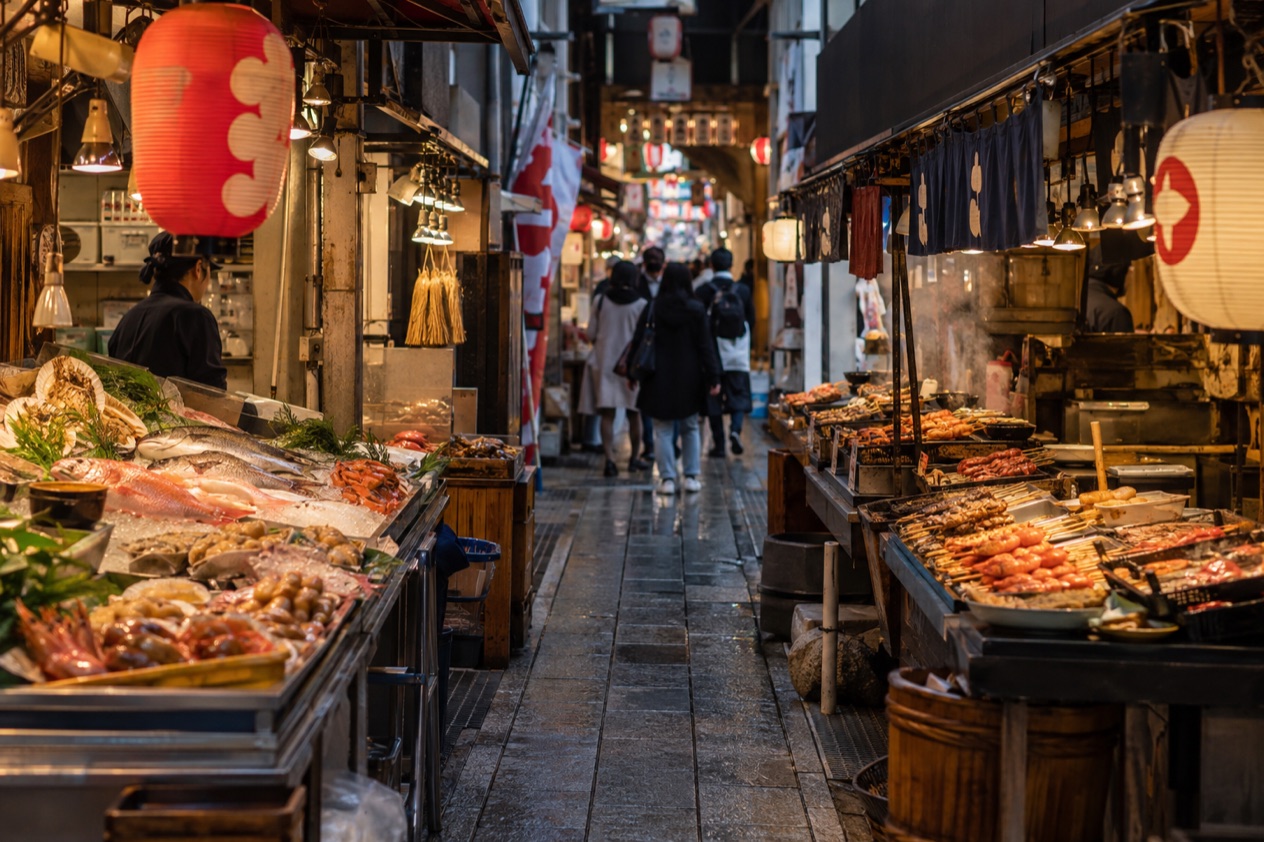
Markets are the natural place to graze. Kuromon Market, Nishiki Market, Miyagawa Morning Market, Omicho Market, Tsukiji Market and Toyosu Market are all typical examples. In Fukuoka the yatai stalls serve dinner in the open street.
Ekiben, the traditional boxed meals sold at stations, let you taste a region while you travel through it. Many contain local ingredients, so a train day can double as a tasting. Local sake from a nearby brewery is a natural companion to a regional meal.
At the table: habits worth knowing
It is customary to say itadakimasu before eating and go-chisosama deshita to the host or restaurant staff afterward. Noodles are traditionally eaten by bringing the bowl close and drawing them in, and the loud slurp is considered normal. In a traditional room with tatami floors, shoes always come off, and the formal sitting style is seiza, kneeling with the legs folded under you.
Typical meal times run from 6:00 to 9:00 for breakfast, 12:00 to 14:00 for lunch and 18:00 to 20:00 for dinner. Kaiseki is typically served in ryotei, traditional restaurants, and licensed fugu chefs are assessed every year by the government.
Eating vegetarian and other tastes
Vegans and vegetarians can expect refined dishes in Japan, though some care is needed. At a noodle shop the vegetarian-safe item is typically zarusoba, plain cold noodles, but the dipping sauce usually contains dashi.
Summer festivals bring kakigori, shaved ice flavored with syrup or condensed milk. Sake, by legal definition, uses just four ingredients: special rice, water, koji and special yeast. Shochu is produced everywhere in Japan, but its production started in Kyushu.
Good to know before you go
Regional dishes are often seasonal, so the month you travel decides what is on the menu, from salmon stews in autumn to crab and monkfish in winter and namero in late spring. Japan also has its quirks, such as cube watermelons sold as ornamental gifts at prices as high as US$200, and Kentucky Fried Chicken at Christmas, which you must preorder several weeks ahead or wait in line for hours. Let the local specialty guide where you stop, and let a market or a station box fill the gaps between meals.
Sources
- Japan National Tourism Organization, Japanese gastronomy (https://www.japan.travel/en/gastronomy/), checked October 11, 2026
- Japan National Tourism Organization, eastern Japan cuisine (https://www.japan.travel/en/gastronomy/local-cuisine-eastern-japan/), checked October 11, 2026
- Japan National Tourism Organization, western Japan cuisine (https://www.japan.travel/en/gastronomy/local-cuisine-western-japan/), checked October 11, 2026
- Wikipedia, Japanese cuisine (https://en.wikipedia.org/wiki/Japanese_cuisine), checked October 11, 2026
- Wikivoyage, Japanese cuisine (https://en.wikivoyage.org/wiki/Japanese_cuisine), checked October 11, 2026
To plan your stay
- Best Time to Visit Japan: Cherry Blossoms, Autumn Colors, Weather and Festivals
- Where to Stay in Japan: Ryokan, Temple Stays, Capsule Hotels and the Best Cities to Base In
- Sending Luggage from the Airport in Japan: Hands-Free Travel, Hotel Delivery and Coin Lockers
- Know Before You Go to Japan: Entry, Money, Etiquette and Getting Around