
Somewhere between the departures board at Tokyo Station and the first look at a map of Honshu, travelers stop and ask whether one pass could carry them across the whole country. The Japan Rail Pass is the ticket built for that question: a pass sold by the JR group to overseas visitors, good on almost all JR trains, Shinkansen included. Whether it suits a trip depends on where it works, where it stops, and who is allowed to hold it.
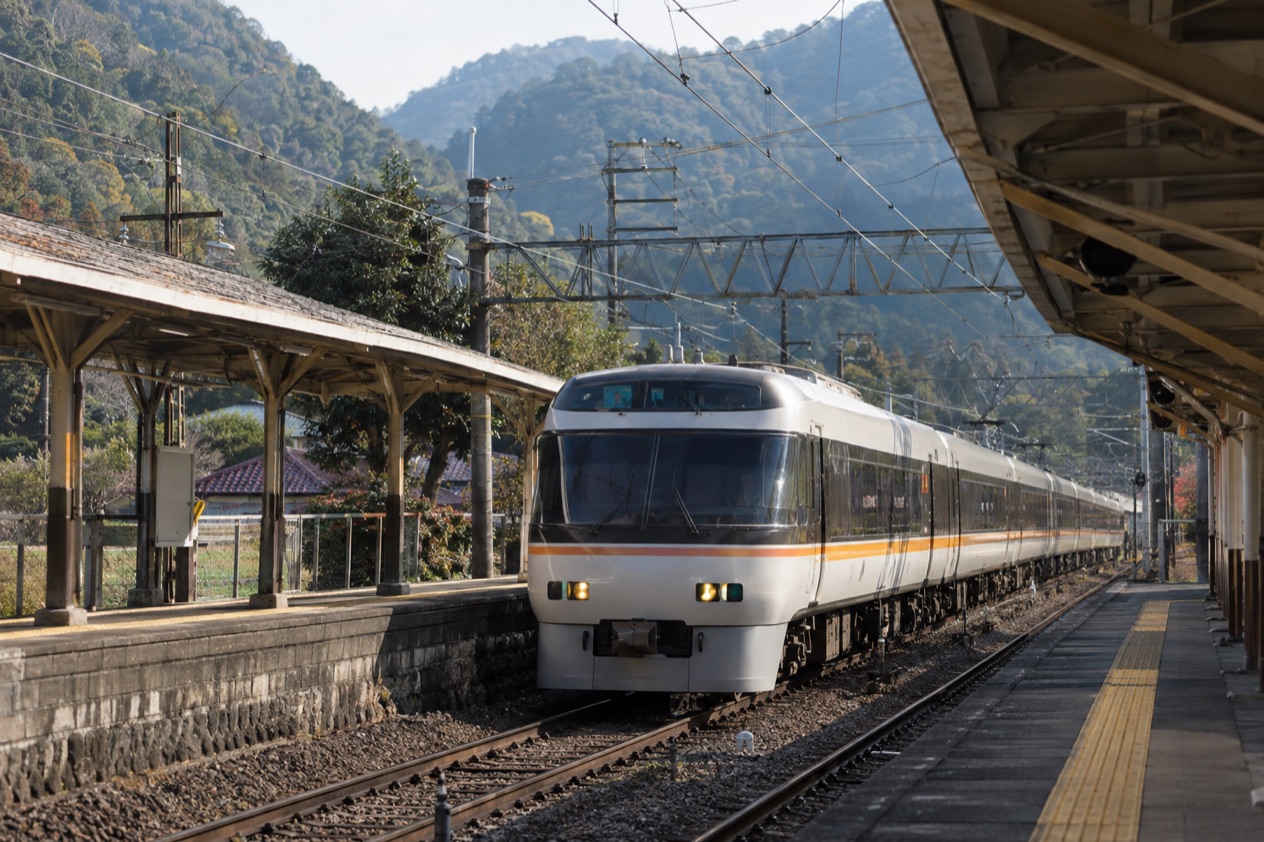
What is the Japan Rail Pass?
The Japan Rail Pass is a rail pass sold by the Japan Railways Group exclusively to overseas visitors, designed to stimulate travel and tourism throughout Japan. Six companies of the JR group offer it jointly, which is why a single card can take you from one end of the network to the other without a new ticket at every station.
It allows unlimited travel on almost all JR trains, including the Shinkansen bullet trains, and on certain segments of private railways. The pass comes in periods of seven, 14 or 21 consecutive days, and you pick the length that matches the stretch of the trip you plan to spend moving between cities.
How the days are counted
A pass day starts and ends at midnight. Activate a seven-day pass at noon on July 1, and it runs out at midnight on July 7, not at noon on the 8th. In practice that means the first day counts in full even if you start in the afternoon, and the last day ends when the clock strikes twelve.
The periods are consecutive. Days you spend in one city, at a ryokan or wandering a market still count against the pass. A traveler who plans to settle in Kyoto for several days and make a couple of long train rides on either side will want to think about that before choosing a length.
Regional passes from the JR companies
The national pass is not the only JR ticket. The companies of the group also sell passes for single regions, and for a trip that stays in one part of the country they can be a closer fit. Each one covers its own territory, so a pass for the Tokyo area does not follow you to Hiroshima, and a Kyushu pass stays on Kyushu. The JNTO lists the main ones, and the range runs from the northern island of Hokkaido down to Kyushu in the south.
| Pass | Where it goes |
|---|---|
| Hokkaido Rail Pass | All trains of JR Hokkaido, except the Hokkaido Shinkansen line and the SL Fuyu-no-Shitsugen train |
| JR East-South Hokkaido Rail Pass | All trains in the eastern part of Japan and southern Hokkaido |
| JR EAST PASS | JR East lines, including Tokyo, Tohoku, Nagano and Niigata |
| JR TOKYO Wide Pass | Lake Kawaguchiko (Mount Fuji), Nikko and the Izu Peninsula |
| Hokuriku Arch Pass | Tokyo to Osaka via Nagano, Toyama, Ishikawa and Fukui prefectures |
| JR Central passes (four types) | Shirakawa-go, Takayama, Kanazawa, Kumano Kodo, Ise, Mount Fuji and the Tateyama Kurobe Alpine Route |
| JR West tickets | Kyoto, Osaka, Toyama, Kanazawa, Okayama and Hiroshima |
| ALL SHIKOKU Rail Pass | All trains of the six railway companies on Shikoku |
| JR KYUSHU RAIL PASS | Several types, for travelers staying on Kyushu |
A few of these answer very specific itineraries. The Hokuriku Arch Pass, for example, links Tokyo and Osaka by way of the Sea of Japan side, while the ALL SHIKOKU Rail Pass is made for an island trip.
What does it cover?
The Japan Rail Pass covers almost all JR trains, including the Shinkansen, plus a few private railway segments and ferry and monorail links that carry the JR name or connect to it. It does not cover everything, and the exceptions matter more than the rule when you stand at a ticket gate.
Bullet trains, local lines and the Tokyo monorail
On the JR network the pass works on the Shinkansen and on local JR lines, so the Yamanote line in Tokyo and the Osaka Loop Line are both covered. Those loops are the ones that tie together stations visitors pass through, and riding them with the pass in your wallet means no fare to work out at the machine.
The pass is also valid on the Tokyo Monorail between Hamamatsucho and Haneda Airport, with stopovers allowed. For a traveler landing at Haneda, that puts the first leg into the city on the pass. Out in the west, it is valid on the JR Ferry route between Miyajima and Miyajimaguchi, the crossing to the island of the floating torii.
Nozomi and Mizuho need an extra ticket
The Nozomi service on the Tokaido and Sanyo Shinkansen lines and the Mizuho service on the Sanyo and Kyushu Shinkansen lines are not covered by the pass alone. Holders need an additional special ticket to ride them. Other Shinkansen services on those lines stay within the pass.
The point to carry away is the train name. On a departures board, Nozomi and Mizuho are the two names to look for before boarding, since the pass does not cover them without the supplemental ticket.
Where surcharges apply and what is left out
Some JR trains run on tracks that JR does not own, and pass holders pay extra on them. The examples are the Tokyo Waterfront Railway Rinkai Line between Osaka and Shin-Kiba, the Izukyu Railway from Ito to Shimoda, and the Kyoto Tango Railway from Fukuchiyama to Toyooka. The same pass that rides a Shinkansen without a second thought stops short on these stretches.
City subways are not covered either. Tokyo’s and Osaka’s subway networks sit outside the pass, even though the JR loop lines above them are included. IC cards such as Suica serve a different purpose and cannot be used to travel between two different regions, for example from JR East’s Suica region to JR Central’s TOICA region.
Seat reservations
Seat reservations on pass-eligible trains can be made without additional payment at all JR Midori no Madoguchi ticket offices. These are the staffed JR ticket counters, and they are where a traveler turns a day’s plan into a seat on a particular train.
Keep in mind that the Shinkansen never runs overnight, and that most trains do not operate around the clock. A late dinner in Osaka or an early start in Kyoto is planned around the last and first trains of the day, not around a train that never stops.
Who can buy it?
The Japan Rail Pass is for foreign nationals visiting Japan as tourists, and for Japanese nationals who have lived outside Japan for at least ten years. It is a visitor’s product, and eligibility is tied to the stamp in your passport.
Eligibility in practice
A foreign tourist whose passport bears the Temporary Visitor entry status can use the pass. That status is the condition, and the actual passport has to be shown when the pass is exchanged, so a photo or a copy does not stand in for it.
The second group is Japanese nationals who have lived outside Japan for at least ten years. For them the pass is open on that residence history rather than on a visitor stamp. Everyone else who travels the rails on a different status falls outside the pass and buys ordinary tickets instead.
Picking up the pass
To collect the pass, you go to a staffed ticket counter or a ticket vending machine at a major JR station and present your passport. The passport is the key item in both cases, and it is worth having it in hand, not in a suitcase on a rack, when you reach the counter.
The sale of the paper Exchange Orders that agencies once issued has ended, and the pass is now sold through the official website. If you see references to an Exchange Order with a time limit for swapping it, those belong to the older system. Starting from the official site is the route that matches the current setup.
Passes for the regions, held by the same visitors
Someone who spends a week around Tokyo, Nikko and the Fuji lakes is looking at a different ticket from someone crossing the country. The national pass is for the second kind of trip, the regional ones for the first. Whichever you choose, the same habits carry over: know which trains are excluded, remember that city subways sit outside, and keep the passport close for the exchange.
Good to know before you go
A few rail habits help with any pass in your pocket. In Tokyo, most trains do not run from 1:00 to 5:00 in the early morning, so a night out has a natural end. All Shinkansen lines banned smoking entirely from March 2024.
If a train is delayed, passengers can apply for a delay certificate from the station or the rail company’s website. IC cards stay valid for ten years after last use, except the Welcome Suica, which expires after 28 days. The Shinkansen has had no passenger fatalities in accidents since operations began in 1964.
Sources
- Japan National Tourism Organization, Japan Rail Pass and regional passes (https://www.japan.travel/en/plan/jr-rail-passes/), checked October 11, 2026
- Wikipedia, Japan Rail Pass (https://en.wikipedia.org/wiki/Japan_Rail_Pass), checked October 11, 2026
- Wikivoyage, Japan Rail Pass (https://en.wikivoyage.org/wiki/Japan_Rail_Pass), checked October 11, 2026
- Wikivoyage, Rail travel in Japan (https://en.wikivoyage.org/wiki/Rail_travel_in_Japan), checked October 11, 2026
To plan your stay
- Best Time to Visit Japan: Cherry Blossoms, Autumn Colors, Weather and Festivals
- Where to Stay in Japan: Ryokan, Temple Stays, Capsule Hotels and the Best Cities to Base In
- Sending Luggage from the Airport in Japan: Hands-Free Travel, Hotel Delivery and Coin Lockers
- Know Before You Go to Japan: Entry, Money, Etiquette and Getting Around