
Japan runs from Hokkaido to Okinawa, so one packing list never fits every itinerary. The short answer is light clothes in layers, shoes that come off easily, a way to handle rain, and a bag that leaves room for what you will buy.
What should you pack for Japan?
Pack for the part of Japan and the season you will be in, because the country stretches from Hokkaido in the north to the subtropical region of Okinawa. A trip that stays in the cities of Honshu needs a different bag from one that adds the Japan Alps, a ryokan in the hills or a beach on the Izu Peninsula. Start with the route, then choose the clothes.
Mountains and forests cover 70% of the country, so even a city-based trip often includes a day among trees, hills or a volcanic landscape. Leave a little room for that day in the bag.
Clothes and shoes
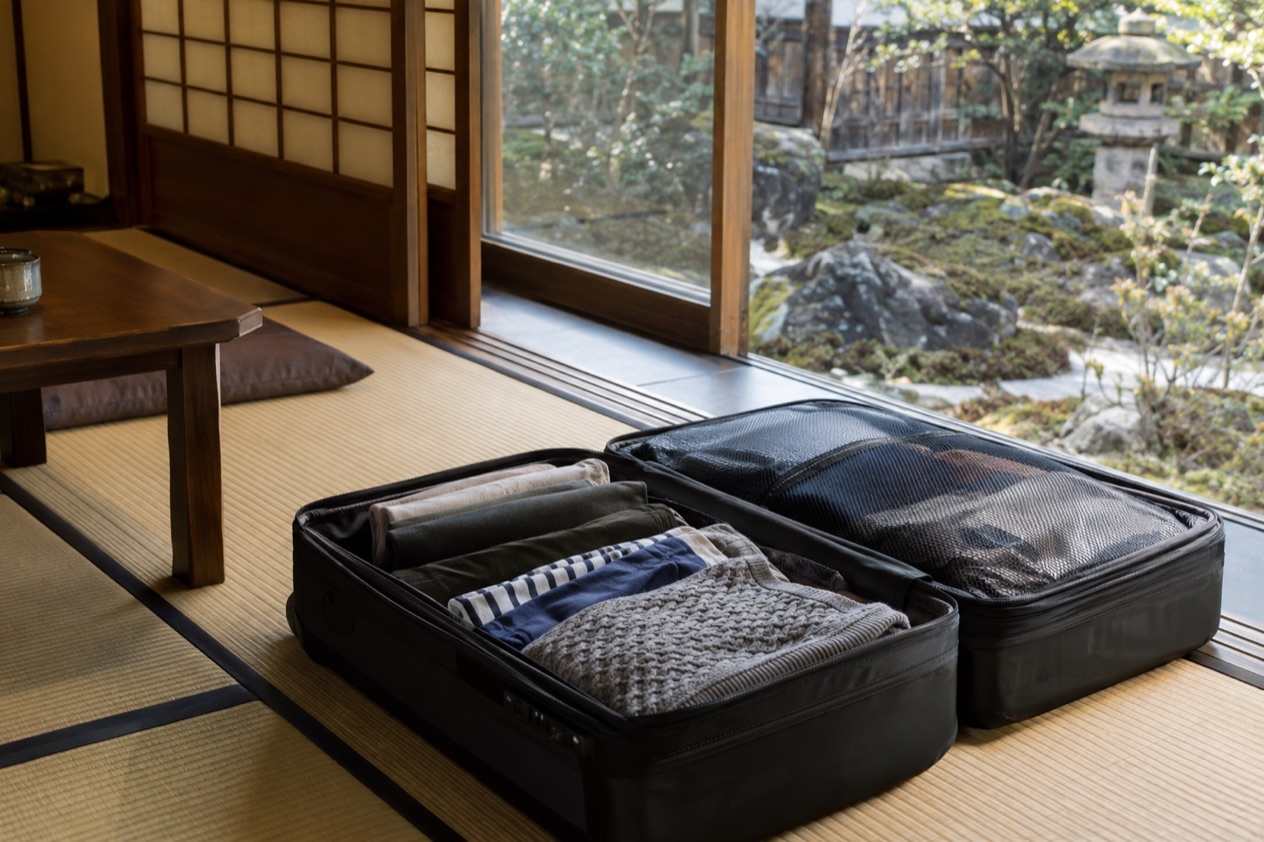
Think in a small set of pieces that mix and match: a few tops, two pairs of trousers or skirts, one layer for warmth and one for rain. Plain, comfortable clothes suit temples, museums and train stations alike, and they dry quickly if you wash a few things in the sink at night.
Shoes matter more than anything else on the list. Days in Japan tend to be spent on foot, through station corridors, temple gravel and shrine steps, and shoes come off at the entrance of a ryokan, many restaurants with tatami seating and some temple halls. Pick one broken-in pair that slips on and off without a struggle, and add socks without holes, since you will often be in them in front of other people.
Rain gear
The rainy season arrives between May and June, and typhoon season in August and September can disrupt travel plans. For a trip in either window, a light waterproof jacket with a hood earns its place in the bag. It folds small, and it leaves your hands free for a camera, a phone or a rail ticket.
Shoes that cope with wet pavement are worth more than a second pair of dry ones. A small plastic bag for a damp umbrella or wet shoes also helps, because you will move between buses, trains and indoor sights all day.
For onsen and ryokan stays
Hot springs and traditional inns are part of many itineraries, and the packing is minimal. A ryokan stay often centers on a yukata, the light cotton robe worn around the inn, and slippers for the corridors, so the evening needs no special outfit. Bring something comfortable for lounging in the room and for the walk from the bath back to your futon.
A small bag for toiletries makes the move to the bath simple. If you plan to stay at several inns, pack the overnight things in one small pouch so that you do not have to unpack the whole suitcase for a single night.
A daypack and a few small things
A compact daypack carries the layer you take off at noon, a water bottle, a phone charger and whatever you pick up at a market or a station shop. A foldable tote inside your suitcase gives you a second bag for the trip home.
What layers do you need?
You need thin layers that you can add or remove through the day: a short-sleeved or light top, a long-sleeved shirt or sweater, and a jacket that blocks wind and rain. The weight of your layers depends on both the season and the stops on your route.
| Season | What the calendar brings | What it means for your bag |
|---|---|---|
| Cherry blossoms | Bloom moves from south to north between March and May | A sweater and a light jacket for outdoor picnics under the trees |
| Rainy season | Begins between May and June | Waterproof jacket, quick-drying clothes, shoes that handle wet streets |
| Typhoon season | August and September | Rain gear and a flexible mindset about transport plans |
| Autumn foliage | Color spreads from Hokkaido to the south between late September and early December | Warmer layers for hillsides, gardens and mountain towns |
Spring and the blossom weeks
Cherry blossoms open from south to north, so the same week can mean petals in one city and bare branches in another. If you chase the bloom up the country, you will meet different weather along the way. Pack a sweater for evenings spent sitting under the trees at a hanami party, the picnic that follows the flowers, and a jacket you can tie around your waist.
Scarves and a light hat take almost no room and can make a long afternoon in a park more comfortable. Bring one pair of shoes that you do not mind getting dusty or damp, since parks and riverbanks are where the petals gather.
The rainy season and the heat behind it
When the rains begin between May and June, the clothes that serve you best are the ones that dry fast. Synthetic or blended fabrics beat heavy cotton, and a second pair of socks in the daypack is a small comfort. Cotton jeans take a long time to dry in a hotel room, so travelers do better with lighter trousers.
As summer approaches, the layers get thinner but do not disappear. A light cardigan or overshirt is an easy layer to carry in summer. Okinawa, the subtropical end of the country, calls for the lightest wardrobe and the swimsuit.
Typhoon months
Typhoons in August and September can disrupt travel plans, so the bag should help you be flexible. Keep a change of clothes, a charger and basic toiletries in your carry-on in case a delay keeps you in an unplanned place for the night. A rain jacket matters here more than an umbrella, since wind can turn an umbrella inside out.
Autumn color and the mountains
Autumn foliage spreads from Hokkaido in the north to the south between late September and early December, which means the leaves and the chill arrive in the north first. For a trip to the hills, add a warmer sweater and perhaps gloves and a hat, since the Japan Alps rise across the central part of Honshu and the air changes as you go up.
Walks through temple gardens, forest paths and hillside towns reward shoes with a grip and a jacket with a hood. If your itinerary includes rocky or uneven trails, bring footwear with a sturdy sole.
What can you leave at home?
You can leave behind the “just in case” items: extra shoes, bulky coats for a season that does not need them, formal outfits and anything you would not wear twice. The country is large, but the wardrobe that works is small.
Heavy coats and extra shoes
A thick winter parka is worth the space only if your route heads to the cold north or the mountains. For a trip across the cities in spring or early autumn, layers of sweaters and a light shell do the same job and pack far smaller. The same goes for boots, which are heavy and rarely needed on a city itinerary.
Choose footwear for the activities on your route rather than packing extra pairs by default. Anything beyond that adds weight to bags that you will carry up station stairs and along platforms.
Formal wear and a big wardrobe
A neat shirt or a simple dress covers a nice dinner, and there is rarely a reason to pack a suit or an evening outfit for sightseeing. Shrines, temples and gardens call for comfortable, modest clothes you can walk in rather than anything dressy. Leave behind items that wrinkle quickly or need ironing, since you will be moving from place to place.
A good test is to lay out everything you plan to bring and remove a third. What remains usually covers the trip, and the space you free up is for the souvenirs, snacks and small crafts you will bring home.
Gear for places you are not going
The same logic applies to hiking poles and heavy trail gear. If the plan includes a mountain day, think about what you actually need for it rather than packing for every possible landscape.
For those days, a small separate bag with the specific items you need keeps the main suitcase light.
Good to know before you go
Pack for the season you will be in and keep a little slack in the plan during the rainy season and the typhoon months, when weather can change the day. A light bag is easier to carry through stations and up to a ryokan door, and the room you leave empty fills quickly with food gifts, paper goods and small crafts. Whatever the month, leave space for the trip home.
Sources
- Japan National Tourism Organization, weather and seasons in Japan (https://www.japan.travel/en/plan/weather/), checked October 11, 2026
To plan your stay
- Best Time to Visit Japan: Cherry Blossoms, Autumn Colors, Weather and Festivals
- Things to Do in Japan: Kyoto Temples, Onsen, Street Food and Day Trips
- Where to Stay in Japan: Ryokan, Temple Stays, Capsule Hotels and the Best Cities to Base In
- Sending Luggage from the Airport in Japan: Hands-Free Travel, Hotel Delivery and Coin Lockers